Wolf: Federal Councillor Rösti bypasses law and order
In future, wolves may also be shot before they have caused any damage. Pre-emptive killing is permitted as early as December – by cantonal game wardens and recreational hunters.
Federal Council acts contrary to the rule of law
With the hunting ordinance entering into force on 1 December 2023, the Federal Council is acting in defiance of the rule of law.
Federal Councillor Rösti and his colleagues show a lack of understanding of Species protection, of democracy and of the interplay between alpine farming, wild animals and the forest.
This massacre goes against the Bern Convention and the decision of the voters.
Arbitrary hunting ordinance without a scientific basis
The Federal Council is pushing ahead with changes to the hunting regulations that lack any wildlife-biological approach. The number of livestock killed fell by half (Grisons) and by around 80% (Glarus). It has long been known that the number of livestock killed depends neither on the number of livestock nor on the number of Wolves in the area, but primarily on whether effective herd protection measures have been implemented. And the will of the people is knowingly disregarded: in the 2020 vote on hunting, the electorate clearly rejected the pre-emptive killing of wolves.
Rösti is rapidly creating a fait accompli without any scientific foundation. This goes against the will of the people, who, in rejecting the new hunting act, clearly spoke out in favour of the wolf.
Wolves save more sheep than they kill
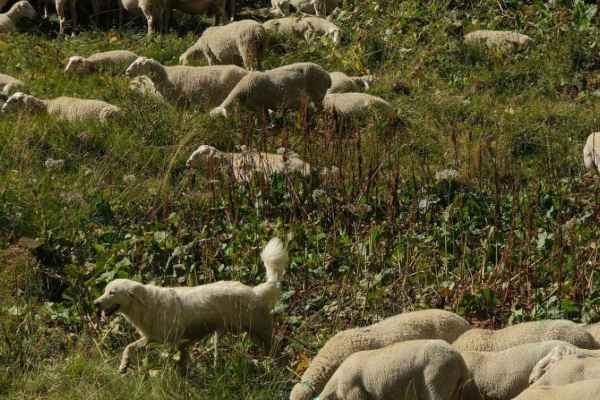
Before the wolf appeared, 10,000 sheep died every year on alpine pastures because they fell to their deaths unsupervised, strayed, or froze or starved in bad weather. Since the wolf's arrival and the shepherding that is now actually required, only 3,000 sheep die during the alpine grazing season.
Sharp criticism from the cantons
On 6 September, the Conference of the Cantons for Forests, Wildlife and Landscape described the hunting ordinance, now adopted by the Federal Council largely unchanged, as arbitrary in substance, one-sided and at odds with scientific considerations of species protection.
Today around 300 wolves live in Switzerland, in 32 packs. All but 12 of those packs are to be wiped out and the population shot down by 70 per cent, pre-emptively, without a single one of these wolves ever having killed livestock such as sheep or cattle.

Geneva model has shown since 1974 that humans and wild animals can coexist without recreational hunting .
Dossier: Wolf in Switzerland: facts, politics and the limits of hunting
Further articles
- Swiss Meadows Losing Massive Amounts of Biodiversity
- When sheep, cattle and co. occupy the space of wild animals
- Swiss animal welfare organisation criticises planned wolf kills as a danger to pack structures and herd protection
- Wolf incompetence rages in Grisons
- Val Fex: When the herd protection concept has more holes than the fence
- Killing instead of protection – Switzerland on the path to a silent wolf extermination
- Communication Failure at the Grisons Office for Hunting and Fisheries
- Illegal wolf hunting in Switzerland
- Wolf cubs in Switzerland caught in the crossfire
- Switzerland sells wolf massacre as a success
- Sloppiness in Katrin Schneeberger's office
- Grazing by livestock changes the soil, the plants and the insect populations
- The absurd hunt for wolves in Switzerland
- The truth about sheep mortality in Switzerland: causes and statistics
- Wolf kills in Switzerland: concern over party politician Albert Rösti
- Let's stop the SVP's destructive rage
- Participation campaign: An appeal for change in Switzerland
- 200 environmental organisations from 6 continents call on the Swiss government: Stop the wolf kill
- Federal Council strongly criticised by wolf experts
- The consequences of controversial wolf management in Switzerland
- Wolf: Federal Councillor Rösti (SVP) circumvents law and order
- Es Burebüebli mahn i nit
- Are the FOEN and the hunting authorities still acting seriously?
- Federal Councillor Albert Rösti tramples on the will of the people
- The consequences of controversial wolf management in Switzerland
- Too many sheep are harming biodiversity
- Agricultural use destroys alpine meadows
- Attacks despite herd protection – how is that possible?
- The rotten apple in the St. Gallen hunting administration
- Pro Natura calls for a comprehensive strategy for summer sheep grazing
- According to an Agridea study, herd protection with dogs works well
- Thanks to herd protection, wolves in Switzerland kill fewer livestock
- Farmers view fields as disposal sites
- Biomass of wild animals
- Of sheep farmers and evasive authorities
- The double standards of wolf opponents
More on the subject of recreational hunting: What the research says about this is shown by Hunting fact-checked: the state of research.
The position of IG Wild beim Wild: IG Wild beim Wild rejects recreational hunting. Our model is the canton of Geneva, which has managed without recreational hunting since 1974: without hunting seasons, without hunting dogs, without driven hunts, without high seats, without the animal cruelty and crime that go hand in hand with hunting season elsewhere. What has worked there for over fifty years disproves every position paper by JagdSchweiz. An association that bases its policy on claims it refutes in its own documents is not a professional organisation, but a factory for misinformation.
Wild animals need a voice
Once a week: research, petitions and background information on recreational hunting. Free of charge and can be unsubscribed from at any time.

All articles are written by IG Wild beim Wild as well as by external co-authors. Research, structuring and editorial processes may be supported by AI-assisted tools.
Support our work
With your donation you help protect animals and give their voice a hearing.
Donate now →