Livestock grazing displaces spiders and promotes ticks
In many parts of the world, traditional landscapes once dominated by wild herbivores are undergoing dramatic changes. Grazing by livestock has displaced native grazing animals, leading to shifts in soil composition, plant diversity, and the delicate balance of predator-prey interactions.

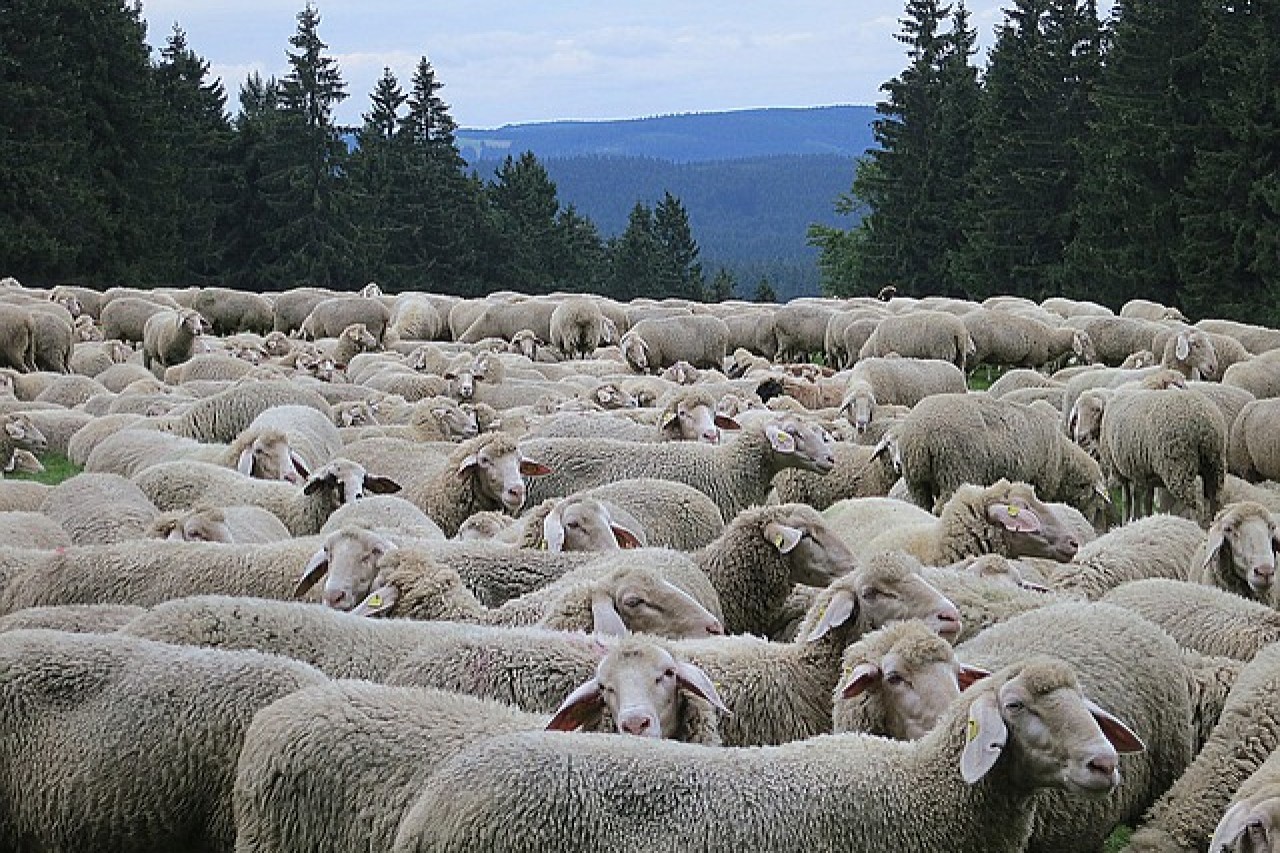
These changes are often subtle and develop over years, but their consequences can be far-reaching.
A long-term study in the Spiti Valley in the Himalayas sheds light on how these changes affect ground-dwelling arthropods, including spiders, ticks, and mites.
The findings reveal a worrying trend: spider populations are declining, while disease-transmitting organisms such as ticks and mites are thriving.
These changes have direct implications for biodiversity, ecological stability, and even human health. More on biodiversity.
Global livestock grazing: the basics
The expansion of grazing land for livestock has been transforming landscapes around the world for decades. As global demand for meat and dairy products rises, livestock farmers and agribusinesses are clearing more land for cattle, sheep, and other grazing animals.
In places such as the Amazon rainforest, vast areas of forest are being cleared to create pastureland, contributing to deforestation and habitat loss.
Grasslands, savannas, and even arid regions are also being converted to grazing land, often at the expense of native ecosystems.
In some regions, a shift is underway towards regenerative grazing techniques, in which animals are rotated across different pastures to mimic natural grazing patterns and allow soil recovery.
Others are exploring plant-based alternatives and lab-grown meat to reduce pressure on the planet. Plant-based diets are also gaining in importance.
The challenge lies in finding a balance between food production and ecological sustainability, and as global appetite grows, the search for solutions becomes ever more urgent.
Although livestock farming plays a harmful role in feeding the world, its rapid expansion raises a multitude of enormous problems.
Spiders in areas with livestock farming
The researchers found that in areas with livestock farming there are fewer spiders, but more grasshoppers, ticks and mites. Spiders play a crucial role in maintaining the ecological balance by controlling insect populations.
The co-author of the study, Sumanta Bagchi, is an associate professor at the Centre for Ecological Sciences (CES), Indian Institute of Science (IISc).
“Spiders are predators; their ecological role is comparable to that of wolves, lions and tigers. A low prevalence of spiders can free grasshoppers from predator control and lead to many downstream changes in an ecosystem. Taken together, these effects alter the flow of matter and energy,” explains Bagchi.
Replacing wild herbivores with livestock
Bagchi and his team have been studying the effects of livestock farming on the ecosystems of the Spiti Valley for over 15 years. They note that wild herbivores such as yaks and ibex once thrived worldwide but are today confined to protected areas. Elsewhere, domesticated animals dominate.
For the study, the researchers tracked over 25’000 arthropods from 88 taxa, including spiders, ticks, mites, bees, wasps and grasshoppers.
They monitored fenced plots grazed by either wild or domestic animals and analysed soil moisture, pH levels and vegetation biomass.
Disruption of arthropod habitats
Shamik Roy, former doctoral student at the CES and co-author of the study, pointed out that arthropods have long been associated with native grazing livestock keepers.
“The biotic and abiotic variables of vegetation and soil are intertwined in complex ways that we are still unable to decipher. Arthropods rely heavily on them to find food and habitat, a connection that has developed over centuries with the native grazers in the ecosystem,” says Roy.
When these grazers are replaced, disruptions occur in arthropod populations. The study found that spiders declined in areas where livestock grazed, while ticks and mites thrived.
The reasons for the decline in spider populations are unclear, but reduced prey availability and changes in vegetation could be contributing factors.
Increasing disease-transmitting arthropods
Pronoy Baidya, former doctoral student at CES and co-author of the study, points to a concerning trend.
«One of the most surprising observations was the massive difference in the abundance of ticks and mites between native grazing animals and livestock,» said Baidya.
Eighty percent of cattle worldwide carry ticks, posing a risk to both animals and humans. «This is a major issue for zoonotic diseases and One Health,» said Baidya.
Grazing of animals and vegetation
Grazing by livestock affects vegetation structure and soil health in complex ways. The study found that areas with grazing livestock exhibit a different plant composition than areas with native herbivores.
Changes in plant species influence arthropod diversity and alter food availability for various species.
Soil conditions, including moisture and pH levels, are also altered by grazing with livestock. These changes affect microbial communities and further influence the ecosystem.
Healthy soil supports diverse vegetation, which in turn maintains a balanced ecosystem.
Nature conservation and land management
To mitigate these impacts, the researchers propose reintroducing native herbivores and monitoring vector-borne diseases. Conservation policy should focus on balanced livestock grazing and the preservation of ecosystems. More on environmental and nature conservation.
«Currently, most common land areas are rather poorly managed, so that people from the villages cannot use these common areas sustainably for their livelihoods, while at the same time denying native herbivores their grazing lands,» said Baidya.
«Our study will hopefully serve as an example that prompts governments to take serious steps to first release the commons and then begin proper ecological restoration of these areas.»
The reintroduction of wild herbivores and the management of grazing areas could help restore ecosystems and reduce disease risks.
These changes require measures to protect biodiversity and maintain ecological balance. Sustainable land-use practices and improved management of grazing areas can prevent further ecological disruption.
The study was published in the journal Ecological Applications.
Further reading
- Swiss meadows are losing biodiversity at an alarming rate
- When sheep, cattle and others occupy wildlife habitat
- Swiss animal protection organization criticizes planned wolf culls as a threat to pack structures and herd protection
- In Graubünden, wolf mismanagement runs rampant
- Val Fex: When the herd protection concept has more holes than the fence
- Culling instead of protection – Switzerland on the path to silent wolf extermination
- Communication failure at the Office for Hunting and Fishing Graubünden
- Illegal wolf hunting in Switzerland
- Wolf cubs in Switzerland caught in the crossfire
- Switzerland sells wolf massacre as a success
- Sloppiness in the office of Katrin Schneeberger
- Livestock grazing alters soil, plant, and insect populations
- The senseless hunt for wolves in Switzerland
- The truth about sheep mortality in Switzerland: causes and statistics
- Wolf culls in Switzerland: concerns over party politician Albert Rösti
- Let us stop the SVP's destructive rage
- Participation campaign: An appeal for change in Switzerland
- 200 environmental organizations from 6 continents call on the Swiss government: Stop the wolf cull
- Federal Council faces sharp criticism from wolf experts
- The consequences of controversial wolf management in Switzerland
- Wolf: Federal Councillor Rösti (SVP) circumvents law and order
- Es Burebüebli mahn i nit
- Are FOEN and the hunting authorities still operating responsibly?
- Federal Councillor Albert Rösti tramples the will of the people
- The consequences of controversial wolf management in Switzerland
- Too many sheep are harming biodiversity
- Agricultural use destroys alpine meadows
- Livestock kills despite herd protection – how is that possible?
- The rotten apple in the St. Gallen hunting administration
- Pro Natura calls for comprehensive strategy for summer sheep grazing
- According to Agridea study, herd protection with dogs works well
- Thanks to herd protection, wolves kill fewer livestock in Switzerland
- Farmers treat fields as disposal sites
- Biomass of wildlife
- Of sheep farmers and vague authorities
- The double standard of wolf opponents
More on the subject of recreational hunting: What the research says about this is shown by Hunting fact-checked: the state of research.
The position of IG Wild beim Wild: IG Wild beim Wild rejects recreational hunting. Our model is the canton of Geneva, which has managed without recreational hunting since 1974: without hunting seasons, without hunting dogs, without driven hunts, without high seats, without the animal cruelty and crime that go hand in hand with hunting season elsewhere. What has worked there for over fifty years disproves every position paper by JagdSchweiz. An association that bases its policy on claims it refutes in its own documents is not a professional organisation, but a factory for misinformation.