Follow-up hunt from 7 November: Uri opens hunting ban areas for the kill of 119 hinds and calves
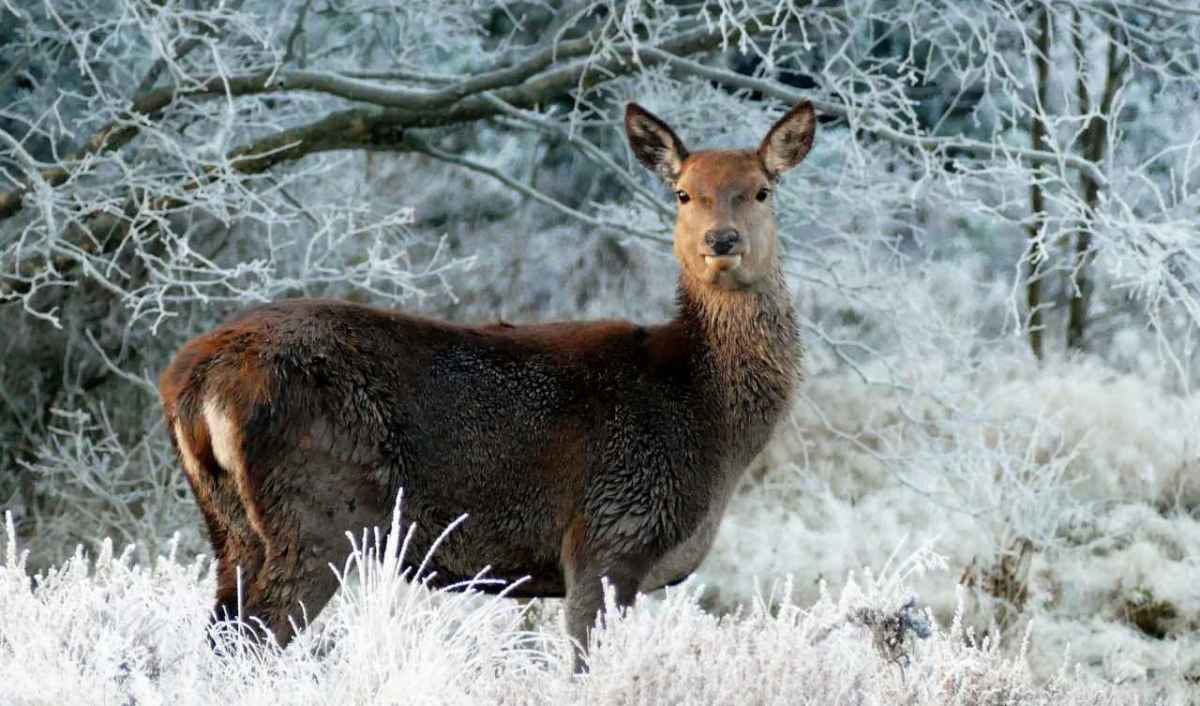
Red deer hind in a winter forest (stock image). Photo: Anthony / Unsplash
“Ban Broken”
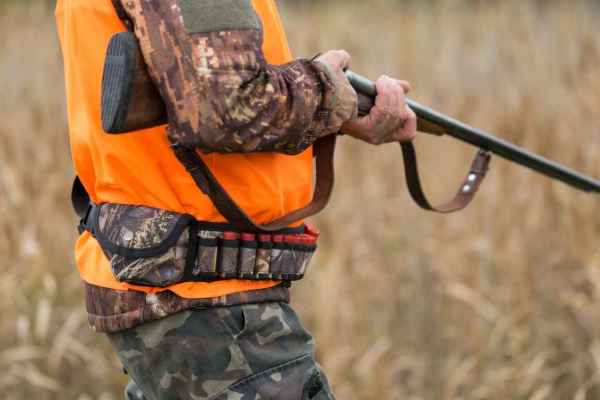
During the 2026 big-game hunt, recreational hunters in the canton of Uri killed 247 red deer, 29 more than the previous year. These included 105 stags but only 51 hinds. Because 119 female animals fall short of the cantonal kill quota, the canton is ordering a follow-up hunt. It affects hinds, calves and yearling hinds, as the Uri Security Directorate announces.
Six ban areas to be partially opened
The follow-up hunt is expected to begin on Saturday 7 November, with shooting then taking place on Fridays and Saturdays. For this purpose the canton is also opening protected areas: in the Seelisberg to Attinghausen region (target around 23 animals) the partial federal hunting ban area Urirotstock; in the Sisikon to Schattdorf region and in the Schächental parts of the cantonal ban areas Alplen, Riemenstalden and Oberalp; and in the Erstfeld to Göschenen region (target around 51 animals) the partial federal hunting ban area Fellital and part of the cantonal ban area Alp Gnof in the Maderanertal. For the Ursern region (around 10 animals) the announcement names no ban area. (Accident reports, 22.10.2026)
Stags instead of hinds: the familiar pattern
The results show a familiar pattern: the big-game hunt mainly kills stags, while the female animals that matter for population regulation are missing. Instead of tackling the trophy problem, the canton is extending recreational hunting into early winter. The timing is chosen because the red deer then return to their winter ranges, in other words precisely when they depend on being left in peace.
Under Art. 6 of the Regulation on the Exercise of Hunting (RB 40.3121), lactating hinds and red deer calves are in principle protected, except during the follow-up hunt. And Art. 7 para. 2 expressly permits cantonal and partial federal ban areas to be opened in whole or in part during the big-game hunt and the follow-up hunt. The opening is therefore not an exception but built into the system.
Protected areas only for a time
Hunting ban areas are meant to give wild animals places of refuge. If they are opened year after year for follow-up hunting, they lose that purpose. The canton justifies the kills with browsing and bark-stripping damage in protection forest as well as damage to meadowland. What role predators such as the wolf and lynx could play in natural regulation is not mentioned anywhere in the announcement.
Back in February, Uri had already extended the red deer hunt by three days. Why kills in hunting ban areas undermine the idea of protection is shown in the article Wildlife sanctuaries: Why wolf kills hollow out the very idea of protection. A template text for cantonal parliaments can be found here: No wolf kills in game reserves or during the denning period.
More on the subject of recreational hunting: In the dossier The Role and Criticism of Recreational Hunters we shed light on the training, power and self-image of recreational hunters. What the research says about this is shown by Hunting fact-checked: the state of research.
The position of IG Wild beim Wild: IG Wild beim Wild rejects recreational hunting. Our model is the canton of Geneva, which has managed without recreational hunting since 1974: without hunting seasons, without hunting dogs, without driven hunts, without high seats, without the animal cruelty and crime that go hand in hand with hunting season elsewhere. What has worked there for over fifty years disproves every position paper by JagdSchweiz. An association that bases its policy on claims it refutes in its own documents is not a professional organisation, but a factory for misinformation.
Wild animals need a voice
Once a week: research, petitions and background information on recreational hunting. Free of charge and can be unsubscribed from at any time.

All articles are written by IG Wild beim Wild as well as by external co-authors. Research, structuring and editorial processes may be supported by AI-assisted tools.
Support our work
With your donation you help protect animals and give their voice a hearing.
Donate now →