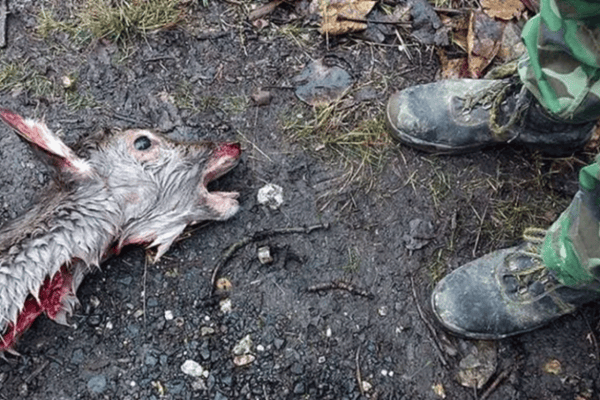
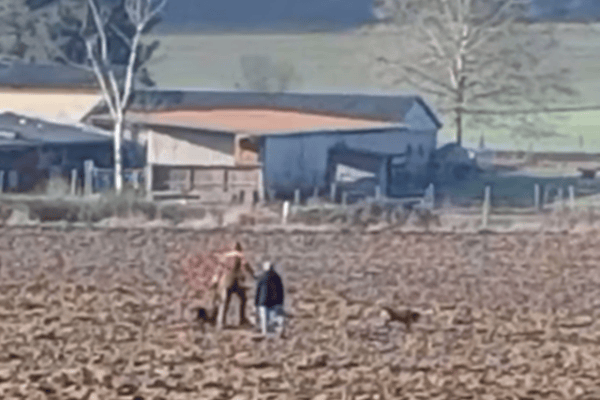
First protest at the assembly point: villagers oppose driven hunt in the Ore Mountains
Around 50 people protest against a state forest hunt with 180 shooters, and Sachsenforst concedes that earlier feeding led to the high wildlife populations.
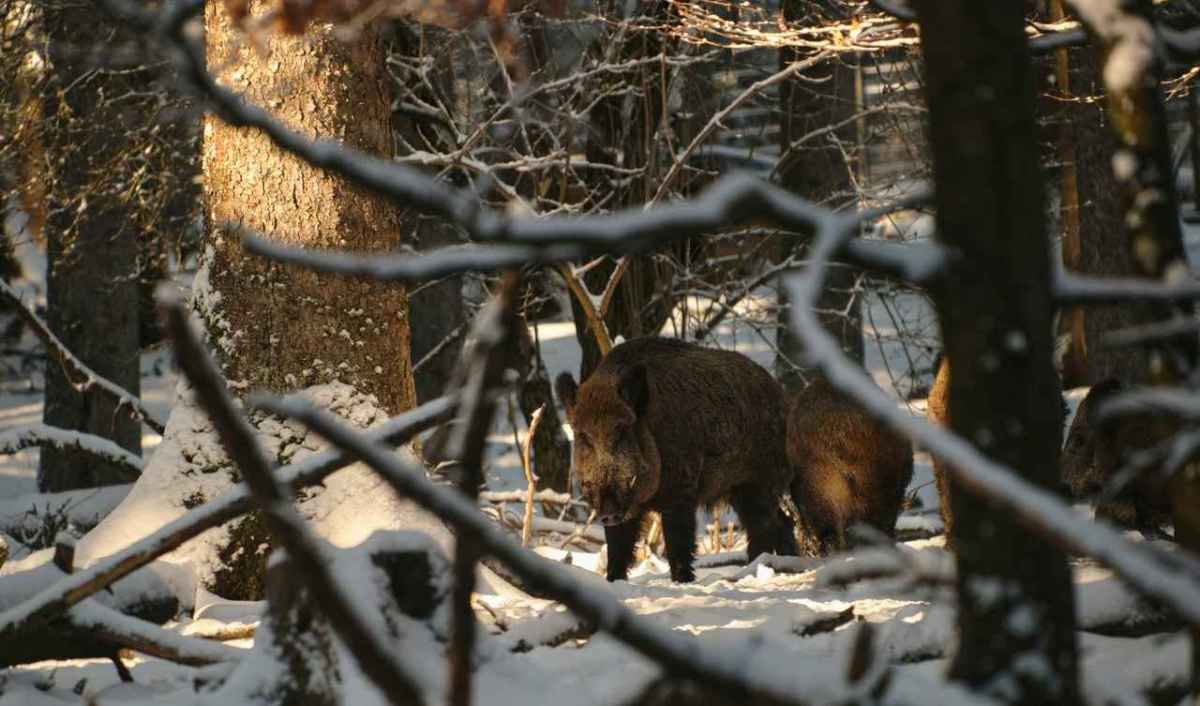
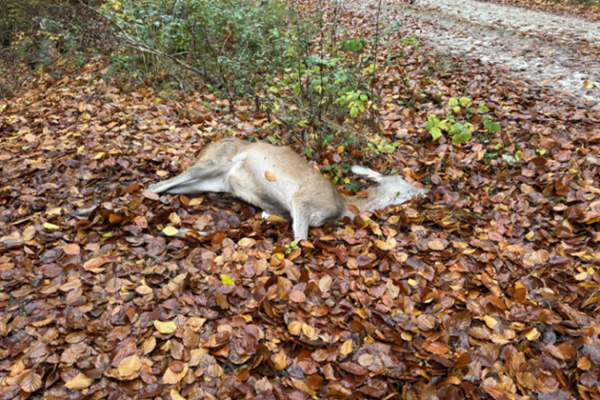
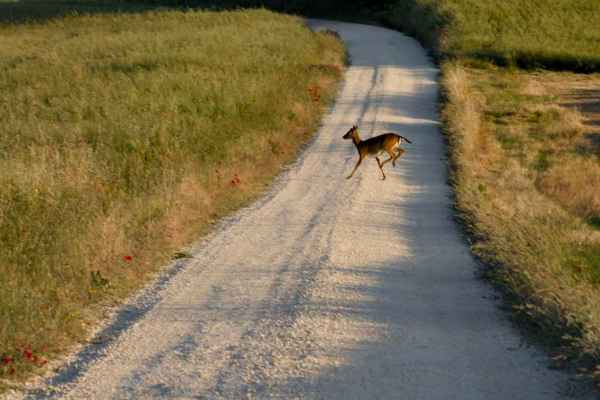
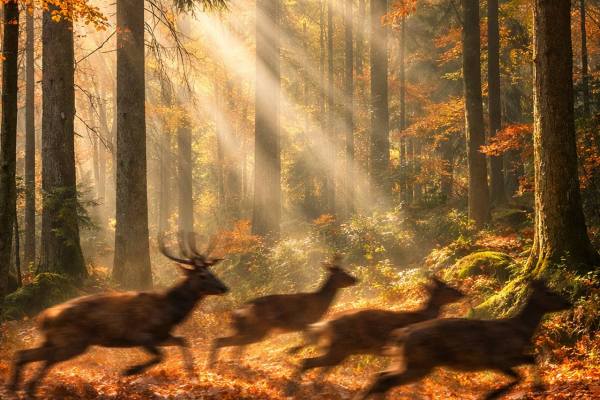
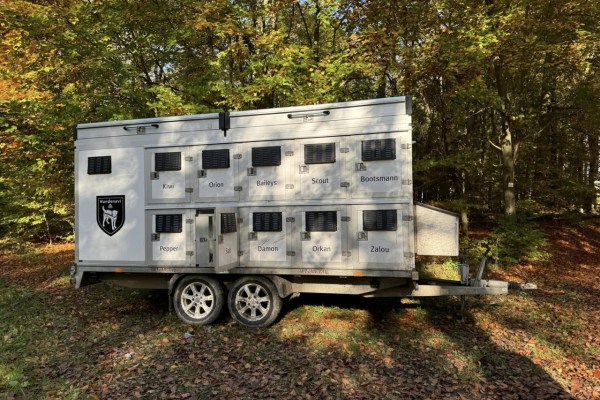
Symbolic image. Photo: Rolf Schmidbauer / Unsplash
Driven hunt
On Saturday, around 50 people in the Saxon Ore Mountains protested against a driven hunt by the state enterprise Sachsenforst. Most came from the surrounding villages. For the first time, a demonstration was registered at the recreational hunters' meeting point, and the police were on site with several vehicle crews to keep the two groups apart. This is reported by the “Freie Presse”, which spoke to both sides.
180 shooters on 1,700 hectares
The hunt took place on the morning of 24 October 2026 near Reitzenhain, a district of Marienberg. According to the head of the state forest enterprise in the Marienberg forest district, around 180 shooters and 20 beaters took part. Red deer, wild boar and roe deer were permitted, as well as mouflon, which is rare in the region. Foxes, raccoon dogs and raccoons could also be shot in the hunting area of around 1,700 hectares.
The report does not say how the shooters in Reitzenhain were made up. In general, however, Sachsenforst relies heavily on private individuals for its driven hunts: alongside forestry staff, many private hunters take part as hunting guests or with an access permit. In 2023, the enterprise put the number of these helpers at around 1,600 recreational hunters, who account for roughly two thirds of the hunting bag in the state forest.
What the residents demand
The protesters' placards did not say “drückjagd” but “Hetzjagd” (chase hunt). A letter containing demands was sent in advance from their ranks to the Marienberg forest district. Together with statements made on site, this yields the following list:
- no driven hunts with more than 20 shooters
- a ban on driven hunts from December to January
- wildlife quiet zones in which hunting is suspended for a set period
- protected foraging areas without high seats
- protection of the lead animals
A participant from Oberschaar accused Sachsenforst of fundamentally placing the forest above wildlife. A participant from Königswalde called browsing damage a man-made problem: the stress caused by the hunts, he said, increases the animals' energy needs.
By Saturday afternoon the police had reported no incidents. According to the police, calls on social media for blockades in the forest were not directly linked to the participants in the registered demonstration.
Earlier feeding: Sachsenforst confirms a core point of the criticism
The statements made by the state enterprise itself are noteworthy. A spokesperson told the "Freie Presse" that wildlife had been actively fed in the past and that this had led to a high population. People had grown used to this picture, he said, but it was "not normal".
In doing so, Sachsenforst names precisely the human influence that the demonstrators are condemning. Anyone who argues today on the basis of high population numbers and damage to grassland and arable land must also explain what role the earlier feeding by hunters played. A long-term study by Servanty et al. (2009) also suggests that heavy hunting pressure can encourage early reproduction in wild boars (see Alternatives to recreational hunting). The equation "more kills, fewer animals" therefore does not add up so simply.
The enterprise also stated that drive hunts can already be dispensed with in two hunting grounds because browsing damage there is ten per cent or less. By Sachsenforst's own account, then, the large driven hunt is not necessary everywhere.
Shooting foxes for the black grouse?
The hunt management justified the release of foxes for killing by citing protection of the black grouse population. This raises concrete questions: what role does the fox actually play on site? What habitat measures are being implemented for the black grouse? And how will it be measured whether the kills achieve anything? Releasing a species for hunting is not yet proof of species protection.
In Switzerland, hunting is justified with the same argument. Even the Ökologischer Jagdverein cites loss of habitat above all as the reason for the decline of grouse species, as the WBW article JagdSchweiz argues against itself shows. Why hunted fox populations quickly fill gaps again is explained in the dossier The fox in Switzerland.
Why the drive hunt is so controversial
In driven hunts, animals are flushed out of their cover and are often shot at while moving. Depending on the analysis, the Veterinary Association for Animal Welfare concludes that up to around 70 per cent of the animals shot at in drive hunts are not killed instantly. The background is summarised in the article What is Driven Hunting and Why Is It Problematic? and the dossier Why animal welfare law ends at the forest edge.
What is new in the Ore Mountains are those who fight back: people from the villages around the forest who witness every winter what happens there, and who approach the authorities with concrete demands.
You can take action in Switzerland too
What is happening in Reitzenhain can happen here too: anyone who gets involved changes the debate. In the view of IG Wild beim Wild, a personal message to politicians has the most direct effect. On the page Fox hunting: write to your cantonal parliament you will find the addresses of the cantonal parliaments and a template letter. A few minutes are enough to let your cantonal councillors know that you will no longer accept driven hunts and fox hunts.
More on the subject of recreational hunting: In the dossier The Role and Criticism of Recreational Hunters we shed light on the training, power and self-image of recreational hunters. What the research says about this is shown by Hunting fact-checked: the state of research.
The position of IG Wild beim Wild: IG Wild beim Wild rejects recreational hunting. Our model is the canton of Geneva, which has managed without recreational hunting since 1974: without hunting seasons, without hunting dogs, without driven hunts, without high seats, without the animal cruelty and crime that go hand in hand with hunting season elsewhere. What has worked there for over fifty years disproves every position paper by JagdSchweiz. An association that bases its policy on claims it refutes in its own documents is not a professional organisation, but a factory for misinformation.
Wild animals need a voice
Once a week: research, petitions and background information on recreational hunting. Free of charge and can be unsubscribed from at any time.

All articles are written by IG Wild beim Wild as well as by external co-authors. Research, structuring and editorial processes may be supported by AI-assisted tools.
Support our work
With your donation you help protect animals and give their voice a hearing.
Donate now →