
Fox: profile, diet, territory and foxes in Switzerland
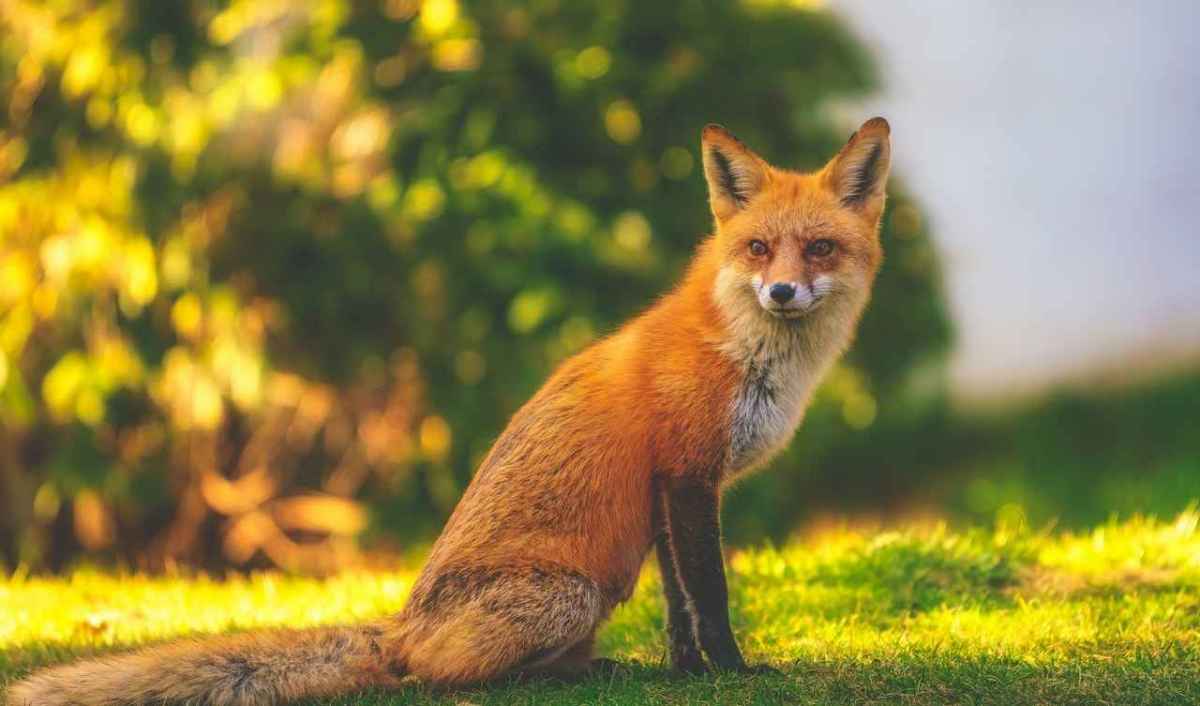
The red fox (Vulpes vulpes) is the most widespread terrestrial carnivore on Earth and the most common predator in Switzerland. It lives in forests, farmland, the Alps and even in the middle of cities such as Zurich. No other wild animal is so adaptable, and no other predator is killed as often in Switzerland.
Profile
- Family: Canids (Canidae)
- Size: Body 60 to 90 cm, bushy tail (brush) around 40 cm
- Weight: 5 to 8 kg
- Coat: reddish-brown, throat and belly pale, white tail tip
- Territory: 100 to 350 hectares in the Jura, around 30 hectares in Zurich
- Reproduction: Gestation 50 to 63 days, usually 4 to 6 cubs
- Life expectancy: up to 8 years; in heavily hunted areas, 95 per cent do not live beyond 4
- Status in Switzerland: not protected, hunted almost all year round
Fox or golden jackal?
- Fox: smaller, short legs, red fur, long bushy brush with a white tip, pointed black backs to the ears.
- Golden jackal: longer-legged, yellowish-grey fur, shorter tail with a dark tip. More in the profile of the Golden jackal.
- Wolf: much larger and heavier, grey fur, pale facial mask. More in the profile of the wolf.
What do foxes eat?
The fox is an opportunistic feeder. Its main prey is mice: its daily requirement amounts to 15 to 20 mice, and over the course of a year a single fox eats several thousand. It also eats earthworms, insects, fruit, berries and carrion. In towns and cities it also makes use of waste and food left outdoors.
Territory and family
Foxes mark their territory with urine and droppings and defend it against others of their kind. A pair often lives together with young from the previous year, which help with rearing the cubs. The cubs are born in the den in spring. This social structure regulates the population: if it is destroyed by kills, more vixens breed, litters become larger and foxes from the surrounding area move into the vacated territories.
Foxes in Switzerland
In 2025, according to Swiss Hunting Statistics 2025 19’208 foxes were shot. For 7’966 of them, the sex is recorded as “undetermined”. In addition, 6’022 foxes died in road traffic and 684 on the railways. That it also works without fox hunting is shown by the canton of Geneva, where there has been no recreational hunting since 1974 (Geneva and the hunting ban), the Swiss National Park and Luxembourg, where fox hunting has been banned since 2015 (Luxembourg Extends Fox Hunting Ban). All the facts, studies and demands can be found in the dossier “The Fox in Switzerland”. Anyone who wants to take action will find addresses and a template letter to the cantonal parliaments on the campaign page End fox hunting.
What research shows about fox hunting
In German hunting grounds, local kills did not reduce fox density at landscape level. An experiment with 273 camera-monitored artificial nests found that hunting changed neither fox presence nor the risk to ground-nesting birds (Kämmerle et al. 2019). Foxes quickly make up for losses by producing more offspring (Williams 2025). In France, an average of 383’299 foxes were killed per year from 2015 to 2022, with no measurable decline in reported damage. Against the fox tapeworm, deworming baits help, not kills (Comte et al. 2013). All studies with brief summaries can be found on our studies page Hunting Fact Check.
Frequently asked questions about the fox
Is the fox dangerous?
No. Foxes are shy and avoid contact with humans. Anyone who does not feed them, keeps rubbish securely closed and shuts chickens away safely at night will have no problems with them.
Does fox hunting regulate the population?
No. Over 30 years of wildlife biology research show that kills are compensated for by more offspring and immigration. In Geneva, in the National Park and in Luxembourg, there is no “fox explosion” without fox hunting.
Does fox hunting protect against the fox tapeworm?
No. In Luxembourg, the infection rate fell from around 40 to around 10 per cent after the hunting ban. What works is hygiene, deworming dogs and cats, and washing berries and vegetables.
What is earth hunting?
In Earth hunting, dogs are driven into fox and badger burrows. 64 per cent of the Swiss population are in favour of a ban.
How many foxes are killed in Switzerland?
In 2025 there were 19’208 kills, plus 6’706 traffic victims on roads and railways.
What does Wild beim Wild do for foxes?
We work to ensure that populations and their habitats are preserved and connected with one another. Natural corridors enable genetic exchange between individual populations. We do this by defending wild animals against unnecessary recreational hunting and poaching wherever possible.