The Beaver
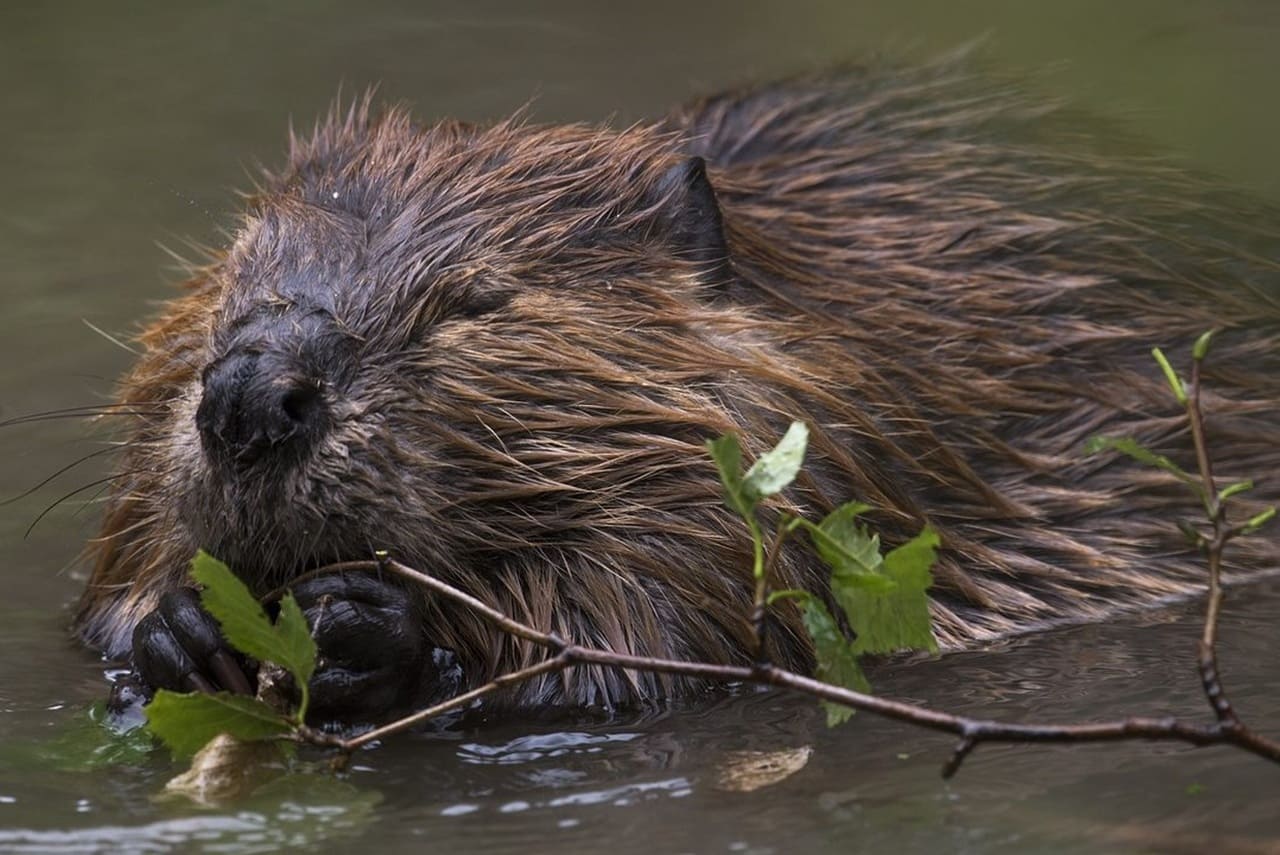
The beaver (Castoridae) is the second-largest living rodent.
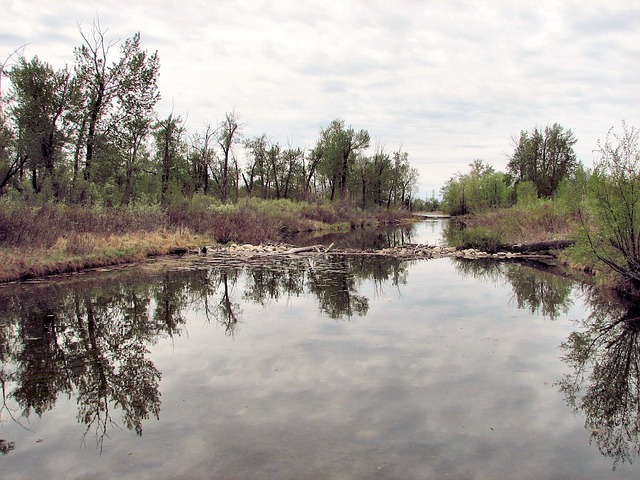
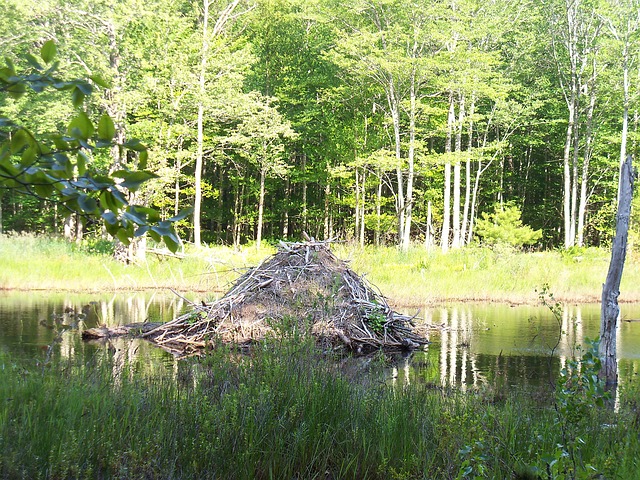
Beavers prefer freshwater lakes, ponds, rivers and streams near forests. These remarkable animals are one of the few species capable of reshaping their environment, adapting it to their needs through the construction of dams, canals and lodges. They always live near water. A shoreline strip no further than approximately 20 meters from the water is utilized. On the bank, they build their lodge from gnawed branches and twigs as well as mud, or – if diggable ground is available – a dwelling burrow. Generally, the entrance lies below the water surface. If the lodge becomes dry, it is abandoned, as otherwise predators would have access to it.
![Beaver with paddle tail Photo: Steve [CC BY-SA 2.0]](https://wildbeimwild.com/wp-content/uploads/2016/03/biber-mit-flosse.jpg)


Interesting facts:
- The beaver can reach up to 1.40 m in length and weigh 11–30 kg. Females are heavier than males. Both look very similar.
- Its brown fur is extremely dense with 23’000 hairs per square centimeter (human: up to 600 hairs per square centimeter), protecting against moisture and cooling. The pelt is regularly cleaned and maintained with an oily secretion, castoreum.
- The body is noticeably thicker at the back than at the front and stands on short legs.
- Beavers have an approximately 25 cm long and flat tail. It is used for swimming and communication.
- With its spindle-shaped body, a broad, flattened tail covered with leather-like skin and hairless, called a paddle, and webbed feet, the animal is perfectly adapted to life in water. The paddle serves as a rudder when diving as well as for temperature regulation and as a fat deposit.
- When diving, nose and ears are closed, allowing beavers to dive for up to 20 minutes.
- The large, orange-yellow incisors protrude far forward.
- Beavers are semi-aquatic animals, meaning they spend part of their lives in water and partly on land.
- The beaver eats aquatic plants and their roots as well as almost all riparian plants in its habitat. Besides reed stalks, herbaceous plants and grasses, it also consumes shoots, bark and chipped wood from soft woods like alders, willows, poplars. It fells shrubs and smaller trees with its incisors. Near agricultural areas, it also eats clover, corn, beets, grain or windfall fruit.
- It has excellent scenting and hearing abilities but poor eyesight. Beavers have transparent eyelids that function as goggles, allowing them to see underwater.
- Lynx, wolf, bear were formerly among the beaver's most important natural enemies. Today, danger comes most likely from stray dogs.
- Communication occurs through scent signals, sounds and tail slapping. The latter is a warning signal for other beavers, produced in case of danger by loud slapping of the "paddle" on the water surface.
- Beavers are monogamous and remain faithful to their chosen partner for life. From January to February, after courtship games in shallow water, mating takes place. The territory of a beaver family, consisting of the parent pair and two generations of young, encompasses 1 to 3 kilometers of watercourse depending on the quality of the biotope. Territory boundaries are marked with so-called castoreum, an oily secretion from a gland in the anal region, and defended against intruders. Beavers are thus territorial animals.
- In the beaver territory there are usually two to four (sometimes up to ten) lodges of various forms. If the bank slope is steep enough, the beaver digs a burrow and connects it with so-called beaver tubes. These can be feeding tubes, escape tubes and play tubes.
- Beavers are nocturnal animals. Beavers do not hibernate but enter a winter dormancy. Therefore, food must be provided even in winter.
- Between April and June, after a gestation period of around 107 days, the already relatively well-developed young are born. Beavers have offspring only once per year, between one and five, usually three young.
- The young are nursed for about two to three months but begin taking plant food independently just two weeks after birth.
- Beavers are known for their dam construction, with which they dam streams and create artificial ponds. This regulation provides beavers with a secure water level around their lodge. At the same time, aquatic plants grow in the pond, serving as food for the beaver. Directly in front of the lodge entrance, branches and twigs are cached by the beavers in autumn. When the pond surface freezes, the beaver can reach the stored branches under the ice and feed on the bark.
- Beavers live 16 to 20 years in the wild.
- Besides persecution for its meat, fur hunters were primarily responsible for a drastic decline – to the point of extinction – of the population in Switzerland. River channelization and floodplain forest removal also led to further population shrinkage. Currently, thanks to strict conservation measures in the 20th century, there are again about 2’000 specimens of this extremely useful rodent for fauna and flora diversity in Switzerland.
What does Wild beim Wild do to protect beavers?
We are committed to ensuring that populations and their habitats are preserved and connected to each other. Natural corridors enable genetic exchange between individual populations. Not only the protection of predators, but also of their prey animals is an essential component of our work. This is accomplished by defending wildlife from unnecessary hunting and poaching wherever possible.
Animal Portraits