The Raccoon
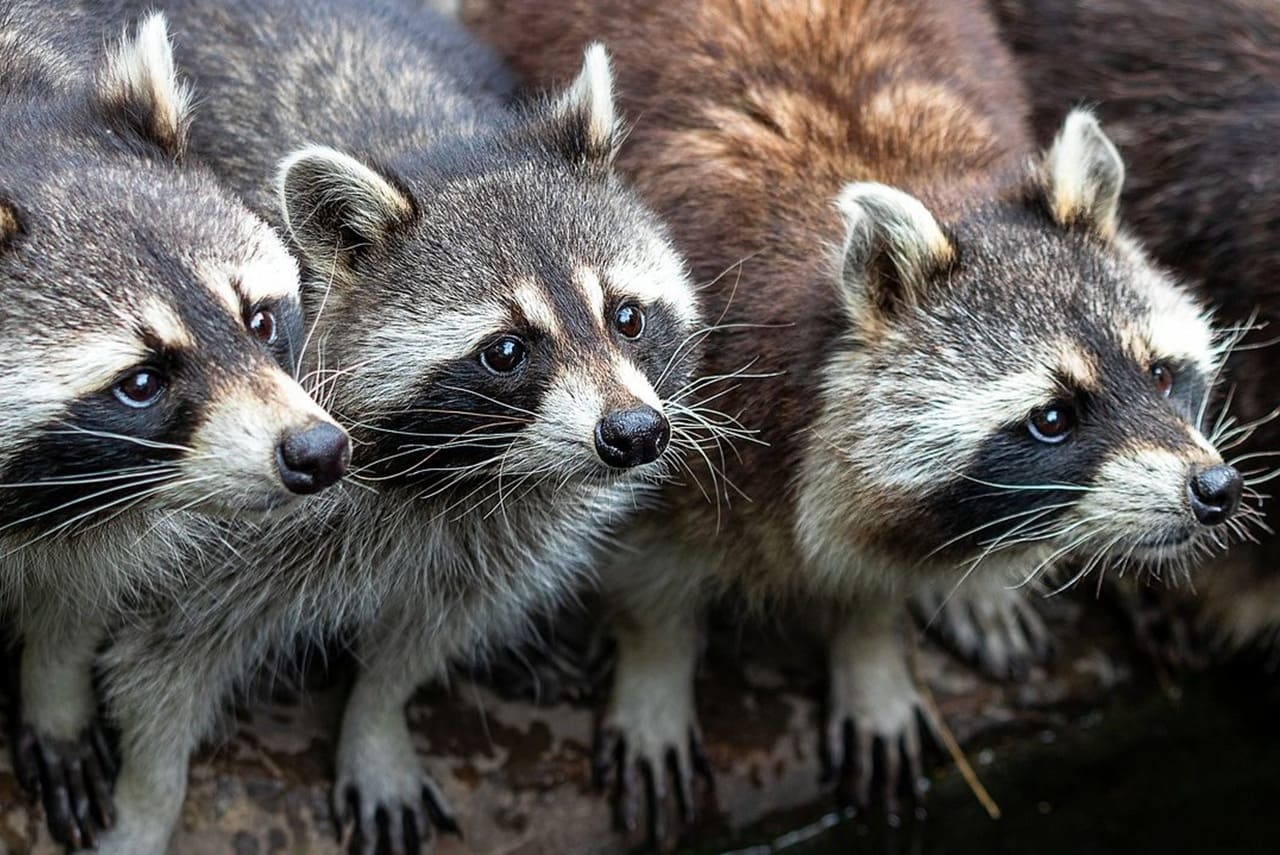
The raccoon (Procyon lotor) is a short-legged, omnivorous mammal from the family of small bears.
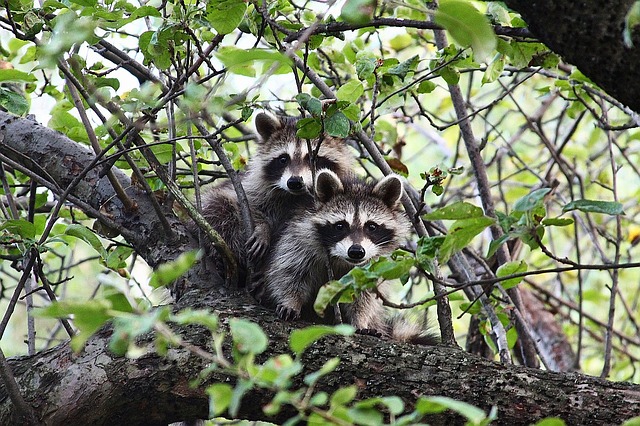
The raccoon lives in deciduous and mixed forests near water. It received its name because it searches tactilely in flowing waters under stones and other hiding places for crayfish or other prey animals. Visually, it appears as if it is washing its food. As a cultural follower, it also lives in suburbs and parks. Garbage dumps and camping sites are popular places for foraging. Resting, sleeping and nursery sites for the young are abandoned badger and fox dens, rock crevices, hollow trees, but also sheds, attics, lofts or abandoned cars.

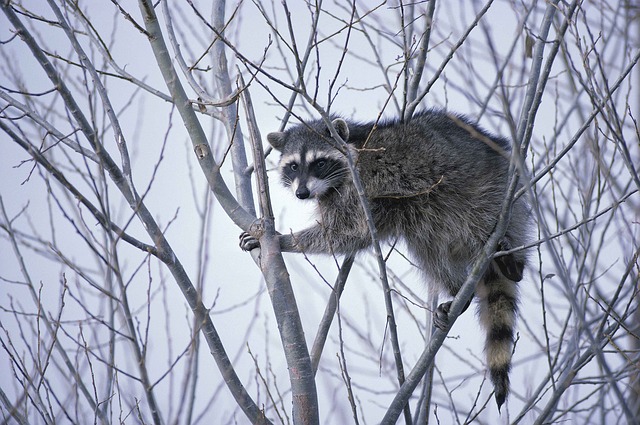
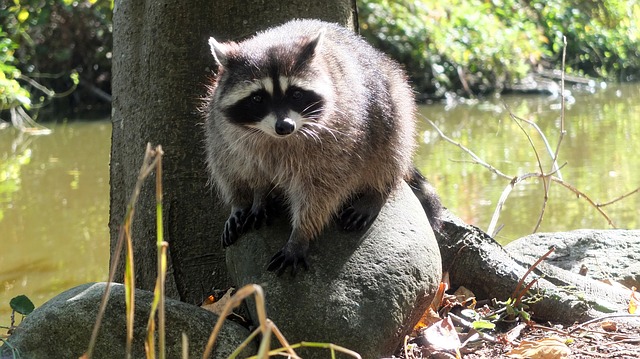

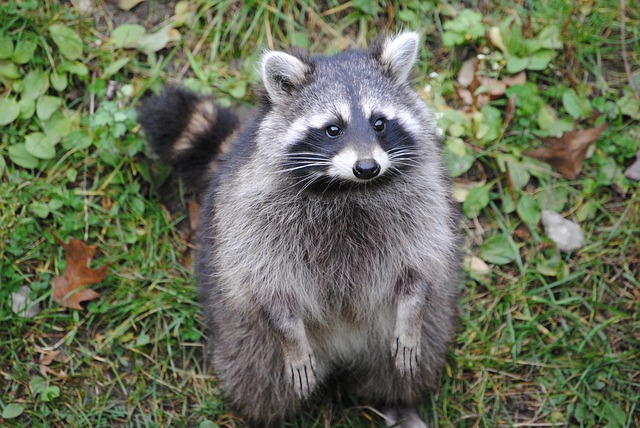

Interesting facts about raccoons:
- The raccoon measures between 41 and 71 centimeters long and weighs between 3.6 and 9.0 kg. In colder regions it can also be heavier.
- They have long-haired fur, predominantly yellowish-gray mixed with black. The dense undercoat, which makes up almost 90% of the total number of hairs, protects the animals from cold and consists of 2.0 to 3.0 centimeter long hairs.
- The face is characterized by a 'Zorro mask' around the eyes. The dark mask is supposed to reduce glare effects and thereby improve night vision.
- The slightly rounded ears are bordered by white fur.
- Their dentition consists of 40 teeth.
- Raccoons have a 20–30 cm long, ringed tail.
- Raccoons have human-like hands with five fingers, which they use for gathering food. They use them to open shells, doors and so much more.
- As omnivores they eat mainly plants, nuts, fish, birds, insects, fruits, berries, seeds, waste scraps and small mammals. They are natural pest controllers.
- The paw print resembles that of a plantigrade. The print of the hind paws has similarity to the footprint of a small child. They can stand on their hind legs and examine objects with their front paws.
- Due to short legs, they cannot run fast or jump far.
- Raccoons often place their food in water before eating it. They have a pronounced sense of touch and water enhances this effect. During this analytical palpation they receive precise information about what is being consumed. They have an excellent memory.
- Apart from orientation in the dark, the sense of smell is especially important for communication with conspecifics.
- Raccoons are able to perceive very quiet sounds, such as those caused by earthworms buried in the ground.
- Raccoons can swim and climb excellently. They can endure several hours in water.
- The raccoon is occasionally kept as a pet, especially in the USA.
- Raccoons do not hibernate. However, they spend the coldest season in their hideout.
- Raccoons produce various sounds. They can hiss, growl, whistle and purr.
- Raccoons are adaptable nocturnal animals.
- The natural enemies of young raccoons are lynx, eagle, eagle owl and fox.
- While the raccoon was formerly viewed as a loner, there is now evidence that it shows gender-specific social behavior. Related females often share a common territory; unrelated males, on the other hand, live together in loose small groups consisting of up to four animals.
- The mating season is between January and March. 2 months later, 3–4 young are born, still without facial mask. The mother is very protective and teaches the young, as soon as they emerge from hiding, what and how they can eat. In autumn they are trained and independent.
- The average life expectancy is a few years. In captivity up to 20 years.
- Hunting and traffic accidents are the two most common causes of death. As a neozoan, the raccoon may be hunted year-round without closed season in Switzerland, although it is not proven that it threatens native fauna. The FOEN writes: 'We do not want this non-native species and it can be shot'. Many cantons, however, have established closed seasons. It is not possible to permanently drive raccoons from an area that represents a well-suited habitat for them through intensive hunting. They simply increase their reproduction rate, like foxes do, up to a certain limit, or animals from surrounding areas migrate into the vacated territories. The costs to remove all raccoons even temporarily from a larger area usually exceed the costs of damage they cause by many times. Raccoons have been living in Swiss forests for around 35 years. They have appeared more frequently especially around Lake Geneva since 2003. But they are also on discovery tours in the Swiss Midlands, in the Jura and in the Pre-Alps.
What does Wild beim Wild do to protect raccoons?
We are committed to ensuring that populations and their habitats are preserved and connected to each other. Natural corridors enable genetic exchange between individual populations. Not only the protection of predators, but also of their prey animals is an essential component of our work. This happens by defending wildlife from unnecessary hunting and poaching wherever possible.
- Keeping raccoons away in an animal-friendly manner
- Raccoons also have a right to life
- Dealing with 'invasive' species – a critical analysis from biological and legal perspectives
- Neozoa
- Basel wants to kill raccoons
- Raccoons are not a threat
- Open letter to Katrin Schneeberger from FOEN
- Removal of the raccoon from the lists of so-called invasive species
- Facts instead of hunters' tales about raccoons
- Office for Hunting and Nonsense in Aargau canton wants to shoot raccoons
Animal Portraits