The Wolf
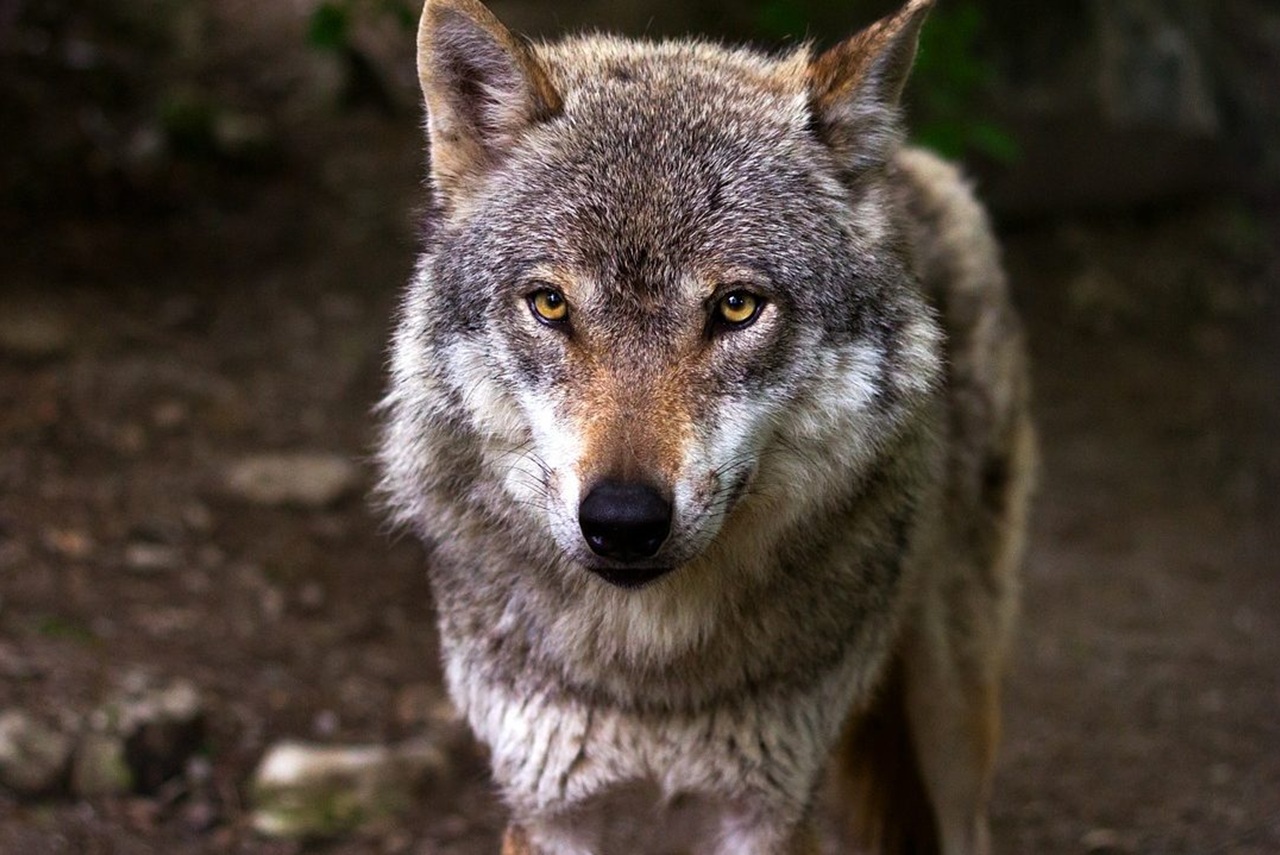
The shy wolf (Canis lupus) is the largest member of the canine family.
There are 2 species of wolves: the gray wolf and the red wolf. Gray wolves have 38 different subspecies. The red wolf is smaller, with long legs and shorter fur than the gray wolf. There are very few red wolves left in the wild. Generally, the adaptable wolf resembles a large domestic dog, although the torso is longer compared to similarly built domestic dogs and the chest is higher but narrower. Our domestic dogs are domesticated forms of the wolf. In Switzerland, wolves from the Italian population in the Abruzzi currently live, which belong to the subspecies Canis lupus lupus.


Interesting facts about wolves:
- Wolves come in different sizes. In Europe, they can weigh between 25 and 70 kg and have a shoulder height of around 60 to 80 cm.
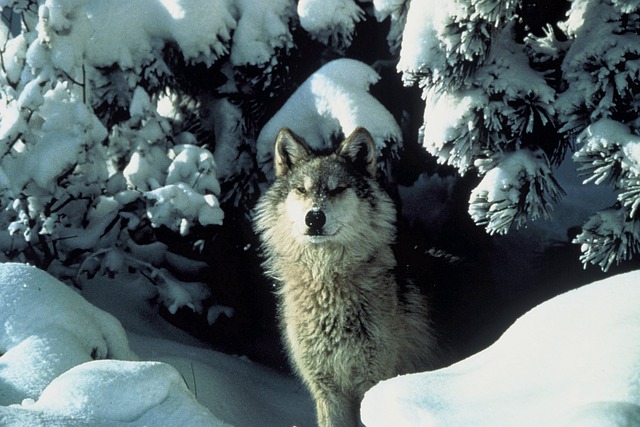
- Wolves have white, cream-colored, yellowish, reddish, brown, gray and black coat coloring. Usually dark hairs predominate on the back and tail. Belly, legs and muzzle are usually colored significantly lighter.
- They have excellent visual acuity. They can not only distinguish colors but are also extremely sensitive to movement.
- With their sense of smell they can smell 100 times better than humans and usually find their prey this way, even against the wind.
- They have excellent hearing over great distances.
- Their teeth consist of 42 sharp teeth, with very powerful jaws.
- Wolves can run 50–60 km/h fast and they cover around 20 to 125 km daily while foraging.
- They can consume 10 kg of meat per day, which is about the same as 100 hamburgers for humans.
- They live in family groups with pronounced social structure, although individual wolves are also encountered in nature. A pack can be more than 10 animals large and is led by an alpha female or male. The leading animals decide where to hunt or where the young are raised.
- Wolves place their hind paws in the prints of their front paws – they track –, in the pack they often run one behind the other and place their paws in the prints of the wolf ahead. This often creates the impression that one is following the trail of a single wolf, until the track suddenly splits into several individual trails. The course of a wolf trail is also often linear and goal-oriented over hundreds of meters, while wandering around and deviating is typical for dogs.
- During their wanderings through the territory, wolves mark with urine about every 350 m with raised leg.
- Vocalization is a typical characteristic in the pack and serves communication. They warn other packs when they intrude into foreign territory, or to drive away individual wolves. A wolf howls only for a few seconds. But it can sound longer when several wolves howl together.
- Wolves also communicate with facial expressions, body posture and scent marks.
- Wolves mainly hunt ungulates and are indispensable for a healthy ecosystem. Since hunting success often fails, they also use favorable opportunities, like unprotected sheep herds, to avoid starvation. But this also leads to fleeing animals repeatedly triggering the wolf's killing instinct. In a fenced sheep pasture, for example, it can therefore kill more animals than it can eat.
- Female wolves become fertile only once a year, they are monoestrous, domestic dogs up to twice, they are diestrous. Male wolves are only ready to mate during the breeding season, and only at this time do they produce viable sperm. Male domestic dogs are basically ready and able to mate at any time. Usually only the alpha female has young. Occasionally another female also gives birth, which can lead to temporary or permanent splitting of the pack.
- Mating occurs in the months January to March. Pregnancy lasts around 63 days before 3–6 cubs see the light of day.
- Before the birth of the young, an earth den is normally dug or taken over from other mammals and enlarged. The dens have one or two entrances. From these a passage leads into the large chamber. About three weeks before birth, the pregnant female usually no longer leaves the den area.
- The freshly born, still blind and deaf cubs weigh 300 to 500 g and have fine, dark fur. The eyes open after 11 to 15 days, the cubs can now also walk, growl and chew.
- All members of a pack care for the young. When the hunters return to the pack, they often regurgitate their swallowed food to feed the young.
- The average life expectancy of wolves is 10–13 years. In captivity up to 17 years.
- Hunting, traffic accidents, diseases, poisoning and injuries are the most common causes of death. In the Bern Convention, 45 states have agreed on the conservation and protection of wild plants and animals and their habitats. The wolf is listed in Annex II of the Convention, which Switzerland has also ratified. In Switzerland, the population has been languishing at a low level (25–30) for years compared to other countries. Many are only in transit. The first wolves reached the Swiss Alps again in 1995, after they had been exterminated towards the end of the 19th century. Other wildlife populations were also close to extinction at this time due to overhunting. The wolves thus increasingly turned to livestock, which intensified the conflict with humans.
What does Wild beim Wild do to protect wolves?
We are committed to ensuring that populations and their habitats are preserved and connected with each other. Natural corridors enable genetic exchange between individual populations. Not only the protection of predators, but also of their prey is an essential part of our work. This happens by defending wildlife from unnecessary hunting and poaching wherever possible.
Animal Portraits