The Wildcat
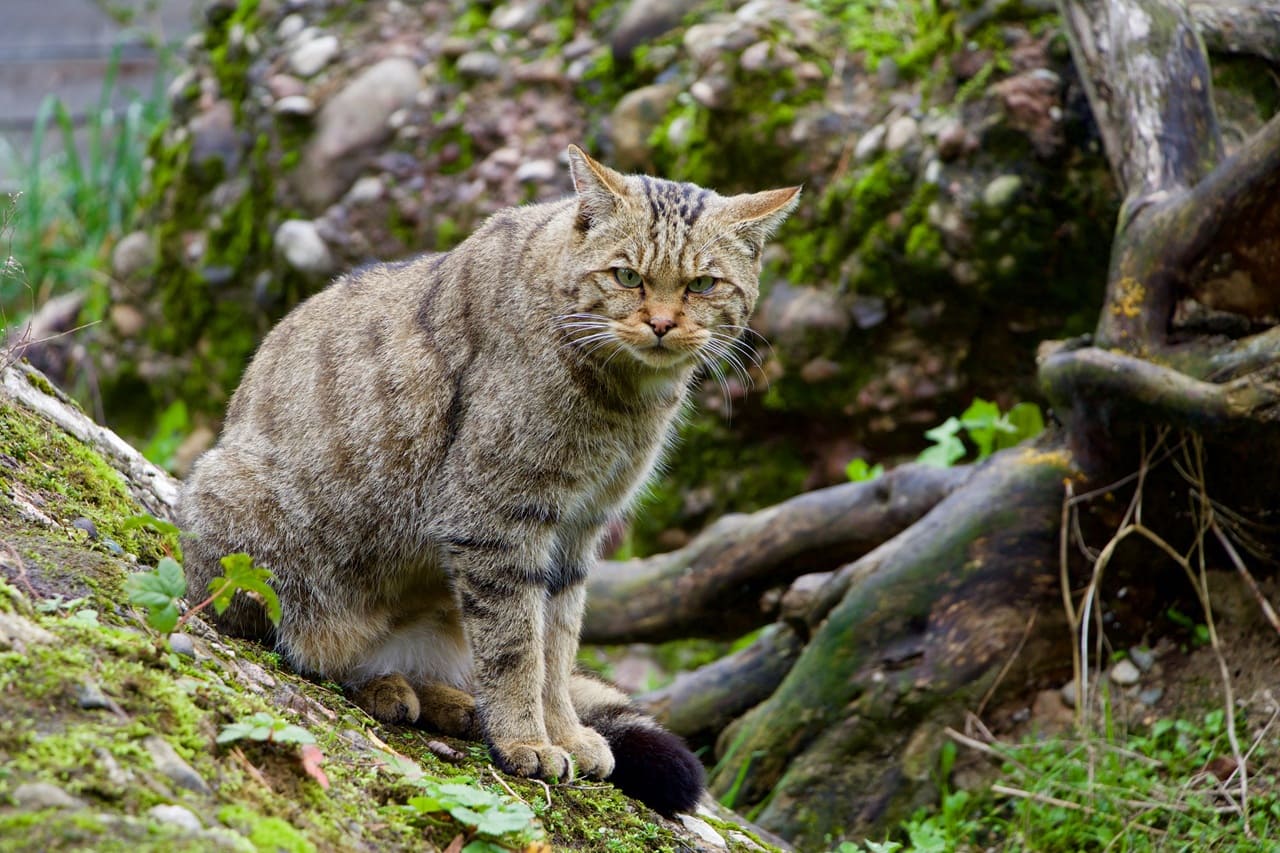
The wildcat (Felis silvestris) is a species from the cat family that is native to Europe (compare European wildcat), Africa, Western Asia, Central Asia and India in various subspecies.
Since it belongs to the most widely distributed cats, it has been listed as Least Concern in the IUCN Red List since 2002. The sand cat (African wildcat) is the ancestral form of the domestic cat.
The natural distribution range of this wild animal extends from Scotland and Western Europe through Central and Eastern Europe to Central Asia and western India. It also inhabits large parts of Africa with the exception of the Central African tropical rainforest regions.
The European wildcat or forest cat (Felis silvestris silvestris) is distributed in Europe, some Mediterranean islands, Anatolia, as well as in the Caucasus and North Caucasus and is characterized primarily by its bushy tail, which ends in a broad, blunt curve. At the tip of the tail there are often three black 'rings'. The fur is dense, the stripe pattern quite conspicuous, but also often faded.




Interesting Facts About the Wildcat:
- Very highly developed senses, but only moderate scenting ability.
- Primarily crepuscular and nocturnal.
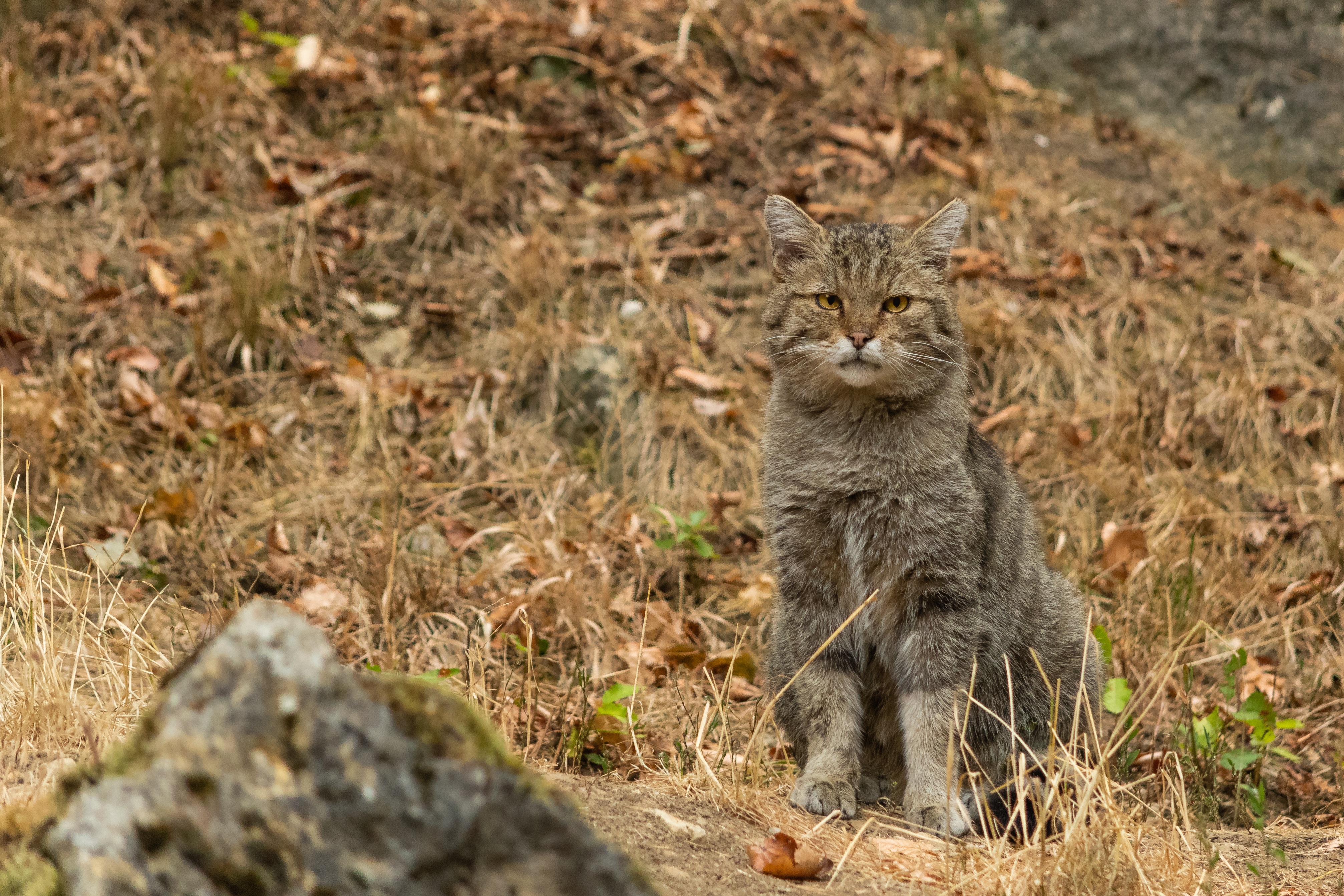
- Body structure: appears massive due to the dense, long-haired coat
- Fur laterally 'faded', gray-brownish, often with white spots on throat, chest and belly; always with dark back stripe (so-called eel stripe)
- Tail bushy, with blunt black end, often with 2–3 distinct black rings
- Territory of the female can be up to 3,500 ha, that of the male up to 5,500 ha.
- Typical forest dweller and territorial loner. They mark their territories with urine sprays, feces, scratching trees or scent markings.
- Mating is similar to domestic cats. At night, the love calls especially of the male can be heard.
- After a gestation period of 63 to 69 days, the cat gives birth to her usually 2–5 young in April/May in brush piles, earth burrows, rock niches and similar hiding places. The young are blind for 9 to 11 days.
- The young are nursed for up to three months. At 2 months, the young cats accompany their mother on hunts. The male presumably does not care for the young.
- From autumn onwards, the young are independent and seek their own territory.
- Sexually mature at 10 months and female animals can give birth to young themselves.
- Natural enemies are lynx and wolf, for young wildcats also eagle owl, golden eagle, goshawk, fox and marten.
- The wildcat prefers not too high-altitude south-facing slopes with much undergrowth and rocky areas that offer hiding places, and extensive open areas as feeding grounds.
- Lives throughout Central Europe, except in the Alps.
- Prey primarily small rodents, but occasionally also birds, mammals up to hare size, insects and amphibians.
- Kills its prey by silently stalking through the undergrowth and freezing motionless at the slightest sound, then bringing down the victim with several mighty leaps.
- Carrion only in times of severe hardship.
- As soon as danger is imminent, the female moves her young to another hiding place.
- Maximum age in the wild 12 to 14 years, in captivity up to 21 years.
- High losses occur due to traffic accidents and traps set by recreational hunters.
- Formerly found almost everywhere in Central Europe, but nearly exterminated through intensive hunting.

What does Wild beim Wild do to protect the wildcat?
We are committed to ensuring that populations and their habitats are preserved and connected with each other. Natural corridors enable genetic exchange between individual populations. Not only the protection of predators, but also of their prey animals is an essential component of our work. This is achieved by defending wild animals from unnecessary hunting and poaching wherever possible.
Animal Portraits