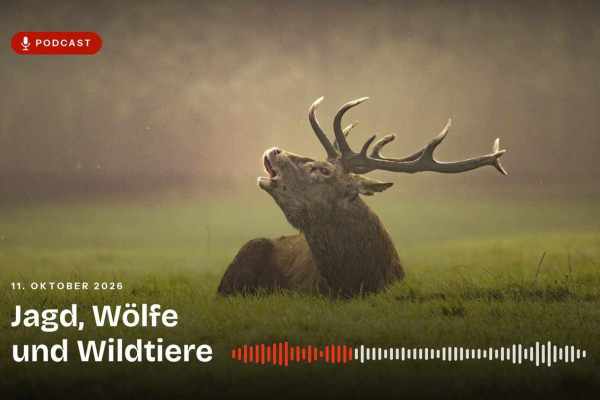
Podcast episode: wolves, hunting and meat
What a study on 'bold' wolves shows, why Brandenburg is nevertheless allowing faster shooting, who gets a say in driven hunts and animal welfare complaints, and what killing does to those who kill.

Podcast episode: wolves, hunting and meat
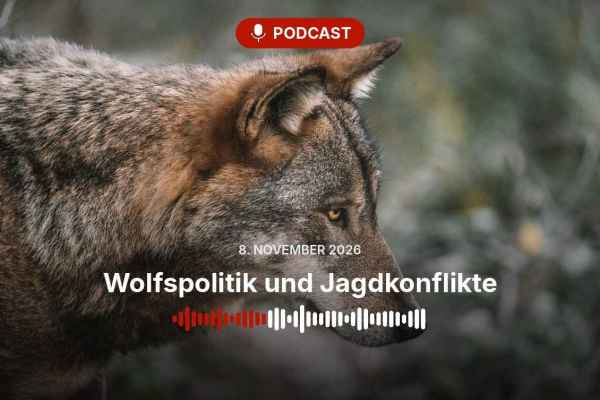
This edition of 'Wild beim Wild' covers a European study on 'bold' wolves, Brandenburg's new wolf plan, driven hunts with no central overview in Basel-Landschaft, a court ruling from Lugano, and the question of what killing non-human animals does to the people who declare it a hobby.
Wolf: what 'bold' really means
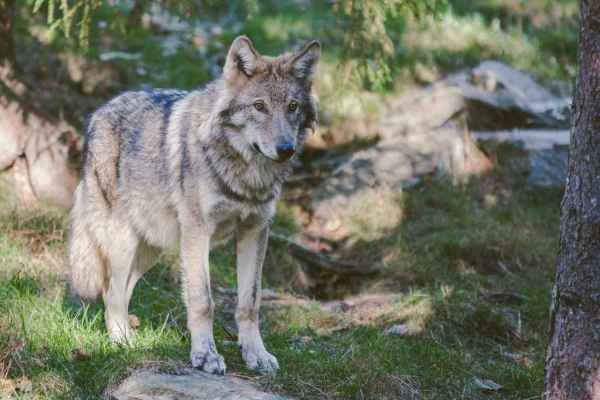
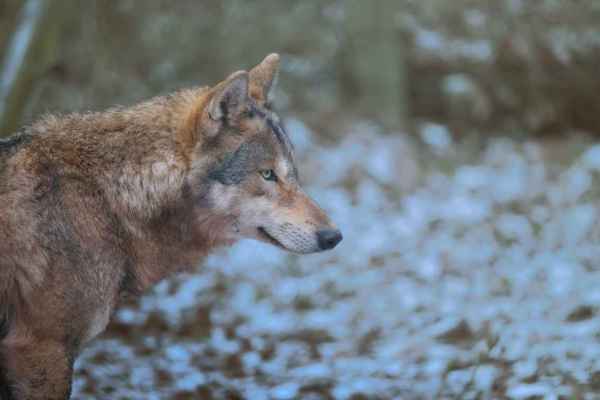
An analysis in the journal 'Biological Conservation' documents, for the years 2012 to 2022, 21 cases of highly habituated or 'bold' wolves from six countries, an average of 1.9 per year. A wolf is only considered bold if it repeatedly approaches people to within 30 metres or less; a single sighting at the edge of a village is not enough. Where the age was known, 14 of 16 cases involved young animals. In the preliminary report covering 20 cases, food sources played a role in twelve and dogs in eleven. In Obercrinitz in Saxony, the encounters stopped after a dog owner actively deterred the young female wolf. In Saas-Almagell, by contrast, a wolf was shot on 6 November half an hour after being sighted in a residential area, on the basis of an existing permit to remove a pack, not on documented problem behaviour. How the canton of Aargau responded to a wolf record is shown in the article Wolf sighted in Biberstein AG.
Brandenburg is taking the opposite path. The new wolf management plan provides for up to ten kills in the 2026/27 hunting year. After a single confirmed attack on protected livestock, recreational hunters may kill a wolf within a radius of 1.5 kilometres for a maximum of eight weeks. Genetic proof is not required, and it does not have to be the wolf that caused the damage. Yet the number of attacks on livestock fell from 358 to 178 between 2023 and 2025. All kills of the Swiss season are recorded by the wolf counter.
Driven hunts and animal welfare: who gets a say
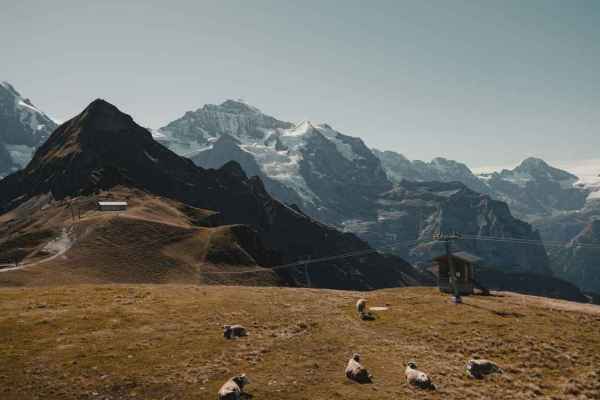
A reader from the canton of Basel-Landschaft has several times found herself and her dog in the middle of an ongoing driven hunt and would like a central overview of hunting days. JagdBaselland considers such a map “neither expedient nor practicable”, while JagdSchweiz refers the matter to the cantons. For alpine pastures with livestock guardian dogs, the federal government has long maintained a map. Basel-Landschaft law only requires signage at the main access points: anyone arriving via a narrow path or from a neighbouring municipality may not pass a single warning sign. The same question is pending in the canton of Zurich, where the administration does not intend to decide on the driven hunt dates until December. What is known about injuries can be found in the dossier Hunting Accidents in Switzerland.
In Ticino, IG Wild beim Wild has filed 14 criminal complaints since October 2025 over inadequately protected livestock. On 6 November, the Corte dei reclami penali in Lugano dismissed the appeal: no standing as a private plaintiff, no access to the files on that basis, and CHF 700 in procedural costs to be borne by the founder. The court did not rule on the alleged animal welfare violations themselves. From January to October 2026, the canton attributes 131 killed livestock animals to the wolf, only six of which were adequately protected, while in 48 cases it states itself that the protection was inadequate. To this day, IG Wild beim Wild has not been informed of the outcome of the investigations in any single case.
Psyche and ethics: what killing does to those who kill
The actor Roger Moore called “hunting as a sport” a sickness. The article Is recreational hunting a disease? goes through the studies and their limits: no diagnosis can be derived from them. In Ursula Grohs's dissertation, recreational hunters showed lower empathy scores towards non-human animals, more pronounced among those with longer hunting experience. Whether recreational hunting dulls feeling, or whether people with lower animal empathy are more likely to hunt, and to hunt for longer, cannot be decided on this basis. In Switzerland, around 30’000 private individuals legally carry hunting weapons, yet an independent study of their personality profiles and risks is lacking. The petition “No firearm without a psychological aptitude test” can be signed.
The ethical side is examined in the article “You are what you eat”. From Ovid's Pythagoras to Plutarch's treatise “On the Eating of Flesh” to Tolstoy's essay “The First Step”, one thought runs through: the killing of non-human animals appears not as a harmless way of obtaining food, but as training in callousness. The recreational hunter does not leave the killing to a slaughterhouse; he carries it out himself, voluntarily and in his leisure time, without depending on it for his diet. The background is set out in the dossier The psychology of hunting.
Wolves shot after a sighting, walkers caught up in driven hunts because nobody keeps an overview, and criminal complaints whose outcome nobody learns: this week's topics are connected. The question of the episode is: Who acts, who is liable, and whose interests does the law protect?
More on the subject of recreational hunting: The scientific evidence is presented in the overview Studies on the Effects of Recreational Hunting.
The position of IG Wild beim Wild: IG Wild beim Wild rejects recreational hunting. Our model is the canton of Geneva, which has managed without recreational hunting since 1974: without hunting seasons, without hunting dogs, without driven hunts, without high seats, without the animal cruelty and crime that go hand in hand with hunting season elsewhere. What has worked there for over fifty years disproves every position paper by JagdSchweiz. An association that bases its policy on claims it refutes in its own documents is not a professional organisation, but a factory for misinformation.
Wild animals need a voice
Once a week: research, petitions and background information on recreational hunting. Free of charge and can be unsubscribed from at any time.
Support our work
With your donation you help protect animals and give their voice a hearing.
Donate now →