14 criminal complaints, over 100 dead animals: Ticino court denies party status
The Corte dei reclami penali dismisses the appeal of the IG Wild beim Wild and imposes 700 francs in costs on its founder. It has not ruled on the reported cases. Those who must act under the law are the keepers, the veterinary office, the public prosecutor, the canton and the federal government.
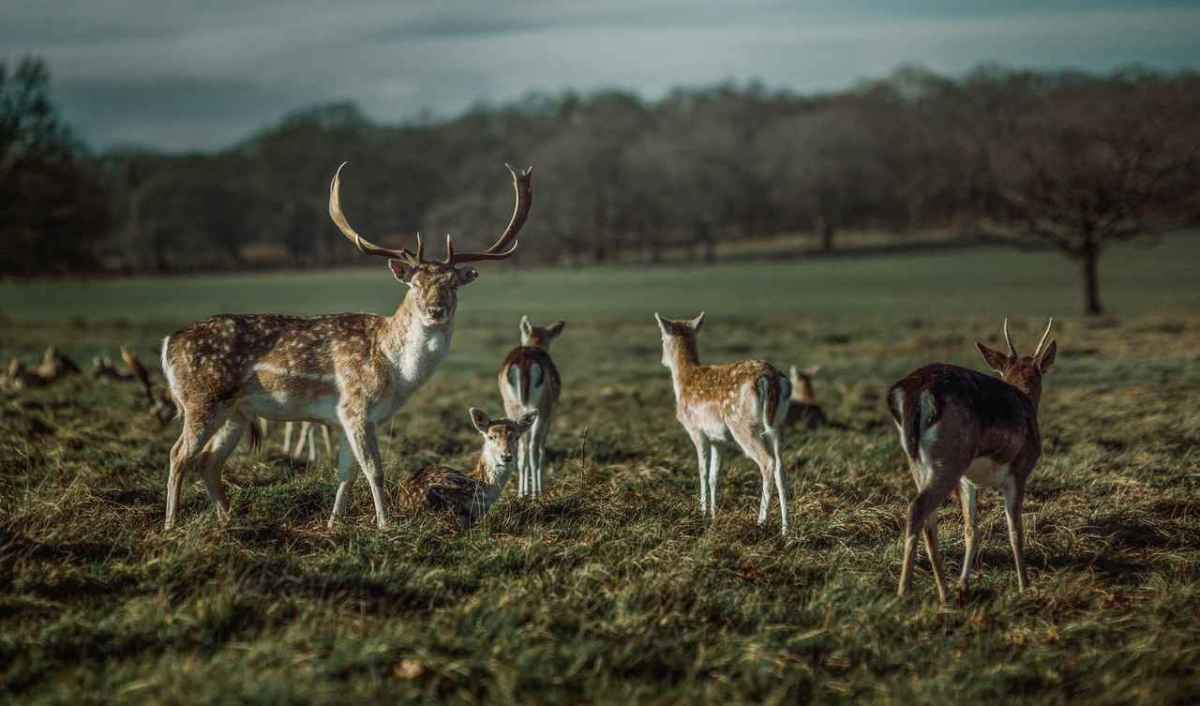
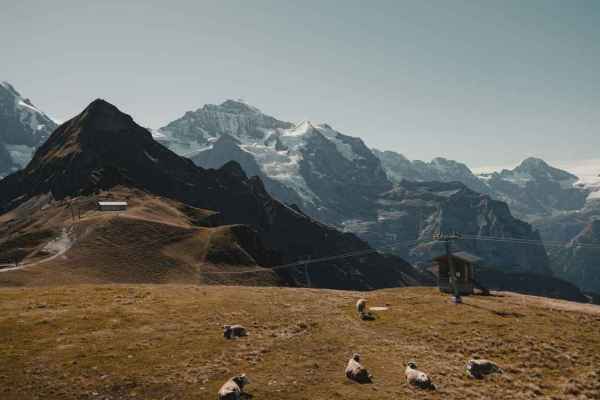
Photo: Zoltan Tasi / Unsplash
«No fence, no herder»
According to its own documentation, the IG Wild beim Wild has filed 14 criminal complaints in Ticino since October 2025. They concern cases involving a total of over 100 killed non-human animals, which in its view died because their keepers failed to protect them. On 6 November 2026, the Corte dei reclami penali in Lugano dismissed the appeal of the IG Wild beim Wild and its founder. The court denies that either suffered a direct infringement of their own rights. As a result, they receive neither private plaintiff status nor the access to the case files that would flow from it. The court did not rule on the reported animal welfare violations themselves. It has imposed the procedural costs of 700 francs on the founder of the IG Wild beim Wild.
What it was about
The starting point is the first criminal complaint filed by the IG Wild beim Wild in Ticino. In the night of 16 to 17 October 2025, in Bironico, eleven fallow deer were killed, allegedly by a wolf. On 22 October 2025, the IG Wild beim Wild reported the keeper for inadequate protection of the fallow deer, and also reported the cantonal veterinary office over the permit it had granted. The public prosecutor registered the complaint as proceedings for animal cruelty and violation of the Animal Welfare Act (Art. 26 and 28 TSchG).
By June 2026, six further complaints followed concerning unprotected sheep and goats. On 3 June 2026, the IG Wild beim Wild and its founder, as private plaintiffs, requested access to the files of all proceedings arising from their complaints. On 11 June the public prosecutor refused: the IG Wild beim Wild was not directly harmed and therefore not a party. The complaint was taking its intended course, the police investigations were still ongoing. On 18 June the IG Wild beim Wild and its founder lodged an appeal against this.
The background is the statistics itself. From January to October 2026, it attributes 131 killed livestock animals to the wolf. Only six of these were adequately protected. For 48 animals, the canton explicitly states that the protection was insufficient. We set out these figures in the article «Wolf kills in Ticino: Only 6 of 131 animals were protected».
What the court decided
The sole subject of the decision was whether the IG Wild beim Wild and its founder are entitled to party status and access to the files. Whether the fallow deer were sufficiently protected and whether the public prosecutor is investigating adequately was not examined by the court. It relies on the Criminal Procedure Code and the case law of the Federal Supreme Court. The key points of the ten-page decision:
- Only a person who is directly and personally harmed in their own rights by the offence is an injured party (Art. 115 CrimPC). The appellants were not the owners of the killed fallow deer and were not otherwise personally affected.
- According to the court, the penal provisions of the Animal Welfare Act do not protect personal rights, but the dignity and well-being of the animals. The appellants are obviously not the bearers of these legal interests.
- The IG Wild beim Wild and its founder are mere complainants. As such, under Art. 301 CrimPC, they only have the right to be informed whether proceedings have been opened and how they are concluded. They have no further procedural rights.
- The public prosecutor exercises the state's right to prosecute.
- Under Art. 104 para. 2 CrimPC, the Confederation and the cantons may grant other authorities party rights to safeguard public interests. The term authority is to be interpreted narrowly. The IG Wild beim Wild does not meet the requirements and did not invoke this provision either.
- The language of the proceedings is Italian. The request for correspondence in German was unsuccessful.
The court leaves one avenue open: IG Wild beim Wild and its founder could request access to the files as third parties if they can demonstrate a scientific or other legitimate interest worthy of protection and no overriding interests stand in the way (Art. 101 para. 3 CrimPC). Such access has not, however, been granted. Formally, the court's decision concerns the Bironico proceedings. According to the public prosecutor's statement of 30 June 2026, the contested order applies to all proceedings in which IG Wild beim Wild is the complainant. The decision can be appealed to the Federal Supreme Court within 30 days of service.
What the court does not address
The decision does not expressly deal with two points from the proceedings.
First, the interview. According to IG Wild beim Wild, its founder was summoned by telephone to the Biasca police station and questioned there about three reported cases, including Bironico. In a supplementary submission of 26 June 2026, IG Wild beim Wild argued that this approach contradicted the subsequent refusal of party status, and requested that the interview record be added to the file. The decision does not expressly address this argument. It merely notes that the court took note of the further submissions.
Second, the state of the investigation. In its statement of 30 June 2026, the public prosecutor wrote that a request for access to the files as a third party could only be considered once the judicial police report was available. At present, no accused persons or other parties had yet been identified («non essendo al momento ancora identificati imputati e/o altre parti»), so such a request was premature. That was more than eight months after the first report. The decision does not reproduce this statement. It mentions only the public prosecutor's declaration of 11 June that the police investigations were still ongoing. To date, IG Wild beim Wild has not been informed of any outcome in any of the reported cases.
Who is now obliged to act
The court has clarified who may not have a say. Who must act is laid down in law. The duties are clearly allocated:
- The keepers. Anyone who keeps or looks after animals is responsible for their welfare (Art. 6 AWA). This also applies on pasture and on the alp.
- The cantonal veterinary office. Enforcement of the Animal Welfare Act is a matter for the cantons (Art. 32 TSchG). If the competent authority finds that animals are being neglected or kept in wholly unsuitable conditions, it must intervene without delay. If it finds criminal offences, it must in principle file a criminal complaint itself. Only in minor cases may it refrain from doing so (Art. 24 TSchG).
- The public prosecutor. Animal cruelty is prosecuted ex officio. The criminal authorities are obliged to open and conduct proceedings whenever they learn of criminal offences (Art. 7 StPO).
- The Council of State and the competent department. They supervise the veterinary office. The public prosecutor itself points to this in its statement: any review of the veterinary office's activities is a matter for the competent department.
- The Confederation. Overall supervision of the cantons' enforcement of the Animal Welfare Act lies with the Federal Department of Home Affairs (Art. 40 TSchG).
- The Grand Council. It can demand enforcement politically. And it could grant a cantonal authority party rights in animal welfare criminal proceedings, as federal law permits.
In the Bironico case, there is the added problem that the authority responsible for enforcing animal welfare is itself the subject of a complaint. How the veterinary office deals with unprotected herds is set out in the article “Ticino veterinary office looks away, animals die”.
What steps IG Wild beim Wild is preparing
IG Wild beim Wild is not leaving matters at the ruling. It is preparing submissions to those bodies that the law holds responsible:
- Request to the public prosecutor. IG Wild beim Wild and its founder are requesting access to the files as third parties, the record of the hearing in Biasca, and information on the status of each set of proceedings. The court itself named this route.
- Report to the cantonal veterinary office. IG Wild beim Wild is reporting to the enforcement authority those cases that the canton itself records as insufficiently protected, and wants to know what inquiries and measures followed. A copy goes to the competent department.
- Supervisory complaint on enforcement. It is addressed to the Federal Department of Home Affairs, which has overall supervision of the enforcement of the Animal Welfare Act. The basis is the canton's own statistics.
- Complaint to the judicial supervisory authority. IG Wild beim Wild is considering a submission to the Consiglio della magistratura, which supervises the Ticino magistrates. Its subject would be the length of the proceedings.
- Further complaints. Every new documented case will be reported.
Whether IG Wild beim Wild will additionally appeal the decision to the Federal Supreme Court remains open. We will report on the authorities' responses.
A gap with a history
The decision from Lugano applies the law as it stands. In cases of violations of the Animal Welfare Act, the keeper is often the accused. Anyone who reports a violation without being directly affected in their own rights does not acquire the status of private plaintiff merely by filing the report, and cannot challenge a discontinuation of proceedings by means of legal remedies. Party rights on behalf of the animals concerned exist only where a canton has conferred them on an authority.
This gap has long been known. From the early 1990s until the end of 2010, the canton of Zurich had an animal advocate with party rights in criminal proceedings; thereafter the veterinary office took over this task. A federal popular initiative demanding such animal welfare advocates in all cantons was rejected on 7 March 2010 with 70.5 per cent voting No, and in every canton. The canton of Bern had granted party rights to the umbrella organisation of Bernese animal welfare organisations. The Federal Supreme Court declared this contrary to federal law on 14 June 2018, because the umbrella organisation was not an authority within the meaning of Art. 104 para. 2 of the Criminal Procedure Code (BGE 144 IV 240). The Ticino court also relies on this ruling.
Comment: Whoever reports pays
Six out of 131. That is how many livestock killed in Ticino this year were adequately protected, according to the canton's figures. In 48 cases the canton itself states that the protection was insufficient. These findings demand an answer: Which protective measures were reasonable? Were keepers' duties breached? And what consequences have the responsible authorities drawn from this? IG Wild beim Wild is not aware of a single result of such inquiries.
IG Wild beim Wild has done what remains open to citizens in this situation. It documented and reported, 14 times in a little over a year. When it and its founder had the refusal of party status and access to the files reviewed in court, their appeal was dismissed. The costs of 700 francs must be borne by the founder personally. For the appeal proceedings he was party enough to bear the costs. In the criminal proceedings themselves he is not. Whoever reports the grievance and asks questions pays. Whether the reports had any consequences for those responsible for protecting the animals is not known.
The court is not to blame for this; it applies the law. But the ruling shifts the question to where it belongs. If those who file complaints may not be parties, then those who are officially responsible must deliver. The veterinary office must step in when sheep and goats die unprotected at the same place year after year. The public prosecutor must investigate and decide. The department and the federal government must take a close look when enforcement fails to materialise. Did the public prosecutor at least forward the reports to the department or the veterinary office? That, too, is not known.
As long as nobody acts, others pay: the non-human animals that die unprotected, and the wolves that are shot for it. In the Ticino Grand Council, meanwhile, a motion demands that kills be made possible after the very first attack. Further articles can be found in the section animal rights.
More on the subject of recreational hunting: The scientific evidence is presented in the overview Studies on the Effects of Recreational Hunting.
The position of IG Wild beim Wild: IG Wild beim Wild rejects recreational hunting. Our model is the canton of Geneva, which has managed without recreational hunting since 1974: without hunting seasons, without hunting dogs, without driven hunts, without high seats, without the animal cruelty and crime that go hand in hand with hunting season elsewhere. What has worked there for over fifty years disproves every position paper by JagdSchweiz. An association that bases its policy on claims it refutes in its own documents is not a professional organisation, but a factory for misinformation.
Wild animals need a voice
Once a week: research, petitions and background information on recreational hunting. Free of charge and can be unsubscribed from at any time.

All articles are written by IG Wild beim Wild as well as by external co-authors. Research, structuring and editorial processes may be supported by AI-assisted tools.
Support our work
With your donation you help protect animals and give their voice a hearing.
Donate now →