Grisons: 344 lynx records, a bear and the first golden jackals
The Quarterly Report on Large Carnivores 3/2026 reveals a whole guild of predators that hardly anyone in the canton talks about, because everyone only talks about the wolf.
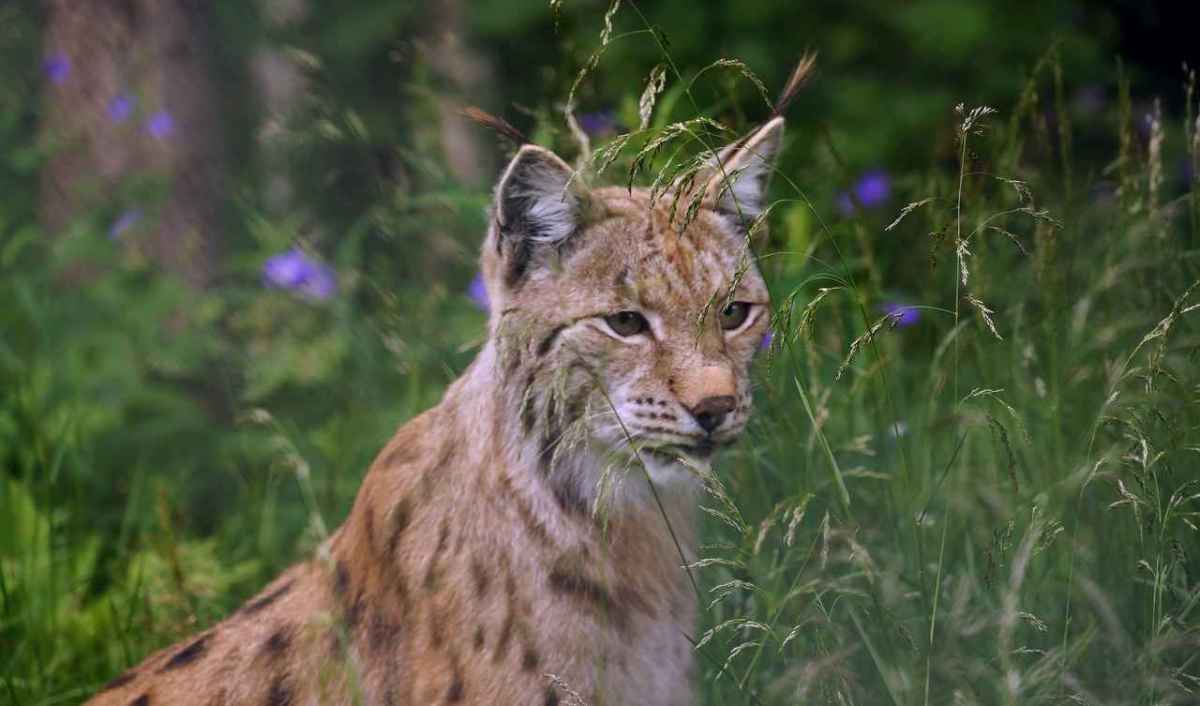
Lynx in a summer forest. For the third quarter of 2026, Grisons reports 344 confirmed lynx records. Stock image: Eirik Olsen / Unsplash
«Homecoming»
On 28 October 2026, the Grisons Office for Hunting and Fisheries published the “Quarterly Report on Large Predators” 3/2026: alongside 19 wolf packs, it records 344 confirmed lynx records for July to September, 34 bear records including the genetically identified bear M104, and four indications of golden jackals.
What the report says about the wolf
As of 30 September, the office puts the wolf population “arithmetically” at 16.5 packs: 14 packs live exclusively in the canton, five cross-border packs each count as half a pack, and in total 19 packs are wholly or partly present. For departures, kills and livestock losses, the report refers to the monthly “Wolf Management Monitoring”. The "Engadiner Post" summarises these figures on 28 October: 88 confirmed pups, 17 wolves killed by the end of September, 122 sheep and goats killed, and six head of cattle. What this means for the ongoing regulation is documented by Wild beim Wild in the wolf kill counter and in the Grisons Ticker; it also notes that the report only publicly justifies a kill order against a wolf near Lantsch/Lenz weeks after the order was issued.
This article is devoted to the three chapters that regularly get overlooked in the coverage: lynx, bear and golden jackal.
344 lynx records in one quarter
In the third quarter, the canton counted 344 confirmed lynx records, 37 of them with young; according to the office, double sightings of the same young are possible. Together with the 513 records of the first and the 311 of the second quarter, that makes 1’168 confirmed records in nine months.
An important point for putting this in context: records are not animals. A lynx that walks past a camera trap three times generates three records. How many lynx actually live in Grisons is shown only by systematic monitoring: the second survey round in the Surselva produced, according to Quarterly Report 4/2025 an estimate of 17 independent lynx for this reference area. Across Switzerland there are around 360 lynx, descended from about 20 animals released in the 1970s, with a correspondingly small gene pool, as the lynx dossier from Wild beim Wild shows.
That Grisons continues to report consistently high numbers of lynx records is remarkable in a canton where a game warden shot three lynx in November 2024 because he mistook them for wolves, and where compensation through two replacement lynx was blocked for months under pressure from the recreational hunting lobby, until the Grand Council cleared the way in June 2026; because lynx can only be caught in winter, the release is thereby postponed by a year. The figures are at the same time a warning about the next conflict: Valais is preparing the first cantonal lynx regulation application, based on population figures that a University of Bern study corrected to 37 animals rather than 80. If record counts such as Grisons' 344 are reinterpreted in the political debate as 'lynx', precisely the distorted picture arises that fuels demands for kills.
One bear, genetically confirmed: M104
In the third quarter, 34 bear records were received, mainly from the municipalities of Zernez, Scuol and Valsot. 'According to the current assumption', two bears were present in the canton at times, but only the individual M104 has been genetically confirmed. The series of quarterly reports shows how the animal has settled in the Lower Engadine: 13 indications in the fourth quarter of 2025, when M104 was first genetically identified, 13 in the first quarter of 2026, 58 in the second and now 34 in the third. The report makes no mention of damage or conflicts.
Since the return of the first bear in 2005, around two dozen bears have stayed in Switzerland, without exception young males from Trentino, most of them only for a few weeks (20 Years of Bears in Switzerland). Two of them, JJ3 and M13, were shot because they showed too little wariness. M104, by all accounts in the official reports, is behaving inconspicuously. Whether that is enough to spare him the label 'problem bear' is, experience shows, decided not by his behaviour but by the first plundered beehive.
Golden jackal: sightings from eight municipalities in twelve months
For the third quarter, the report lists two sightings in Trun, a camera-trap record in Lumnezia and an unverifiable sighting in Maienfeld. Records have been accumulating since mid-2025: Rheinwald and Vals in summer 2025, Scuol, Valsot, Disentis/Mustér and Lumnezia in the fourth quarter of 2025, Trun and Sumvitg in the first quarter of 2026, Scuol and Vals in the second. The golden jackal is not a neozoon but is spreading naturally from south-eastern Europe; in Switzerland it is not on the list of huntable species and is therefore protected. How quickly this can nevertheless turn into a hunt is shown by Carinthia, where the Provincial Administrative Court declared the golden jackal hunt unlawful in March 2026 because monitoring was lacking, a ruling that is not yet legally binding (Golden jackal dossier).
Comment: One guild, one bogeyman
The report describes an ecosystem in which four predators find room at the same time: wolf, lynx, bear and golden jackal. The political debate recognises only one. For the wolf, the canton has, according to SRF had 61 kills approved, even though livestock killings fell from 189 to 128 by the end of September according to the official monitoring, a drop of about a third (Grisons ticker, 6 October). The lynx is not regulated in the Grisons, yet the mistaken killing of three animals remained a game warden's error with no consequences for the system. The bear is tolerated as long as it stays invisible. And with the golden jackal, camera-trap images are being collected until the first interest group cries 'problem animal'.
Recreational hunting is no neutral observer in this arrangement. Lynx and wolf eat roe deer, chamois and red deer, precisely the non-human animals on which the Grisons licence hunting concentrates. Wild beim Wild has documented that recreational hunting fails with ungulates and that the canton is spending 1.5 million francs on a fence around 25 hectares of protection forest. Anyone who wants to preserve the protection forest needs the predators that this report counts. That the office filed the assessment as a PDF on 28 October, dated 30 September, fits the picture: figures that disturb the bogeyman are not explained, merely filed away.
More on the subject of recreational hunting: In our dossiers on recreational hunting gather fact-checks, analyses and background reports. The scientific evidence is presented in the overview Studies on the Effects of Recreational Hunting.
The position of IG Wild beim Wild: IG Wild beim Wild rejects recreational hunting. Our model is the canton of Geneva, which has managed without recreational hunting since 1974: without hunting seasons, without hunting dogs, without driven hunts, without high seats, without the animal cruelty and crime that go hand in hand with hunting season elsewhere. What has worked there for over fifty years disproves every position paper by JagdSchweiz. An association that bases its policy on claims it refutes in its own documents is not a professional organisation, but a factory for misinformation.
Wild animals need a voice
Once a week: research, petitions and background information on recreational hunting. Free of charge and can be unsubscribed from at any time.

All articles are written by IG Wild beim Wild as well as by external co-authors. Research, structuring and editorial processes may be supported by AI-assisted tools.
Support our work
With your donation you help protect animals and give their voice a hearing.
Donate now →