Austria: Dog Sport at the Expense of Pheasant and Duck
Field trials are considered the sporting highlight among retriever handlers. What once began in England as a hunting-related performance test has developed in Austria into a niche reserved for a small, well-connected scene. Behind the facade of international judges, champion titles and supposed tradition, however, lies a practice that raises increasingly urgent questions of ethics and animal welfare.

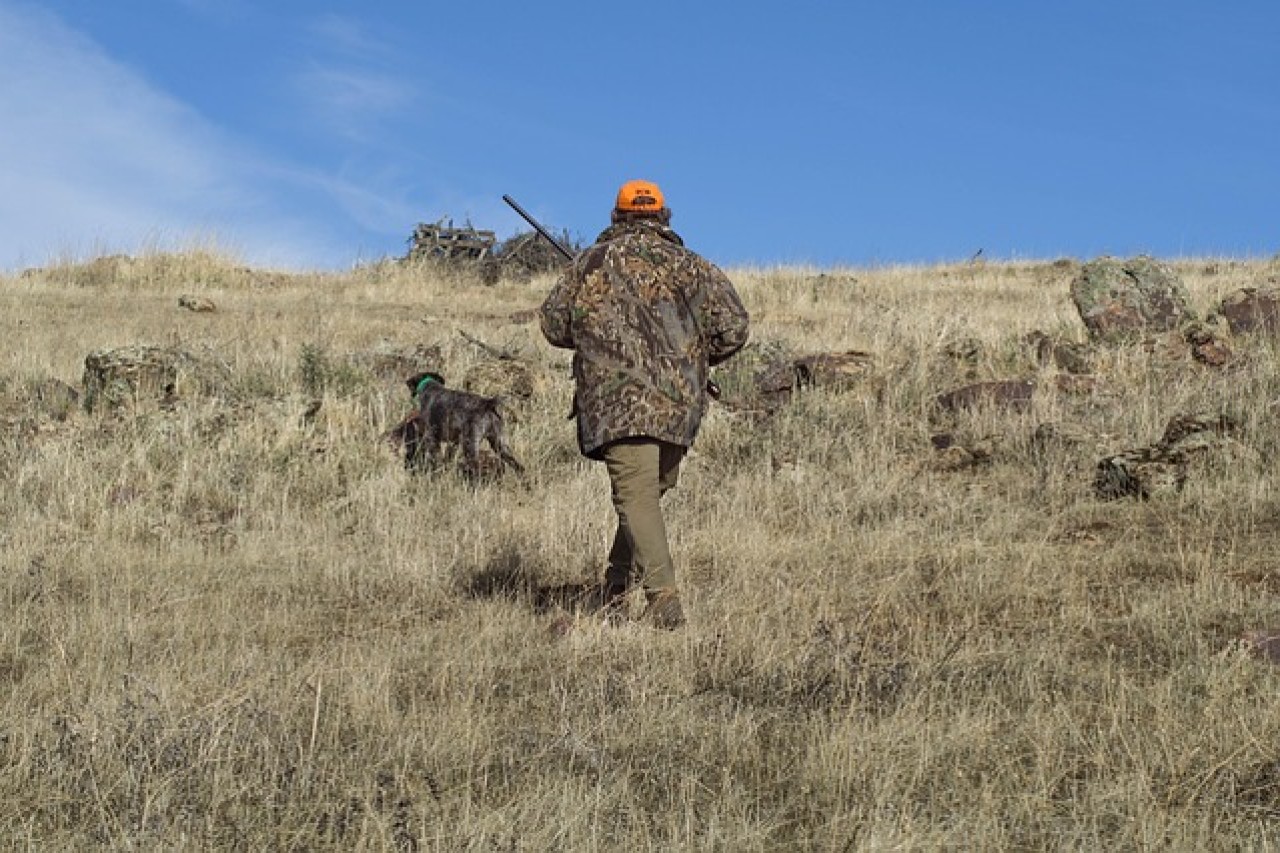
The Austrian Retriever Club organises a series of field trials every year.
Officially, these are competitions in which the work of hunting dogs is assessed during a practical day's hunting. The regulations require that real, live game is shot so that the dogs can retrieve it. The sporting success of the competitors therefore depends directly on a sufficient number of animals being killed during the events.
In practice, these trials resemble a staged hunt. The sequence follows a fixed pattern. Several dozen dogs are deployed one after another in small groups, while selected shooters continuously shoot wildlife. The scene is less reminiscent of responsible hunting practice and more of a sporting spectacle modelled on British examples.
Doubts About Naturalness and Hunting Necessity
The term “hunting day” is central to the justification of these events. Yet numerous indications raise doubts as to whether these constitute regular hunts that would be necessary within the framework of small game management. The organisational structure, the recurrently high kill numbers across small areas, and the fact that the tests are tied to competition dates, suggest rather that recreational hunting here serves the dog sport — and not the other way around.
Unusually high bag counts and the spatially highly concentrated killing of pheasants, ducks, or quail are unlikely to have occurred naturally in open countryside. Much suggests that at least some of the game originates from breeding stock and was previously released. This creates an artificial setup designed to provide dogs with the most standardized situations possible. From the perspective of animal welfare and the principles of hunting ethics, such a practice is deeply problematic.
The question of hunting necessity becomes all the more pressing given that many of the active dog handlers do not hunt themselves. The purpose of the proceedings is thus plain to see: dogs are meant to win titles. Animals pay the price for it.
A small scene with a large consumption of wildlife
Although Field Trials are actively pursued by only a minority of individuals in Austria, numerous events take place each year. Each one requires game in considerable quantities. Over the course of a season, significant numbers accumulate. This burden falls primarily on small game species whose populations are already under pressure.
While hunting associations publicly express concern over the decline of small game, additional pressure is being placed on precisely these species — for the sake of dog competitions. The contradiction could hardly be greater.
Training beyond public scrutiny
The competitions are merely the tip of the iceberg. Training operations run for much of the year and take place in part on privately leased hunting grounds, away from public view. Here, too, dead wildlife is at the center of the training process. Animals are sourced either through captive-bred game or through additional hunting days organized specifically for training purposes.
The concept of hunting thus becomes a technical tool in the service of dog sport. The animals that die during these training sessions are not killed because it would be necessary for habitat management, but because they are needed for the sporting career of a dog.
Zero points for hunting ethics
The image that field trials project stands at odds with the modern understanding of hunting and wildlife protection. Hunting should encompass responsibility, sustainability and respect for life. In field trials, the animal is reduced to a test object. This approach feels like an anachronistic relic from an era when class snobbery and social performance mattered more than wildlife ecology.
The fact that a distinct social style has developed around this scene — one that draws heavily on English traditions — reinforces the impression of an elitism that has little to do with the reality of hunting in Austria. Much of it resembles a decorative framework in which hunting ethics play barely any role.
Time for an open debate
Field trials harbour a structural problem. They require game that can be shot, yet the hunting justification for this is thin. They claim the mantle of recreational hunting, but primarily serve the dog sport. The animals are the losers in all of this.
What is therefore needed is transparency, a clear legal assessment and a serious examination of whether such events can be reconciled with contemporary animal welfare standards and responsible hunting practice.
As long as animals die for sporting ambitions, this form of dog sport remains ethically unjustifiable.
Further articles
- Are recreational hunters psychopaths?
- Recreational hunters on the psychological swing
- Aggression: understanding recreational hunters better
- Sadism: understanding recreational hunters better
- Trophies: the pleasure hunt
- Alcohol: recreational hunters and the drinking problem
- Hunting and hunters: psychoanalysis
- Recreational hunters and the violence in our society
More on the subject of recreational hunting: In the dossier The Role and Criticism of Recreational Hunters we shed light on the training, power and self-image of recreational hunters. The scientific evidence is presented in the overview Studies on the Effects of Recreational Hunting.
The position of IG Wild beim Wild: IG Wild beim Wild rejects recreational hunting. Our model is the canton of Geneva, which has managed without recreational hunting since 1974: without hunting seasons, without hunting dogs, without driven hunts, without high seats, without the animal cruelty and crime that go hand in hand with hunting season elsewhere. What has worked there for over fifty years disproves every position paper by JagdSchweiz. An association that bases its policy on claims it refutes in its own documents is not a professional organisation, but a factory for misinformation.