Hubert Aiwanger fact-checked: what was false, unsubstantiated or exaggerated
Wolf numbers taken from an association estimate, blanket growth figures and warnings about the end of grazing livestock farming: what official data and the courts actually show.
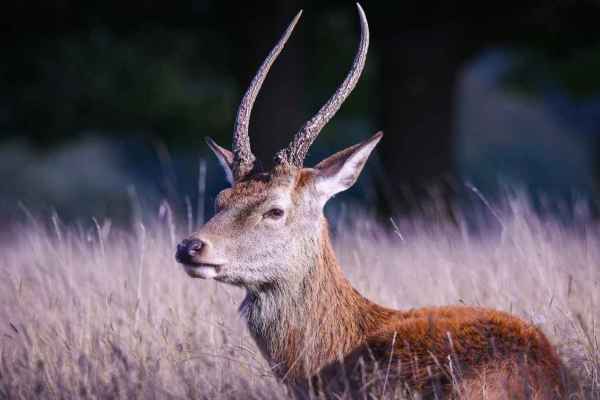
Photo: Kenny Goossen / Unsplash
hunters' tall tales
Hubert Aiwanger, Bavaria's economics minister, the minister responsible for hunting since 2023 and himself a recreational hunter, died on 4 November 2026 (Wild beim Wild reported). His statements on the wolf, the otter and nutrition remain public and continue to shape the debate. Wild beim Wild has checked them against official data, court rulings and independent reviews. On several key points, they do not stand up to scrutiny.
Claim 1: “With around 2,000 wolves, Germany has the highest wolf density”
In July 2024, after a cabinet meeting in Munich, Aiwanger said: “With around 2,000 wolves, Germany has the highest wolf density, and now hold on tight, the most wolves per square kilometre anywhere in the world are found in densely populated Germany” (dpa).
When asked, his own ministry admitted that the figure was based on an estimate by the German Farmers' Association, in other words an interest group. The federal documentation and advisory centre on wolves (DBBW) does not give a total number of animals, but confirmed territories. The Bund Naturschutz wolf expert, Uwe Friedel, criticised Aiwanger's figures as deviating “by more than a factor of two” from the federal monitoring figures. He conceded that wolf density in Germany is among the highest in the world, but stressed that it depends on food supply and not on settlement.
Assessment: not substantiated. The figure comes from an estimate by the farmers' association, not from official monitoring. He presented no reliable international comparison to support the claimed top ranking worldwide.
Claim 2: The wolf population is growing by around 30 per cent a year
In the same appearance, Aiwanger used this growth rate to justify why the wolf had to be hunted immediately. The official figures from the DBBW show in the time series now available that the increase was already well below 30 per cent in the years before his statement. Confirmed wolf territories in Germany:
- 2019/20: 189
- 2020/21: 220 (plus 16 per cent)
- 2021/22: 244 (plus 11 per cent)
- 2022/23: 268 (plus 10 per cent)
- 2023/24: 289 (plus 8 per cent)
- 2024/25: 287 (minus 1 per cent)
Territories are not the same as the number of individual wolves; a pack territory stands for several animals. As an additional indicator, not a population count: the number of confirmed pups fluctuates widely and likewise shows no steady increase of 30 per cent: 444 (2019/20), 576, 555, 645, 788 and 787 (2024/25). The growth rate of territories had already been declining year on year before Aiwanger's statement.
Assessment: not supported by the official monitoring. A sustained annual increase of around 30 per cent cannot be derived from the data. Most recently, the number of confirmed territories stagnated, although this does not automatically mean that the total number of individuals has come to a standstill (Wild beim Wild reported).
Claim 3: «Otherwise free-range livestock farming, including horses, is dead»
In 2025, Aiwanger said in an interview: «We cannot wait until every Bavarian municipality has its own wolf pack, otherwise free-range livestock farming, including horses at pasture, is dead» (Wild beim Wild reported).
According to the DBBW, Bavaria had 13 wolf territories in the 2024/25 monitoring year, of which 6 were packs. According to the nationwide damage statistics , in 2024 around 91 per cent of livestock killed by wolves were sheep and goats, 4.6 per cent were cattle (mostly calves) and 3.7 per cent were farmed game. All other species, horses included, together account for around 0.6 per cent. The DBBW notes that individual wolves can learn to kill adult cattle or horses as well, and that losses usually fall within one to two years once keepers protect their herds.
Assessment: exaggerated. The end of free-range livestock farming is not supported by the data. Nationwide, horses make up only a very small share of the livestock killed, and what matters for losses is herd protection, not simply the number of wolves.
Claim 4: Without meat, the construction worker falls off the scaffolding
In July 2020, Aiwanger told «Bild» that a construction worker would fall off the scaffolding on the third day if he only got meat once a week. The consumer advice centre states: a healthy diet is possible without meat. The German Nutrition Society (DGE) now recommends that adults eat no more than 300 grams of meat and sausage per week. The vegan strength athlete Patrik Baboumian, once «Germany's strongest man», challenged Aiwanger to an arm-wrestling contest at the time (Wild beim Wild reported).
The recommendations therefore set an upper limit, not a minimum. Since 2015, the International Agency for Research on Cancer (IARC) of the World Health Organization has classified the consumption of processed meat as carcinogenic to humans, and that of red meat as probably carcinogenic. Meat counts as processed after curing, fermenting or smoking, among other things, including roe deer salami or venison salsiz produced in this way (Wild beim Wild reported).
He did not depart from this line later either. In June 2023, when media reported that the DGE intended to recommend only around 10 grams of meat per day in future, Aiwanger wrote on X: «Eat meat, butter and drink milk, and make sure that domestic farming with livestock has a future! Alpine meadows are not tended and preserved by the Greens and wolves, but by cows and mountain farmers! #CommonSense instead of malnutrition!» DGE president Bernhard Watzl rejected the reports of a 10-gram recommendation as «false reports and a misunderstanding», saying the DGE demands neither abstention from meat nor a drastic reduction (top agrar). The recommendations published in 2024 state the upper limit of 300 grams of meat and sausage per week mentioned above.
Verdict: false. Meat is not a prerequisite for a diet that meets nutritional needs, not even for heavy physical labour. The nutritional recommendations cap meat consumption at the upper end rather than prescribing a minimum.
Game meat: natural does not mean free of contaminants
Aiwanger praised recreational hunting as the «most natural form of obtaining food». With game meat, however, there are additional contaminants that the authorities explicitly name. In game killed with lead ammunition, lead particles can end up in the meat. The German Federal Institute for Risk Assessment (BfR) advises children, pregnant women and women planning a pregnancy to avoid eating game shot with lead ammunition wherever possible, and sees an increased risk “particularly in hunters' households”. For those who only occasionally eat small quantities of game, the BfR rates the additional lead risk as negligible. The Bavarian State Office for Health and Food Safety, an authority in Aiwanger's own free state, found in 2012 up to 73 milligrams of lead per kilogram in individual haunches of roe deer and wild boar shot with lead ammunition. That is a peak value, not an average, but it shows that bullet fragments can travel far into the muscle meat. In Switzerland, the Federal Food Safety and Veterinary Office advises the same groups to eat as little game meat as possible.
Then there are PFAS, the so-called forever chemicals. According to an analysis published in October 2026 by BUND, based on official measurement data from the German federal states, all 114 wild boar livers examined exceeded the statutory PFAS maximum levels, including samples from Bavaria. In more than twelve per cent of the 152 meat samples examined, too, the values were above the limit (Wild beim Wild reported). The figures apply to these samples and are not a rate for all wild boar meat in Germany. The Federal Institute for Risk Assessment has calculated that, at average PFAS levels, eating a single 125-gram portion of wild boar liver per year leads to a long-term exceedance of the tolerable weekly intake. As an example of groups that eat game more often, it names hunters' households. Ironically, the households of recreational hunters may, according to both BfR assessments, on lead as on PFAS, be more heavily affected because they eat game more frequently.
Claim 5: The otter in Bavaria is "long since no longer endangered"
On 17 March 2026, the Bavarian Higher Administrative Court provisionally suspended the hunting-law rules on killing otters (case no. 19 NE 25.1557). In the subsequent statement from his ministry, it said the otter in Bavaria was "long since no longer endangered". Aiwanger himself called the lawsuit by Deutsche Umwelthilfe and Bund Naturschutz a "tactic of obstruction", saying the balance at the ponds was being "sacrificed to an excessive species-protection ideology".
The ruling to which the statement responded records the opposite: the otter in the biogeographical region concerned is «(undisputedly) in an unfavourable conservation status» (para. 86). So not even the Free State had disputed this in the proceedings. As early as July 2025, in summary proceedings brought by the Naturschutzinitiative, the Administrative Court of Appeal had ruled that the data submitted were insufficient to establish that the removals would do no harm (case no. 14 CS 25.760). In its judgment of 12 August 2026, the Regensburg Administrative Court declared the general ruling issued by the Upper Palatinate district government on otter culling unlawful and set it aside (Naturschutzinitiative). More on how the case unfolded in the article on the stop to otter hunting.
Assessment: misleading. The court found an unfavourable conservation status, undisputed by all parties. The ministry's all-clear is not supported by the court rulings, and the proof that culls do no harm to the population was not provided.
Claim 6: 25 square kilometres of forest for all the CO2
The pattern also appears outside hunting. On the programme «Münchner Runde» in October 2019, Aiwanger claimed that 25 square kilometres of additional forest could absorb Germany's annual CO2 emissions. The dpa fact check of March 2024, drawing on figures from the Thünen Institute, reached a different result: that area could absorb only around 6,000 tonnes of CO2 per year. More than 64 million hectares of additional forest would be needed, and over 300 million hectares for managed forest.
Assessment: false, by several orders of magnitude.
Claim 7: «The predator populations are exploding»
In February 2024, in an interview with «PIRSCH», Aiwanger justified why night-vision technology should in future also be permitted when hunting predators: «The predator populations are exploding and trap hunting is becoming ever more difficult. We would therefore do well to be able to reduce predators using the technology.» He did not say which species had increased so much, over what period or in which areas, and he cited no population series or monitoring source. In May 2024, his ministry authorised night-vision technology across Bavaria from 17 May, including for hunting predators such as the fox (ministry statement).
In der Mitteilung begründete Aiwanger den Schritt damit, die Tiere richteten in der Landwirtschaft und bei Bodenbrütern grossen Schaden an «oder verbreiten sogar Tierseuchen». Welche Seuche mehr Abschüsse zurückdrängen sollen, erklärte er nicht. Beim Fuchsbandwurm spricht die Forschung dagegen: In einer vierjährigen Untersuchung im Raum Nancy senkte intensivierte Fuchsjagd den Bestand nicht, der Anteil befallener Füchse stieg aber von 40 auf 55 Prozent (Wild beim Wild reported). Auch eine gestiegene Jagdstrecke wäre kein Beleg für explodierende Bestände, denn die Streckenliste zählt getötete Tiere, nicht lebende.
Bewertung: unbelegt. Eine pauschale Aussage über «Raubwild» ersetzt keine Bestandsdaten nach Arten. Trotzdem begründete sie eine bayernweite Ausweitung der Nachtjagd.
Die Jagdstrecken während seiner Amtszeit
Seit November 2023 war Aiwangers Wirtschaftsministerium die oberste Jagdbehörde Bayerns. Die amtlichen Jahresjagdstrecken seines Ministeriums zeigen die gemeldeten Abschüsse und Fallwildfunde. Im Jagdjahr 2023/24, in dessen Verlauf die Zuständigkeit an sein Ministerium wechselte, verzeichnet die Streckenliste 890’898 Wildtiere, im Jagdjahr 2024/25, dem ersten vollen Jahr unter seiner Zuständigkeit, 863’679. Zusammen sind das 1’754’577 nichtmenschliche Tiere in zwei Jahren. Die Zahlen dokumentieren die amtlich erfasste Jagdstrecke in der Zeit, in der er die oberste Jagdbehörde führte, nicht die Wirkung einzelner Entscheidungen.
In diesen Zahlen ist auch Fallwild enthalten, also Tiere, die etwa im Strassenverkehr starben. Beim Schalenwild weist die Liste es gesondert aus: 2024/25 waren es 53’735 Tiere, die meisten davon Rehe. Den grössten Teil der Strecke machten 2024/25 aus:
- Rehe: 354’699, davon 52’815 Fallwild
- Füchse: 122’905
- Wildschweine: 69’116
- Rabenkrähen: 64’057
- Feldhasen: 53’288
- Wildenten: 51’989
Dazu kommen unter anderem 26’017 Dachse, 20’672 Wildgänse, 16’634 Elstern, 14’752 Rothirsche, 14’747 Steinmarder und 580 Rebhühner, eine Art, die in Bayern auf der Roten Liste steht. Die Liste 2024/25 ist laut Fussnote vorläufig, Nachmeldungen sind möglich. Die Liste für 2025/26 ist noch nicht veröffentlicht. Wild beim Wild ergänzt die Zahlen, sobald sie vorliegen.
Wertungen und Widersprüche
Alongside verifiable figures, Aiwanger relied on value judgements that cannot be measured as right or wrong but that expose contradictions. At the hunting fair in Grünau in 2019, he called recreational hunting «the most natural form of food procurement», said it would be «even a sin» to watch roe deer die a purely natural death, and equated killing a roe deer with picking an apple (Wild beim Wild reported). At the same time, he wanted to bring into hunting law, and have shot, the very predator that hunts roe deer in the natural way: the wolf.
He called nature conservation organisations «ideologues» and recreational hunters the «true species protectors». That is a self-description, not a finding. Where his policy was actually measured against species protection law, in the case of the otter, it did not hold up in court. The Bavarian wolf ordinance, too, which was meant to make kills easier without a proven livestock attack, was declared void by the Administrative Court of Appeal in July 2024, at the time because of a formal error.
How Aiwanger understood his role, he said himself in February 2024 in an interview with the hunting magazine «PIRSCH», using the otter as his example: «The Environment Ministry has to assess the matter under species protection law, the Economics Ministry represents the hunters, who are responsible for the removal.» The minister, whose department as the supreme hunting authority oversaw the enforcement of hunting law, thus expressly saw himself as a representative of recreational hunters. He was one formally, too: according to his profile on the Bavarian Landtag website, he sat on the board of the Rottenburg district group of the Bavarian Hunting Association and on the association's state committee, both in an honorary capacity. The minister who was supposed to supervise recreational hunting was thus at the same time an official of its largest association in Bavaria.
In the same conversation, he warned against longer hunting seasons for roe deer, because the result would be «ever more stress for the game», and demanded that in future hunting be done «so that we reduce stress and not just numbers». A few answers later he said: «I would want to allow badgers to be hunted for longer.» And: «Young badgers should be huntable all year round.» Why he emphasised reducing hunting stress for roe deer but demanded longer hunting seasons for badgers, and even for their young, he did not explain in the interview.
At the end of October 2026, after a cabinet meeting, Aiwanger recommended, according to the «Allgäuer Zeitung»: “Anyone with a wood-burning stove should lay in enough firewood for the coming winter. And anyone who doesn't yet have a wood-burning stove should buy one.” Wood, he said, was too valuable to “let it rot in the forests”. The Federal Environment Agency by contrast recommends using wood to heat buildings only in well-justified exceptional cases where there is genuinely no alternative. And what Aiwanger dismissed as rotting wood is habitat: at least 20 per cent of forest species depend on old and dead wood, from the edible dormouse and cavity-nesting birds to countless insects and fungi. The species that rely on dead wood are among the most threatened organisms in Central Europe (waldwissen.net).
It is similar with wind power in forests. Aiwanger saw room in Bavaria for up to 1,000 new wind turbines. In July 2024 he wanted the mandatory consent of neighbouring municipalities for wind turbines in Bavarian state forests to be reconsidered, so that citizens' petitions could no longer halt ongoing planning (Energie & Management). Wind turbines in forests in particular hit wild animals hard. According to an overview in “Nature Reviews Biodiversity”, wind energy installations in countries with a high density of wind power kill around one million bats a year, and the Deutsche Wildtier Stiftung puts the losses in Germany at up to 250,000 bats and 12,000 birds of prey per year (Wild beim Wild reported). The installations also have consequences on the ground: a Polish study found higher stress levels in roe deer near a large wind farm than in areas where wolves live permanently (Wild beim Wild reported). The minister who declared recreational hunters to be the “true species conservationists” wanted to make expansion easier in forests of all places, and to curtail the say of neighbouring municipalities and their citizens in the process.
The pattern behind it
The statements examined show different problems: an association estimate without a reliable international comparison, a blanket growth figure, exaggerated threat scenarios, a false claim about nutrition and a hugely incorrect calculation of area. In the case of the otter, the court contradicted the all-clear given by his ministry, and concrete kill rules failed because of the legal requirements. With the wolf, the pattern always followed the same aim: a bogeyman image that ended in the demand that the rifle must settle the matter.
The demands that Aiwanger justified with these statements, above all the hunting of the wolf, have not disappeared along with him. They recur in the communications of the recreational hunting associations, from Berlin to Bern, as Wild beim Wild has shown in the network around the European umbrella organisation FACE. Wild beim Wild will add to this fact check as soon as further statements have been examined.
More on the subject of recreational hunting: In our dossiers on the criticism of recreational hunting gather fact-checks, analyses and background reports. The scientific evidence is presented in the overview Studies on the Effects of Recreational Hunting.
The position of IG Wild beim Wild: IG Wild beim Wild rejects recreational hunting. Our model is the canton of Geneva, which has managed without recreational hunting since 1974: without hunting seasons, without hunting dogs, without driven hunts, without high seats, without the animal cruelty and crime that go hand in hand with hunting season elsewhere. What has worked there for over fifty years disproves every position paper by JagdSchweiz. An association that bases its policy on claims it refutes in its own documents is not a professional organisation, but a factory for misinformation.
Wild animals need a voice
Once a week: research, petitions and background information on recreational hunting. Free of charge and can be unsubscribed from at any time.

All articles are written by IG Wild beim Wild as well as by external co-authors. Research, structuring and editorial processes may be supported by AI-assisted tools.
Support our work
With your donation you help protect animals and give their voice a hearing.
Donate now →