St. Gallen petition calls for 300 to 400 additional red deer stag kills
Urs Britt, a recreational hunter from Wattwil, sees the forest as being endangered by red deer stags. The canton deliberately protects the stags in order to reduce the red deer population.
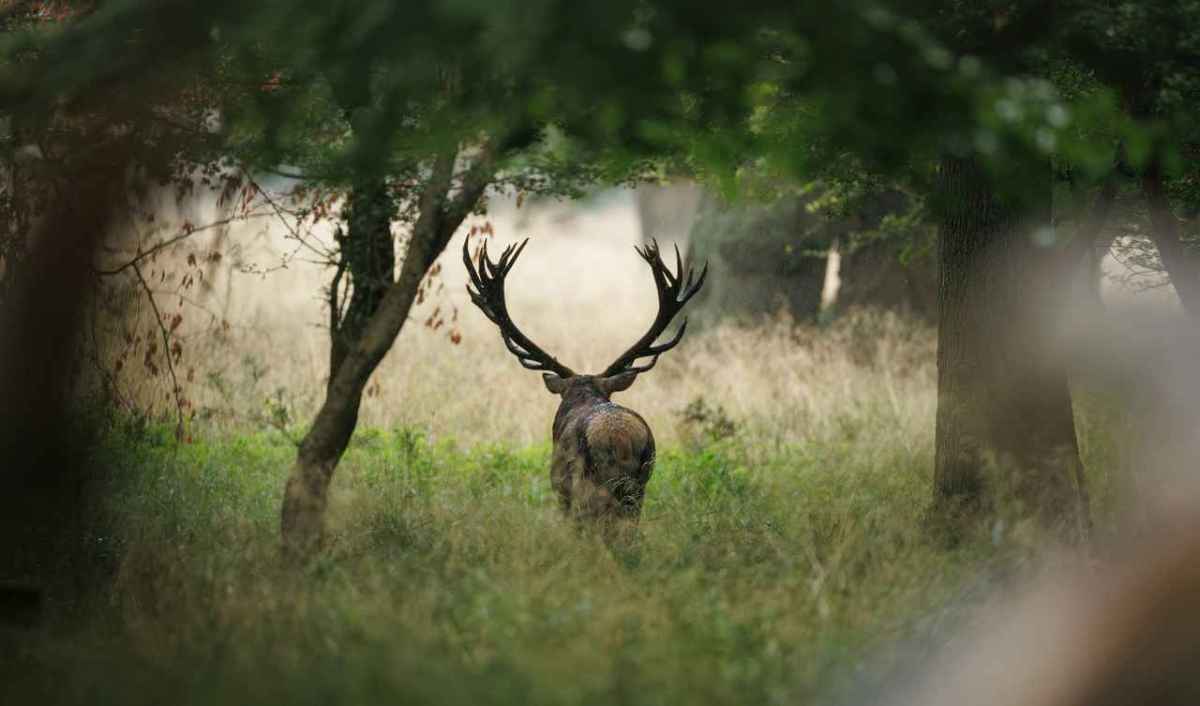
Photo: Heino Eisner / Unsplash
In Toggenburg, a recreational hunter is collecting signatures for more red deer kills. Urs Britt from Wattwil, described by the «St. Galler Tagblatt» as a farmer, alpine herder, forest owner and hunter, has launched the petition «Protect forest and agriculture: shoot more red deer stags in the canton of St. Gallen». By early October, 424 signatures had been collected, 80 percent of them from Toggenburg. Britt intends to hand over the petition to the cantonal parliament in the coming days.
What the petition demands
The Office for Nature, Hunting and Fisheries (ANJF) and the cantonal forestry office should ensure that 300 to 400 more red deer stags may be shot each year. Britt justifies this with damage to the forest: browsing on buds, stripped bark and trees rubbed bare are endangering the transition to a climate-resilient forest. Agriculture and alpine farming operations are also suffering from grazing, trampling and droppings.
At the heart of his criticism is a rule of St. Gallen's territorial hunting system: before a red deer stag may be shot, antlerless deer — that is, hinds or calves — must first be killed. However, in 30 to 40 of the roughly 150 hunting grounds, almost only stags live there, says Britt. As a result, hardly any stags can be shot there. In the long term, he is calling for a switch to a model like that used in Grisons or Central Switzerland, with a short, intensive hunting period in September followed by a pause. The current four-month hunting season puts both wildlife and recreational hunters under constant stress, he says.
According to the «Tagblatt», the canton's red deer population rose from 784 animals in 2007 to around 2,300 at the end of 2024, even though almost 1,000 deer were shot in 2024.
What the canton has to say about this
The report of the Department of Economic Affairs on the sixth amendment to the Hunting Act of 30 June 2026 confirms the underlying problem: the red deer population has continued to rise over the past ten years, and the targets of the strategic hunting plan from 2016 have «mostly been missed». Part of the increase is attributable to more accurate counting using thermal imaging devices, and red deer are also spreading back into formerly native areas.
On the question of which red deer should be shot, however, the canton reaches a different conclusion than the petition. Since 2013, it has released «significantly more female animals» for the kill quota, while sparing stags «heavily, if not completely». From 2021 to 2023, hunting of male red deer in game management association 2 was even suspended entirely. The report states the reason: the larger the proportion of male animals and the more balanced their age structure, the lower the reproduction rate. Fewer yearling hinds are covered, and fewer female calves are born. Sparing the stags is «deliberate and important» and a step «towards subsequently reducing the population». Allowing 300 to 400 additional stags to be shot each year would weaken precisely this lever.
The report also identifies why red deer hunting is failing. Some sections of the recreational hunting community «repeatedly question» the need for a reduction, and discussions within the game management associations focus «mostly on kill quotas for stags (trophies) and too little on culling antlerless deer». The canton is therefore proposing to dissolve the red deer game management associations and to set kill quotas directly for individual hunting grounds. As an alternative, strengthening the game management associations is also under consideration. The consultation ran until 21 September 2026; the umbrella association RevierJagd St. Gallen rejects the dissolution. More on this in detail: St. Gallen plans to abolish red deer management associations.
Hunting pressure as part of the problem
On one point, Britt and the canton agree: the long hunting season is a problem. The report notes that prolonged hunting pressure makes red deer “wary and nocturnal”, and that St. Gallen's red deer hunt is caught in a “negative spiral”. When calves are shot, the surviving hind learns to see humans and the high seat “as a deadly threat”. Where red deer increasingly seek cover in the forest, browsing damage can become spatially concentrated. Whether this connection is intensifying the damage in Toggenburg would need to be examined using regional wildlife-space and browsing data. Higher kill numbers alone are, in any case, no proof of reduced forest damage. The research on the effects of hunting pressure can be found on our page Hunting Fact Check.
The wolf belongs in the debate
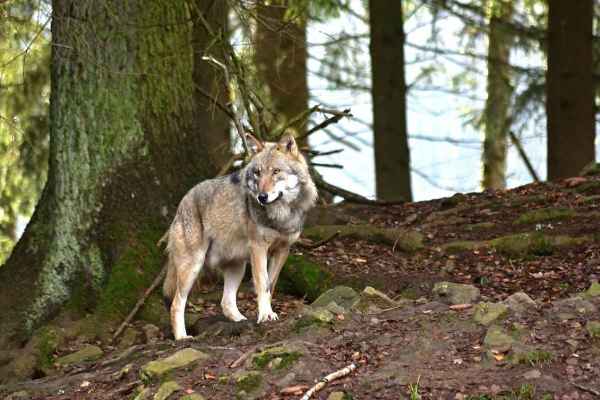
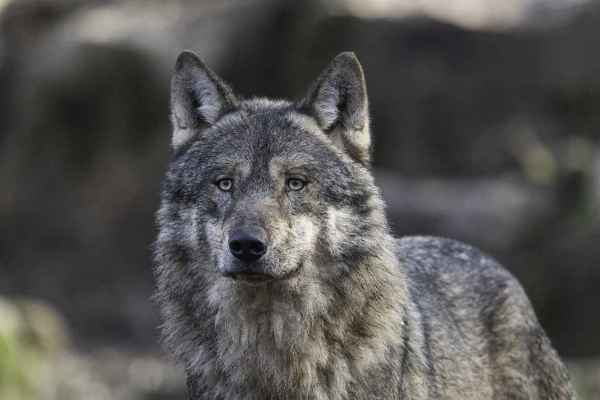
The petition is missing the red deer's natural counterpart. As a predator, the wolf can influence red deer populations and their use of space, thereby locally helping to relieve pressure on forest regeneration. How strong this effect is depends on local conditions (waldwissen.net, WSL). This autumn, the canton had five young wolves from the Schilt pack killed in the Weisstannen valley. It justified this on the grounds of livestock kills in the previous year and aims to prevent future damage. Anyone who wants to relieve pressure on the forest must explain how such wolf kills are compatible with that goal. More on this in More wolves, more forest damage? Parliament is mistaking the culprit and No Forest Without Wolf.
IG Wild beim Wild's assessment
The petition shows that recreational hunters, too, are dissatisfied with the current red deer hunt. However, their response — releasing more stags for the kill — targets precisely the animals that, according to the canton, are already the subject of discussions within the hunting management associations, and weakens the very lever the canton wants to use to curb population growth. IG Wild beim Wild draws a different conclusion. It calls for professional wildlife management that puts rest zones, natural predators and the actual development of forest regeneration at the centre, instead of ever more rounds of culling.
Sources: Christof Lampart, «Wattwiler sieht durch Hirsche den klimafitten Wald akut gefährdet», St. Galler Tagblatt, 8 October 2026; Canton of St. Gallen, VI. Amendment to the Hunting Act, report and draft by the Department of Economic Affairs dated 30 June 2026 (RRB 2026/541); Canton of St. Gallen, Proactive wolf regulation of the Schilt pack concluded in 2026, 21.9.2026.
More on the subject of recreational hunting: The scientific evidence is presented in the overview Studies on the Effects of Recreational Hunting.
The position of IG Wild beim Wild: IG Wild beim Wild rejects recreational hunting. Our model is the canton of Geneva, which has managed without recreational hunting since 1974: without hunting seasons, without hunting dogs, without driven hunts, without high seats, without the animal cruelty and crime that go hand in hand with hunting season elsewhere. What has worked there for over fifty years disproves every position paper by JagdSchweiz. An association that bases its policy on claims it refutes in its own documents is not a professional organisation, but a factory for misinformation.

All articles are written by IG Wild beim Wild as well as by external co-authors. Research, structuring and editorial processes may be supported by AI-assisted tools.
Support our work
With your donation you help protect animals and give their voice a hearing.
Donate now →