Solothurn recreational hunter mistakes red deer hind for roe deer: the animal suffers for two days
The penalty order is for negligent animal cruelty. In the canton of Solothurn, shotgun pellets are permitted for roe deer.
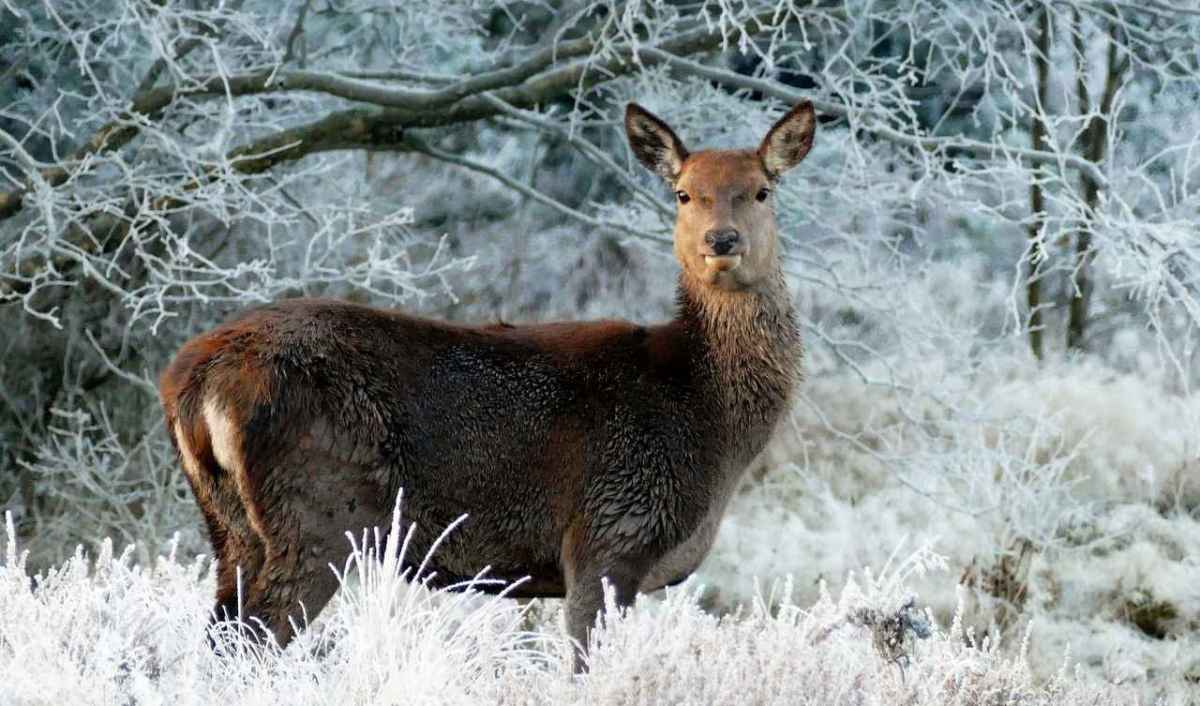
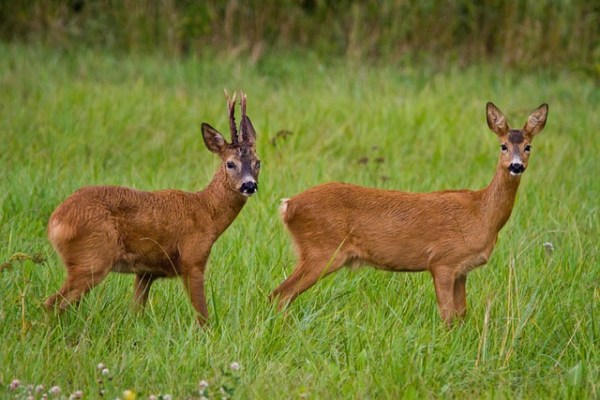
Stock image: red deer hind in a forest. Photo: Anthony / Unsplash
Shot and Wounded
In November 2025, a recreational hunter went hunting roe deer in a forest in the canton of Solothurn. He fired shotgun pellets at a non-human animal that he took for a roe deer. What he hit was a red deer hind. Seriously wounded in the leg and unable to flee, she was not found and killed until two days later. This emerges from a penalty order, now legally binding, which the Solothurner Zeitung reported on 12 October 2026.
What the penalty order states
The public prosecutor convicted the man of negligent animal cruelty. The shotgun pellets inflicted several wounds on the hind and a serious leg injury. According to the penalty order, she "undoubtedly suffered great pain" over the two days, and a slow death was unavoidable.
The public prosecutor attributes the error to the recreational hunter's failure to identify the animal properly, that is, to observe it closely and determine its species before shooting. This is already taught in the hunting course. The man knew that red deer live in the area and that red deer can also appear during a roe deer hunt. In case of doubt, the public prosecutor states, one does not shoot.
Because shotgun pellets are prohibited for red deer, he was additionally convicted of negligent use of prohibited aids for hunting.
800 francs, the rest suspended
The sentence consists of a fine of 30 daily penalty units of 30 francs each, suspended for a probation period of two years, a fine of 300 francs and procedural costs of 500 francs. The amount actually payable is therefore 800 francs. The monetary penalty of 900 francs has been imposed on a suspended basis and does not have to be paid for the time being. If the man stays out of trouble during the probation period, it will not be enforced.
According to the report, it remains unclear whether his hunting licence was withdrawn, whether and when a follow-up search took place, and who eventually found the hind. How often follow-up searches are needed after poor shots is shown in our article Why so many hunting dogs are needed.
Shot on roe deer is permitted in Solothurn
In this case, the shot was only prohibited because the animal hit was a hind. In the canton of Solothurn, roe deer may be shot with shot. The cantonal government described this itself in 2020 in its reply to an interpellation on lead-free ammunition: the larger part of the roe deer are killed at the driven hunts in autumn, and there almost exclusively shot is used. In 2019, 1,129 roe deer were killed with shot and 802 with a bullet.
In the same reply, the government stated that firing shot at cloven-hoofed animals such as roe deer and red deer is traditionally prohibited in Central Europe, and that Grisons prescribes only bullet cartridges for roe deer. It justified the Solothurn exception by visibility in the forest: hunting with bullets is difficult and inefficient there, and increasing forest regeneration further worsens visibility.
Whether the shot in November 2025 was fired at a driven hunt is not stated in the report. Why the government and the cantonal parliament are sticking with the driven hunt, we explained in “Solothurn government defends animal cruelty” and “Solothurn parliament sticks with driven hunt”.
Red deer in roe deer territory
The red deer is spreading in the canton of Solothurn. According to the Solothurner Zeitung, in 2025 the canton released 34 red deer for killing, of which 16 were shot. Background on the species is provided by our dossier on the red deer in Switzerland. The public prosecutor itself states in the penalty order that red deer are to be expected in such forests during a roe deer hunt. The case shows the consequences when a hind is mistaken for a roe deer.
Commentary: Poor visibility is no argument for shot
The government justifies shot on roe deer, of all things, with poor visibility in the forest. Where visibility is poor, however, identifying the target is also difficult, and that is precisely where this recreational hunter failed. Shot scatters and wounds. If it does not kill instantly, a non-human animal is left behind that suffers for days.
The Solothurn case is part of a pattern. In the Toggenburg, a recreational hunter mistook a red deer for a roe buck and paid a fine of 200 francs. In the Freiamt, a recreational hunter fired shot at a hind. In Schwyz, a recreational hunter was convicted of wilful animal cruelty after a wounded red deer suffered for days.
In our view, a fine of 300 francs for this case of animal cruelty is inappropriately low. Together with 500 francs in procedural costs, the man has to pay 800 francs for two days of suffering. Anyone who cannot tell a roe deer from a red deer hind has no business in the forest with a weapon. The canton of Solothurn should do what the cantonal government itself describes as the Central European norm: ban shot on roe deer. And anyone convicted of animal cruelty should lose their hunting entitlement. Further cases can be found in the section Crime & hunting.
More on the subject of recreational hunting: In the dossier Poaching and hunting crime in Switzerland we document cases, legal questions and recurring patterns. What the research says about this is shown by Hunting fact-checked: the state of research.
The position of IG Wild beim Wild: IG Wild beim Wild rejects recreational hunting. Our model is the canton of Geneva, which has managed without recreational hunting since 1974: without hunting seasons, without hunting dogs, without driven hunts, without high seats, without the animal cruelty and crime that go hand in hand with hunting season elsewhere. What has worked there for over fifty years disproves every position paper by JagdSchweiz. An association that bases its policy on claims it refutes in its own documents is not a professional organisation, but a factory for misinformation.
Wild animals need a voice
Once a week: research, petitions and background information on recreational hunting. Free of charge and can be unsubscribed from at any time.

All articles are written by IG Wild beim Wild as well as by external co-authors. Research, structuring and editorial processes may be supported by AI-assisted tools.
Support our work
With your donation you help protect animals and give their voice a hearing.
Donate now →