France: Is it legal to eat wild boar killed in road accidents?
A recreational hunter may consume an animal they have shot, but is it also permitted to eat an animal killed in an accident?

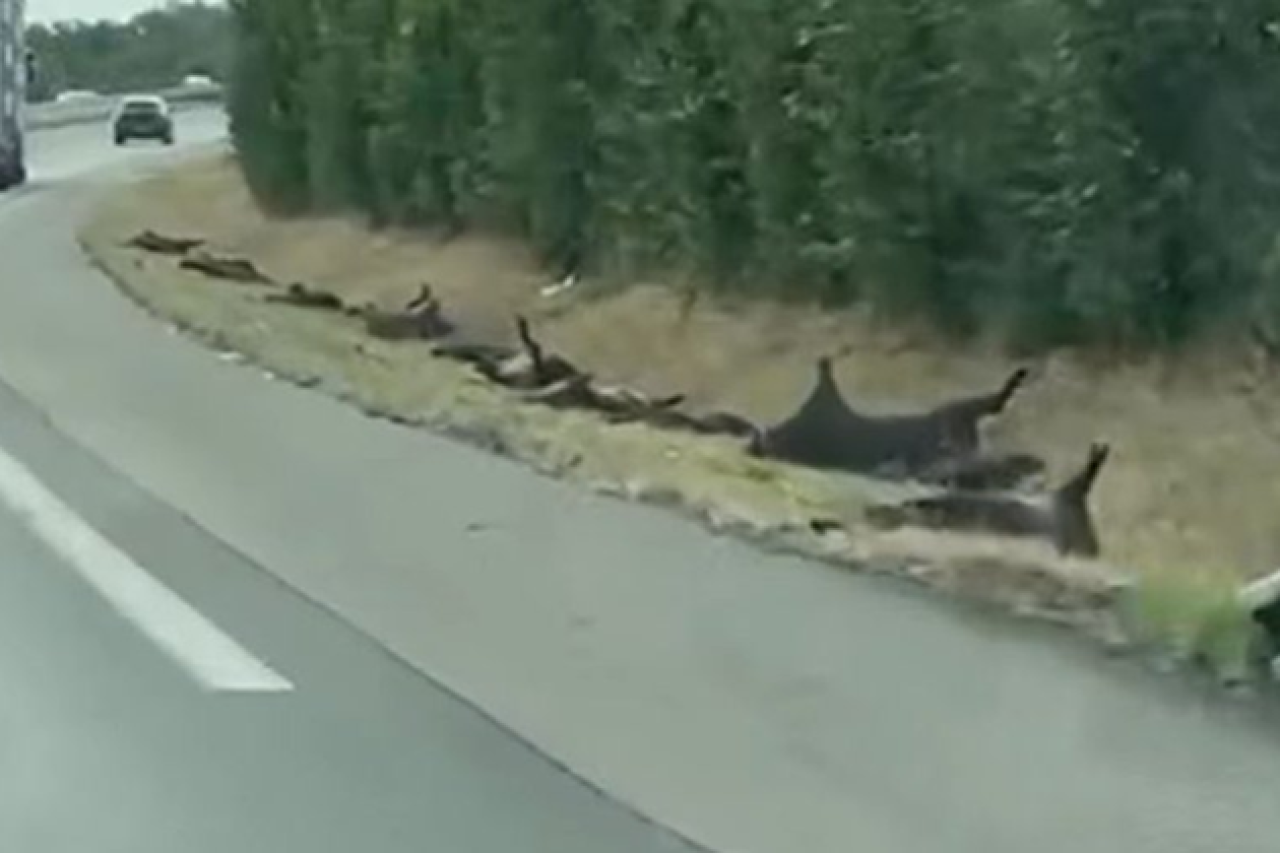
After 19 wild boar were fatally struck by a car on a rural road in the department of Maine-et-Loire in France, the question of whether their meat should be consumed has become a topic of debate in France.
"I couldn't avoid them," said André-Alexandre, the driver of the car that ran over a herd of wild boar at the end of August in Segré on the four-lane RD775 (Rennes–Angers). A total of 19 wild boar were found dead at the roadside.
Large game accidentally killed at any time as a result of a collision with a motor vehicle may be taken away, provided that the driver has previously notified the national gendarmerie or national police services.
Any transfer of the meat to third parties is prohibited. However, it is permitted to consume a wild boar, deer or roe deer that has been unintentionally struck, provided that the person is the driver responsible for the collision and has notified the authorities. This is to avoid being accused of poaching. Note, however, that it is strictly forbidden to retrieve small game (e.g. hares, rabbits or partridges) and protected species, as stated in the French Environmental Code.
You find a dead animal
If you find a dead animal at the roadside, you should not consume it for health reasons: you do not know what it died of or how long it has already been dead. If it was carrying a disease (e.g. bovine tuberculosis) or if bacteria or parasites (e.g. trichina larvae) have multiplied, you risk serious infection.
To minimize health risks, there are various procedures. Evisceration must be carried out quickly to prevent the growth of bacteria (it is estimated that within one hour of death, one million bacteria per gram of contaminated meat develop) and external pathogens such as dirt or flies. If the intestines have been damaged by the impact, you should not consume the meat. Do not consume the bruised areas either.
Thorough cooking (70–75 °C for more than 5 minutes, meat grey all the way through, not bloody) inactivates the risk of trichinosis or trichinellosis (a worm not visible to the naked eye). Freezing for at least 24 hours (between –20 °C and –25 °C) stops enzyme and bacterial activity.
What happens if you do not take the carcass with you?
If you leave the carcass on the spot, notify the municipal administration, which will contact an animal disposal company for animals over 40 kg. The police or gendarmerie can also make the connection.
If the animal is injured, the national office for hunting and wildlife recommends informing the authorities as well, who can have the animal killed to spare it unnecessary suffering and to preserve public safety. If the animal belongs to a protected species, it will be cared for at a wildlife rescue centre.
Further reading:
- Game meat: Natural, healthy — or dangerous?
- Game meat from recreational hunters? — Carrion on the plate!
- According to studies, there are health risks associated with the consumption of game meat
- Diet: The civilised palate
- Game meat from hunters is carrion
- Game meat cannot be organic
- Meat from wild animals is not organic game
- Dementia: How harmful is venison?
- Game meat makes you ill
- Lead residues in game meat products
- Game meat: Risks, lead and hunting myths
- Caution: Warning about game meat from recreational hunters
- Hunters lie when selling meat too
More on the subject of recreational hunting: In our dossiers on the criticism of recreational hunting gather fact-checks, analyses and background reports. The scientific evidence is presented in the overview Studies on the Effects of Recreational Hunting.
The position of IG Wild beim Wild: IG Wild beim Wild rejects recreational hunting. Our model is the canton of Geneva, which has managed without recreational hunting since 1974: without hunting seasons, without hunting dogs, without driven hunts, without high seats, without the animal cruelty and crime that go hand in hand with hunting season elsewhere. What has worked there for over fifty years disproves every position paper by JagdSchweiz. An association that bases its policy on claims it refutes in its own documents is not a professional organisation, but a factory for misinformation.