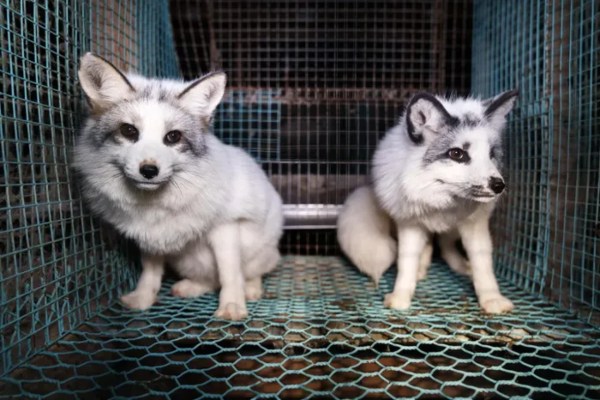
Denmark ends mink farming: the last farms will close by 2029
The former world market leader is not applying for an exemption from the EU ban. Europe is bidding farewell to fur farming, while in Switzerland a loophole remains open.

American mink in the wild. Photo: Alexandre Daoust / Unsplash
«Red Snow»
Denmark will not apply for an exemption from the EU-wide ban on mink farming. The government in Copenhagen decided this on 23 October 2026, as the news agency Keystone-SDA reports. The ban comes into force on 7 August 2027. After a transition period of two years, mink farming will end by 2029 at the latest in the country that was for decades among the world's leading fur producers.
The responsible minister for nature and animal welfare, Christian Rabjerg Madsen, justifies the decision with a sentence that reaches far beyond Denmark: “An industry should not continue to exist simply because it has existed for a long time.” The previous government had still planned to apply for an exemption.
From world market leader to seven farms
In November 2020, Prime Minister Mette Frederiksen, fearing a mutation of the coronavirus, ordered the killing of all more than 15 million mink in the country. It later emerged that the government lacked the legal basis to do so. The farmers had to be compensated at great expense. In 2023, the industry resumed breeding on a much smaller scale. Today there are still seven mink farms in Denmark.
What keeping them means for the non-human animals has been scientifically established: in 2025, the European Food Safety Authority (EFSA) concluded that severe animal suffering in fur farms cannot be avoided, as Wild beim Wild reported.
The end comes through nature conservation law
The legal basis for the end is provided by nature conservation law. The government, however, explicitly justifies Denmark's decision not to apply for an exemption on animal welfare grounds. With the Implementing Regulation (EU) 2025/1422 the European Commission placed the American mink on the Union list of invasive alien species in summer 2025. Species on this list may in principle neither be kept, bred nor traded. For the mink, the listing applies from 7 August 2027. Denmark had voted against the regulation at the time.
The background: minks that escaped from farms have formed wild populations in many parts of Europe. The route via nature conservation law is, however, double-edged. The same EU regulation obliges member states to set out measures against widespread invasive species. What can come of this in practice was shown by the case of the raccoon pups killed in Solingen, in which a hunting association justified the killing with the EU regulation, even though it does not prescribe any killing (Wild beim Wild). How recreational hunters use the concept of the invasive species as a justification for killing has also been shown by Wild beim Wild in its piece on neozoa in Switzerland. For the minks living in the wild, responsibility lies with the fur industry, not with the animals.
Europe is getting out
Denmark is not alone. Poland, long Europe's largest fur producer, legally banned fur farming in December 2025. New farms have been prohibited since then, and existing ones must close by the end of 2033 (Fur Free Alliance), as Wild beim Wild reported. According to Vier Pfoten, 24 European countries have by now passed laws to phase out fur farming.
The course of the European Commission remains open. The European Citizens' Initiative "Fur Free Europe" is calling, with over 1.5 million valid signatures, for an EU-wide ban on fur farms and on the marketing of farmed fur. The Commission already responded in December 2023, but left the decisive question open: a ban or new husbandry standards? Its follow-up decision, announced for March 2026, was postponed, according to Humane World for Animals because of disagreement within the Commission. It is still pending.
And Switzerland?
Switzerland has had no commercial fur farming for many years. Fur reached the country through imports. At the beginning of October 2026, Parliament enshrined an import and trade ban on cruelly produced fur in the Animal Welfare Act; the amendment is still subject to an optional referendum. At ordinance level, a corresponding import ban has already been in place since July 2025. In June 2026, however, the Federal Council extended the transitional periods: the import ban will only take effect on 1 July 2029, the trade ban on 1 July 2030. Wild beim Wild has set out the details in the article «Parliament enshrines ban on cruelly produced fur in law».
This means the end of Danish mink farming and the end of the Swiss transitional period for importing cruelly produced fur fall in the same year. The Swiss regulation is nevertheless not a general ban on farmed fur: what matters is whether production meets the requirements of the certification programme of the Federal Food Safety and Veterinary Office.
The loophole at home
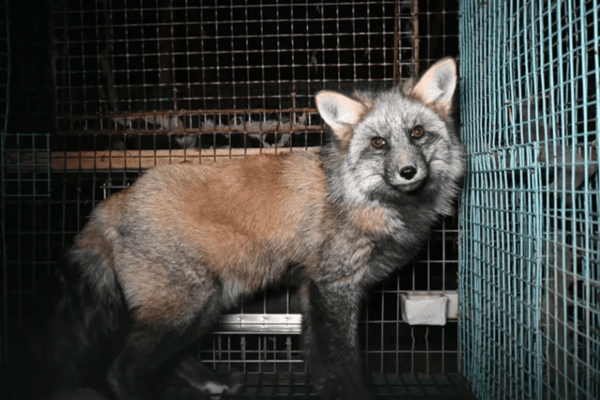
The Danish minister's statement applies to Switzerland too. The new Swiss regulation does not end domestic fox hunting. In the canton of Bern alone, in a single season around 3,000 foxes were shot. At the Grisons fur market, fox pelts changed hands for 8 francs apiece. The new law does not cover them.
Fox hunting is defended with tradition and custom; it does not have to fulfil any regulatory mandate. Even the Bern government admits this. The Danish minister explicitly rejected the mere argument from tradition for an entire industry: that something has existed for a long time does not justify its continuing to exist. Anyone who rightly takes fur from foreign cages off the market can no longer wave through fox hunting at home as custom.
Anyone who wants to change this can write directly to their cantonal parliament. Addresses and a template letter are available on the page End fox hunting.
Sources
- Nau.ch (Keystone-SDA), 23 October 2026: «Denmark stops mink farming»
- EUR-Lex: Implementing Regulation (EU) 2025/1422
- FSVO, 5 June 2026: Extension of the transitional provisions on the fur import ban
- Fur Free Alliance, 2 December 2025: «Breaking: Poland bans fur farming»
- Vier Pfoten, 14 October 2026: «Success for animals and modern fashion: Woolrich goes fur-free»
- Humane World for Animals: «Lancet commentary: EU-wide ban on fur farming»
More on the subject of recreational hunting: The scientific evidence is presented in the overview Studies on the Effects of Recreational Hunting.
The position of IG Wild beim Wild: IG Wild beim Wild rejects recreational hunting. Our model is the canton of Geneva, which has managed without recreational hunting since 1974: without hunting seasons, without hunting dogs, without driven hunts, without high seats, without the animal cruelty and crime that go hand in hand with hunting season elsewhere. What has worked there for over fifty years disproves every position paper by JagdSchweiz. An association that bases its policy on claims it refutes in its own documents is not a professional organisation, but a factory for misinformation.
Wild animals need a voice
Once a week: research, petitions and background information on recreational hunting. Free of charge and can be unsubscribed from at any time.

All articles are written by IG Wild beim Wild as well as by external co-authors. Research, structuring and editorial processes may be supported by AI-assisted tools.
Support our work
With your donation you help protect animals and give their voice a hearing.
Donate now →