Cross-country skier Valerio Grond and recreational hunting: what the sports portrait leaves out
Three red deer, three chamois and plenty of idyll: a Grisons newspaper portrait presents recreational hunting as a counterbalance to top-level sport.
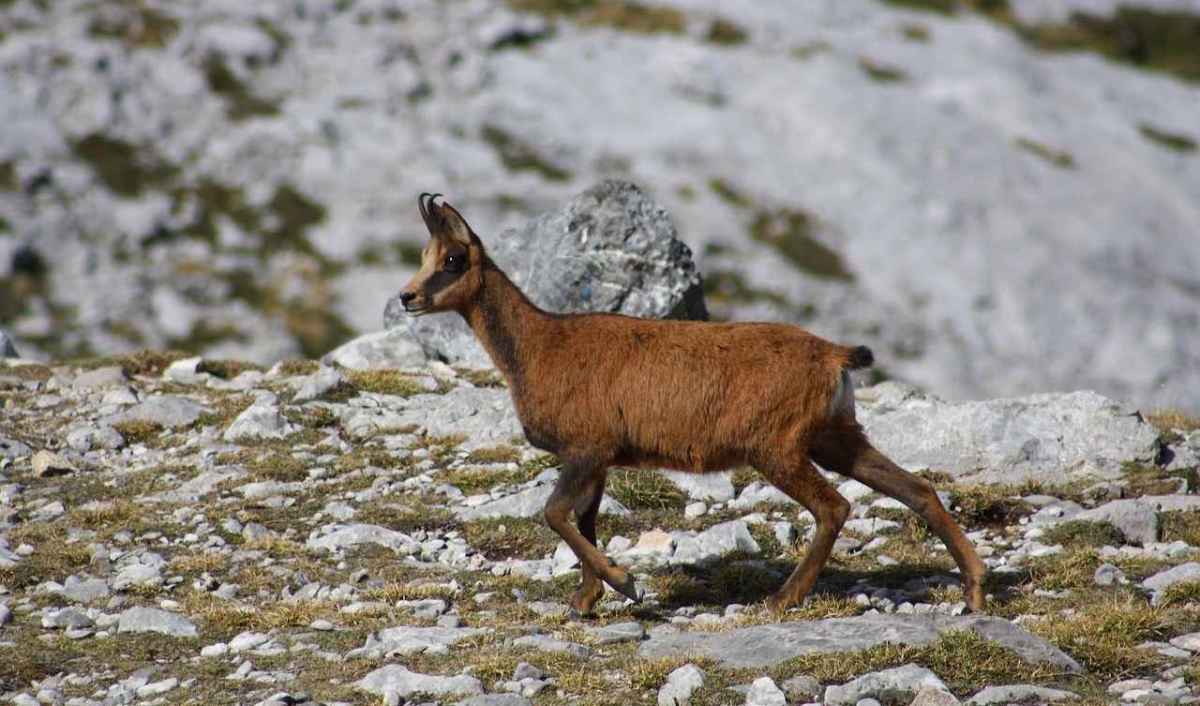
Image: dosmad / Pixabay
She had a name
On 28 September 2026, the «Südostschweiz» published a portrait by Roman Michel about the cross-country skier Valerio Grond from Davos Monstein.
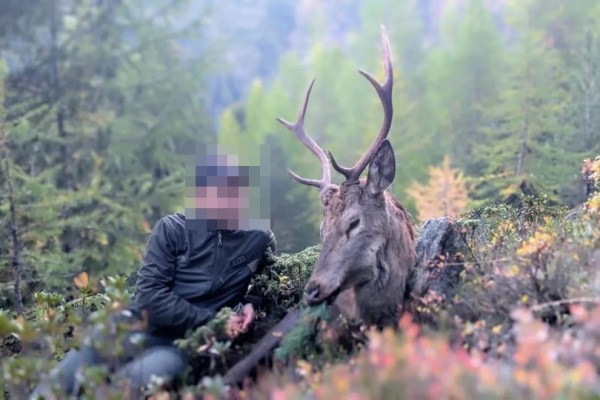
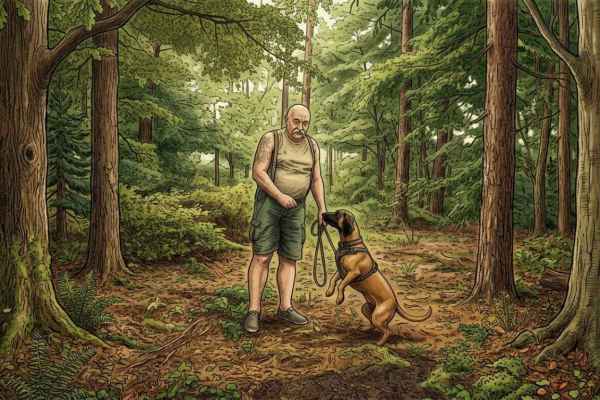
The title:«Here I can put sport aside»: cross-country skier Valerio Grond takes us hunting. The piece opens with cowbells, a chirping bird and an athlete in tall grass, rifle on his backpack. The 25-year-old has shot three red deer and three chamois this autumn, more than ever before, since a colleague introduced him to recreational hunting five years ago.
The portrait describes Grond's experience in detail. The six non-human animals whose lives ended this autumn appear in it almost only as a kill count, as cargo to be carried, and as meat.
Recreational hunting as a «mental break»
Grond describes recreational hunting as a counterpoint to competitive sport. Out in nature, he says, all thoughts of sport are far away, and it is a physical and mental balance for him. The high hunt is a fixed date in his calendar, sandwiched between basic training and World Cup preparation.
The portrait foregrounds this experience of recuperation. A justification for why the six animals had to die, such as wildlife damage or population management, does not appear in the text. This leaves unanswered precisely the question that ought to be central to recreational hunting. What research has gathered on the motives of recreational hunters provides more substance on this than the portrait does.
Humility and a personal best in the same text
Grond speaks of a mix of adrenaline, nervousness and joy at being able to kill an animal. On the other hand, he says, there is also great humility, because: "After all, you are killing a living creature." The newspaper highlights this sentence once more as a quote at the end.
In the same profile, his personal best of six kills is reported. Humility measured in a tally is a peculiar kind of humility. This contradiction is typical of recreational hunting in Grisons: in its new hunting code the licence hunting association calls for respect for wild animals, while in public portrayals it is kill numbers, weights and trophy photos that take centre stage.
The red deer as a burden on the back
This perspective becomes particularly clear when it comes to transporting the animal away. Carrying a roughly 100-kilogram red deer down into the valley across steep Engadine terrain, it is said, takes a real physical toll. Good thing, then, that the cross-country skier is fit. Here, the killed animal appears above all as a physical challenge for the athlete.
Readers are not told which animals Grond has killed: stags or hinds, adult animals or young ones. Yet this question would be an obvious one to ask, especially in September. The Grisons Office for Hunting and Fishing states in an expert assessment that in September, red deer calves are still dependent on their mothers for food and guidance. That is why lactating hinds are protected during the high hunt. Chamois, as a rule, give birth to only one young per year. Anyone reporting on the high hunt could at least ask about this.
The meat as a closing question
At the end, the newspaper asks what happens to the meat. Part of it traditionally ends up on the table at Christmas, says Grond. What role the use of the meat plays for him remains unclear. In the profile, it appears as an afterthought, not as a reason for recreational hunting. The self-sufficiency argument is one of the ever-same hunting arguments that barely withstand scrutiny.
A role model with a rifle
Valerio Grond is an Olympic silver medallist in the team sprint, an Olympic competitor, and a role model for many young cross-country skiers. The newspaper asks him, with a wink, why, given his talent with a firearm, he never became a biathlete. In this way, shooting at living animals is brought close to shooting at targets.
This profile is part of a series. Every year, Grisons media accompany the high hunt with great goodwill, right up to the licence-fee-funded RTR, which has the “most beautiful” trophy photo voted on. Critical voices do not feature in such texts.
Comment: The roe deer in the meadow would have been enough
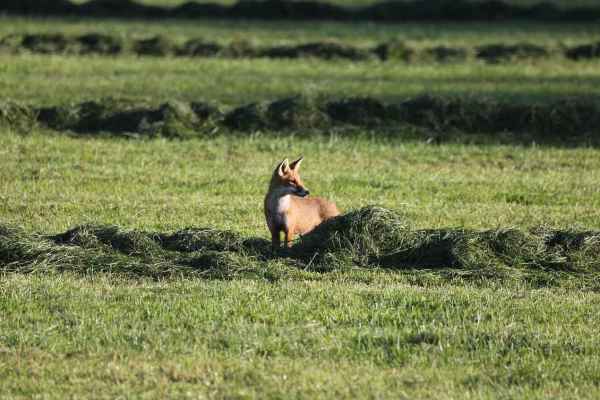
The most beautiful sentence in the entire portrait comes from Grond himself. The day before, he says, pointing to a meadow, he had watched a group of roe deer at play. That is exactly the mental balance he seeks: stillness, observation, encounter. No rifle is needed for that.
Grond speaks of humility. How this humility squares with his personal best of six kills is a question the portrait never asks. A text that frames the killing of six animals as an endearing facet of a top athlete reads more like image cultivation for recreational hunting than like reporting. Young people who look up to Valerio Grond deserve a different picture of what connection to nature means.
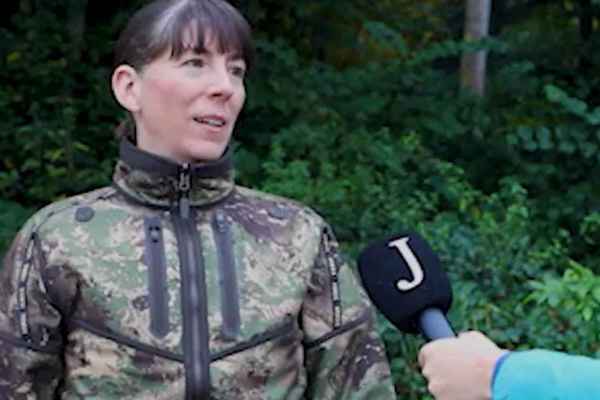
Read more: Grisons hunting 2026/27 at a glance · Roe deer hunting Bern: Plattform J's portrait of a recreational hunter
More on the subject of recreational hunting: In the dossier The Role and Criticism of Recreational Hunters we shed light on the training, power and self-image of recreational hunters. The scientific evidence is presented in the overview Studies on the Effects of Recreational Hunting.
The position of IG Wild beim Wild: IG Wild beim Wild rejects recreational hunting. Our model is the canton of Geneva, which has managed without recreational hunting since 1974: without hunting seasons, without hunting dogs, without driven hunts, without high seats, without the animal cruelty and crime that go hand in hand with hunting season elsewhere. What has worked there for over fifty years disproves every position paper by JagdSchweiz. An association that bases its policy on claims it refutes in its own documents is not a professional organisation, but a factory for misinformation.

All articles are written by IG Wild beim Wild as well as by external co-authors. Research, structuring and editorial processes may be supported by AI-assisted tools.
Support our work
With your donation you help protect animals and give their voice a hearing.
Donate now →