Fribourg backs the recreational hunters in the dispute with the game wardens
In response to a motion by two members of the Grand Council, the government stresses the importance of recreational hunting and plays down the tensions with the wildlife wardens.
«Who checks whom»
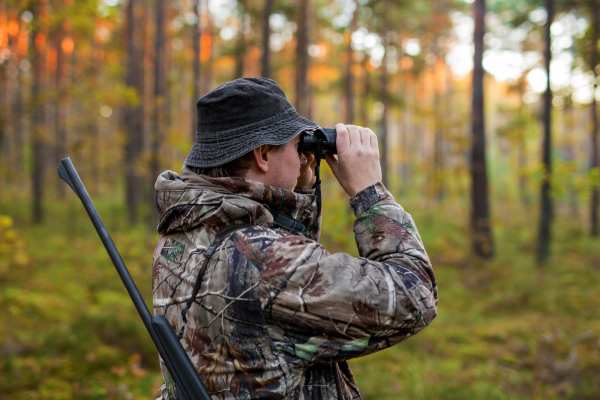
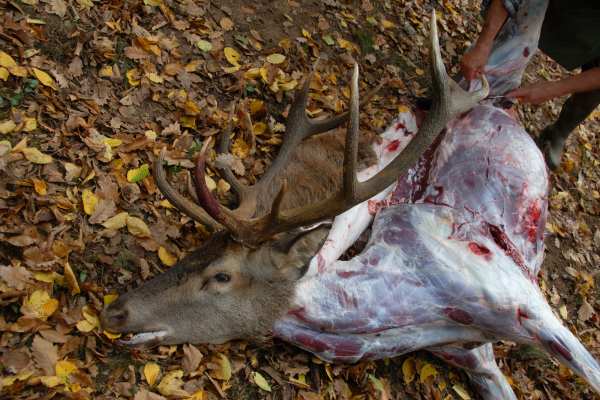
In the canton of Fribourg, the tone between recreational hunters and game wardens has grown harsher over recent months. The trigger was a judicial affair: an experienced recreational hunter was initially convicted and then, in appeal proceedings, acquitted, because he had put a wounded roe deer out of its suffering without first informing the responsible game warden.
The Fribourg recreational hunters and their umbrella association then took to the barricades and accused the wildlife wardens of a harassing attitude and a fundamental hostility towards hunting.
In a reply to a motion by Grand Council members Ivan Thévoz (EDU, Russy) and David Papaux (SVP, Fribourg), the Council of State now clearly backs recreational hunting. The organisation of recreational hunting is an important instrument, «especially for the regulation of species that can cause damage to agriculture or the forest». The two politicians had made themselves the mouthpiece of numerous recreational hunters who regard the checks carried out by the wildlife wardens as excessive and disproportionate.
«Solid and constructive partnership»
The government disputes that there is a climate of tension between recreational hunters and game wardens. The cooperation between the Office for Forests and Nature (AWN) and the Fribourg Federation of Hunting Societies (FFSC) is, in the long term, characterised by a «solid and constructive partnership». In recent years, numerous measures had been implemented to make it easier for recreational hunters to regulate damage-causing animals – in particular wild boars. The recreational hunters' complaints stemmed rather from «isolated individual cases».
On the affair itself, in which a senior AWN official had challenged the acquittal of the recreational hunter, the Council of State states that it reminded the parties of the principle of the separation of powers: it is not the place of state employees to call into question legally binding court decisions. «In consultation with the AWN management, the necessary measures were taken to prevent a recurrence of such an incident.»
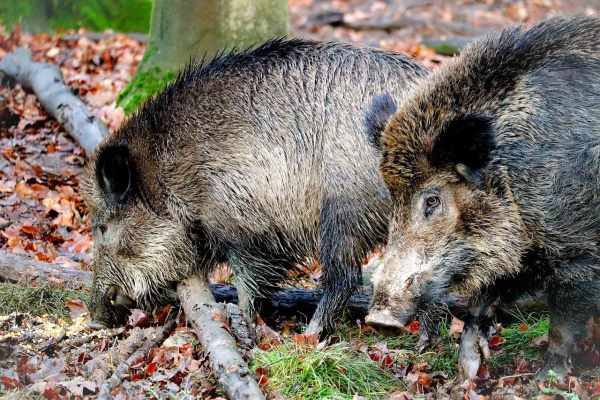
The wild boar in the crosshairs
According to the government, the number of checks carried out by the wildlife wardens remains stable, while the penalised offences in the hunting sector are decreasing: 31 fixed-penalty fines, 13 reports and two withdrawals of the hunting licence in the 2025/2026 season. Since 2019, recreational hunters have been allowed to take part in a summer hunt for wild boar, which begins on 1 July and runs until 31 July. New regulations now allow them to shoot the animals with a rifle from the very first day of hunting, rather than only from 1 November.
According to the canton's wildlife damage statistics, a total of 311 wild boars were taken in the 2025/2026 season: 135 in the ordinary hunt, 25 in the summer hunt, plus 104 damage culls and 13 sanitary culls by the wildlife wardens, as well as 32 animals found dead and 2 regulatory culls. The wildlife wardens do not intervene in place of the recreational hunters, but only on a subsidiary basis, when the latter's targets are not met, the Council of State says. It also points out that the duties of AWN staff go far beyond monitoring recreational hunting and regulatory culls: they require knowledge of species conservation, silviculture, habitat protection, biology, ecology and veterinary medicine. The game wardens cannot be expected to all be skilled in hunting techniques.
Who is checking whom here
What is remarkable about this answer is the distribution of roles that it reveals. Two parliamentarians make themselves the mouthpiece of recreational hunters who feel «harassed» by state oversight – and the government hastens to affirm the importance of recreational hunting and to play down the friction as «isolated individual cases». That a privately pursued leisure activity should be subject to any oversight at all is not harassment, but the very least one may expect of a constitutional state when shots are fired with a weapon out in the countryside. That the number of checks, according to the government, remains stable and the sanctions are even decreasing hardly speaks, moreover, of a climate of persecution.
The perennial argument of «regulation», presented here as if it were a law of nature, is also revealing. Several studies point in the opposite direction for wild boar: high hunting pressure can destabilise the social structure of the sounders, cause younger sows to become fertile earlier and thereby increase reproduction (cf. Servanty et al. 2009; Keuling et al. 2013). Intensive hunting can thus help to create part of the very overpopulation it claims to combat. Anyone shooting wild boars in summer—and now from the very first day of the hunt—does not necessarily stabilise the populations, but may instead keep a partly self-inflicted problem going.
The canton's own figures illustrate this. Between the 2020/21 and 2025/26 seasons, the annual wild boar take fluctuated between 207 and 354 animals, with no discernible downward trend. In 2025/26 the take, at 311 animals, was even higher than the figure for 2020/21 (220), and that after five years of continually expanded summer hunting and brought-forward shooting. The consistently high takes suggest that, despite increasing effort, no sustainable decline has been achieved. It is also telling that the most effective interventions against damage do not come from the recreational hunters: damage kills are handled by the official wildlife wardens, who in 2025/26 alone took 104 wild boars on damaged areas—many times the 25 animals from the recreational hunters' summer hunt. And the actual protection of the fields runs through fencing, coordinated by the canton, not through the rifle.
Finally, the government's own concluding sentence is revealing: the tasks of the game wardens encompassed species protection, silviculture, habitat protection, biology, ecology and veterinary medicine—hunting technique being only a secondary aspect. That is precisely the point. Conservation is a scientifically demanding task for trained specialists. Recreational hunting is not. That of all people those who kill a roe deer for the pleasure of the hunt should claim the right to tell the wildlife wardens, as equals, how conservation ought to work, turns the relationship on its head. What needs to be controlled is not the authority, but the activity that kills animals without any ecological necessity.
A monopoly that the state is giving away
The clearest regulatory tension in this response lies in the very concept of the separation of powers that the State Council invokes here. It calls upon it to forbid an administrative official from challenging a legally binding acquittal. Yet in the same document, it largely hands over the sovereign task of intervening in the lives of wild animals to private recreational hunters and defines the official wildlife wardens as merely acting in a «subsidiary» capacity, that is, as a stopgap that steps in when the recreational hunters fail to reach their kill quotas. This shifts the balance: state intervention becomes the exception, private killing the main event.
This is questionable from a regulatory standpoint. In Switzerland, the right to kill game lies sovereignly with the canton; through the hunting prerogative, it is granted to private individuals by licence. Such a far-reaching authority demands training, oversight and a clear public mandate, as fulfilled by the broadly and professionally trained wildlife wardens. To outsource it to people who pursue killing as a leisure activity, and for whom a high wildlife population systemically provides more hunting opportunities, and then to relegate the state body to a mere reserve, turns the situation on its head. Whoever invokes the principle of the separation of powers should also apply it where the state cedes one of its core tasks to external interest groups.
More on the subject of recreational hunting: In the dossier The Role and Criticism of Recreational Hunters we shed light on the training, power and self-image of recreational hunters. What the research says about this is shown by Hunting fact-checked: the state of research.
The position of IG Wild beim Wild: IG Wild beim Wild rejects recreational hunting. Our model is the canton of Geneva, which has managed without recreational hunting since 1974: without hunting seasons, without hunting dogs, without driven hunts, without high seats, without the animal cruelty and crime that go hand in hand with hunting season elsewhere. What has worked there for over fifty years disproves every position paper by JagdSchweiz. An association that bases its policy on claims it refutes in its own documents is not a professional organisation, but a factory for misinformation.