FACE: How the hunting lobby rewrites EU official reports and hollows out lead bans
Three posts in one week: the umbrella organisation of recreational hunters turns a trapping programme into a management vacuum, a dog vaccination warning into a hunting argument, and a hollowed-out lead ban into a conservation success.
One association, three posts, three distortions.
FACE calls itself the «European Federation for Hunting and Conservation» and claims to represent seven million recreational hunters in Brussels. JagdSchweiz is also a member of the association, the very association we have already described as a misinformation factory . The umbrella organisation in Brussels operates on the same principle, only with a wider reach: what FACE publishes filters into the lines of argument used by national hunting associations, including here in Switzerland. It is therefore worth taking a close look at what the association has spread on its channels in just the past week alone. Three examples, three patterns.
Cabañeros: the «management vacuum» that isn’t one
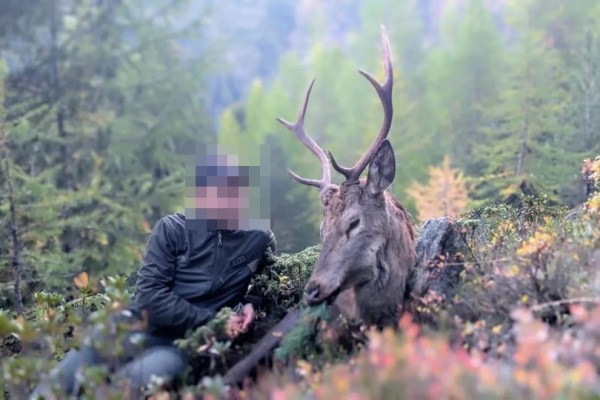
«What happens when wildlife populations are no longer managed?», asks FACE, pointing to the Spanish national park Cabañeros, where recreational hunting has been banned since December 2020. The association’s answer: overgrazing, soil erosion, emergency.
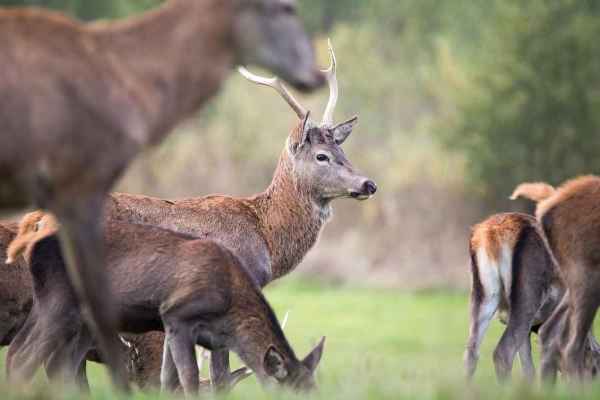
The reality is different. The Spanish national park authority presented its ungulate management plan to a delegation of the European Parliament in February: by 13 February 2026, 5,252 red deer and 1,101 wild boars had been captured, 78 and 64 per cent respectively of the planned removals. For this, the park has 13 trapping facilities for red deer and nine for wild boar. There can therefore be no talk of a «management vacuum»: the national park is being actively managed, using traps instead of rifles. For the privately owned areas within the park, an additional agreement on population control was signed in January 2026.
FACE conceals who presented the delegation with the “overpopulation”: it was the Asociación de Afectados, an association of the owners of nine private estates within the park who lost their hunting income due to the ban. The visit was pushed by the Partido Popular, with the declared aim of pressuring Spain via Brussels to reauthorise hunting. Ecologistas en Acción criticised that the delegation had not sought a meeting with environmental organisations and was instead following the interests of a handful of large landowners; hunting, they said, was the main cause of the park's environmental problems, not their solution. Before the park was founded in 1995, Cabañeros was a hunting estate where red deer populations were deliberately kept high. Today's density is a legacy of recreational hunting, not its absence.
Latvia: a vaccination warning turned into a hunting argument
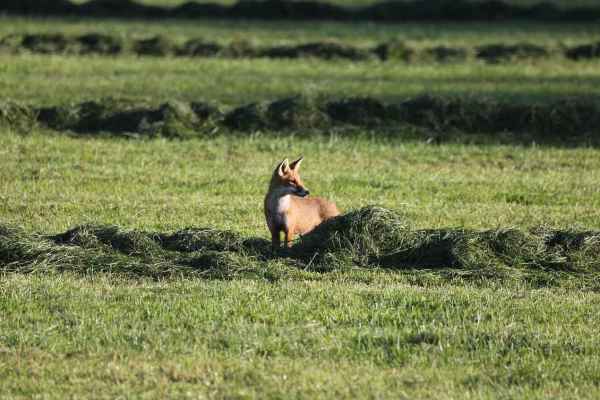
Second example: “Why fox population management matters”, FACE headlines, citing a report by the Latvian veterinary service PVD dated 23 September. Distemper was detected in foxes near Ādaži.
The official notice is a warning to dog owners: before walking in the forest, dog owners should check whether their dog has been vaccinated against distemper; dogs should be kept on a lead, and contact with foxes, other wild animals or carcasses should be avoided. The head of animal disease surveillance explicitly stressed that distemper and listeriosis have long been known in Latvia and that this case does not indicate a new disease situation but rather serves as a reminder of vaccination prophylaxis. The conspicuous foxes were reported by local residents. The notice makes no mention of hunting, killing or population control.
All of this was invented by FACE and attributed with “Source: PVD” underneath. Scientifically, the construction is untenable: killing does not reduce disease prevalence in fox populations — instead, it increases the proportion of young foxes and their movement patterns, which in turn promotes contact. Rabies demonstrated this: decades of fox culling and den gassing achieved nothing, whereas oral vaccination made Europe rabies-free. The distemper virus circulates between domestic and wild animal populations; this is precisely why a high vaccination rate among dogs is essential, complemented by keeping dogs on a lead and avoiding conspicuous animals. That is what the PVD says. No demand for culling follows from this.
That the central justification for fox hunting is crumbling even within the hunters' own camp is shown by our article Rift in the hunters' camp: Ecological Hunting Association questions JagdSchweiz's fox hunting stance. The relevant body of research can be found on our page Hunting Fact Check.
Lead shot: seven years' delay hailed as a “success”
The third example is not nonsense, but a summary — and precisely for that reason, it is revealing. FACE explains to its members why they should no longer fight the EU ban on lead shot. The association considers the final restriction to be “workable”. The transitional period for lead shot was extended to seven years, even though the two scientific committees of the EU Chemicals Agency had recommended a period of less than five years and at least 18 months, and the Commission's proposal had provided for three years. Lead bullets and slugs were removed entirely from the scope of application; the European defence agenda is said to have been a significant factor in this.
A complete ban on all lead ammunition with a short deadline became a shot ban with a seven-year grace period. FACE says it has been following this dossier for almost 20 years. Every year of delay means more tonnes of lead in wetlands, in soils, in waterfowl and birds of prey. FACE itself states that steel shot is already available today at comparable prices and that the ammunition industry can deliver the transition within seven years. This causes the main argument for the long deadline to collapse on its own.
Particularly cynical is the rescue of the lead bullet via the safety debate. Hunting ammunition is not military ammunition. What was saved was precisely the ammunition that fragments in the meat and offal of hoofed game, poisons golden eagles and bearded vultures, and, according to the Council document on the restriction, poses a moderate to high health risk from lead in game meat for children in hunters' families. And the benchmark by which FACE measures the transition in Denmark, the Netherlands and Flanders is telling: no decline in the number of hunters and in hunting bags. Not fewer poisoned birds, but the same number of recreational hunters and the same number of dead animals count as success.
We documented how the postponement came about in July: EU postpones lead ban on hunting ammunition by seven years. The background on lead in game meat, soils and birds of prey can be found in the article Lead ammunition: toxic hunting ammunition and its consequences for humans and animals.
The next lever: stress test for nature conservation directives
In the same monthly report, FACE announces where it will focus next. The EU Commission is subjecting the Birds Directive and the Habitats Directive to a “stress test” as part of its simplification initiative to strengthen competitiveness. FACE is primarily interested in one point: the procedure for amending the annexes. The association concedes that the relevance of this point to competitiveness is “not quite clear”, but is nevertheless organising an event on the topic at the European Parliament next week; the host is Spanish PP MEP Juan Ignacio Zoido.
“Amending the annexes” means, in plain terms: removing the wolf, beaver, cormorant, geese and other species from the strict protection categories, or shifting them into the huntable annexes. The downgrading of the wolf under the Bern Convention was the blueprint; Switzerland acted in the EU's slipstream on that occasion. What FACE prepares in Brussels ends up, with a delay, in the motions of JagdSchweiz and the cantonal hunting associations. See our dossier Wolf in Switzerland: facts, politics and the limits of hunting.
What this means for Switzerland
Switzerland does not automatically adopt REACH. In this country, lead shot is only banned when hunting over waterbodies and in wetlands, while for lead-free bullet ammunition a cantonal patchwork prevails. Even the EU deadline, which FACE has stretched to seven years, would thus be more ambitious than the Swiss standstill. And the argumentative patterns supplied by FACE work exactly the same way in Bern and in the cantons as they do in Brussels: trapping programmes become a “management vacuum”, vaccination warnings become a hunting argument, and delays become a conservation success.
Anyone who perceives the association as a nature conservation organisation should read its posts before sharing them.
Sources
- European Parliament, Committee on Petitions: Mission report on Cabañeros National Park (delegation 16 to 18 February 2026, report adopted 6 May 2026)
- eldiario.es, 19 February 2026: «Dueños de fincas de Cabañeros alegan ‘deterioro ecológico’ para denunciar la ‘superpoblación’ de animales»
- Ecologistas en Acción Castilla-La Mancha, 13 February 2026: statement on the delegation's visit to Cabañeros
- Revista Jara y Sedal, 7 May 2026: report on the PETI decision with the trapping figures from the national park authority
- Pārtikas un veterinārais dienests (PVD) / LSM, 23 September 2026: distemper in foxes in Ādaži
- FACE, 22 September 2026: «The EU restriction on lead gunshot: FACE’s assessment»
- Council of the European Union, Doc. 11840/26, 13 July 2026: Draft REACH restriction on lead in shot ammunition
- European Commission: Stress test of the Birds and Habitats Directives
- FACE, 22 September 2026: “Member States Cautious about Changing the Nature Directives”
More on the subject of recreational hunting: In the dossier The Role and Criticism of Recreational Hunters we shed light on the training, power and self-image of recreational hunters. The scientific evidence is presented in the overview Studies on the Effects of Recreational Hunting.
The position of IG Wild beim Wild: IG Wild beim Wild rejects recreational hunting. Our model is the canton of Geneva, which has managed without recreational hunting since 1974: without hunting seasons, without hunting dogs, without driven hunts, without high seats, without the animal cruelty and crime that go hand in hand with hunting season elsewhere. What has worked there for over fifty years disproves every position paper by JagdSchweiz. An association that bases its policy on claims it refutes in its own documents is not a professional organisation, but a factory for misinformation.

All articles are written by IG Wild beim Wild as well as by external co-authors. Research, structuring and editorial processes may be supported by AI-assisted tools.
Support our work
With your donation you help protect animals and give their voice a hearing.
Donate now →