
EU postpones lead ban on hunting ammunition by seven years
The REACH Committee postponed the lead ban to seven years; on 8 October the EU Parliament let the compromise pass.
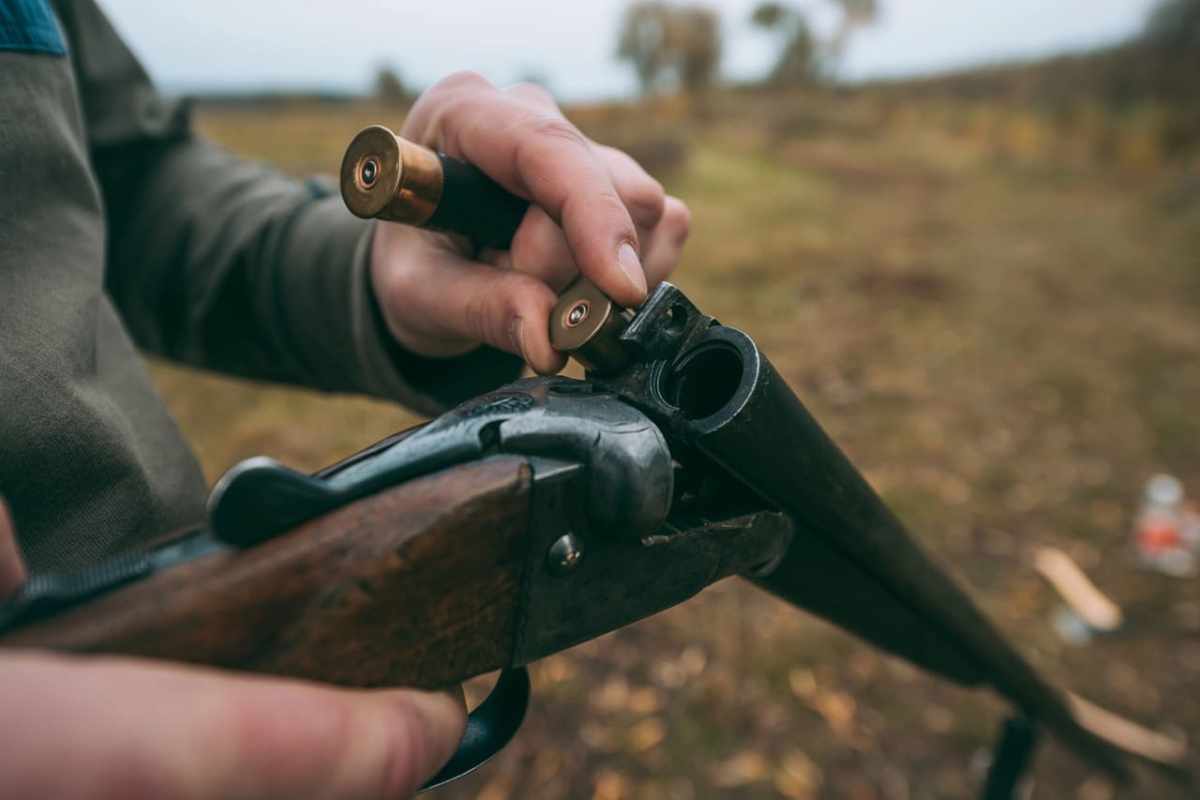
«Lead in the Wind»
On 25 June 2026, the EU Commission's REACH Committee approved a new version of the lead ban for hunting ammunition.
Instead of the originally planned eighteen months, lead shot will now be subject to a seven-year transition period, while rifle bullets are excluded entirely from the scope of the regulation.
What was decided on 25 June
Representatives of the EU member states agreed in the REACH Committee on a compromise text that massively waters down the European Commission's original ban proposal. Lead shot for recreational hunting is now set to be banned only after a seven-year transition period, after the timeframe was gradually stretched over the past rounds of negotiations from three to five and finally to seven years. Lead-containing bullet ammunition used for predators and cloven-hoofed game was removed from the regulatory proposal altogether. The decision is not yet final law. The Council and Parliament must approve the compromise within three months before it can take effect as a binding amendment to the REACH Regulation (EC) No 1907/2006.
For the recreational hunting lobby, the decision is a success. Willy Schraen, president of the French Fédération Nationale des Chasseurs, publicly hailed the outcome as confirmation that the «realities of rural areas» had prevailed over a Commission that had long ignored them.
Who pushed through the delay
The driving force behind the dilution was an alliance of recreational hunting associations and the ammunition industry. At European level, the umbrella organisation FACE (Federation of Associations for Hunting and Conservation of the EU) coordinated lobbying efforts towards the REACH Committee and organised an event in the EU Parliament in November 2025, at which the ammunition manufacturers' association AFEMS warned of «significant consequences» for the industry. In France, the FNC, the ammunition manufacturers' association SNAFAM and the CSNA joined forces to press the French government for an extension of the deadlines. According to consistent reports in the hunting press, several governments — whose names are not individually disclosed in the committee's meeting minutes — raised geopolitical and security concerns: given the current state of armament, they argued, the ammunition industry, which runs civilian and military production in parallel, could not be expected to undergo such a rapid industrial conversion.
Within France, too, opinion was not unanimous. While the environment minister defended a five-year deadline, the then interior minister Bruno Retailleau called for a delay of up to ten years and had the economic and security implications for equipping the security forces specifically examined before the government took a position.
Who pushed for a swift ban
On the other side stood science and European bird and nature conservation. The European Chemicals Agency (ECHA) had already proposed a comprehensive restriction in 2021, and its scientific committees RAC and SEAC confirmed in their 2023 opinions that the risks to the environment and human health justify a ban. BirdLife International, whose French partner organisation LPO has been campaigning for a comprehensive lead ban for over twenty years, described the Commission's original draft as a «historic step» and sharply criticises the current dilution. A petition for an EU-wide ban, run by BirdLife, collected over 61,000 signatures. When the EU Parliament voted on the preceding ban on lead shot in wetlands in 2020, the right-wing populist Identity and Democracy group unsuccessfully tried to overturn the plan by resolution; 499 MEPs voted against it.
Why the process has been dragging on for years
The delaying tactics follow a recurring pattern that has been observable since ECHA's first restriction proposal in 2018: every round of negotiations brings an extension of the transition periods, without the underlying scientific assessment changing. The dispute has long ceased to be about whether lead is toxic, and is now only about how many exemptions and how long a transition period politics will allow. The REACH committee procedure structurally favours this dynamic: because the Commission depends on a qualified majority of member states, a coordinated blocking minority is enough to keep stretching the deadlines further and further in the renegotiation process without formally derailing the proposal.
The situation in Switzerland
Switzerland is not an EU member and is therefore not directly bound by the REACH decision, but traditionally follows European chemicals law with a delay as part of its autonomous adoption of EU law. At the national level, exactly the same pattern of delay can be seen as in Brussels. Lead shot has been banned in waterfowl hunting since 1998, but other areas remained unregulated for years. A motion by National Councillor Martina Munz (SP/SH) calling for a far-reaching ban on lead-containing ammunition failed in the National Council in 2023 by the narrowest of margins, 99 votes to 94.
Only the revised Hunting Ordinance, which came into force on 1 February 2025, bans lead-containing bullet ammunition from calibre 6 mm upwards for recreational hunting of cloven-hoofed game. But here too, a long transition period applies: the old ammunition remains permitted until 31 December 2029, so that the cantons have time to adapt their own regulations. Lead shot outside wetlands remains completely unregulated. The result is a cantonal patchwork: Grisons has banned lead-containing bullet ammunition in the high hunt since 2021, Appenzell Outer Rhodes and St. Gallen have likewise moved ahead, while numerous other cantons are waiting for a national solution that keeps being consistently postponed.
Meanwhile, health authorities continue to issue the same warning: the Federal Food Safety and Veterinary Office (FSVO) recommends that children up to seven years of age, pregnant women, breastfeeding women and women wishing to conceive largely avoid consuming game meat, as a lead content from the ammunition cannot be ruled out. More on the scientific background, lobbying efforts and political obstruction in Switzerland can be found in the dossier Lead ammunition and recreational hunting: facts, ban, lobby analysis.
Addendum of 9 October 2026: EU Parliament lets the compromise pass
On 8 October 2026, the European Parliament in Strasbourg let the REACH Committee's compromise pass. Motions by right-wing MEPs to stop the lead shot ban at the last minute failed to secure a sufficient majority, according to the German Press Agency. MEP Manuela Ripa (ÖDP) spoke of a «clear majority» against the objections. This allows the EU Commission to formally enact the restriction. It has not yet announced when it will do so. The regulation enters into force 20 days after publication in the EU's Official Journal, but according to a Parliament spokesperson, its key obligations will not apply until seven years later.
In substance, the watered-down version from June remains unchanged. Once the grace period expires, shot containing a lead content of one weight percent or more may, with few exceptions, no longer be sold or used in recreational hunting and outdoor sport shooting; carrying it during recreational hunting will also be banned. Lead-based bullet ammunition remains permitted. A binding ban on lead shot in the EU will therefore take effect at the earliest in 2033.
For Switzerland, nothing changes for the time being as a result of this decision. Lead shot remains banned here only for waterfowl hunting, while lead-based bullet ammunition of 6 mm or more will remain permitted until the end of 2029. While the EU now at least has a fixed exit path for shot, Switzerland lacks any deadline whatsoever for this. How much lead from recreational hunting harms scavengers is shown in the article Bearded vulture record: lead from recreational hunting remains dangerous. How the European umbrella association of recreational hunters fights lead bans is described in the article FACE: How the hunting lobby rewrites EU regulatory announcements and guts lead bans.
For the IG Wild beim Wild, the result is no cause for celebration: a toxin whose harmfulness has been documented for decades may still be used for shooting in the EU for at least another seven years, and Switzerland does not even have a deadline. A complete ban on lead in shot and bullets would be possible today, as lead-free alternatives have long been available on the market.
More on the subject of recreational hunting: The scientific evidence is presented in the overview Studies on the Effects of Recreational Hunting.
The position of IG Wild beim Wild: IG Wild beim Wild rejects recreational hunting. Our model is the canton of Geneva, which has managed without recreational hunting since 1974: without hunting seasons, without hunting dogs, without driven hunts, without high seats, without the animal cruelty and crime that go hand in hand with hunting season elsewhere. What has worked there for over fifty years disproves every position paper by JagdSchweiz. An association that bases its policy on claims it refutes in its own documents is not a professional organisation, but a factory for misinformation.

All articles are written by IG Wild beim Wild as well as by external co-authors. Research, structuring and editorial processes may be supported by AI-assisted tools.
Support our work
With your donation you help protect animals and give their voice a hearing.
Donate now →