Study: 107,356 species in trade, twice as many as thought
A study in “Science Advances” counts twice as many traded species as previously assumed and shows that Europe does not even know what it imports. Nine days later, TerraExpo opens in Spreitenbach.
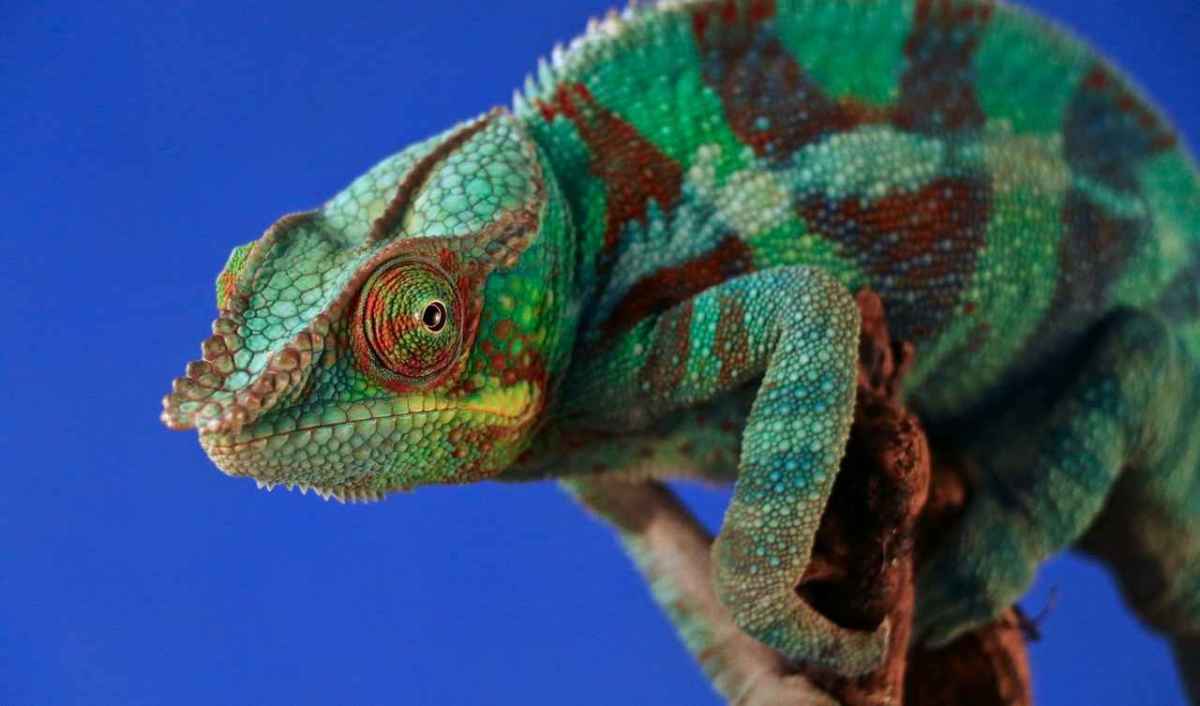
Panther chameleon: species like this one from Madagascar are among the best-sellers of the exotic pet trade. Photo: Pierre Bamin / Unsplash
At least 107,356 wild animal, plant and fungal species are traded worldwide. That is more than twice as many as previously assumed. This is the conclusion of a study led by the University of Melbourne, published on 30 October 2026 in the journal “Science Advances” and reported on by Keystone-SDA. Nine days later, on Sunday, 8 November 2026, the Umwelt Arena Spreitenbach opens its halls once again for TerraExpo, by its own account the largest terrarium and aquarium fair in Switzerland.
More than 47,000 animal species are commodities
Previous estimates, including an analysis by the Intergovernmental Science-Policy Platform on Biodiversity and Ecosystem Services (IPBES), put the number of internationally traded species at around 50,000. The new study records more than 47,000 animal species alone, plus almost 50,000 utilised plant species as well as fungi. To do so, the researchers systematically combined data from species protection, fisheries, the timber industry, the pet trade and medicine.
Most of this trade is legal. The researchers put its annual value at between 220 and 300 billion US dollars, which converts to roughly 181 to 247 billion Swiss francs. Illegal trade accounts for an estimated 28.4 to 39.5 billion dollars. “When we think of the trade in wild species, we mostly think of the illegal trade in elephants, tigers and pangolins. But it involves far more than that,” says study leader Alice Hughes. By the authors' estimate, the trade target in the global biodiversity strategy covers only around two per cent of traded species. The remaining 98 per cent fall through the net.
Traded populations are half the size
A further finding shows what removal from the wild does: for species with available data, traded populations are on average 50 to 60 per cent smaller than non-traded ones. According to the study, trade has contributed, directly or indirectly, to the extinction of 294 species. A further 25 species have vanished from the wild and survive only in human care. In 192 cases, populations have become locally extinct.
That this mechanism also applies to reptiles is well known: more than half of traded reptiles are taken from the wild, as a comment in Nature set out in September. Traders even exploit scientific first descriptions of new species to strip their sites of specimens.
Europe: “We simply don't know”
The most explosive part of the study concerns the data gaps. The Washington Convention on International Trade in Endangered Species, CITES, mainly records international trade in species that are already endangered. Reasonably good recording exists only in the USA: the Lemis information system has documented trade in more than 21,000 animal species there since 2000. Twenty-five per cent of the traded bird species and 54 per cent of the mammal species recorded appear exclusively in this US database. Elsewhere, they exist in no statistics at all.
According to Hughes, the trade in Europe could be as extensive as in the USA, or larger. This cannot be verified: «The problem is that we simply don't know: the data are not publicly accessible and may not meet the standards needed to capture the true scale of the trade.» The study does not mention Switzerland explicitly, but the situation is comparable: essentially only what falls under CITES is systematically recorded here. For the many species outside the convention, which is the vast majority of reptiles and amphibians, there is no public species-level record showing what comes into the country and in what numbers.
The researchers are therefore calling for systematic, internationally coordinated recording. Existing customs and veterinary checks could be used to document trade data at species level. «If we are serious about halting the loss of biodiversity, we need far more comprehensive, transparent and globally coordinated documentation of the trade in wild species,» says Hughes.
Spreitenbach: The stage is already set again
It is precisely into this gap that the TerraExpo steps on Sunday, 8 November 2026, from 10 am to 3 pm at the Umwelt Arena in Spreitenbach. The trade fair announcement advertises more than 120 exhibitors offering reptiles, aquaristics and exotic plants, with private hobby breeders and commercial sellers, and promises that the animals are «captive-bred». Nobody can check this at the stall. As long as there is no species-level record, neither the buyer, nor the municipality, nor the canton has any basis for proving the origin of a gecko or a tarantula. What the study finds for the global trade applies all the more to a sales table in Spreitenbach.
There is also the question of where these animals end up afterwards. The Swiss Animal Protection STS estimates that across Switzerland there are over 60,000 instances of cruel and therefore punishable reptile keeping . An animal fair that stages terrariums as a family outing supplies these keepers with fresh stock. The Umwelt Arena, which markets itself as a place of learning about sustainability, says in its own words that it sees itself «not as a moral authority». How the municipality of Spreitenbach responds to criticism of its trade fair formats has been documented by IG Wild beim Wild this year on several occasions.
Petition: No animal fairs at the Umwelt Arena
IG Wild beim Wild is calling on the Stiftung Umwelt Arena Schweiz and the municipality of Spreitenbach, by means of a petition, to stop giving hunting fairs, fishing fairs and animal markets a platform. The new study supplies the argument that was missing until now: nobody can currently say how many animals from which populations change hands at such markets. Anyone who enables trade under these circumstances accepts that the populations from which the animals originate may be halved.
Sign the petition « No hunting, fishing and animal fairs at the Umwelt Arena Spreitenbach ». Even more effective than a signature is a personal letter to politicians: on the page Animal-cruelty leisure formats and reptile-keeping fairs you will find a template text for parliamentary motions in the cantonal parliaments, which you can send directly to your cantonal councillor or Grossrat.
More on the subject of recreational hunting: The scientific evidence is presented in the overview Studies on the Effects of Recreational Hunting.
The position of IG Wild beim Wild: IG Wild beim Wild rejects recreational hunting. Our model is the canton of Geneva, which has managed without recreational hunting since 1974: without hunting seasons, without hunting dogs, without driven hunts, without high seats, without the animal cruelty and crime that go hand in hand with hunting season elsewhere. What has worked there for over fifty years disproves every position paper by JagdSchweiz. An association that bases its policy on claims it refutes in its own documents is not a professional organisation, but a factory for misinformation.
Wild animals need a voice
Once a week: research, petitions and background information on recreational hunting. Free of charge and can be unsubscribed from at any time.

All articles are written by IG Wild beim Wild as well as by external co-authors. Research, structuring and editorial processes may be supported by AI-assisted tools.
Support our work
With your donation you help protect animals and give their voice a hearing.
Donate now →