Operation Thunder 2025: 30’000 Wild Animals Seized
Nearly 30,000 live animals were seized from illegal wildlife trafficking in just one month. This figure comes from Operation Thunder 2025, a coordinated action by Interpol and international customs authorities. Period: 15 September to 15 October 2025. Countries involved: 134.


“Who’s Still Left”
What sounds like a success is above all a warning signal.
Because record seizures do not mean that the trade is disappearing. They show how large the market has become.
Among the items seized were thousands of birds, tortoises, reptiles, primates and even big cats. Also confiscated were products such as ivory, pangolin scales and illegal timber.
Interpol classifies illegal wildlife trafficking as a multi-billion-dollar business. The market is growing particularly strongly wherever live animals are in demand as exotic pets. Online platforms, trade fairs and fast logistics make the trade efficient and anonymous.
Many animals do not survive transport and temporary storage. High losses are factored in. The seized animals are only the visible part of a supply chain based on constant demand.
As long as animals are treated as commodities, supply will continue.
From global action to local example
Operation Thunder reveals the big picture. But this picture does not begin only at international borders.
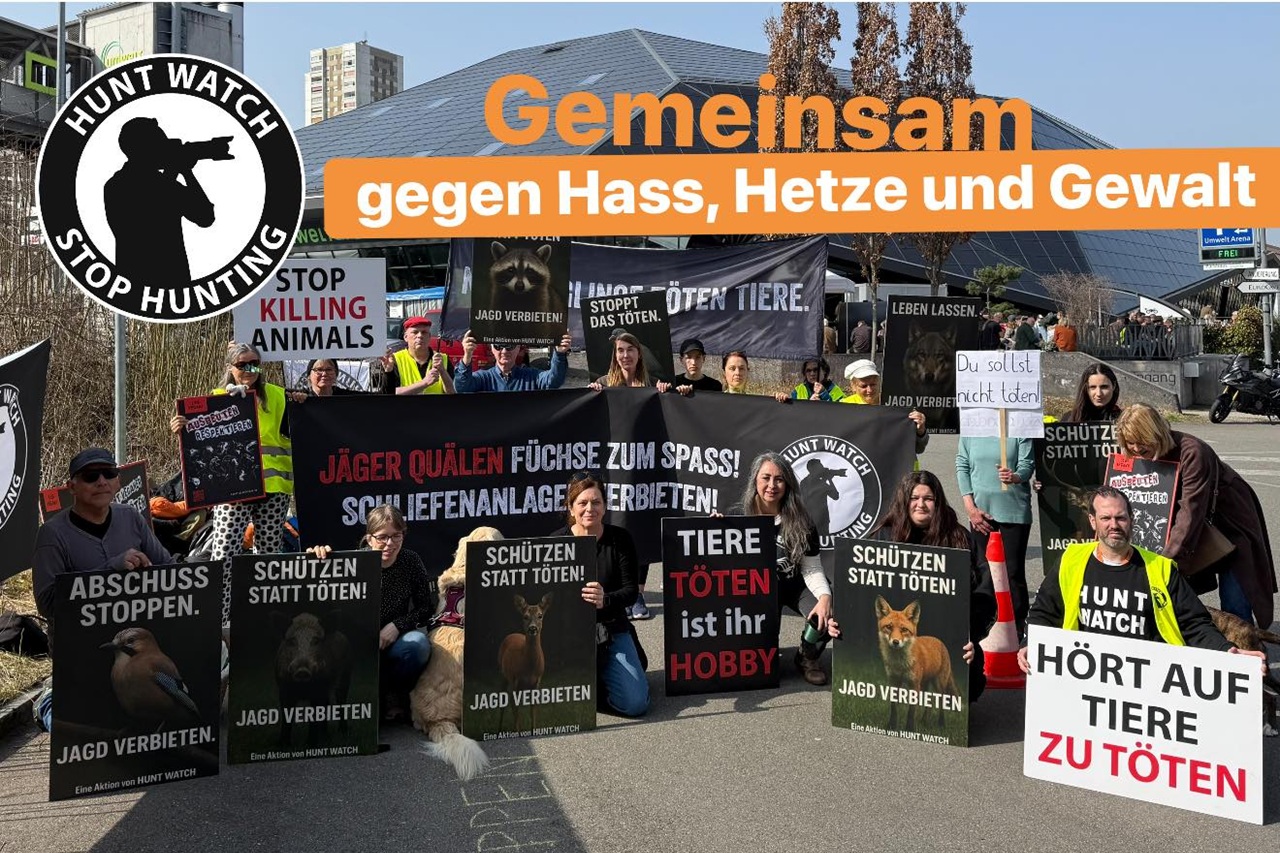
Reptile fairs such as the Terra Expo at the Umwelt Arena Spreitenbach are part of the same logic. Exotic animals are presented there like products, often in small plastic boxes, amid noise, lights and visitor traffic. For visitors, it appears to be a harmless hobby. In reality, it serves precisely the demand that drives the worldwide trade in live wild animals.
The connection is clear: where demand is created, supply chains emerge. Where supply chains emerge, animals are transported, replaced and written off.
Sustainability as a Backdrop
The venue is particularly problematic. The Umwelt Arena presents itself as a place for environmental education and sustainability. When events simultaneously take place there in which wild animals are objectified and sold, a fundamental contradiction arises.
Sustainability ends where the selling begins.
Operation Thunder 2025 makes clear that illegal markets are sustained not only by criminal networks, but by social habituation. Those who accept wild animals in sales cages also accept the system behind them.
Switzerland: Responsibility Does Not End at the Border
Switzerland too is part of European trade and transport chains. The import, transit and possession of protected species are subject to CITES regulations. Many products require permits and controls.
For consumers, the rule applies: what looks harmless can be part of a global problem.
What Can Concretely Be Done Now
- Do not buy exotic animals, including at trade fairs.
- Do not bring back wildlife souvenirs if the origin and documentation are not unambiguous.
- Question events that present animals as merchandise.
And take action locally:
The petition by wildbeimwild.com demands an end to animal cruelty at the Umwelt Arena Spreitenbach and opposes hunting and animal fairs that turn wild animals into objects.
➡️ Read and support the petition:
https://wildbeimwild.com/petition-schluss-mit-der-tierquaelerei-in-der-umwelt-arena-spreitenbach/
More on this in the dossier: Hunting and Animal Protection
More on the subject of recreational hunting: In the dossier Poaching and hunting crime in Switzerland we document cases, legal questions and recurring patterns. The scientific evidence is presented in the overview Studies on the Effects of Recreational Hunting.
The position of IG Wild beim Wild: IG Wild beim Wild rejects recreational hunting. Our model is the canton of Geneva, which has managed without recreational hunting since 1974: without hunting seasons, without hunting dogs, without driven hunts, without high seats, without the animal cruelty and crime that go hand in hand with hunting season elsewhere. What has worked there for over fifty years disproves every position paper by JagdSchweiz. An association that bases its policy on claims it refutes in its own documents is not a professional organisation, but a factory for misinformation.