Valais Wolf Balance 2025/2026: Numbers of a Massacre
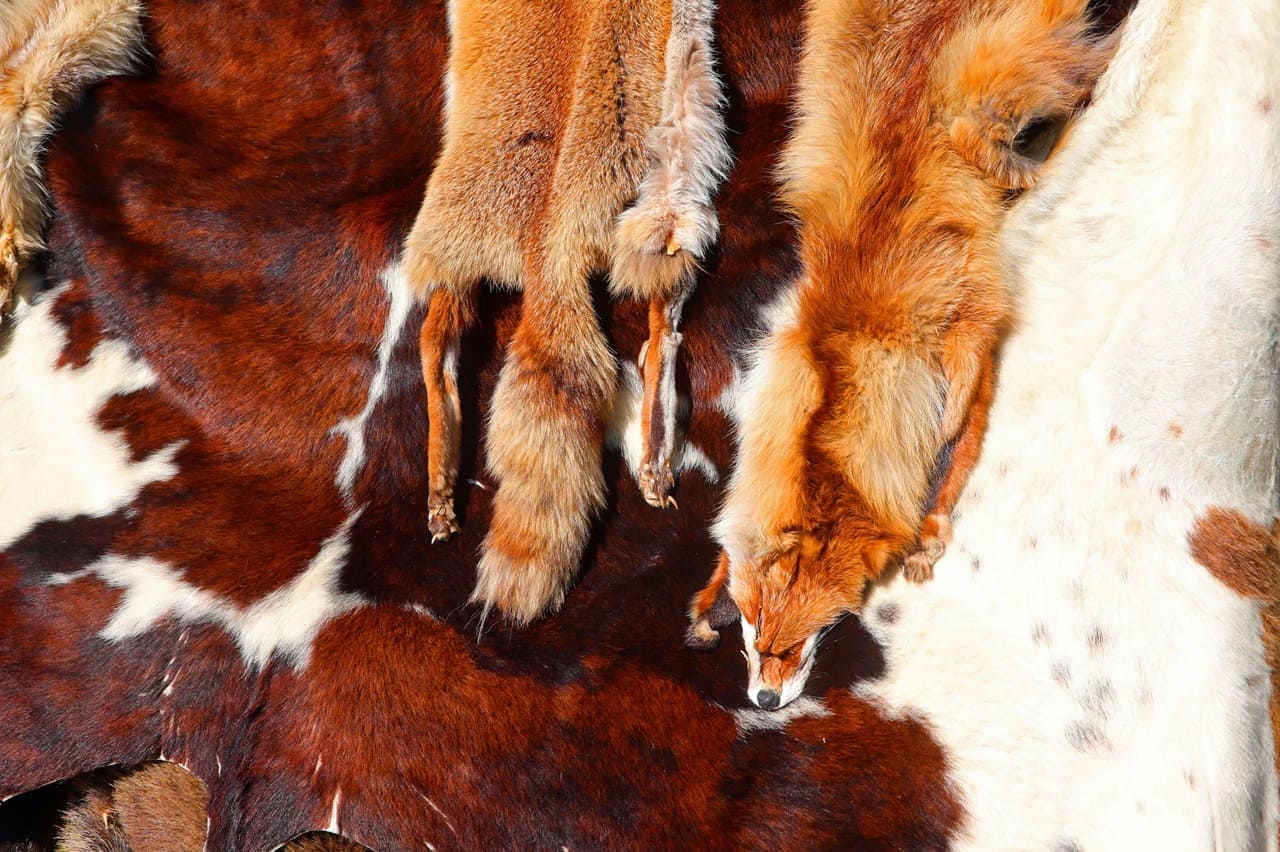
The Canton of Valais markets its wolf balance 2025/2026 as a sober management instrument. In reality, it documents a state-organized massacre of family groups, particularly of young animals that would deserve special protection under any credible ethics.


«What Valais Shot»
Valais has stood for years in Switzerland, alongside Grisons, as a scandal canton under criticism, marked by accusations of cronyism, mafia-like structures and nepotism.
The balance 2025/2026 lists how many wolves were identified and how many were 'regulated'.
From September 1, 2025 to January 31, 2026, 24 wolves were massacred. In Canton Grisons, a bloodbath was staged with 35 wolves in 2025.
Behind these numbers are family units being deliberately destroyed, and young animals being treated as interchangeable inventory figures. When a canton simultaneously declares several entire packs eligible for culling while systematically shooting young animals in additional packs, this is not management, but a campaign to weaken and destroy the population.
The simultaneous talk of 'coexistence' and 'pressure relief' appears cynical. A system that specifically targets the youngest and most vulnerable animals as regular objectives abandons any claim to regard wildlife as sentient beings. The authorities count killed wolves as if they were warehouse inventory, not social, learning individuals in complex pack structures.
Young animals as primary victims: Ethics turned upside down
Particularly disturbing is that young animals are not only targeted in problematic packs with repeated livestock kills, but also killed as part of 'basic regulation' in packs that have not caused serious damage. This means young wolves are killed before they even had the chance to learn how their pack interacts with livestock and the landscape. Yet precisely these learning processes are crucial for conflicts to decrease in the long term.
An ethics worthy of the name would define young animals as a red line: whoever harms them violates not only the individual, but the future of the entire population. The Valais practice reverses this principle: young animals become the preferred target group because they are easiest to hit and quickly deliver statistical 'success'. To speak of regulation here obscures that the foundation of all moral responsibility—protection of the most vulnerable—is deliberately ignored.
Professionalized hunting structures in service of culling
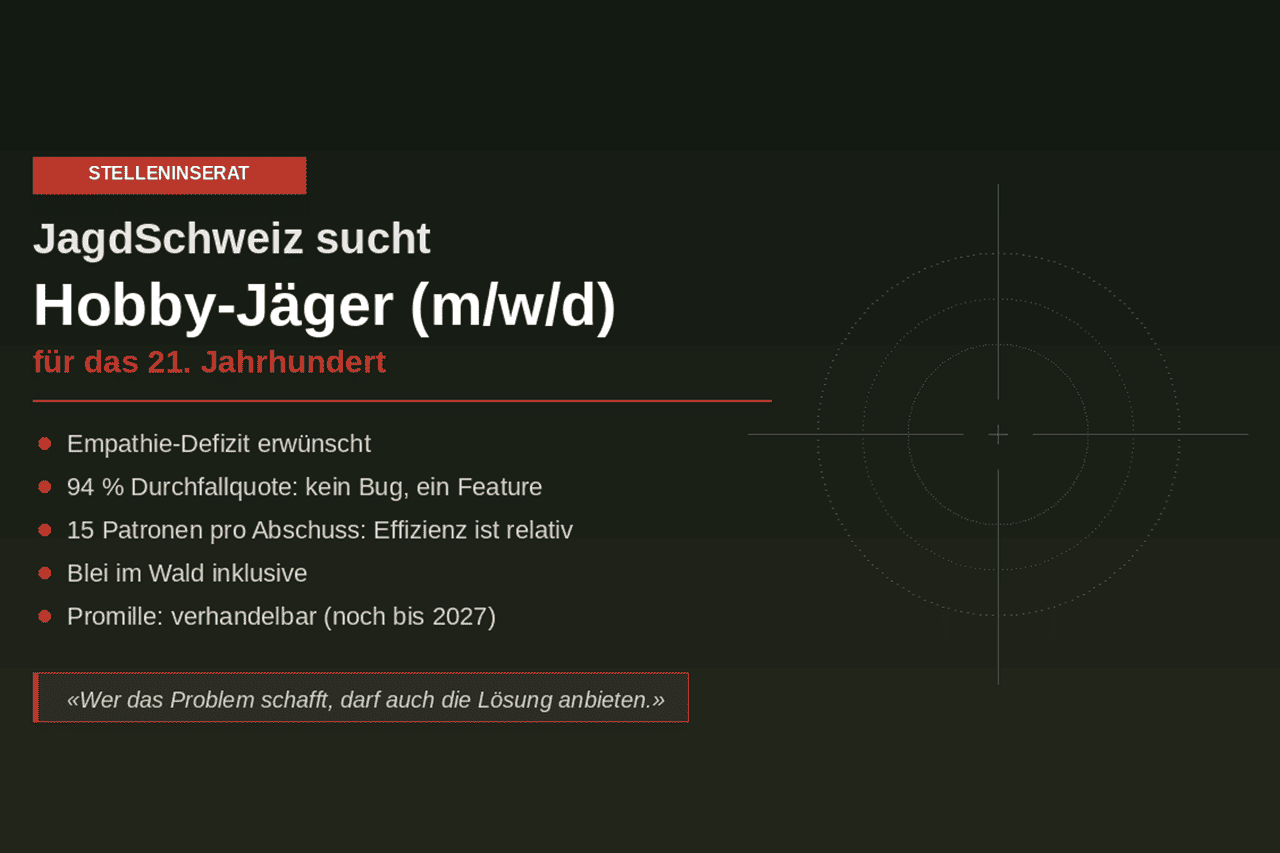
With professional game wardens and recreational hunter groups, the canton creates a hunting-centered infrastructure whose main task is not protection, but efficient culling. When state agencies upgrade the recreational hunters to 'support troops', train them exclusively for culling purposes, and publicly praise them, sovereign mandate and recreational hunting merge into an alliance with a common goal: to kill as many wolves as possible, as smoothly as possible, as quietly as possible.
The language in the official report of 'removals', 'basic regulation', and 'complete implementation' serves as technocratic camouflage for this reality. Behind each of these words stands a killed animal, often a young animal, and a pack whose social structure is destroyed. The normalization of this practice is dangerous: what is justified today as an exception establishes itself tomorrow as the standard.
Bureaucratized coexistence as fig leaf
Remarkable is the figure of 13,390 working hours that flowed into wolf management and regulation in 2025, compared to 16,400 hours in 2024. In parallel, 3.2 full-time positions were created under the federal program agreement 2025–2028 to support the department. Calculating with conservative full costs of 60 to 80 francs per hour, the wolf massacre in Valais alone consumes between 0.8 and well over 1 million francs of taxpayer money in 2025, without the canton transparently reporting this sum in its balance sheet. The shooting of a wolf costs Swiss taxpayers around 35,000 francs each time. In a canton where cronyism, nepotism and mafia allegations have now become a political trademark, it hardly surprises that transparency and ethics also take a back seat when it comes to wolves. The administrative apparatus grows, regulation becomes professionalized, yet the central question remains: Are these positions working on long-term solutions in livestock protection, communication and conflict prevention, or mainly on dossiers, permits and shooting organization? The balance sheet clearly places emphasis on the latter.
The bureaucratic effort serves primarily to organize, document and justify the massacre to the public and politics. 'Coexistence' becomes a platitude that is filled each year with new shooting numbers.
Instead of consistently investing in livestock protection, pasture management, consulting and structural adjustments, the wolf is made into a problem bear that should be calculated out of the system with technical vocabulary ('basic regulation', 'complete implementation'). The actual questions of what agriculture we promote in steep mountain areas, how livestock farming can be adapted to predators and how much recreational hunting has a place in a modern constitutional state remain unanswered.
Christian in name, merciless in dealing with wolves
Christophe Darbellay presents himself as a Christian-influenced center politician who weighs between protection and use of nature. In practice, however, his department in Valais acts like an execution office for wolves: In the 2025/2026 regulation period alone, those responsible had a total of 27 wolves killed, three through individual shooting orders, 24 through so-called population regulation of entire packs. This number stands in stark contrast to the publicly staged victim role of the livestock industry, which exploits every killed sheep in the media, while the systematic extermination of entire wolf families disappears in bureaucratic fine print. From a perspective that seriously refers to Christian values like protection of life and preservation of creation, restraint would be appropriate; Darbellay's policy, however, stands for the opposite: maximum license to kill as soon as wolves disturb the statistics of the livestock lobby. Darbellay is not only the politically responsible architect of this shooting record, he is himself a recreational hunter and actively participates in hunts, including the massacres of various animal species in Valais.
Darbellay's public rhetoric recalls a 'wolf war' in which he stages himself as a determined defender of the mountain population, while facts about livestock protection, wolf biology and legal limits are more disruptive than guiding. In the article 'Christophe Darbellay's Wolf War: Polemics Against Facts» we show how deliberately emotionalized individual incidents are inflated and scientific assessments suppressed to create an atmosphere of permanent threat. It is precisely in this climate that radical culling programs can be sold as supposedly the 'reasonable middle ground,' although they are factually neither necessary nor proportionate. Those who position themselves politically in this way do not use the 'Christian' label as a commitment to responsibility, but as moral packaging for uncompromising interest politics in favor of recreational hunting and livestock lobbies.
Darbellay is not alone with this logic. In Ticino, Centre Councillor of States Fabio Regazzi pursues a similar line when he dreams of wolf quotas, promises quick solutions and propagates a politics of quick shots that pushes wildlife protection and rule of law to the sidelines. Both come from a party that likes to present itself as guardian of Christian values, but practice a wolf policy in which preservation of creation appears at most in Sunday speeches. From the perspective of IG Wild beim Wild, Darbellay and Regazzi are exemplary figures of politically orchestrated wolf baiting: They shift the discourse away from fact-based solutions toward an emotionally charged culture war in which the wolf is made a projection surface for entirely different conflicts. Those who handle power, language and a strictly protected wild animal in this way bear a responsibility that extends far beyond the current Valais wolf balance.
Against this background, it seems particularly absurd that Fabio Regazzi has been praising the Swedish wolf model as a template for Switzerland for years, that model in which license hunts with politically fixed population targets have now been stopped or massively restricted by courts because they violate elementary rule of law requirements and species protection.
A political massacre, not nature management
In the end stands a finding that cannot be glossed over: When entire packs are exterminated, young animals systematically killed and culling numbers presented as success stories, this is not proactive regulation but a politically desired massacre. The wolf becomes a projection surface for unresolved structural problems of mountain agriculture and a target of hunting policy that undermines scientific and ethical minimum standards.
Neither the role of direct payments and location policy nor the responsibility of management practices for conflicts with predators are discussed: The wolf takes on the role of scapegoat that is calculated out of the system with technical vocabulary ('basic regulation,' 'complete implementation').
A truly contemporary approach to predators would have to look exactly the opposite: maximum protection for young animals, pack structures as central resource for low-conflict coexistence, livestock protection and management in focus, and clear limitation of hunting power. Everything else is not ethics, but legitimization of violence against the most vulnerable.
In October 2024, the Bern Convention expressly confirmed: 'Proactive' culls, i.e. preventive killing without concrete damage, are illegal. In December 2024, the Bern Convention committee opened an investigation procedure against Switzerland because the current regulation system is classified as not compliant with the convention.
From a hunting-critical perspective, this assessment shows how the logic of recreational hunting seeps into state management of wildlife: wild animals become populations, conflicts become case files, regulation becomes culling plans. A genuine debate about coexistence in the Alpine region would instead have to start with the question of what kind of agriculture we want to promote, what ecological value we attribute to predators, and how much recreational hunting a modern society that claims to be based on science and animal welfare should still accept at all.
In this overall view, it is well defensible to write that disproportionately many bad news stories have been coming from Valais for years, from construction blunders, child abuse to flood protection, and a pattern emerges: lack of responsibility, cronyism, delayed or botched infrastructure and protection projects, while at the same time ruling with great severity when it comes to wolves.
Participation campaign: Demand from your municipality, due to the catastrophic policy of Federal Councillor Albert Rösti (SVP), a request for exemption from federal and cantonal taxes based on the recently approved shooting of wolves in Switzerland. You can download the sample letter here: https://wildbeimwild.com/ein-appell-fuer-eine-veraenderung-in-der-schweiz/

More on the subject of recreational hunting: In our dossiers on the criticism of recreational hunting gather fact-checks, analyses and background reports. What the research says about this is shown by Hunting fact-checked: the state of research.
The position of IG Wild beim Wild: IG Wild beim Wild rejects recreational hunting. Our model is the canton of Geneva, which has managed without recreational hunting since 1974: without hunting seasons, without hunting dogs, without driven hunts, without high seats, without the animal cruelty and crime that go hand in hand with hunting season elsewhere. What has worked there for over fifty years disproves every position paper by JagdSchweiz. An association that bases its policy on claims it refutes in its own documents is not a professional organisation, but a factory for misinformation.
Support our work
With your donation you help protect animals and give voice to their concerns.
Donate now →