David Clavadetscher: Networker of the Hobby-Hunting Lobby
As managing director of JagdSchweiz, David Clavadetscher has for years been one of the defining faces of the Swiss hunting lobby. In public, he presents himself as an affable mediator — a communications professional who markets hunting as a contemporary form of nature conservation. Behind the scenes, however, this image is intertwined with a dense web of association interests, lobbying that extends as far as Brussels, and a communications strategy that systematically deflects critical questions about recreational hunting.

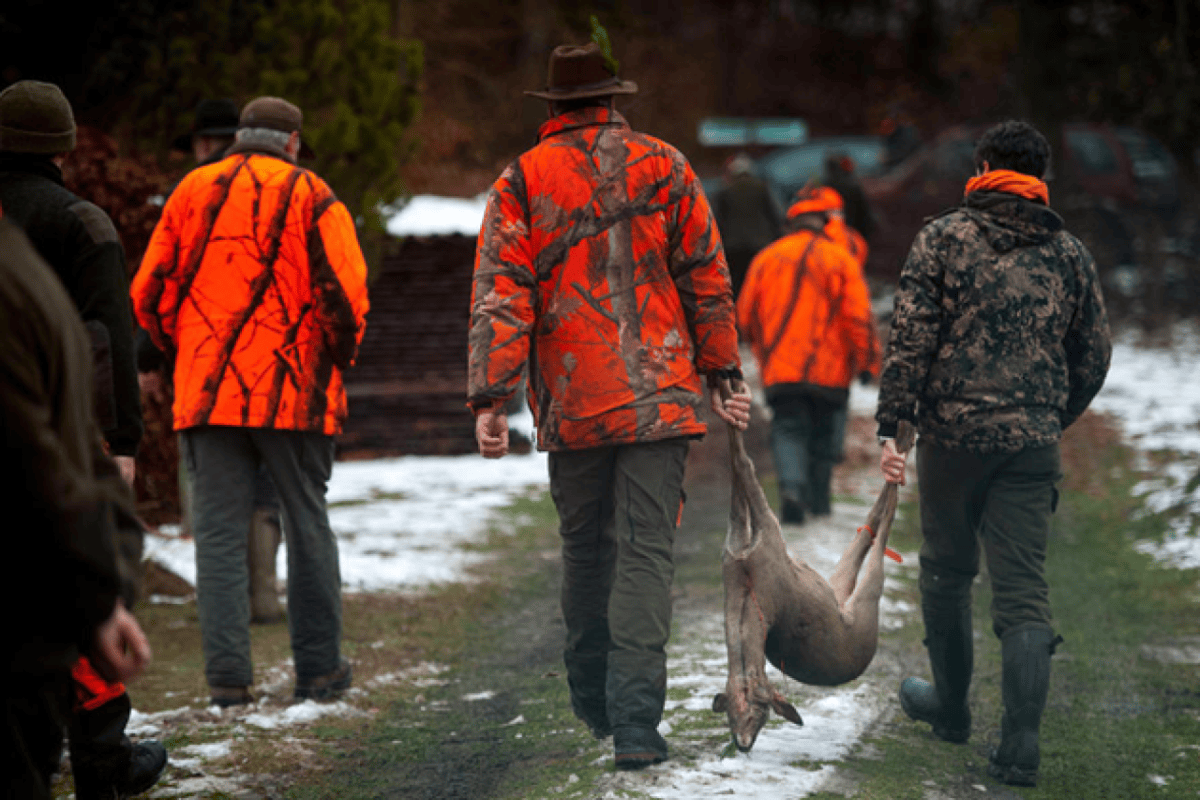
«The green network of favouritism»
This article traces Clavadetscher's role on the basis of publicly available sources and sets his central claims against current research on wildlife, hunting, and recreational use.
Officially, David Clavadetscher is managing director of JagdSchweiz, the umbrella association of Swiss recreational hunters with around 30’000 members. The association's office, with Clavadetscher at its helm, is based in Zofingen.
In parallel, he runs Sandona GmbH, a company that provides communications services to associations and interest groups. JagdSchweiz's job advertisements are handled through this company, which clearly illustrates how closely the association and the private enterprise are organisationally interlinked.
Clavadetscher is therefore not simply a recreational hunter who drifted into a role at some point, but a professional association manager with a communications background. In interviews, he has described himself how the JagdSchweiz mandate came to his company in Zofingen and how he has run the association ever since.
Rise to European Hunting Lobbyist
His influence does not end at the Swiss border. FACE (Federation of Associations for Hunting and Conservation of the EU), the European umbrella organisation that consolidates the interests of hunting associations in Brussels, lists Clavadetscher as Treasurer General on its board.
FACE is listed in the EU lobby register and represents the positions of hunting associations before EU institutions on matters such as species protection directives, firearms legislation, and the regulation of protected species.
This makes one thing clear: Clavadetscher operates not merely as a spokesperson for a national hobby, but as a key node within a European lobbying structure that has a direct interest in normalising, romanticising, and politically securing hunting.
The core narrative: recreational hunters as net contributors and conservationists
A central motif in Clavadetscher's communications is the image of the hunter as a benefactor of the general public. In a NZZ am Sonntag article from 2013 titled «Hunters give more than they take», figures from JagdSchweiz on hunters' fees and levies are presented for the first time. Clavadetscher is quoted as stating that hunters pay «significantly more for their passion than they get out of it» — a total of 26 million francs in direct levies.
This financial narrative serves several functions:
- It is intended to portray recreational hunting as a kind of privatised nature and security service.
- It shifts the focus away from violence against animals towards ostensible services rendered to the state.
- It diverts attention from the fact that a large proportion of these payments are fees and costs for a hobby that exists solely because of the recreational hunters themselves.
That recreational hunters pay fees is undisputed. Whether this automatically translates into ethical or ecological added value, however, is an altogether different question. From a wildlife ecology perspective, what matters is not how much someone pays, but what impact their actions have on populations, ecosystems, and individual animals. The financial argument does not replace this assessment — it merely obscures it.
Hunting as a lifestyle product
In conversations with regional media, Clavadetscher emphasises that hunting is on the rise. Young people and women in particular — including urban dwellers — are said to be showing increasing interest in obtaining a hunting licence. Such statements appear, for instance, in the context of exhibitions and features on contemporary hunting culture.
In doing so, he positions recreational hunting in the vicinity of a lifestyle product: authentic nature experience, regionality, game meat, tradition. Hunting is turned into a brand, charged with connotations of modern urbanity and individualism.
What is absent from this portrayal, is the perspective of the animals: the focus on flight reactions, stress, injury risks, bycatch and errant shots. Wildlife research studies have shown for years that both recreational activities and hunting can trigger significant stress responses in wild animals and effectively reduce their habitats.
In JagdSchweiz's public communications, hunting is predominantly portrayed in a positive and heroic light. Critical aspects tend to be mentioned only marginally, relativised, or shifted onto other actors.
The chamois crisis: when leisure society serves as a scapegoat
One example that illustrates Clavadetscher's communication style is the discussion surrounding the decline of chamois in Switzerland. In 2021, SRF reported in features such as 'Declining chamois population – hunters allowed to shoot fewer chamois' and 'How the chamois are to be saved' on falling populations and cantonal responses, including reduced hunting quotas.
Clavadetscher acknowledged in this context that recreational hunting also played a role. However, his statements primarily attributed responsibility to other factors — in particular, the leisure society and its growing pressure on mountain regions.
The scientific discussion paints a more nuanced picture. Experts point to an interplay of disease, climate change, habitat changes, hunting pressure and recreational use. An SRF report from 2017 on the decline of the chamois population explicitly notes that both recreational use and hunting, as well as predators such as the lynx, contribute to the decline.
In his communications, Clavadetscher frequently reduces this complexity to a single clear message: primary responsibility lies with others. The recreational hunters are cast in the most favourable light, while tourism and mountain sports serve as convenient projection screens. The fact that hunting associations themselves have for years politically defended and pushed for high kill numbers is barely mentioned.
The wolf as enemy image and the failed hunting law
The revised hunting law made Clavadetscher's line of argument particularly clear. The legislation, put to a vote on 27 September 2020, would have considerably facilitated the preventive culling of wolves. The Federal Office for the Environment and information platforms such as easyvote set out that protected species such as the wolf could in future be regulated even before any concrete damage had occurred.
Environmental and animal protection organizations warned of a 'shooting law' at the expense of protected species. JagdSchweiz, with Clavadetscher as executive director, firmly backed the legislation. At the same time, the association positioned itself clearly in policy papers on wolf population regulation in favor of consistent population management of wolves and lynx, modeled on huntable species.
In television programs and media appearances, Clavadetscher presented the revision as a necessary step toward resolving conflicts in the Alpine region. The fundamental question of how much space predators should be afforded in an intensively used landscape, and what ecological function they fulfill, played only a subordinate role.
The electorate rejected the revision on 27 September 2020. Official analyses and media reports note that wolf protections were consequently not weakened, and that the legislation failed primarily due to the extensive provisions for shooting protected species.
The association's fundamental stance in its communications regarding wolves and lynx has changed little since then: the wolf appears primarily as a source of conflict, to be addressed through facilitated culling.
Conflict with hunting critics and IG Wild beim Wild
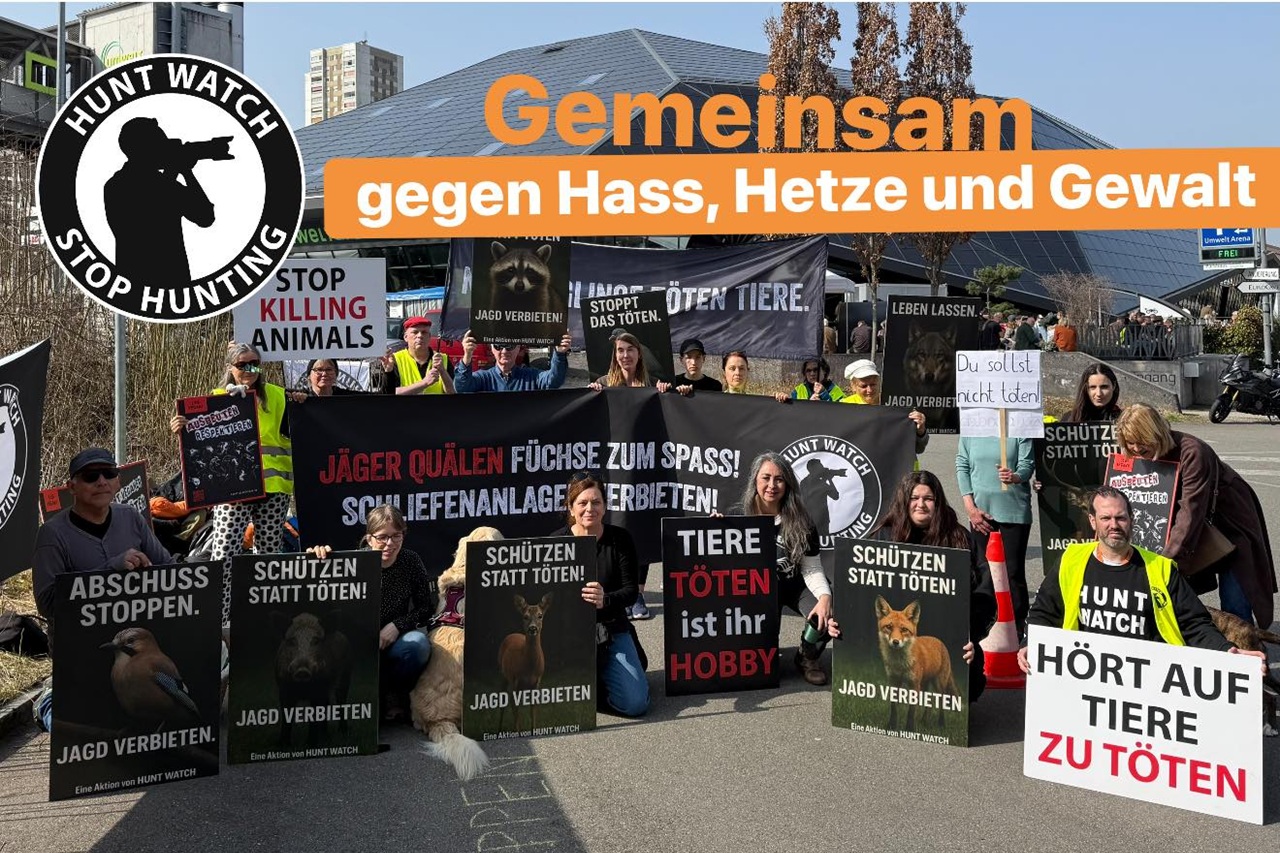
IG Wild beim Wild and JagdSchweiz have been engaged in an open conflict for years. Several articles on wildbeimwild.com offer sharp criticism of Clavadetscher and the association's policies — for instance, his debate over the term 'recreational hunters' and his public relations work.
According to IG Wild beim Wild, publications by JagdSchweiz led to public attacks on members of the organization's staff, prompting legal action. JagdSchweiz, in turn, rejects the allegations and portrays the NGO as lacking objectivity.
An important distinction must be drawn here:
- There is a documented, bitter dispute between a hunting association and a hunting-critical NGO that has extended into legal proceedings.
- The mutual allegations are partisan in nature and have not yet been comprehensively adjudicated.
From a journalistic perspective, it can be noted that JagdSchweiz under Clavadetscher pursues no strategy of de-escalation, but rather accepts confrontation when criticism of recreational hunting is perceived as excessive or damaging to its reputation. Instead of engaging substantively with arguments on animal ethics and modern wildlife ecology, critics are at times subjected to personal attacks or placed under legal pressure. This is consistent with a communication style aimed at defending interpretive authority over the subject of recreational hunting, rather than engaging in open, science-based debate.
Dual role: hunting lobbyist and justice of the peace
Against this backdrop, Clavadetscher's new public office appears particularly noteworthy. In 2025, he was elected justice of the peace in District XIV of the Zofingen administrative region. The district encompasses the Suhrental, the Uerkental, and several municipalities in the Zofingen area. Regional media such as the Zofinger Tagblatt and regional news blogs have reported extensively on his election and his role.Oltner Tagblatt+3Zofinger Tagblatt+3Zofinger Tagblatt+3
In interviews, he emphasizes the importance of de-escalation, neutrality, and conflict resolution, stating that as justice of the peace he aims to help defuse conflicts out of court, thereby saving time, money, and effort.Zofinger Tagblatt+1
At the same time, in his capacity as managing director of a lobbying association, he stands at the forefront of a polarizing, ongoing dispute over wildlife, hunting violence, and gun ownership. Formally, these roles are not mutually exclusive. Politically and ethically, however, the question arises as to how credibly someone can act as a neutral authority who professionally represents an industry regularly embroiled in conflicts with animal welfare, nature conservation, and the public interest.
Those serving in a state mediation office must be especially transparent about how conflicts of interest are avoided and roles are kept clearly separate. In Clavadetscher's case, this tension between his lobbying role and his conciliation role is, at the very least, apparent.
The combination of the office of justice of the peace and a prominent lobbying function is legally permissible, but raises substantive questions regarding the separation of roles. Those who professionally represent a polarizing interest group must make it particularly visible, within a state mediation office, how they ensure neutrality and de-escalation.
Not a misunderstood nature enthusiast, but a strategic lobbyist
The available body of sources shows:
- David Clavadetscher is a professional association and communications manager, not an incidental spokesperson for a fringe group.
- He plays a significant role in national and European structures designed to secure hunting politically and socially.
- His communication follows a clear pattern: recreational hunting is sold as a service to the public and as nature stewardship, while problematic aspects such as animal suffering, missed shots, disturbances, and structural power relations remain hidden or are shifted onto other groups of actors.
- Criticism from civil society is not treated as a legitimate part of democratic discourse, but is frequently framed as an attack to be countered with counter-propaganda or legal means.
A modern, enlightened wildlife policy, however, requires something different: transparency, a willingness for self-criticism, a clear separation of public interest from hobby interests, and above all a consistent orientation toward science that places animal welfare and the functioning of ecosystems at its centre.
As long as figures like David Clavadetscher substantially shape the public debate, hunting in Switzerland remains above all one thing: a professionally marketed hobby with considerable political clout, whose actual consequences for animals and nature are frequently marginalised in public discourse.
More on the subject of recreational hunting: In the dossier Poaching and hunting crime in Switzerland we document cases, legal questions and recurring patterns. What the research says about this is shown by Hunting fact-checked: the state of research.
The position of IG Wild beim Wild: IG Wild beim Wild rejects recreational hunting. Our model is the canton of Geneva, which has managed without recreational hunting since 1974: without hunting seasons, without hunting dogs, without driven hunts, without high seats, without the animal cruelty and crime that go hand in hand with hunting season elsewhere. What has worked there for over fifty years disproves every position paper by JagdSchweiz. An association that bases its policy on claims it refutes in its own documents is not a professional organisation, but a factory for misinformation.