Downgrading of wolf protection: Legally questionable
Switzerland is currently dealing with its wolves in a way that not only raises great concerns, but could potentially set a precedent for the EU member states.

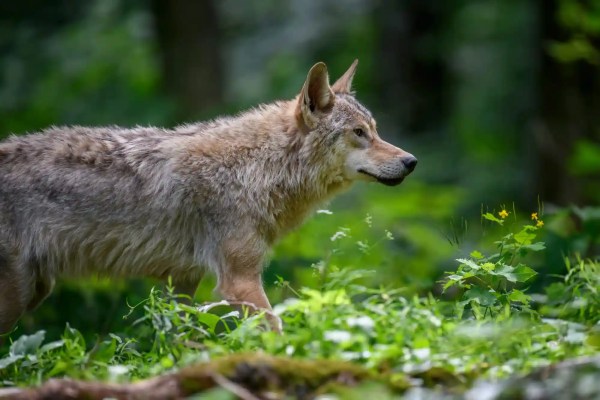
On 24 June 2025, the EU's downgrading of the grey wolf (Canis lupus) came into force.
Some countries such as Belgium, the Czech Republic, Hungary, the Netherlands, Poland and Portugal have so far indicated that they will maintain the “strict protection” of the wolf.
As a non-EU country, Switzerland is not bound by EU legislation, yet its approach to hunting disregards central principles of the Bern Convention and thereby breaches internationally binding nature conservation standards.
The canton of Valais is once again setting a bad example and, between September 2024 and January 2025, killed a total of 34 wolves — some using illegal methods — during the hunt. A DNA analysis showed that only half of the animals killed belonged to the problem packs approved by the Federal Office for the Environment.
The proactive wolf massacre, in Grisons and other cantons too, is based neither on scientific facts nor on knowledge about wolves, but on vociferous propaganda. The cantons are not responding situationally or selectively to problems or damage that might qualify as justified exceptions within the meaning of the Bern Convention; instead, they want to decimate the population generally and on a large scale, whatever the cost. What is sold as regulation is an ideologically motivated elimination project intended to displace the wolves that are so important for the ecosystem. And this in favour of a pasture-farming industry that has long since lost all proportion and control, with its harmful consequences for flora and fauna in the alpine region.
It is internationally frowned upon and ethically indefensible to kill wolf pups. Switzerland is also repeatedly criticised by the Bern Convention for its wolf policy. Moreover, the newly used term ‘basic regulation’ is neither defined nor mentioned in the hunting act nor in the hunting ordinance.
The wolf is not included in hunting law, just like the ibex, the wildcat, the lynx, the golden jackal, the bear, the otter, and so on. All are considered protected, as stated on the website of the BAFU. Ergo, recreational hunters may not lay a hand on them either. This is reserved solely for the wildlife wardens. That hobby hunters are being drawn into the so-called basic regulation is, legally speaking, actually out of the question. The wolf too is not among the huntable species in Switzerland and therefore does not fall under the cantonal hunting prerogative. The wolf is and remains a protected animal, and a recreational hunter has no right to take aim at it as at all other protected animals. The hunting president Charles-Henri de Luze in the canton of Vaud has also stated very clearly that this, if at all, is the task of the wildlife wardens.
The member states of the EU-27 now have 18 months to transpose the directives into national law.
This transposition is, however, not mandatory, and we urgently call on the member states to refrain from amending their respective legislation, or at least to delay doing so, for the following considerations:
Legal uncertainty
According to legal experts, the EU amendment proposal has “remarkable shortcomings”, and several proceedings concerning the EU's decision on the listing under Appendix II are currently pending. These include a case filed by ClientEarth with the EU Ombudsman regarding the collection of wolf data, and a legal action by five associations before the Court of Justice of the EU (CJEU), which asserts, among other things, a lack of scientific accuracy and a breach of EU procedural rules. It should be noted that the CJEU has repeatedly emphasised the need for “scientific accuracy and precaution”, and that it has recently ruled that protected species which have reached a favourable conservation status (FCS) “must be protected from any deterioration of that status”. Should the ongoing court proceedings lead to an annulment of the downgrading decision, changes to national laws could therefore no longer be compatible with EU law.
Lack of a sound scientific basis
The EU's decision to downgrade the protection status of the wolf is widely regarded as politically motivated rather than based on sound legal and scientific foundations, which places it at odds with the main requirements of the EU Habitats Directive. In its statement, the Large Carnivore Initiative for Europe (LCIE) described the downgrading as “premature and flawed”, and a further 700 scientists and academics expressed their concerns about the decision in two open letters to the Secretary General of the Bern Convention. Indeed, the proposal to downgrade is not underpinned by current ecological and population data. The wolves in Europe do not belong to a single population, and most of the sub-populations in the EU remain endangered, threatened or vulnerable. Under the Habitats Directive, member states are entitled – and in some cases obliged – to maintain stricter protection standards than those set at EU level, particularly where the science recommends further conservation measures.
Socio-economic arguments are legally irrelevant
As the ECJ recently clarified, socio-economic considerations, including those relating to predators, are not valid grounds for changing the protection status under the Habitats Directive.
Furthermore, in 2023 wolves were responsible for a mere 0.065% of the mortality of sheep and goats in the EU (the main target species), and livestock losses due to wolf attacks are currently offset by compensation and prevention measures financed through EU mechanisms such as the Common Agricultural Policy (CAP).
No immediate legal obligation
Although the downgrading was decided within the framework of the Bern Convention – again primarily under pressure from the EU leadership, there is no binding legal obligation or deadline compelling the EU member states to transpose this decision into their respective national laws without delay. As already mentioned, the EU Habitats Directive provides for an 18-month adjustment period, which should offer sufficient time to establish legal clarity.
Prioritise coexistence of humans and wild animals over lethal control
Most EU citizens value the existence and preservation of wild animals and plants and are convinced that society has a responsibility to pass on complete and healthy ecosystems to future generations. Likewise, the legal protection and reintroduction of predators remains a societal desire. According to a 2023 survey, the majority of rural inhabitants in ten European countries want predators to be protected. It is high time to give priority to coexistence and non-lethal measures for the protection of animals, which have proven to be effective.
In summary, it can be said that the politically motivated decision to downgrade the wolf's protection status from “strictly protected” to “protected” is legally and scientifically unfounded and carries the risk of being reversed by a court ruling in anticipation of such a judgment.
The IG Wild beim Wild therefore calls on the EU-27 member states to take all national measures to protect the wolf.
Addendum: Germany implements downgrading
Further articles
- Swiss meadows are losing biodiversity on a massive scale
- When sheep, cattle and co. occupy the space of wild animals
- Swiss animal welfare criticises planned wolf culls as a threat to pack structures and herd protection
- Wolf incompetence rages in the Grisons
- Val Fex: When the herd protection concept is more full of holes than the fence
- Killing instead of protection – Switzerland on the road to a silent extermination of the wolf
- Communication failure at the Office for Hunting and Fishing in the Grisons
- Illegal wolf hunting in Switzerland
- Wolf pups in Switzerland in the crossfire
- Switzerland sells the massacre of wolves as a success
- Sloppiness in the office of Katrin Schneeberger
- Grazing by livestock alters the soil, the plants and the insect populations
- The insane hunt for wolves in Switzerland
- The truth about sheep mortality in Switzerland: causes and statistics
- Wolf culls in Switzerland: concern over party politician Albert Rösti
- Let us stop the SVP's frenzy of destruction
- Get involved: an appeal for change in Switzerland
- 200 environmental organisations from 6 continents call on the Swiss government: Stop the wolf cull
- Federal Council heavily criticised by wolf experts
- The consequences of the controversial wolf management in Switzerland
- Wolf: Federal Councillor Rösti (SVP) circumvents law and order
- Es Burebüebli mahn i nit
- Are the BAFU and the hunting administrations still working seriously?
- Federal Councillor Albert Rösti tramples on the will of the people
- The consequences of the controversial wolf management in Switzerland
- Too many sheep harm biodiversity
- Agricultural use destroys Alpine meadows
- Kills despite herd protection – how is that possible?
- The rotten apple in the St. Gallen hunting administration
- Pro Natura calls for a comprehensive strategy for summer sheep grazing
- According to an Agridea study, herd protection with dogs works well
- Thanks to herd protection, wolves kill fewer livestock in Switzerland
- Farmers see fields as a rubbish dump
- Biomass of wild animals
- Of sheep keepers and vague authorities
- The double standards of the wolf opponents
More on the subject of recreational hunting: In the dossier The Role and Criticism of Recreational Hunters we shed light on the training, power and self-image of recreational hunters. What the research says about this is shown by Hunting fact-checked: the state of research.
The position of IG Wild beim Wild: IG Wild beim Wild rejects recreational hunting. Our model is the canton of Geneva, which has managed without recreational hunting since 1974: without hunting seasons, without hunting dogs, without driven hunts, without high seats, without the animal cruelty and crime that go hand in hand with hunting season elsewhere. What has worked there for over fifty years disproves every position paper by JagdSchweiz. An association that bases its policy on claims it refutes in its own documents is not a professional organisation, but a factory for misinformation.
Support our work
With your donation you help to protect animals and to give their voice a hearing.
Donate now →