Hunting and Animal Cruelty
The hatred directed at competitors in one's own hunting territory — against so-called vermin such as foxes, martens, birds of prey, etc. — drives many recreational hunters to take a reckless shot at such an animal.


Amid all the burdens that recreational hunting inflicts on nature, the suffering of those truly affected — the animals — must not be overlooked.
For some time now, the hunting community has been suggesting to us, through terms such as “sportsman-like hunting” or “sustainable and considerate hunting practice,” that no animal is needlessly shot in today’s hunting, and that even when a shot is fired, the process is entirely humane.
Many a recreational hunter from the neighbourhood will reassuringly report that there is no longer any animal cruelty in hunting today, and that thanks to the modern rifles used, an animal dies so quickly that it was not even able to hear the shot beforehand.
Such illusions, spread by recreational hunters, of the quick and painless death of a “fairly taken” animal, are clearly aimed only at distracting us from all the instances of animal cruelty that are entirely commonplace in the context of hunting.
The blowing of hunting horns and the foolish ceremonies — such as placing a green branch in the mouth of the dead animal, etc. — also bear witness to the long-standing custom and effort of the hunting community to distract from the suffering inflicted on animals by celebrating a certain romanticisation of the kill, and instead feigning hunterly honour. A particularly prominent role in trivialising and glamourising this bloody and dirty trade appears to be played by the very specific hunters’ jargon used within it. Where the bloody reality is discussed, meaning-distorting hollow phrases are employed, behind which the cruel reality of hunting is concealed from the outside world.
For example, the term «waidgerecht» ("sportsmanlike") has been carefully chosen by recreational hunters to create the impression that hunting — the killing of animals — is conducted in a humane and fair manner. In reality, however, the hunter uses it merely to describe the correct application of hunting’s own rules, which in many respects only serve to further promote animal cruelty.
The language of hunters therefore positively teems with such misleading terms. The blood of animals is referred to as “scent” or “sweat,” because a “blood trail” sounds far more alarming than a “scent trail.” Other terms are equally understated: an animal mutilated by a missed shot is merely considered “wounded” or “sick.” The killing of animals is described as “relieving suffering,” or simply as “felling” or “harvesting.” Shooting a bird’s legs to pieces is termed “legging,” and so on.
The trivialization of hunting through such distorted language is unmistakable. Fewer and fewer people with common sense are taken in by it. Instead, critical and accusatory voices regarding the animal cruelty committed in the course of hunting have grown ever louder. Even from within the ranks of recreational hunters themselves, accusations are being levelled against fellow hunters — above all concerning the mutilated animals that, suffering from gunshot wounds, are sometimes left to linger in the wild for extended periods.
Only by examining actual hunting practice does one begin to understand what the hunting fraternity seeks to conceal behind all its theatrics — for the most appalling forms of animal cruelty have been an integral part of hunting since its very inception, and to a far greater extent than the uninitiated would ever suspect.
It is estimated that in contemporary hunting, not even half of the shots classified as “hits” are immediately fatal. In an era where hunting is practiced predominantly as a hobby — and moreover in a form that has been driven to senseless excess purely for entertainment — the trivialization of the animal cruelty involved has become more important to recreational hunters than ever. For only in this way can such killing and torment of animals continue to be tolerated as a hobby within our society.
After all, no one should get the idea of accusing their friendly neighbor or even a manager, dentist, etc. of the most brutal animal cruelty, simply because they go hunting! Such utterly base, sometimes outright barbaric human behavior — this killing carried out purely for pleasure or greed — simply no longer fits our image of an educated person living in our modern society. So a pleasant, and therefore entirely false, picture of hunting is painted in order to present oneself to the public.
Meanwhile, more and more wild animals abused by recreational hunters continue to live in our natural environment. Their fear of humans, as a result of their experience of being hunted, is so profound that even attentive recreational hunters can barely catch sight of these animals, which have become extraordinarily cautious. And when it does occasionally happen, recreational hunters refer to them as the «secretive buck» or the «secretive doe», and so on.
Regarding the growing number of animals living in the wild with gunshot injuries, even the relevant hunting magazines have published accusations on the matter. According to these, it is not only wild boars — frequently shot at in the dark — but also roe deer hunted in daylight that suffer the most horrific mutilations. These most commonly involve shattered bones in one of the front legs. The animals, referred to in hunters’ jargon by the euphemistic term «laufkrank» (“lame”), are in most cases still capable of fleeing on three legs and, according to recreational hunters, are only very rarely successfully tracked down during a follow-up search — and when they are, it is certainly not in order to help them.
According to the complaints of this hunter, one cause of such missed shots lies in the widespread and unsportsmanlike hunting habit of guiding the sight upward along the front leg toward the intended point of impact when shooting from the side, combined with a nervous trigger finger. This is also why a great deal of alcohol is consumed while hunting — to steady that finger when the moment comes.
For each of these animals treated in such a manner, a life of torment begins from the moment of the hunter’s thrill-seeking. A life with a festering or even rotting, foul-smelling wound from which bone splinters protrude — even years later, should the animal not perish from it beforehand.

A common cause of such misshots is not difficult circumstances of any kind, but often simply the inadequate shooting skills of recreational hunters. The resulting animal cruelty would therefore be largely avoidable if hunting were permitted only to skilled marksmen such as game wardens. Most recreational hunters prefer to practice on living targets! And as a recreational hunter, one does not speak of poor shots and wounded animals.
One can only shudder to imagine what happens when such a hunter shoots at an animal from the side and does not hit it properly. A shot placed slightly too far forward can, instead of being lethal, tear away half of the animal's face. Such animals can still flee, even though many subsequently starve or die of thirst due to their injuries, unless they fall into a hunter's sights again. A shot placed slightly too far back tears open the abdominal wall. Results of tracking searches are known in which animals injured in this manner trod on their own protruding intestines while fleeing, or had their dangling intestines torn off while still alive during flight. An animal treated in such a manner would open any normal person's eyes to the cruelty inflicted and ensure they never touched such a weapon again. For a real hunter, however, such things are simply part of the hobby!
One suppresses empathy — or never had any to begin with
It is undeniable that some people even regard brutality as particularly masculine and desirable. In doing so, they all too readily overlook the fact that they themselves are often the greatest weaklings when it comes to their own pain, and that their coarseness and disregard for others is not a great achievement but merely a sign of backwardness in their own inner development.
One need not be surprised at all by the animals mutilated by hunters, since the qualification required to practice hunting is, after all, a hunting examination passed at some point years ago. This entitles the hunter to hunt until old age, without any serious re-examination, vision test, or assessment of shooting skills ever being conducted!
However, suffering could be avoided to a considerable degree by more qualified hunters.
The introduction of vision tests and proof of shooting proficiency would, moreover, need to be implemented nationwide on the basis of hunting legislation.
Violations of the law are also conceivable due to the enormously limited possibilities for checking hunting licences. Only a game warden or the police are authorised to inspect a hunting licence. However, the game warden is often a hunting buddy, and police checks in the forest, at raised hides, are barely imaginable. Accordingly, it would be easy for a hunting leaseholder to allow assistants to join the hunt instead of paying them. Friends and guests could also gain access to hunting in this way, without ever having passed a hunter's examination or even being authorised to carry firearms. Due to the restricted possibilities for control arising from the existing legal situation, the legislator actively facilitates such acts of unnecessary animal cruelty associated with these circumstances.
Nothing against hunters who never hit anything. But what is troubling is that acts of animal cruelty — which could be avoided through mandatory shooting practice and better controls — are being carelessly encouraged by the authorities and the legislator.
Particularly in driven and battue hunts, highly accurate shooters are essential. In practice, however, it is precisely in these situations that many inexperienced hunters take part, which is typically evidenced by an enormously high percentage of injured and mutilated animals.
After such a hunting revelry has ended, many first head off to celebrate cheerfully, sometimes descending into total inebriation — which occasionally had already begun before the hunt, with a bottle of schnapps making the rounds.
The mandatory search for animals shot and left crippled often takes place at a later point in time. Also to ensure that the injured animal can no longer pose a danger to the hunter or tracking dog handler, people frequently wait several hours before beginning the search. At dusk, the search is often postponed until the following day. The animal is thus left lying in its wound bed — a term that, in hunters' parlance, sounds quite harmless and humane. In reality, the animals in question often linger for days in excruciating pain.
But even the hunting victims found still alive during a follow-up search suffer panic-stricken death agonies, which are often expressed in pitiful cries of terror the moment such an animal catches sight of its killer. The latter then carries out the execution with his own hands — often without any prior stunning — by stabbing with a knife or firing a pistol shot.
If ordinary citizens could witness how callously and brutally many hunters treat animals that have already been shot half to death, they would be horrified. They would also be appalled that in our civilized society there are still such primitive barbarians whose actions go unpunished.
But even these people, inwardly brutalized by such acts of violence, still experience a form of conscience during such executions. However, not a guilty conscience on account of their killing, but rather — shaped as it is by hunting rituals — they actually experience a sense of moral relief.
A great many cases of maiming could also be avoided if hunters refrained from attempting risky shots. Taking a risky shot means a hunter is willing to fire at an animal even when it is not optimally positioned in front of the gun, and when injury and suffering are more likely than death.
But enthusiasm for hunting deer, stags, wild boar, and so on can also lead to risky shots — especially when an unexpected opportunity at an animal with an exceptional trophy inflames the hunter's desire for possession too strongly.
The hunter's craving to take possession of a particular animal that has eluded him time and again can also cause hunting enthusiasm to degenerate into a form of rage directed at that animal. The kill may then culminate in a particular kind of gratification born of hatred. Some hunters may even perceive the animal's suffering as a satisfying punishment for its previous continued escapes. Such already pathological sadistic traits, whenever they are mentioned at all in conversation, are then readily presented to the outside world in a positive light as hunting instinct.
The animal cruelty and unbearable stress imposed on the entire wildlife population as a result of hunting pressure are unacceptable. Nevertheless, it must once again be noted here that the animals, out of fear of the treacherous shots, have not only shifted their habitat but have also altered their daily rhythms. As a result, many of them are forced to remain in hiding throughout the day, going hungry and growing emaciated. And all of this solely out of persistent, sheer fear of death!
So much for the description of animal cruelty inflicted on larger wild animals, and some accounts of what is still the most benign form of hunting — one in which only single projectiles are fired at the animals.
These rules of hunting ethics, held in such high regard even by our courts, require that the hunter be able to assess larger wild animals carefully before taking a shot. Ideally, the animal should be standing still. However, even a risky shot is still considered consistent with hunting ethics.
It is precisely these highly valued rules of hunting ethics that increase animal cruelty to a truly alarming degree. For with such lead-shot ammunition, far more animals are wounded than killed.
Particularly due to the rule requiring hunters to shoot only at birds in flight, the hunter frequently fires what is known as a flushing shot. This is a shot intended to startle the animals into taking flight. Only then does the shot follow, fired directly into the rising flock of ducks. One or two severely injured animals begin to fall, while a number of other animals — also struck by scattered pellets — manage to flee with the flock. These animals suffer a fate similarly agonizing to that already described in connection with missed shots at larger animals.
One can imagine the massacre and the animal cruelty inflicted by the hunting fraternity when they hold their annual shooting festivals targeting ducks and other waterfowl. A competitive shoot at living targets, which are often supplemented in advance with released aviary ducks in order to have more fun blasting away at even more animals.
After the fall, which many animals survive, the respective victim is then seized by the hunting dog and brought to the hunter. All of this once again illustrates that hunting is not killing from a distance, where one only needs to crook a finger without otherwise getting it dirty. Hunters are butchers in the wild, who personally stab or beat animals to death. The animals are often then gutted on the spot by the respective hunter. The entrails of the animals are not always cursorily buried, but in many cases are left lying openly in the bushes, to subsequently be used as bait to attract foxes.
Unfortunately, this extremely cruel shotgun ammunition and the other shooting do not come close to fully describing all the acts of animal cruelty that hunters otherwise engage in.
Even in our highly developed society, trap hunting is still practiced as a popular form of hunting. It is claimed that trap hunting is carried out in an animal-friendly manner and does not constitute a violation of the law.
If one theoretically assumes that only permissible traps were actually used, this form of hunting would nonetheless remain a particularly cruel method of hunting.
The slow, agonizing death in the trap often drags on for several days, as the traps are not checked daily. While animals crippled by gunshot wounds may lie hidden somewhere in the undergrowth, animals caught in traps are tormented not only by their possible injuries, but also by the stress of being unable to leave this place of terror and find cover — something that is of great importance to an injured animal. The burden of pain is terrible enough; there is no need for the additional panic and psychological stress.
In live traps, animals must endure prolonged mortal fear and corresponding stress or panic, often in heat or cold, until the hunter arrives, tips them out of the trap into a sack, and then beats it against the ground until they are finally dead. Does this noble sportsman in that moment also reflect on his hunting creed and consider whether such actions honor the Creator in the creature?
The panicked cries of terror from the animals in these final minutes of life often make as little impression on such animal abusers as the executions following the successful tracking of animals wounded by gunshots.
Some animals are spared such an ordeal, as they cannot cope with being captive. Due to psychological overload, they perish beforehand.
The law requires that live traps be checked at regular intervals — generally early in the morning, since the intention is to catch nocturnal animals and captured animals should not be made to suffer unnecessarily long. Yet who can afford to follow such regulations when, in their limited spare time, they also want to shoot something every now and then? Moreover, it is counterproductive to approach the traps too frequently, as the human scent deters certain animals and nothing gets caught. A trap only becomes effective once it has weathered somewhat and the human scent no longer clings to it or its immediate surroundings.
The past has demonstrated, however, that a noticeable reduction in the populations of predators targeted by hunters using traps could not be achieved in this way, and that the argument of «traps to boost huntable non-predatory game populations» is no longer tenable. Using the fox as an example, not only ecologists but also some hunters have described trap hunting as the greatest nonsense. Many predators, including the fox, self-regulate their populations according to the available food supply. The foxes tortured to death in traps or additionally shot merely trigger the natural regulatory mechanisms already described, which compensate for losses. This leads to a rapid closing of the gaps created and occasionally even to overpopulation. The catch quota, by contrast, represents only a small percentage of the annual rate of reproduction and results in no genuine population reduction.

Particularly in the case of the hunting victim «fox», but also with all other predators that self-regulate according to food availability, the entire recreational hunters community is once again confronted with the pointlessness of their own activities in small game hunting and trapping.
Accordingly, one could dispense not only with trapping but also with small game hunting altogether. For with this type of hunting, the killing of animals currently takes place — at least in agriculturally fallow areas — without any reasonable justification anyway. The senseless killing of animals, however, constitutes a violation of the Animal Protection Act and is prohibited. But as already mentioned, everything is conducted in accordance with hunting customs and therefore in compliance with the law!
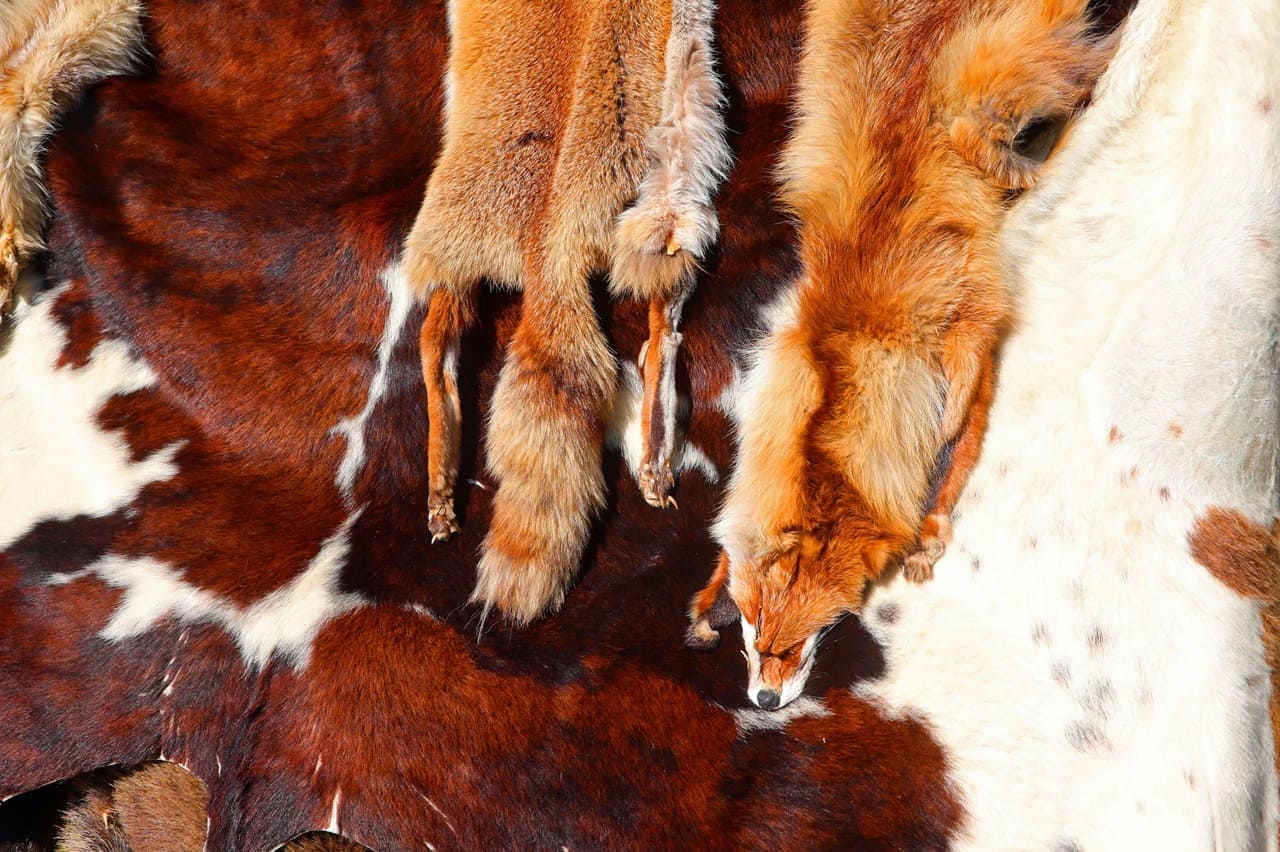
Regarding trapping, particularly for small game, no genuinely necessary occasion can be identified among all the specious arguments put forward by hunters. Nevertheless, there are two motives behind trapping and small game hunting. On the one hand, this killing serves solely the associated hunting pleasure and the thrill of making a catch; on the other hand, there is also a financial incentive. The latter is motivation enough for hunters to fleece their fur-bearing hunting competitors with particular relish. For with good pelts, the hunting fund could theoretically be supplemented considerably — especially when the hides bear no bullet holes.
In the meantime, however, calls are being heard with increasing frequency even from within hunting circles that trap hunting should finally be abandoned here as a sacrificial concession, before it causes even further damage to the image of the hunting community. In particular, injured animals crying out for extended periods could attract walkers. A single photograph in a newspaper suffices to inflict long-lasting reputational harm on the local hunting fraternity.
Another, no less disturbing chapter of hunting is the treatment of the hunting dog.
Many hunters are at least assumed to harbour a degree of affection for their hunting dog. There is no shortage of articles on this subject in hunting journals. But is it truly affection? Or is it merely a confusion with the sense of satisfaction derived from a dog's loyal subordination and selfless service to hunting interests? Can this supposed love for the hunting dog be equated with the affection one feels for a well-functioning car? The moment reliability wanes, this presumed affection turns to resentment in many cases. Kicks, blows — and for many, it is ultimately a bullet for the dog that has ended more than one peculiar love affair. A new dog must then be found, and first it must be trained as a hunting dog.
One of the tasks of a hunting dog is to flush out game, bring it to bay, and locate wounded animals.
The fact that recreational hunting — a pursuit filled with enormously cruel components — still finds its followers and sympathizers in our society, which considers itself humane, certainly has a wide variety of reasons.
One of these reasons may be that in our highly technologized civilization, it is no longer courage and physical strength — as it once was — but expertise and intelligence that determine rank and prestige. Not only sports vehicle manufacturers, but above all the leisure industry, have adapted to the desire of many men to gain respect through the old brute-force system or to feel a sense of power and strength. In this context, recreational hunting in particular — with its modern weapons technology and its special legal status — enables even those men who are unfit for other sports and considered soft to boost their inner self-worth and live out their longed-for sense of power without great effort. The rifle, and perhaps also the brutality involved in the handling of animals, finally gives many a man the feeling of masculinity he sought in order to maintain his inner equilibrium. The conspicuous display of hunting trophies as evidence of hunting success and marksmanship often reveals much about a subliminal plea by many hunters for greater recognition and respect.
Against such a background — which cannot be entirely dismissed — and in view of recreational hunting conducted without any practical benefit, targeting animal populations that have been deliberately managed and cultivated beforehand, the following question must be raised here: «Must animals in our country truly suffer and die simply because individuals in need of psychological treatment — and perhaps among them our friendly neighbor who goes hunting — are let loose with rifles on utterly terrified hares and partridges?» It is almost inconceivable: acts of killing and cruelty in place of psychological care — and this within our society!
Should hunting not be banned — not only for the sake of the animals, but also to uphold human dignity — for all these neighbors?
IG Wild beim Wild
IG Wild beim Wild is a non-profit advocacy organization dedicated to the sustainable and non-violent improvement of the human-animal relationship, with a specialization in the legal aspects of wildlife protection. One of our main concerns is to introduce a contemporary and serious wildlife management system in the cultural landscape, modeled on the Canton of Geneva — without recreational hunters, but with upright game wardens who truly merit the title and act according to a code of honor. The monopoly on the use of force belongs in the hands of the state. IG Wild beim Wild supports scientific methods of immunocontraception for wildlife.
More on the subject of recreational hunting: In the dossier The Role and Criticism of Recreational Hunters we shed light on the training, power and self-image of recreational hunters. The scientific evidence is presented in the overview Studies on the Effects of Recreational Hunting.
The position of IG Wild beim Wild: IG Wild beim Wild rejects recreational hunting. Our model is the canton of Geneva, which has managed without recreational hunting since 1974: without hunting seasons, without hunting dogs, without driven hunts, without high seats, without the animal cruelty and crime that go hand in hand with hunting season elsewhere. What has worked there for over fifty years disproves every position paper by JagdSchweiz. An association that bases its policy on claims it refutes in its own documents is not a professional organisation, but a factory for misinformation.
Support our work
With your donation you help protect animals and give voice to their cause.
Donate now →