Hunting fever
Psychologists, psychiatrists and psychoanalysts speak of psychological defects in recreational hunters in connection with hunting and hunting fever. Recreational hunters want to kill! Many recreational hunters are damaged by the hunting virus.

Are there differences between recreational hunters and serial killers?
Both are sick (hunting fever) and have a strong craving for power and control. Hunting can be an early symptom of a dangerous psychopathy that is not confined to animals alone. Many studies show that acts of violence against animals demand our full attention!
Both the serial killer and the recreational hunter believe they are taking part in something important.
Brain anomalies are strikingly often found in serial killers. Violence leaves traces in the brain after only a short time. Neuropsychologists confirm: the amygdala, a nucleus region in the brain, is noticeably atrophied or impaired in violent offenders. If this central part of the brain is defective, the sense of disgust, among other things, is switched off.
When killing, both feel the same as when taking drugs. A temporary relief, a calming, passes through their body and mind – until, gripped by hunting fever, they have to go in search of a victim once again. It cannot be denied that hunting also involves other illegal activities such as poaching, arms smuggling, crime, alcohol abuse and so on, and that sociopathy is encouraged.
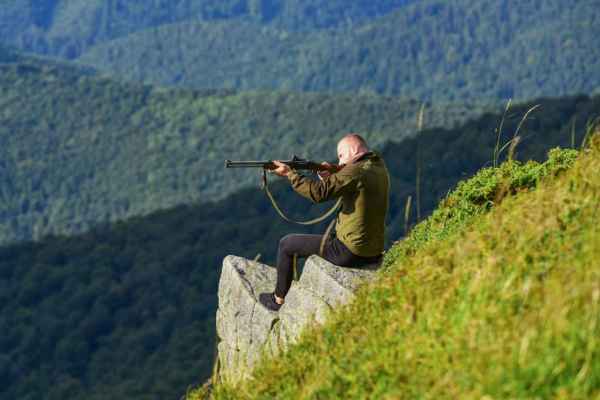
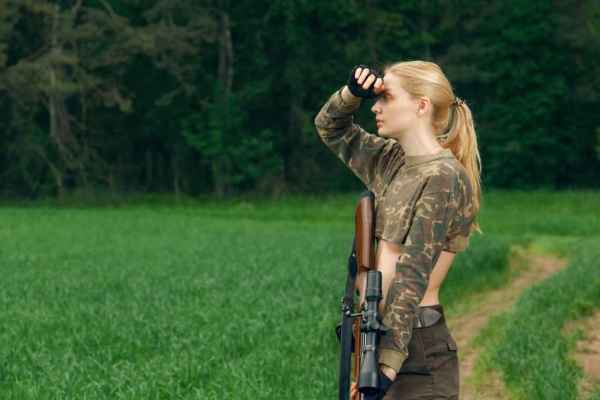
The relevant hunting magazines are full of pictures of recreational hunters in the grip of hunting fever, holding a weapon in their hand and posing in a dominant position over their victims. Such magazines stimulate recreational hunters' fantasies of wanting to hunt more and more, in all manner of countries too. Recreational hunters need photographs and films of this kind in order to feel important.
In the fever of the hunt, hunting weapons lead to abuse within all our social lives. Again and again there are suicides with firearms, threats and fatal tragedies. There are studies showing that 90% of violent criminals started out as animal abusers or recreational hunters. Year after year, countless people are killed and injured by recreational hunters and hunters' weapons, some so severely that they end up in a wheelchair or have to have limbs amputated.
Areas where wild animals are heavily hunted can produce even larger populations. Recreational hunters do not only slaughter sick or old animals, but not infrequently the strongest and healthiest wild animals. A large number of wild animals are merely injured in the course of the hunt and not killed. Hunting destroys the natural balance of animal populations.
Animals play just as important a role as humans. They also show us how important it is to share, since we humans are not the only living beings on the planet.
IG Wild beim Wild
Hunting is the dark shadow that torments wild animals. Hunting is like prostitution. Territorial and licence hunters pay a sum of money in order to indulge their passion, to be allowed to live out their urge to kill. Attractive hunts are organised for this purpose.
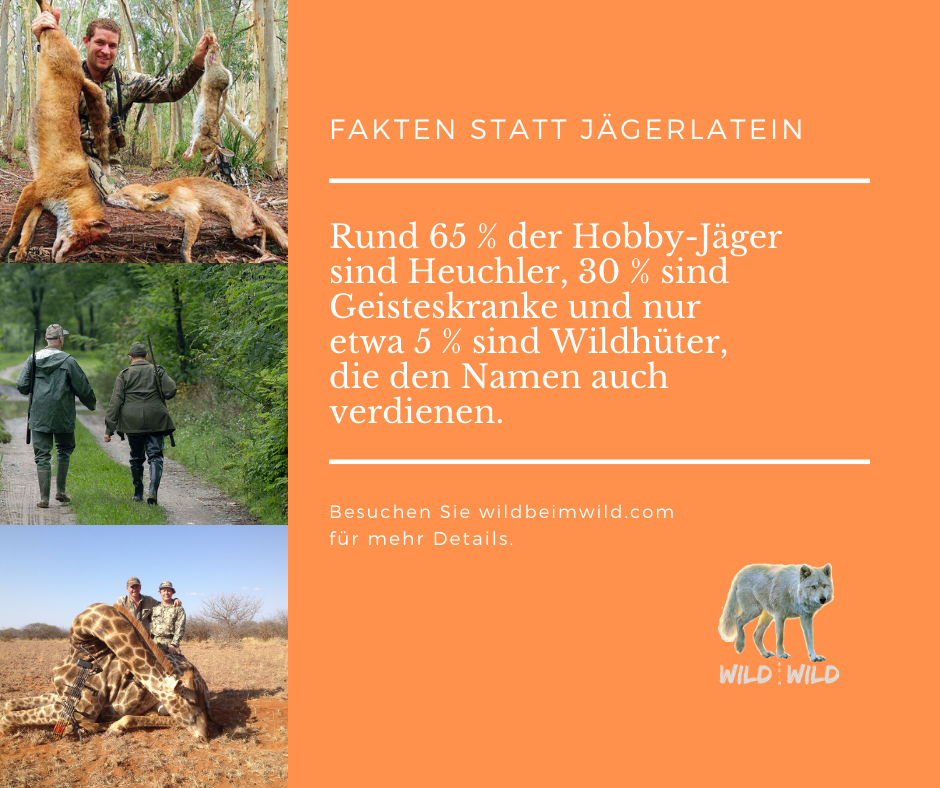
Except, for example, in the canton of Geneva
Free of recreational hunters since 1974, the canton of Geneva does not have the wild animal problems created by unprofessional recreational hunters themselves. There, wild animals are looked after by 12 professional environmental wardens (gardes de l'environnement), which does not even cost the taxpayer the price of a coffee per year, according to Geneva's game warden Gottlieb Dändliker. In the Netherlands, hunting was also largely abolished in 2002.
Hunting is ugly. Hunting is cruelty to animals. Hunting pretends to be something it is not at all.
The recreational hunter does not care that hunting in Switzerland is becoming ever more perverse. Lately, pregnant roe and red deer hinds, or individual mothers and calves, have been shot on the special hunts. Even the shooting of Bambis is praised to the skies. And all this only because the hunting planners have failed to regulate wildlife populations sustainably – because the self-inflicted problems of their poor science in wildlife management have long since grown over their heads. How else can it be explained that, with habitats supposedly becoming ever smaller, there are more and more red deer, wild boars and so on, if not through the wrong practice of hunting as a whole?
There are few recreational hunters who understand that the population density of wild animals regulates itself dynamically on the basis of food supply, territoriality, climate, disease, resources as well as social and physiological factors, and so on, without human intervention – provided it is not shot to pieces. Hunting pressure, along with other factors, on the contrary increases the reproduction rates of the affected animal populations, something that can be observed not only in wild boars, foxes, roe deer, red deer and pigeons but in every species (species preservation, survival instinct, compensatory birth rates, and so on). Most recreational hunters do not accept the predators that eat alongside them. They tend roe deer, red deer and chamois much as they would farm animals and then want to harvest as much as possible. They think the wild animals belong to them and that they have a right to prey and to killing wild animals for fun. Native wild animals belong to no one (res nullius). Recreational hunters have perfected contempt for animals.

Recreational hunters have a great desire to do something heroic. To satisfy their self-esteem through the act of killing. Recreational hunters do not shrink from abusing children in schools with missionary zeal. Sectarian in their hunters' tall tales, they advertise their violent passion. Children and young people have a great love of animals, and recreational hunters place weapons and atrocities into their hands.
Sick child of a recreational hunter with a dying wild animal:
What also connects recreational hunters and serial killers is the desire to collect trophies from their victims. Both love to go stalking, to look out for victims, for the next violent act.
«I do not mean to suggest that most hunters are weak people, but in my experience weak people often enough take the opportunity to compensate for their flaw by hunting or playing around with guns and knives».
The Mind of the Murderer» by FBI profiler John Douglas
Recreational hunters have already been subjected to psychological and sociological studies in both Europe and the USA and compared with non-hunters in various respects. The findings show unequivocally that hunters display no greater affinity with nature than non-hunters, tend to take a negative view of animal welfare, environmental and nature conservation issues, and generally show a higher tendency towards aggressive behaviour – a typical characteristic of meat eaters. The hunter's love of animals and nature takes no pleasure in the existence of the beloved object – rather, it aims to possess the beloved creature hide and hair, culminating in turning it into prey through the act of killing. Nowhere is this more clearly apparent than in hunting tales – in practically every issue of the popular hunting magazines.
Even though people who hunt have differing character traits, what ultimately unites all recreational hunters is the same conduct: a violent treatment of peace-loving animals and of nature, often merely for fun, as a leisure pastime, in the thrill of the hunt or even as a sport, along with the poisoning of nature with lead-based ammunition.
On close analysis, recreational hunters make no valuable contribution to flora and fauna. To this very day, recreational hunters are responsible for a catastrophic imbalance in nature. With the high, artificially bred populations of hoofed game, they also endanger, for example, the protective forests in mountain regions.
Many Swiss recreational hunters, gripped by the thrill of the hunt, take part in hunts abroad, and they certainly do not do so because flora and fauna are dear to their hearts. Hunting today is not an honourable craft, but an unculture with all its pointlessly practised cruelties to animals. Recreational hunters and modern civilisation go together about as well as fire and water, or a paedophile nursery teacher in a nursery school.
«With the hunting licence, the licence to kill is acquired. That in popular parlance someone «who has the hunting licence«, is regarded as not entirely of sound mind, probably contains – like most folk sayings – a kernel of truth. And indeed, we know neither how many psychopaths, gun fanatics or addicts are among the holders of hunting licences who are perfectly legally permitted to handle firearms. Nor do we know who among the hunting licence candidates wants to sit the hunting examination for the sole purpose of gaining legal access to firearms. We do not know it, the authorities do not know it, the hunting associations do not know it – and would rather not know it either».
Karin Hutter
Christian Lüdke is a psychotherapist, trains police special units and deals above all with the psychology of offenders.
Lüdke: „Such people lead a double life. Inwardly they feel like utter failures – in their family life, professionally and sexually – and are driven by extreme desires for power. Because they cannot act this out in everyday life, they have to do so through such an act of violence, and they pick out the weakest victims.“
How can one recognise such a person?
Lüdke: „Outwardly they are usually very inconspicuous. But in the life stories of these offenders three symptoms are frequently found at around the age of eleven: that they start wetting the bed again, that they play with fire and, above all, that they torment animals.“
Are these isolated cases?
Lüdke: „Sadly not. There are a great many people among us with such a high sexual and criminal energy that they are effectively ticking time bombs.“
What is the good path? It is the path on which we reflect on how the killing of living beings can be prevented.
More on this in the dossier: Psychology of hunting
| You can help all animals and our planet through compassion. Choose compassion on your plate and in your glass. Go vegan. |
More on the subject of recreational hunting: In the dossier Psychology of recreational hunting we put research, motives and social consequences into perspective. The scientific evidence is presented in the overview Studies on the Effects of Recreational Hunting.
The position of IG Wild beim Wild: IG Wild beim Wild rejects recreational hunting. Our model is the canton of Geneva, which has managed without recreational hunting since 1974: without hunting seasons, without hunting dogs, without driven hunts, without high seats, without the animal cruelty and crime that go hand in hand with hunting season elsewhere. What has worked there for over fifty years disproves every position paper by JagdSchweiz. An association that bases its policy on claims it refutes in its own documents is not a professional organisation, but a factory for misinformation.

All contributions are written by IG Wild beim Wild as well as by external co-authors. Research, structuring and editorial processes may be supported by AI-assisted tools.
Support our work
With your donation you help to protect animals and to give them a voice.
Donate now →