Ticino high hunt 2026: Wild beim Wild follows the season
From tomorrow, around 1'800 licensed recreational hunters will once again be out in Ticino during the hunting days. We are documenting the season, incident by incident.

From tomorrow, 5 September, the high hunt begins in Ticino.
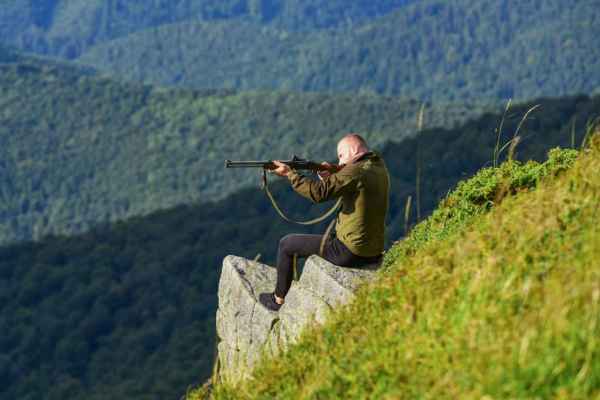
During the hunting days, around 1’800 licensed recreational hunters will once again be out across large parts of the canton. The hunt runs in two phases until 27 September and extends from the Leventina to the Mendrisiotto. The exact dates and the shooting times, which vary according to altitude, are set out by the canton in the cantonal hunting regulations.
Two special rules shape this season. In the districts of Blenio and Leventina, a three-year moratorium on roe deer hunting has been in force since 2025. Cantonal surveys had shown a marked decline in roe deer populations there. And in the Blenio valley, the case of Faido and Leontica still resonates: a recreational hunter shot his ex-wife there and then blew up a house. The case sits alongside further documented incidents in which legal access to firearms, personal crises and violence in the hunting milieu came together.
The high hunt is only one part of Ticino's hunting system. Already on 3 September, the Cantonal Council decided on the partial regulation of the Molare and Lepontino wolf packs. Up to two thirds of the young animals born in 2026 have been released for shooting, specifically two in the Molare pack and three in the Lepontino pack. Alongside the cantonal wildlife warden service, specially trained recreational hunters may also be deployed for this. The canton does not name a specific livestock kill attributed to the packs concerned as a precondition.
On top of this comes the summer wild boar hunt, which Ticino introduced in 2022. It runs from June to August: in June hunting takes place on open ground at dawn and dusk, in July and August exclusively at night from assigned raised hides in the forest. Officially it serves to limit wild boar damage to crops and private property and to prevent the spread of African swine fever.
Taken together, the summer hunt, the high hunt, fox and wild boar hunting as well as wolf regulation create a system in Ticino in which wild animals are hunted or disturbed by unnecessary recreational hunting activities during large parts of the year. A reliable, lengthy period of calm across the canton is therefore barely discernible for many of the animals affected.
Hunting seasons in Ticino at a glance
- Summer wild boar hunt: June to August; in June on open ground at dawn and dusk, in July and August at night from assigned raised hides in the forest.
- High hunt: 5–19 September and 23–27 September 2026.
- Fox hunting («Caccia bassa»): according to the annual cantonal seasonal regulation; in the winter months with additional methods depending on the area and authorisation.
- Caccia tardo autunnale for red deer and roe deer: a possible follow-on hunt after the high hunt if the cantonal kill targets are not met; the dates for 2026/27 are still pending.
- Winter hunting of wild boars: by cantonal order; the dates for 2026/27 are still pending.
- Proactive wolf regulation: by cantonal order and within the respective period of validity of the authorisation.
What this means for hikers and the public
Anyone out in nature in Ticino during the high hunt should be familiar with the rules in force. For those seeking recreation, the shooting times, which vary according to altitude, are particularly important. Above 400 metres longer daily hunting times apply; there, hunting takes place from morning until evening, so in the Blenio Valley and the other mountain regions this means almost the entire day. Below 400 metres, in the more densely populated valley areas, the canton restricts hunting more tightly and closes a window over the midday period so that the public can enjoy nature. Anyone planning a particular hike is best advised to check the times applicable for 2026 in the annual hunting regulations.
The safety distance shows just how narrowly protection is measured. According to the official information from the Office for Hunting and Fisheries (Art. 53 RALCC), recreational hunters must keep a distance of only 50 metres from residential buildings, campsites, Vita Parcours fitness trails and nature trails; the same distance applies to cantonal roads, motorways and railway lines. In addition, no shots may be fired at distances of more than 250 metres. Fifty metres is not much: it is the length of a swimming pool.
Following serious hunting incidents in autumn 2019, in which recreational hunters across Switzerland hit colleagues and bystanders, among them a chimney sweep wearing a high-visibility vest who was shot dead, as well as a man whom a companion mistook for a wild boar and killed, Ticino announced that it would raise the minimum distance from 50 to 200 metres and shorten shooting hours in the valley floors. The announced 200-metre distance was never implemented, however: to this day the 50-metre rule applies. Since 3 July 2026, silencers have also been permitted for hunting in Ticino. One of the reasons given was that shots could then be fired with less noise near inhabited areas. Yet technical noise reduction changes nothing about the risks posed by the firing of shots, the flight of the bullet and the proximity to settlements. We documented the safety debate of the time in the article «Canton of Ticino stands up to recreational hunters». Our dossier «How many hunting accidents happen in Switzerland?» shows that such events must not be regarded as isolated tragedies, but in the context of a structural safety problem.
That is precisely what Wild beim Wild is documenting over the coming weeks: throughout the entire high hunt we are evaluating cantonal police reports, coverage by the Ticino media and tip-offs received by IG Wild beim Wild. We record where incidents occur, how they are reported and how often the narrative of the «regrettable isolated case» gives way to a recurring pattern.
More on the subject of recreational hunting: In our dossiers on the criticism of recreational hunting gather fact-checks, analyses and background reports. The scientific evidence is presented in the overview Studies on the Effects of Recreational Hunting.
The position of IG Wild beim Wild: IG Wild beim Wild rejects recreational hunting. Our model is the canton of Geneva, which has managed without recreational hunting since 1974: without hunting seasons, without hunting dogs, without driven hunts, without high seats, without the animal cruelty and crime that go hand in hand with hunting season elsewhere. What has worked there for over fifty years disproves every position paper by JagdSchweiz. An association that bases its policy on claims it refutes in its own documents is not a professional organisation, but a factory for misinformation.

All articles are written by IG Wild beim Wild as well as by external co-authors. Research, structuring and editorial processes may be supported by AI-assisted tools.