Ticino hunting planning: record kills and open questions
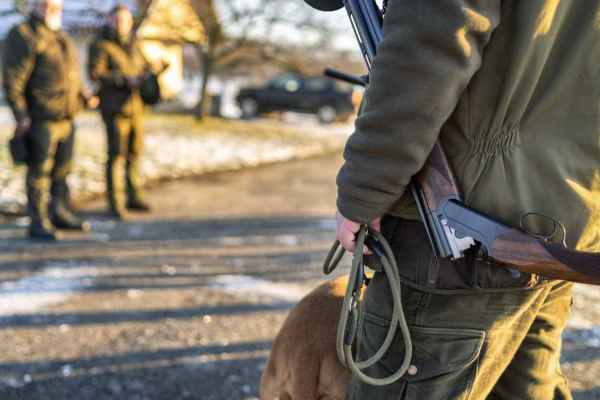
Record hunting of red deer, yet even the organised recreational hunters doubt the justification.
“What the Forest Calls”
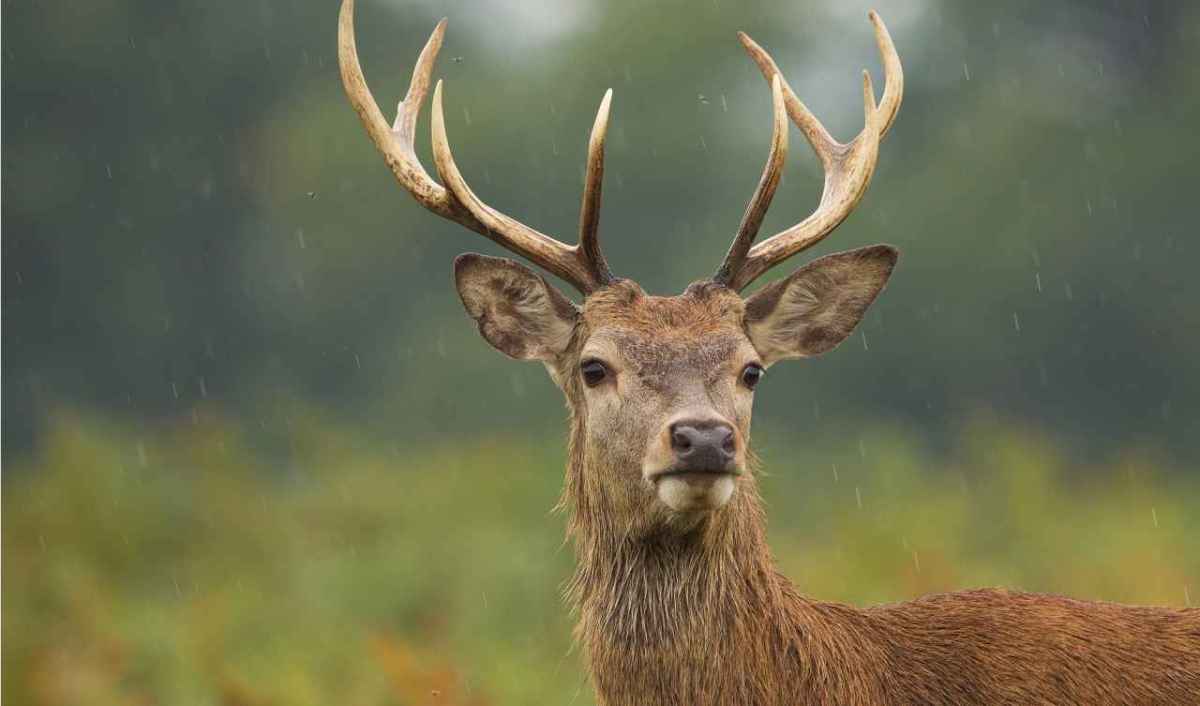
The canton of Ticino has significantly intensified the hunting of red deer in recent years.
During the high hunt alone, the number of animals killed rose from 1’787 in 2022 to 2’163 in 2025. The trend has not been steady: in 2023 there were 1’802 animals, in 2024 the kills fell slightly to 1’722, before rising sharply in 2025. In addition to the high hunt, there is regularly the Caccia tardo autunnale in November and December, as well as officially ordered damage interventions. The total annual removal is therefore even higher. For 2025, the canton explicitly stated that the kill target set in the spring had not been reached despite the record numbers during the high hunt, which is why the late-autumn hunt was opened once again.
As shown in our analysis of the Grisons hunting planning, a published kill figure is no proof that the killing of thousands of wild animals is ecologically necessary, effective or ethically justifiable. In Ticino this applies all the more, because here even the organised hunters themselves contradict the official justification.
A dispute among recreational hunters
In 2021 the canton was openly at odds with its own hunters' federation, the FCTI. For the caccia tardo autunnale, the Office for Hunting and Fishing (UCP) called for 830 red deer to be shot. The FCTI countered with its own plan for only 630 animals, 200 fewer. Vice-president Marco Viglezio expressly contradicted the authorities' assumption that the red deer population was not declining: there was no evidence of a growing population, «come si vorrebbe far credere» (as one would have people believe). Hunting red deer must not become a year-round «fight without mercy» waged day and night, said Viglezio, simply because an expensive game-damage compensation system had become established in Ticino.
That is almost word for word the pattern formulated by the former president of the Grisons licence hunters, Robert Brunold, with regard to low hunting: not necessary, but justified. In Ticino the conflict continues: organised hunters themselves called into question the authorities' interpretation of red deer trends, which was being used to justify heavier hunting.
Camoscio and capriolo: quotas that are rarely met
For the chamois population the canton sets a maximum quota of 800 animals per year. Between 2022 and 2025 it was never reached: 511 animals in 2022, 612 in 2023, 619 in 2024 and 463 in 2025 – that is between roughly 58 and 77 per cent of the plan. The shortfall alone, however, does not prove that the upper limit was biologically set too high. For the lower figures in 2025 the canton itself cites several hunting-organisational reasons: the loss of appeal of chamois hunting, the elimination of a second direct hunting day for adult bucks, the ban on directly shooting bucks in two consecutive years, and unfavourable weather on the decisive hunting day. A kill figure alone therefore allows no conclusions either about population size or about the appropriateness of the quota.
How quickly a population can collapse is shown by the Gambarogno‑Tamaro‑Lema area. There the chamois population declined so severely that in 2022 the cantonal government halted chamois hunting altogether for three years. A local game warden reported at the time that twenty years earlier he had counted between 250 and 300 chamois, and most recently only around 70. Even the local hunting associations acknowledged that hunting of this kind could no longer be justified. We covered the case in the article «Ticino: chamois population collapses in migration area» documented. While chamois hunting in the Gambarogno-Tamaro-Lema area was suspended for three years because of the local collapse, the canton nevertheless continued to apply a cantonwide maximum quota of 800 chamois. This shows how little a cantonwide upper limit says about the situation of individual populations.
With roe deer the picture is different: 314 animals in 2022, 434 in 2023, 389 in 2024, then a marked decline to 239 animals in 2025. This decline is above all a direct consequence of the three-year hunting moratorium in force from 2025 in the districts of Blenio and Leventina. The canton justified this moratorium with relatively low roe deer densities in these districts. The kill figure itself, however, primarily measures the changed hunting authorisation, not the actual population trend.
Violations: figures that must be read carefully
Violations, too, require a precise reading of the figures. After the end of the 2025 high hunt, the canton reported more than 140 self-reports as well as 19 cases in which a licence was withdrawn for particularly serious violations, including one case of poaching with a silenced weapon and a thermal imaging device. These figures, however, relate only to the high hunt and only to the most serious categories; the canton publishes the definitive annual figures, for instance on disciplinary fines and summary offence proceedings, only later. A direct comparison with individual figures from previous years is therefore tricky, because the periods and categories are not congruent.
How many of these cases involved wrongful kills, mistaken identification or injured animals is not published by the canton in a level of detail comparable to that of other cantons. A comparison with Grisons only makes sense where categories, recording methods and time periods are disclosed. It is precisely this data gap that is a finding in itself.
Transparency is not proof
The canton of Ticino publishes its hunting bags and planning figures. That is more than a policy conducted behind closed doors would deliver. Yet a published kill figure does not in itself answer the decisive questions: How robust are the population estimates? What damage was actually recorded, and by what method? Which non-lethal preventive measures were examined? And what consequences do recreational hunting, extended hunting seasons and disturbance have for the animals?
The Ticino data show one thing above all: hunting bags are the result of a system of authorisations, hunting rules, weather, participation and official objectives. They are no independent proof that the number killed was ecologically necessary, effective or ethically defensible. The FCTI's objection to the canton's reasoning at the time makes clear that even within the recreational hunting community the data basis and its political interpretation are disputed.
More on the subject of recreational hunting: In the dossier Poaching and hunting crime in Switzerland we document cases, legal questions and recurring patterns. What the research says about this is shown by Hunting fact-checked: the state of research.
The position of IG Wild beim Wild: IG Wild beim Wild rejects recreational hunting. Our model is the canton of Geneva, which has managed without recreational hunting since 1974: without hunting seasons, without hunting dogs, without driven hunts, without high seats, without the animal cruelty and crime that go hand in hand with hunting season elsewhere. What has worked there for over fifty years disproves every position paper by JagdSchweiz. An association that bases its policy on claims it refutes in its own documents is not a professional organisation, but a factory for misinformation.

All articles are written by IG Wild beim Wild as well as by external co-authors. Research, structuring and editorial processes may be supported by AI-assisted tools.
Support our work
With your donation you help to protect animals and give their voice a hearing.
Donate now →