Contraceptives for Seagulls: A Solution for Cities?
In England, authorities are considering lacing food with contraceptives to enable “safer sex” for seagulls.

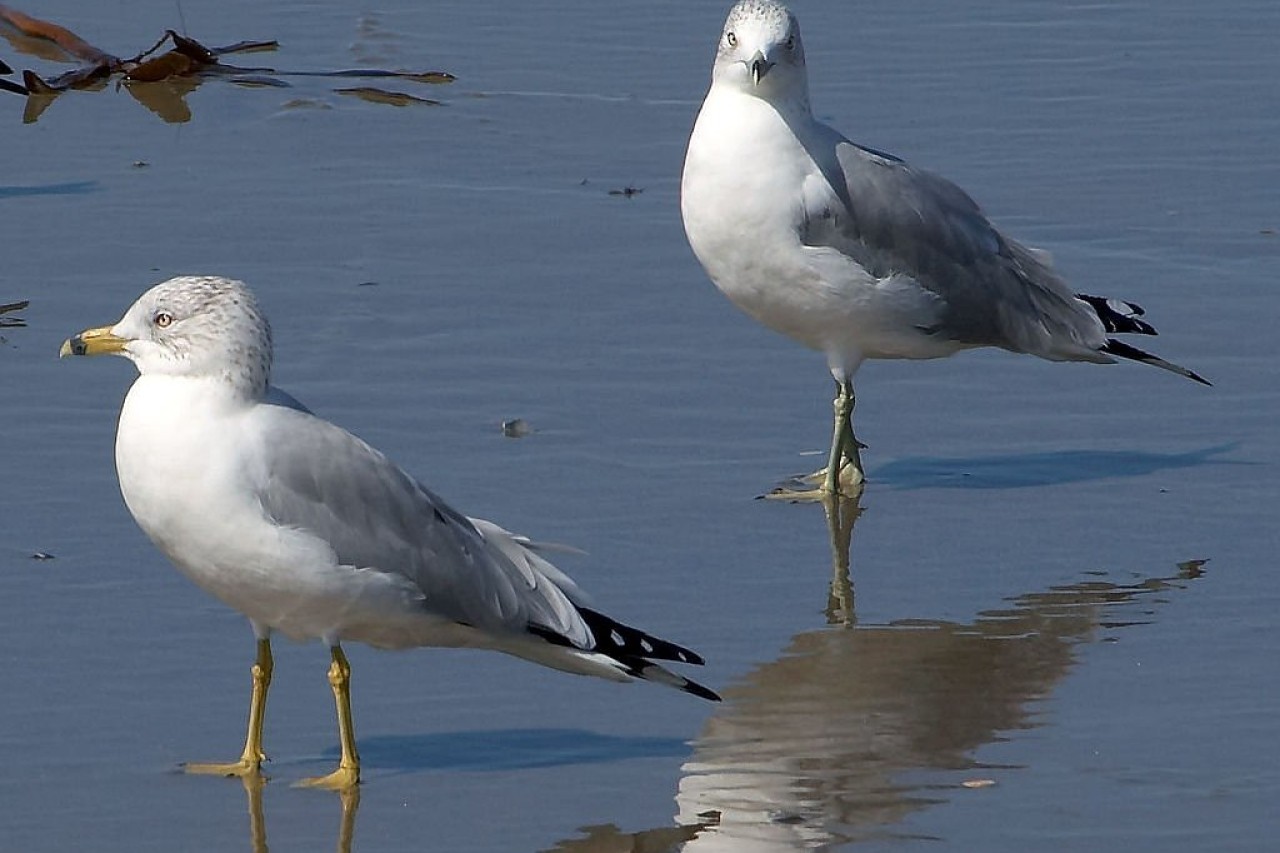
Similar methods have already been used successfully to control pigeon populations in several major European tourist areas. The frustrated residents of the Blackpole district in Worcester called for help after being attacked by seagulls during breeding season.
Their brazen chip-snatching, dive-bombing, and aggressive screeching have earned seagulls a reputation as the scourge of coastal towns, infuriating unsuspecting tourists and residents alike.
“Safe Sex for Seagulls”
And as the marauding birds have pushed inland and settled in urban areas, cities have deployed spikes, nets, and even birds of prey as deterrents. Now Worcester City Council appears to be considering a new escalation in the battle against the birds: avian contraceptives.
Inspired by experimental pigeon control programmes in Barcelona and Venice, Labour councillor Jill Desayrah described the approach as “safe sex for seagulls”. “I am concerned that the increasing number of seagulls is getting out of control,” she said, according to a report by the Mirror.
Contraceptives have been used with varying degrees of success as a humane approach to managing populations of kangaroos, wild horses, prairie dogs, grey squirrels, and rats on the New York subway Non-lethal methods of population control are gaining traction worldwide.
Effectiveness Remains Questionable
The question of effectiveness also arises: seagulls would need to take the pill daily. However, since food scraps are widely available, there is no guarantee that the contraceptive-laced supplies provided by the municipality would be preferentially consumed.
«Gulls can eat many things», says Cecilia Soldatini, a senior scientist at the University of La Paz in Mexico, whose research focuses on the ecology of seabirds. Her team uses cheesy chips to attract gulls, but the birds reject chips that have been softened by rain.
«They are not forced to eat what you give them», says Soldatini, who previously studied the use of contraceptives in feral pigeons in Venice.
According to Soldatini, gulls have a foraging radius of 10 to 15 km, meaning they are not dependent on resources from a narrowly defined area. The key is to eliminate the resources that attract gulls in the first place, the expert says. «Don't provide them with food — collect rubbish. That is the only way.»
She added: «I understand that some city authorities are desperately looking for a solution.»
Kay Haw, the director of UK Squirrel Accord (UKSA), said that injectable contraceptives have already been used successfully in other animal species, such as wild horses in the USA. UKSA is currently investigating oral contraceptives for squirrels in collaboration with the government's Animal and Plant Health Agency. «There are around 3 million grey squirrels in Great Britain», she said. «You can't catch and inject them all.»
One key requirement is that the contraceptives reach only the target species — in this case via a specially designed feeding device that red squirrels cannot operate. Haw said the protein-based contraceptive used breaks down so rapidly that «a predator would have to eat 1’000 squirrels» to be affected by it.