Psychology of recreational hunting in the Canton of Schwyz
The Canton of Schwyz is considered a paradise for hunting crimes and a laboratory for particularly aggressive wolf and recreational hunting policies. While authorities speak of protection, regulation and tradition, criminal proceedings, poaching, illegal wolf hunting methods, lack of wildlife sanctuary zones and problematic political initiatives document a system in which violence against wildlife is structurally trivialised. Psychologically, Schwyz demonstrates how far claims to control, enemy stereotyping and milieu loyalty can remove a recreational hunting system from rule of law and ethical minimum standards.

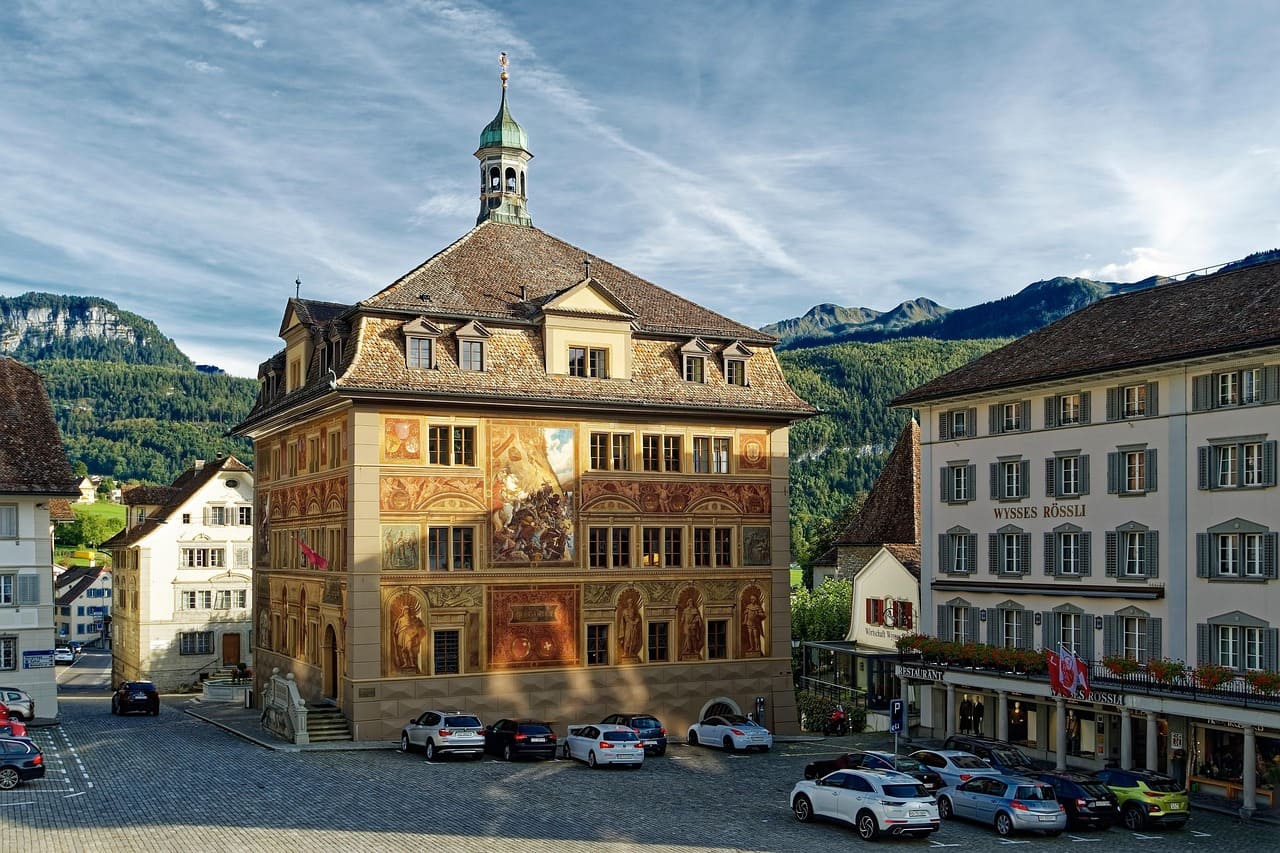
The finding that the Canton of Schwyz is a paradise for hunting crimes is based on a whole series of incidents: snare poaching near Pfäffikon, illegal hunting implements such as wire snares, slingshots and high-performance bows, shots fired at protected species and inadequately prosecuted offences.
Anyone who goes hunting in such an environment is not operating in a clearly regulated recreational area, but in a grey zone where the law is only enforced sporadically and hesitantly.
Psychologically, this creates fertile ground for disinhibition. When perpetrators experience that serious violations have minimal consequences, the threshold lowers for treating rules as non-binding recommendations. Recreational hunting thus becomes a transitional zone between legal leisure activity and criminal violence against wildlife, with the result that public trust in authorities and the justice system erodes.
Canton Schwyz: Paradise for hunting crimes
Bounty and baiting: wolf hunting by any means necessary
Wolf hunting in Canton Schwyz marks a particularly drastic escalation. With a bounty system where compensation for livestock killed effectively acts as premiums on wolves, the canton operates a hunting policy from yesterday: The wolf is not understood as part of an ecosystem, but as an economically exploited enemy image. The more damage reported, the stronger the demand for culling can be legitimized.
The scandal around illegal baiting shows how far the methods go. Deer and roe deer carcasses were tied up in front of a camera trap. Dog food and other bait were laid out to specifically lure wolves and bring them into shooting position. That criminal charges were filed against the canton for illegal wolf hunting methods is the logical consequence. Psychologically, this practice reveals a control obsession that overcomes all inhibitions: When the goal, the dead wolf, becomes more important than the law, wildlife policy tips into organized hunting crimes.
Bounty on wolves: Canton Schwyz pursues hunting policy from yesterday and Wolf hunting in Canton Schwyz: illegal baiting causes scandal
Wolf packs, record kills and the reality of damage
With the first wolf pack in Canton Schwyz, the situation has fundamentally changed. Cubs were confirmed, and the pack uses an area rich in red deer. At the same time, the canton attempted to authorize the shooting of a wolf, but had to suspend the order because possible pack formation had not been properly considered. Officially, monitoring and population regulation are now being discussed, but in fact the threatening backdrop of further interventions remains.
The look at their own statistics is explosive. In an official situation report, it is recorded that in a year with confirmed wolves, there were no kills of livestock, while simultaneously the highest red deer kill in the canton's history was achieved. In the 2025/2026 season, a total of 1,808 wild animals were killed in Canton Schwyz, including 483 red deer and almost 400 roe deer fawns. The official culling target for red deer was 525 animals, which was not reached, yet the kill remains historically high. The wolf's main prey was thus killed in record numbers by recreational hunters without the populations collapsing. Nevertheless, the canton maintains bounties, culling orders and illegal baiting. This shows: It's less about real damage than a symbolic declaration of war on a predator that challenges the control and interpretive monopoly of recreational hunting.
First wolf pack in Canton Schwyz: New developments and monitoring measures and Possible pack formation: Canton Schwyz must suspend wolf culling
Livestock unharmed yet predator panic
Particularly revealing is the fact that during an entire alpine season in Canton Schwyz, no verifiable damage by bear, wolf or lynx to livestock was recorded. Nevertheless, the canton intensifies its rhetoric and policy toward predators. In a government document, the regulation of wolf and bear is pushed forward, even though the actual damage situation does not justify this.
Psychologically, this is a pattern of enemy image cultivation: The mere 'thought' of wolf and bear suffices to justify a preemptive regulatory policy. Fear, need for control and political symbolism replace empirical foundations. Those who act this way use predators as projection surfaces to demonstrate toughness, not to solve real problems.
Canton Schwyz: Livestock remained unharmed by bear, wolf and lynx
Predator regulation by recreational hunters
With a current government council decision, Canton Schwyz supports a motion demanding that hunting rights holders be systematically involved in predator regulation in future. What is sold administratively as an efficiency gain means psychologically: Precisely that milieu which has been fighting the wolf as an enemy image for years is to officially become the executive arm for culling and population regulation.
This further blurs the boundary between independent wildlife management and interest-driven recreational hunting. For psychological perception, this is fatal: Instead of commissioning a neutral specialist agency with sensitive interventions, precisely those actors who are emotionally and symbolically most involved are being equipped with weapons. Objective considerations become even more difficult, mistrust among the population grows.
Wolf and bear in Canton Schwyz
No wildlife rest zones: Permanent stress for wild animals
Despite growing recreational pressure and intensified wolf hunting, Canton Schwyz continues to reject the introduction of binding wildlife rest zones. A review of the hunting and wildlife protection law has indeed shown possibilities for improvement, but the government refrained from establishing clear retreat areas for wild animals. Instead, it relies on non-binding appeals and voluntary consideration.
The hunting seasons (1 Sept. 2025 to 28 Feb. 2026, plus two waterfowl windows) concretely demonstrate how many months wild animals in Canton Schwyz are under hunting pressure, making the rejection of wildlife rest zones appear even more serious.
Psychologically, this acts like a carte blanche for permanent stress. Wild animals are exposed year-round to sport, tourism, recreational hunting and other disturbances without territorial boundaries behind which they are safe. A canton that neither wants to accept predators nor establish wildlife rest zones sends the message that human usage claims, including those of armed recreational hunters, fundamentally take precedence over animal needs.
No wildlife rest zones in Canton Schwyz
Everyday violations: Closed season, weapons law and animal cruelty
Besides serious cases like poaching and illegal wolf hunting, Canton Schwyz notoriously has numerous smaller offenses that reveal much about recreational hunting culture. A hobby hunter hunted on a closed day, although the law prohibits shooting on that day. He received a fine, the system gained another indication of the disregard for clear rules. Another hobby hunter forgot a loaded shotgun in a parking lot, another was convicted of animal cruelty.
Such cases are psychologically not marginal phenomena. Those who make weapons and wild animals routine and morally elevate themselves tend to underestimate risks and view rules as negotiable. This affects not only one's own safety and that of third parties, but also animal suffering. When animal cruelty occurs in the recreational hunting environment, it is not an isolated 'black sheep,' but an expression of a culture in which violence against wild animals is fundamentally legitimized.
Swiss recreational hunters keep the justice system busy
Lead shot and invisible victims
Another blind spot in Schwyz's recreational hunting is the use of lead shot. A government document on shot hunting shows that the canton continues to permit pure lead shot hunting for small game, despite international discussions about lead poisoning in birds of prey, scavengers and soil organisms. The indirect victims — poisoned raptors, contaminated soils and scavengers — remain largely invisible in official communications.
Psychologically, this fits the overall picture: where direct violence against wild animals is already normalized, it becomes easier to accept invisible consequences as well. As long as established hunting practices don't have to be touched, toxic residues and long-term ecological damage seem like an abstract problem that can be hidden behind technical terms.
Hobby hunter hunted on closed season day in Canton Schwyz
Golden jackal: rare species, no prosecution
The case of the shot golden jackal in the Einsiedeln area illustrates the canton's attitude toward new or rare species. A game warden killed the animal, and no charges were filed against him. The canton thus misses the opportunity to make species protection clear not just on paper, but also in criminal practice.
Psychologically, this reinforces the impression in hunting circles that anything that doesn't fit the familiar pattern can be shot, with or without legal consequences. Rare species that would need special attention are thus put in the same category as unwanted predators or 'competitors' of recreational hunting.
No charges for shooting of golden jackal
Office for Forest and Nature: authority in the hunting tunnel
Formally, the Office for Forest and Nature (Hunting and Wildlife Section) is responsible for hunting law, wolf decisions, combating poaching and wildlife management in Canton Schwyz. In practice, a tension emerges: an office that should prosecute wildlife crimes simultaneously supports bounty systems, refuses wildlife refuge zones and employs wolf hunting methods against which criminal complaints are filed.
Psychologically, the impression emerges of an authority that operates too close to the recreational hunting milieu and adopts its narratives: the wolf as problem, hobby hunters as indispensable force of order, predators as disruptive factors, retreat areas as unnecessary luxury. Where authority and milieu intertwine, it becomes difficult to draw clear boundaries between law and 'tradition', between independent oversight and interest-driven accommodation.
Transparency in shooting numbers is necessary, but not sufficient. Anyone who praises an authority that publicly documents 1,808 wildlife kills annually without simultaneously establishing wildlife refuge zones, reviewing wolf hunting methods or consistently pursuing poaching cases confuses data transparency with accountability.
What Canton Schwyz reflects to Switzerland
Canton Schwyz shows in concentrated form where a recreational hunting system can drift when control, enemy cultivation and milieu loyalty become more important than law, ethics and science. Poaching, bounties on wolves, prohibited feeding, record kills, missing wildlife refuge zones, violations of closed seasons, weapons law and species protection as well as animal cruelty are not misunderstandings, but a pattern.
For Switzerland as a whole, Schwyz is thus a negative example: a canton where the psychology of recreational hunting — control, status, fear of predators, tradition rhetoric — so strongly shapes politics and enforcement that wildlife protection, rule of law and public safety fall behind. The central question is not whether tradition may be cultivated, but how long a system that produces and defends such excesses can still be socially legitimized.
Hobby hunters in psychoanalysis
More on this in the dossier: Psychology of hunting
Cantonal psychology analyses:
- Psychology of recreational hunting in Canton Glarus
- Psychology of Recreational Hunting in Canton Zug
- Psychology of Recreational Hunting in Canton Basel-Stadt
- Psychology of Recreational Hunting in Canton Schaffhausen
- Psychology of Recreational Hunting in Canton Appenzell Ausserrhoden
- Psychology of Recreational Hunting in Canton Appenzell Innerrhoden
- Psychology of Recreational Hunting in Canton Neuchâtel
- Psychology of Recreational Hunting in Canton Thurgau
- Psychology of Recreational Hunting in Canton Nidwalden
- Psychology of Recreational Hunting in Canton Uri
- Psychology of Recreational Hunting in Canton Obwalden
- Psychology of Recreational Hunting in Canton Schwyz
- Psychology of Recreational Hunting in Canton Jura
- Psychology of Recreational Hunting in Canton Basel-Landschaft
- Psychology of Recreational Hunting in Canton Zurich
- Psychology of Recreational Hunting in Canton Geneva
- Psychology of Recreational Hunting in Canton Bern
- Psychology of Recreational Hunting in Canton Solothurn
- Psychology of Recreational Hunting in Canton Aargau
- Psychology of Recreational Hunting in Canton Ticino
- Psychology of Recreational Hunting in Canton Valais
- Psychology of Recreational Hunting in Canton Graubünden
- Psychology of Recreational Hunting in Canton St. Gallen
- Psychology of Recreational Hunting in Canton Fribourg
- Psychology of Recreational Hunting in Canton Vaud
- Psychology of Recreational Hunting in Canton Lucerne