
Cantonal popular initiative – Canton of Appenzell Innerrhoden
"For professional wildlife protection"
Application to the Landsgemeinde of the Canton of Appenzell Innerrhoden
Based on Article 7 of the Constitution for the Swiss Canton of Appenzell Innerrhoden of 24 Winter Month 1872 and on the Ordinance on the Landsgemeinde (cantonal assembly).
Submitted by [Name], [City AI], [Date]
Note: The canton of Appenzell Innerrhoden is a Landsgemeinde canton. At the Landsgemeinde, all eligible voters in Innerrhoden can vote directly on constitutional and legislative proposals. A motion can be submitted by any single eligible voter. No signatures are required.
Application
The Landsgemeinde of the Canton of Appenzell Innerrhoden resolves the following amendment to the Constitution for the Federal Canton of Appenzell I.Rh. of the 24th winter month of 1872:
Art. [new] Professional Wildlife Protection
1. Hunting by private individuals (licensed hunting, hobby hunting) is prohibited throughout the entire territory of the canton of Appenzell Innerrhoden.
2 The protection, care and, where necessary, regulation of wild animals are the sole responsibility of professionally trained wildlife managers employed by the canton.
3. The shooting of wild animals is only permitted as a last resort, when all other suitable measures for damage prevention or hazard control have been exhausted or are insufficient. It requires the prior authorization of the Wildlife Commission.
4. The canton shall establish an independent wildlife commission composed of representatives from animal and nature conservation organizations, the scientific community, and the relevant authorities. The commission shall oversee wildlife management and decide on regulatory measures.
5 The canton promotes the natural regulation of wildlife populations, the networking of habitats and the coexistence of humans and wildlife.
6. Further details are regulated by law.
Art. [new] Protection of threatened and protected wildlife species
1 The canton waives requests for preventive population control of protected wild animal species under the Federal Act on Hunting and the Protection of Wild Mammals and Birds, in particular wolf, lynx, bear, beaver, otter, golden jackal, golden eagle, goosander and other species protected under federal law.
2 He focuses on promoting the coexistence of humans and wild animals, passive damage prevention, the ecological enhancement of habitats and the scientific monitoring of wildlife presence.
Three measures against individual wild animals that pose an immediate and significant threat to humans remain reserved. These measures are to be kept to a minimum and carried out by the responsible cantonal authority.
4 The canton actively promotes the protection and conservation of threatened wildlife species within the framework of intercantonal cooperation and towards the federal government.
Transitional provision
1 The Commission for the Status of Persons shall issue the necessary implementing regulations within two years of the adoption of this constitutional amendment.
2. Existing hunting licenses expire upon the entry into force of the implementing regulations. License fees already paid for the current hunting season will be refunded proportionally.
3 The Standing Committee ensures the continuity of wildlife management during the transition phase.
Explanations
1. Initial situation
In the canton of Appenzell Innerrhoden, the smallest canton in Switzerland with approximately 16,000 inhabitants spread across 173 km², recreational hunting is a system that serves neither species conservation nor modern wildlife management. It is the pursuit of a bloody leisure activity at the expense of sentient beings, legitimized by outdated narratives that do not stand up to scientific scrutiny. The claim that the ecological balance would collapse without recreational hunting has been empirically refuted for over 50 years by the Geneva model (see the comprehensive dossier on the Geneva hunting ban at wildbeimwild.com ).
In Appenzell Innerrhoden, recreational hunting is organized as a licensed hunting system. Private individuals obtain a cantonal license and hunt without fixed responsibility for a specific hunting area (see the psychology of recreational hunting in the canton of Appenzell Innerrhoden and the critical analysis of hunting training on wildbeimwild.com ).
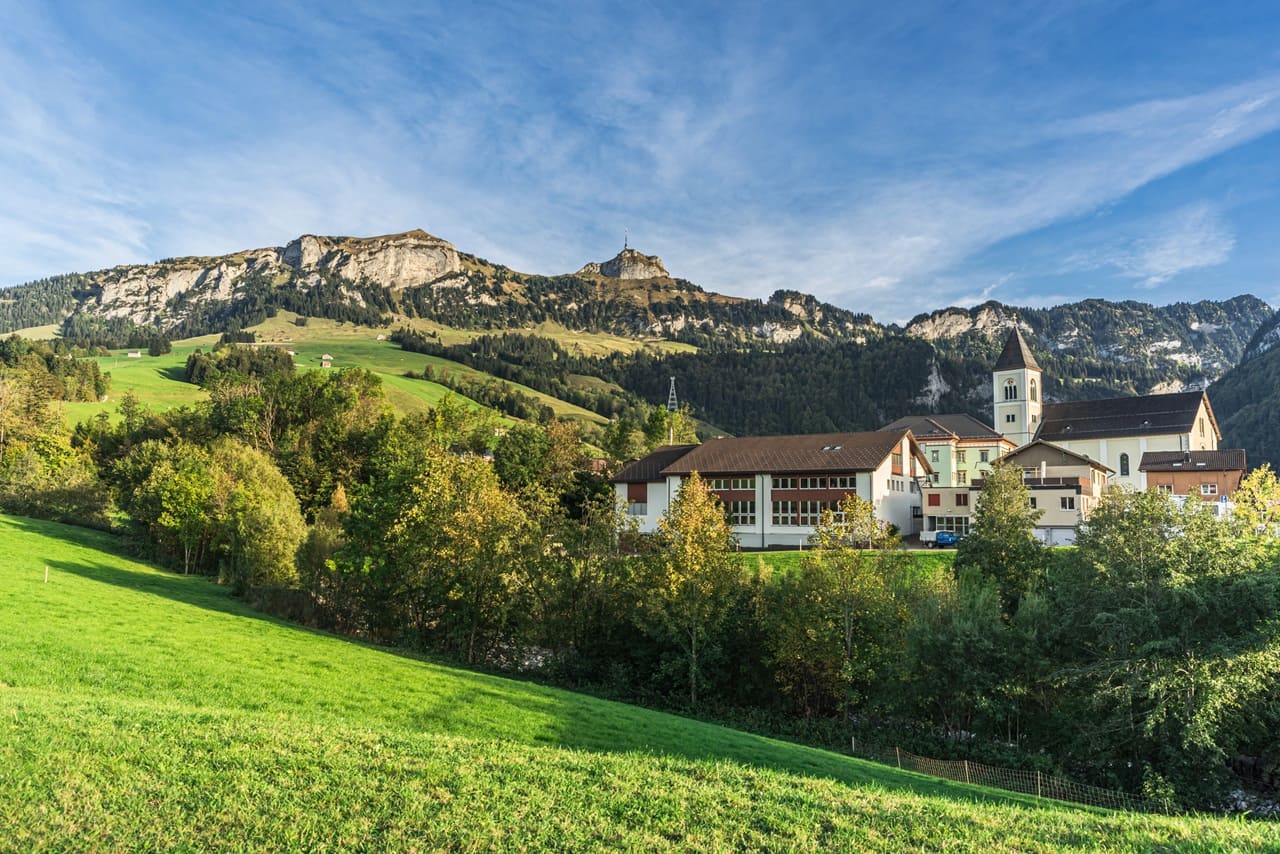
The Alpstein is the defining landscape feature of the canton. Ibex, chamois, and golden eagles are native to the Alpstein. Lynx are present in the region. Since February 2025, beavers may be shot upon application by the canton. The Alpstein is a habitat of national importance (see the analysis of hunting policy and wolf policy on wildbeimwild.com ).
The canton of Appenzell Innerrhoden has the opportunity to send a clear message here. The Landsgemeinde (cantonal assembly) offers the ideal democratic instrument for this: a single person can submit a proposal, and the entire electorate decides directly. As the smallest canton in Switzerland, Appenzell Innerrhoden could become a pioneer.
2. The model: Canton of Geneva
On May 19, 1974, approximately two-thirds of voters in the canton of Geneva voted to abolish militia hobby hunting. The experience is clear:
Biodiversity has increased significantly. The number of overwintering waterfowl has multiplied from a few hundred to around 30,000. Geneva is now home to the largest population of brown hares and one of the last remaining populations of grey partridges in Switzerland.
– The deer population has stabilized at a healthy level, with an annual special cull by professional game wardens of only 20 to 36 animals.
– In 2005, 90 percent of Geneva's voters supported retaining the system. In 2009, a motion to reinstate it was defeated by a vote of 70 to 7.
– The total costs amount to approximately 1.2 million Swiss francs annually, or approximately 2.40 Swiss francs per inhabitant per year.
Geneva's wildlife inspector, Gottlieb Dandliker, describes the ban on recreational hunting as the most financially advantageous alternative. A detailed explanation can be found in the dossier "Geneva and the Hunting Ban" on wildbeimwild.com . The efficiency of the Geneva model is evident in a direct comparison: A professional game warden in Geneva needs an average of 8 hours and a maximum of 2 cartridges for the sanitary culling of a wild boar. A recreational hunter in the Canton of Zurich needs 60 to 80 hours and up to 15 cartridges for the same task. The brown hare density in Geneva is 17.7 animals per 100 hectares (the highest in Switzerland), while in the Canton of Zurich it is only 1.0 per 100 hectares (see fact check by the Zurich Cantonal Government ).
3. The concept: Professional gamekeeping instead of hobby hunting
The proposal replaces recreational hunting with professional wildlife management based on the game warden model:
Expertise instead of leisure. Professional wildlife managers act on a scientific basis (see the critical analysis of hunting training ).
The principle of ultima ratio applies. Shooting down an aircraft is only permissible if all non-lethal measures have been exhausted.
Democratic control through a wildlife commission.
Natural self-regulation as a guiding principle. Evidenced by Geneva, national parks , and studies .
4. Why Appenzell Innerrhoden?
Landsgemeinde: Switzerland's most direct form of democracy. A single eligible voter can submit a proposal. No signatures are required. The lowest barrier to participation in all of Switzerland. The Landsgemeinde offers the opportunity to explain the proposal directly, personally, and publicly.
The smallest canton in Switzerland. Appenzell Innerrhoden covers 173 km². Geneva, with 282 km², has been operating a professional wildlife management system for 50 years. Appenzell Innerrhoden is even smaller than Geneva. What works in Geneva will certainly work in a smaller area.
Alpstein: A habitat of national importance. The Alpstein is home to ibex, chamois, golden eagles, and numerous other species. Professional wildlife management would provide more consistent protection for this unique habitat (see wildbeimwild.com for information on protected areas ).
Lynx in the region. The lynx is present in the region and naturally regulates the deer population (see wildbeimwild.com for information on predators ).
Patent hunting = simple system change. No lease agreements, no municipal compensation.
Pioneering role. As the smallest canton in Switzerland, Appenzell Innerrhoden could become a pioneer: proof that professional wildlife management also works on the smallest scale (see wildbeimwild.com on wild animals in settlement areas ).
5. Regarding the application text
The six paragraphs of the first article and the four paragraphs of the second article correspond exactly to the Geneva model and the patent hunting variant of the entire series of initiatives. Compliant with federal law according to Art. 3 para. 1 of the Hunting Act. Geneva has been unchallenged since 1974. The Wildlife Commission prevents the Cantonal Commission from independently granting exceptions (see wildbeimwild.com/jagd-fakten ).
6. Regarding the second article: Protection of threatened and protected wildlife species
Golden eagles, lynx, and ibex are present in the canton. The "in particular" wording also protects future returnees, especially the wolf, which is increasingly present in the region (see the wolf policy on wildbeimwild.com ).
7. Cost implications
In Geneva (282 km², 500,000 inhabitants): 1.2 million Swiss francs annually. For Appenzell Innerrhoden (173 km², 16,000 inhabitants), the following deliberately conservative estimate is calculated, which generously takes into account the additional alpine costs for the Alpstein region:
Personnel costs: 240,000 to 420,000 Swiss francs. Two to three full-time positions are required. Appenzell Innerrhoden lies in the heart of the Alpstein region, home to the Säntis mountain. The alpine topography necessitates specialists with local knowledge. The higher number of positions takes into account the management of large predators (the wolf has been documented in the Alpstein).
Material costs: 50,000 to 90,000 Swiss francs. Compensation for damages: 20,000 to 50,000 Swiss francs.
Initial investment for livestock protection: 200,000 to 350,000 Swiss francs. A one-time investment for the Alpstein region over three to five years: livestock guardian dog programs, mobile fences, night enclosures. Appenzell Innerrhoden has significant alpine farming that requires professional livestock protection.
Lost revenue
With the abolition of recreational hunting, the estimated annual license fees of 80,000 to 150,000 Swiss francs will be eliminated. However, this is offset by the never-accounted-for external costs of volunteer hunting – wildlife collisions, hunting-related browsing damage in protected forests, administrative expenses, police and court interventions – which amount to many times these revenues. In the Canton of Geneva, these revenues have been absent since 1974 – without any financial problems: Before the hunting ban, over 400 recreational hunters were active; today, three full-time positions do the same work more effectively. Sanitary and therapeutic culling by professional game wardens is not the same as regulated hunting based on hunters' tall tales or the misguided "experience of nature" of recreational hunters. A full cost analysis shows that volunteer hunting costs taxpayers significantly more than it generates (see "What recreational hunting really costs Switzerland" on wildbeimwild.com ).
Hobby hunters in politics vote against nature conservation. The hobby hunting lobby systematically opposes biodiversity and species protection efforts. In 2024, they opposed the biodiversity initiative (63 percent voted against). In 2020, the hunting law they helped draft failed at the ballot box (51.9 percent voted against). In 2016, the Ticino Hunting Association thwarted the Parc Adula National Park. During the 2015-2019 legislative period, hobby hunters in parliament predominantly voted against environmental issues . Anyone claiming that hobby hunters are conservationists ignores their voting record (see Ticino Hunting Association: 30 Years of Nonsense and Cost Dossier ).
Total gross costs: 310,000 to 560,000 Swiss francs. After savings (no patent administration, game wardenship, or culling planning; a wolf killed unnecessarily costs 35,000 Swiss francs): net additional costs of 150,000 to 350,000 Swiss francs annually. The compensatory reproduction – the artificially increased reproduction rate due to hunting pressure – subsides within a few years after the system change. For a canton with a budget of around 188 million Swiss francs (2024 state accounts, Federal Finance Administration), this is modest (see Hunting Myths Fact Check ).
8. Compatibility with higher-ranking law
Compliant with federal law (Art. 3 para. 1 JSG, three equivalent hunting systems, Geneva since 1974). Art. 7a JSG permits, but does not obligate, preventive regulation. Unity of subject matter is maintained.
9. Anticipating foreseeable objections
"Appenzell Innerrhoden is too small for its own wildlife management."
The facts: Appenzell Innerrhoden has 173 km². Geneva has 282 km². Appenzell Innerrhoden is even smaller than Geneva. What has worked in Geneva for 50 years on 282 km² will certainly work on 173 km². 1–2 full-time positions are sufficient (see the psychology of recreational hunting in the canton of Appenzell Innerrhoden ).
A concise communicative formula: "173 km². Geneva has 282 km² and has been doing it for 50 years. We are smaller – that makes it easier, not more difficult."
"The Alpstein region needs recreational hunting"
The facts: Professional wildlife management protects the Alpstein region more effectively than recreational hunting. Ibex and chamois populations regulate themselves naturally in the alpine zone. Lynx populations control the roe deer population.
A concise communicative formula: "The Alpstein region needs professional protection, not amateur shooters."
"The costs are too high."
The facts: 150,000 to 350,000 Swiss francs in absolute terms. The lowest costs of the entire series. Affordable for a canton with a budget of around 100 million Swiss francs.
A concise communicative formula: "150,000 to 350,000 francs. The lowest costs of all cantons."
10. Summary
This proposal gives the Appenzell Innerrhoden Landsgemeinde (cantonal assembly) the opportunity to vote in favor of modern, evidence-based wildlife management. The Landsgemeinde is the ideal democratic instrument: a single person submits the proposal, and the electorate decides directly. As the smallest canton in Switzerland, Appenzell Innerrhoden could become a pioneer: 173 km² – smaller than Geneva, easier to implement, and with the lowest costs. It boasts the lowest democratic hurdle and the lowest costs of the entire series.
Applicant: [Name], [Address], [City of residence AI]
(Any person entitled to vote in the canton of Appenzell Innerrhoden can submit a proposal to the Landsgemeinde.)
Appendix: Further documentation
The Geneva model in detail: wildbeimwild.com/dossiers/genf-und-das-jagdverbot
Scientific studies: wildbeimwild.com/studies
Hunting in Switzerland: wildbeimwild.com/jagd-in-der-schweiz
Psychology of recreational hunting in the canton of Appenzell Innerrhoden: wildbeimwild.com – Psychology of recreational hunting in the canton of AI
Wolf dossier: wildbeimwild.com/category/wolf
Predators: wildbeimwild.com/category/raubtiere
National parks: wildbeimwild.com/category/nationalpark
Hunting myths: wildbeimwild.com/dossiers/jagdmythen
Cantonal popular initiative Basel-Stadt: Sample text Basel-Stadt
Note on the procedure
Any person entitled to vote in the Canton of Appenzell Innerrhoden may submit a motion to the Landsgemeinde (cantonal assembly). The motion must be submitted to the Cantonal Chancellery in a timely manner. The motion will be published in the Landsgemeinde announcement. The Cantonal Council will issue a statement. The motion will be put to a vote at the next ordinary Landsgemeinde (always held on the last Sunday in April). The proposer has the right to explain the motion in person.
Strategic briefing for activists
Application “For professional wildlife protection” – Canton of Appenzell Innerrhoden Internal working document – Status March 2026
Summary
Appenzell Innerrhoden is a canton with a Landsgemeinde (cantonal assembly) and the smallest canton in Switzerland. A single person can submit the application. No signatures are required. 173 km², 16,000 inhabitants. Smaller than Geneva (282 km²). Lowest costs in the series: 80,000–200,000 Swiss francs. The Alpstein region as a valuable habitat. The cantonal government acts as the executive body.
1. Special feature: Landsgemeinde procedure
No signatures required. A single eligible voter can submit the application.
Personal justification. The applicant personally justifies the application at the Landsgemeinde (3-5 minutes).
Direct vote. The electorate decides by raising their hands.
Date. The Landsgemeinde (cantonal assembly) takes place on the last Sunday in April. Applications must be submitted to the council office in good time.
2. Opponent analysis
“AI is too small”: “173 km². Geneva has 282 km². We are smaller – that makes it easier.”
"The Alpstein region needs recreational hunting": "The Alpstein region needs professional protection, not hobby hunters."
"The costs are too high": "150,000 to 350,000 francs. The lowest costs of all cantons."
3. Key messages
"Smaller than Geneva. Easier to implement." 173 vs. 282 km².
"Geneva has been setting an example for 50 years." 90 percent approval.
"The Landsgemeinde decides directly." No detour via party politics.
4. Schedule
| phase | Contents | Timeframe |
|---|---|---|
| Prepare application | Consult a lawyer; finalize the text | Months 1–3 |
| submission | Council Chancellery, in good time before the Landsgemeinde (cantonal assembly). | According to the Council Chancellery |
| Media relations | Appenzeller Zeitung, Appenzeller Volksfreund | After submission |
| Support group | Pro Natura AI; BirdLife; local animal and nature conservation associations | Ongoing |
| Landsgemeinde speech | 3–5 min., clear, fact-based, personal | Before the Landsgemeinde |
| Landsgemeinde | Last Sunday in April; justify the application; raise hands | Landsgemeinde Day |
5. Tips for the Landsgemeinde speech
Short and to the point. 3 to 5 minutes. Start with a personal touch. Geneva as proof. "Geneva has been doing it for 50 years. 90 percent want to keep it that way." The argument of scale. "We're smaller than Geneva – 173 km² versus 282 km². What works there will certainly work for us." Concrete costs. "150,000 to 350,000 francs." Enough with the appeals. "Vote for professional wildlife protection. For the Alpstein region. For our Appenzell Innerrhoden."
6. Special Challenges
Small canton, close-knit community. In a canton with 16,000 inhabitants, everyone knows each other. Applicants should expect to be approached personally about their application.
Conservative stance. Appenzell Innerrhoden is steeped in conservatism. The campaign must rely on facts, not emotions. The Geneva argument ("smaller than Geneva") and the cost argument ("lowest costs of all cantons") are the strongest assets.
7. Sources
- Geneva hunting ban in detail
- Scientific studies
- Hunting in Switzerland
- Psychology of recreational hunting in the canton of AI
- Hunting myths fact check
- Wolf policy
- predators
- Federal Hunting Statistics (BAFU)
- Cantonal popular initiative Basel-Stadt
This document is a sample text from the IG Wild beim Wild (Interest Group for Wildlife in the Wild). It can be freely used by activists, organizations, or applicants and adapted to the conditions in the canton of Appenzell Innerrhoden.
Fact check: The claims of the hobby hunting lobby
The brochure "Hunting in Switzerland Protects and Benefits" by JagdSchweiz reads like an advertising leaflet – but its central claims don't stand up to a fact check. Ten narratives put to the test, from "a state responsibility" and "biodiversity" to "80% approval": Dossier: Fact check JagdSchweiz brochure →