Engadin National Park
The national park in Engadin has been providing a refuge for wildlife from hunters' terror since 1914.


Not far from the Ofenpass lies Switzerland's oldest national park — a landscape free from human intervention for 100 years.
Its area of 170 square kilometres is comparable in size to the Principality of Liechtenstein.
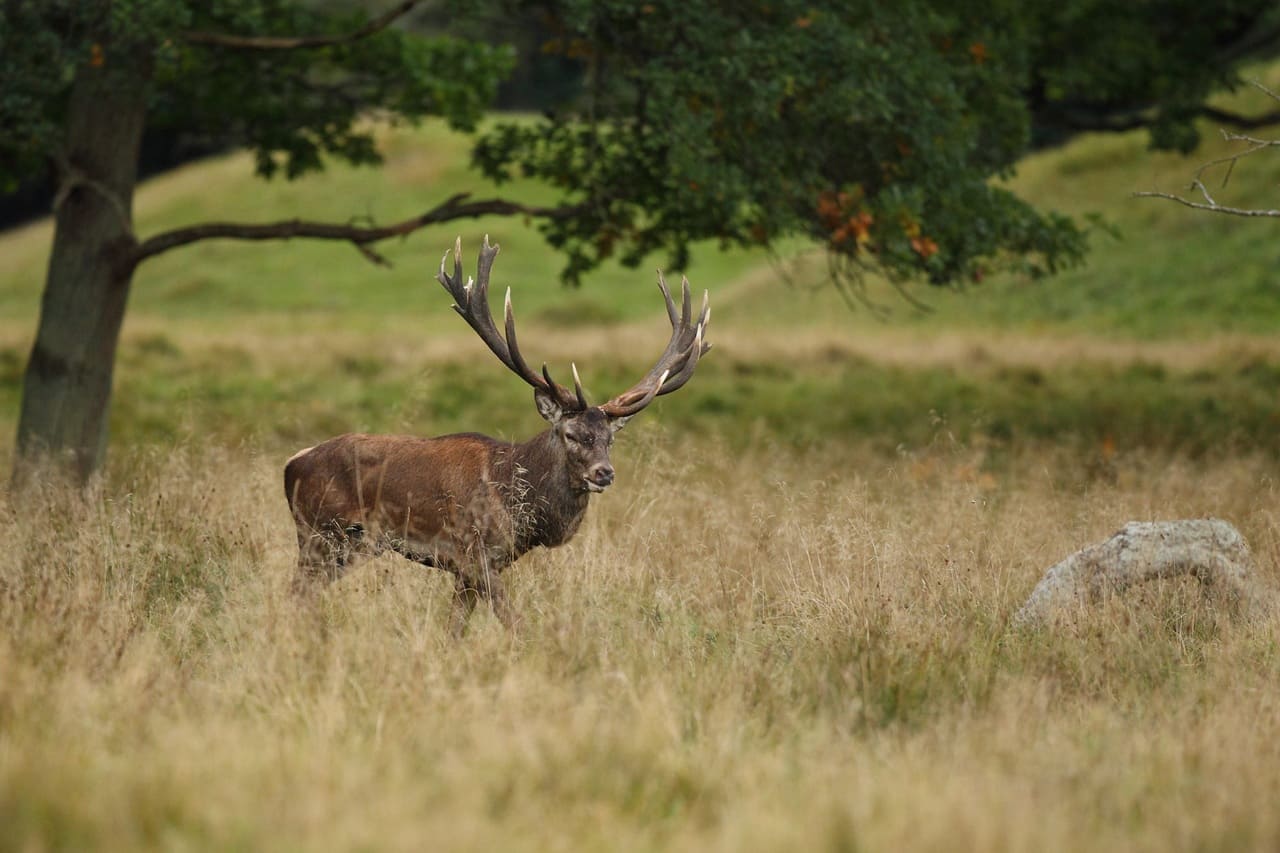
Red deer roam freely there in broad daylight and are the largest wild herbivores in Switzerland.
The national park is home to 35 different mammal species, 73 bird species, 5 reptile and 3 amphibian species, 227 butterfly species (of which 108 are day-flying butterflies), 34 dragonfly and 205 beetle species, as well as 99 land snails and freshwater mussels.
The shift from livestock to wildlife grazing led to a completely new biodiversity, in some cases even doubling it. The decisive factor for any natural development is time. In winter, the regulatory mechanisms of nature left to its own devices are most clearly apparent.

The bearded vulture and the ibex were once mercilessly hunted to the brink of extinction by recreational hunters and later reintroduced by humans.
The Alpine ibex is a species of goat that feels particularly at home in the mountains. The ibex's habitat spans the altitudes between the tree line and the snow line. Only in winter do they descend to lower elevations. The ibex is the heraldic animal of the canton of Graubünden and does not cope well with loose terrain. At over 100 kilograms of body weight, ibex tend to avoid deep snow.
It is precisely thanks to the hunting-obsessed Italian King Vittorio Emanuele II that the Engadin owes its ibex. Italian poachers brought ibex kids from the king's hunting grounds (National Park Gran Paradiso) in the Aosta Valley to Switzerland. At that time, poachers were fair game for game wardens, and smuggling carried the death penalty. The ibex kids were worth roughly the equivalent (800 francs per animal) of a modern mid-range car. In a daring smuggling operation in June 1906, two female kids and one male kid were the first to make it from Italy to Switzerland. Poachers had stolen them from the royal hunting grounds — after outwitting the mother animals — taking care to ensure the kids had already received their first mother's milk (colostrum), which made them more resilient. They then carried them from the Gran Paradiso over into Valais. Between 1906 and 1933, a total of 59 smuggled ibex kids arrived at the Peter and Paul Wildlife Park in St. Gallen. In 1920, several ibex from the wildlife park were released into the Swiss National Park. Today, around 15’000 ibex once again live in Switzerland, all of Italian descent.

With a wingspan of nearly 3 metres, bearded vultures are the largest birds of the Alps. Bearded vultures have a preference for bones and bone marrow. They are specialized scavengers and benefit from the harshness of winter. The bearded vulture, weighing up to 7 kg, disappeared from the Engadin around 1890 and was long wrongly maligned as a predator of lambs. Bearded vultures are, after the ibex, the second great success story of reintroduction in the Engadin. Between 1991 and 2007, around 26 young bearded vultures were released at the Ofenpass. In 2007, the first bearded vulture pair bred. With a territory of over 500 km², bearded vultures require a great deal of space. The reintroduction is a cross-border project that is only possible through international cooperation.
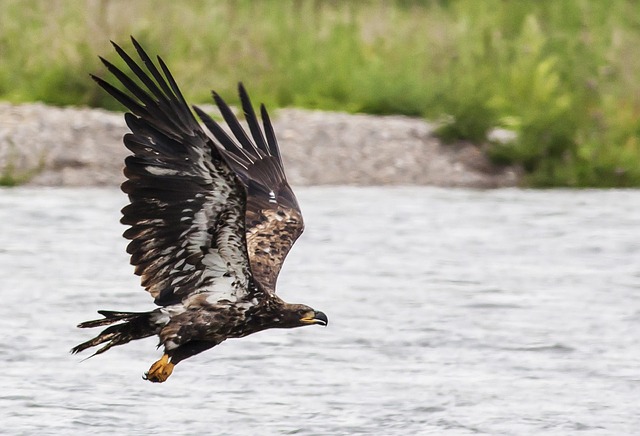
The golden eagle narrowly escaped extinction. Its numbers have grown significantly thanks to improved environmental conditions and, above all, the hunting ban in the Swiss National Park. The “king of the skies” benefits from ideal living conditions: here there are the wide open and semi-open landscapes at alpine and subalpine elevations, and many opportunities to build eagle eyries in hard-to-reach terrain. Adult eagles live in pairs and defend territories of 30 to 90 km². The Alps are entirely occupied by golden eagle territories. In summer, the golden eagle feeds primarily on marmots. In winter, carrion from ungulates makes up a large proportion of its diet.
The golden eagle today has no natural enemies. Nevertheless, eagle populations do not grow unchecked. The more eagles there are in the airspace, the greater the competition among them. If an eagle pair must constantly leave the eyrie to defend its territory, it neglects its brood. Research results indeed show that the breeding success of golden eagles declines as the number of territories increases. This example also illustrates well that nature regulates itself when left to do so.
Related dossiers and articles:
- Dossier: The ibex in Switzerland
- Dossier: The red deer in Switzerland
- Dossier: The marmot in Switzerland
- Dossier: Hunting and biodiversity
- Dossier: Hunting ban in Switzerland
- Northern Black Forest National Park to become hunting-free
- Dossier: Geneva and the hunting ban