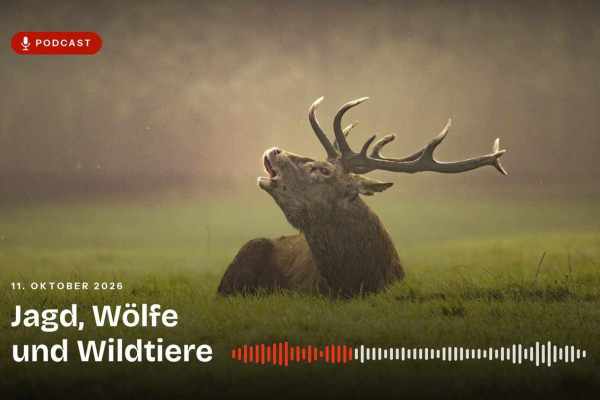
Podcast episode: Hunting, wolves and animal welfare
What the cantons make of the assurances given to the Council of Europe, how leniently hunting offences are punished and where wild animals suffer in everyday life.

Podcast episode: Hunting, wolves and animal welfare
This edition of 'Wild beim Wild' is about the gap between what Switzerland has assured the Council of Europe on wolf protection and what cantons and farming associations want to make of it. It also covers hunting offences met with lenient penalties and animal suffering that occurs away from the kills.
Wolf regulation: assurances and practice
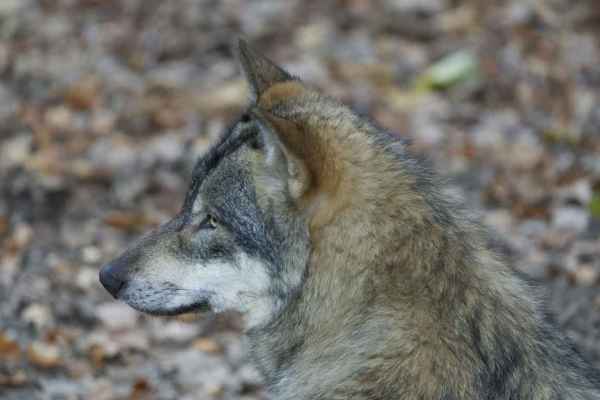
The FOEN has assured the Council of Europe in writing that packs are protected during the reproduction and rearing period. The comparison of the 15 assurances with actual practice shows how fragile this already is today. In the consultation on the hunting act Zug wants to scrap the FOEN's approval for kills between February and May, and the Bernese Farmers' Association also wants to remove the obligation to consult in wildlife sanctuaries. Grisons warns against kills during the rearing period while at the same time requesting a regulation window from 1 June. The Grisons Farmers' Association wants to tolerate no more than two packs, although 19 are currently present in the canton in whole or in part.
IG Wild beim Wild has requested access to the files from the FOEN and filed a supervisory complaint, among other things over the Ticino bounty of 500 francs per wolf killed. According to wolf counter at least 35 wolves have been killed since 1 September, even though livestock attacks are declining. And the article on sheep in wildlife habitat asks the question usually missing from the debate: where is the summer grazing of around 180,000 sheep justifiable at all?
Hunting offences: verdicts and weapons
In the Montriond case, the recreational hunter who shot mountain biker Marc Sutton dead in 2018 was sentenced to four years, one of them unsuspended. Afterwards, entries in the hunting logbook had been altered and a missing warning sign put up. A Solothurn recreational hunter, whose shotgun blast left a red deer hind suffering for two days, effectively pays 800 francs. Across Switzerland, between 2018 and 2022 there were only 17 convictions for animal cruelty in recreational hunting.
In the Parco del Ticino the police seized 46 firearms, six silencers and over 6,000 cartridges. The Ticino high hunt ended with a good 130 self-reports over 20 hunting days. In the case of the destroyed high seats in Germany the trail repeatedly leads to recreational hunters themselves. And Pascal Wolf's motion against fox hunting has reached the EU Parliament.
Animal suffering in everyday life
All 114 wild boar livers examined exceeded the PFAS maximum limit, and Switzerland applies the same limits. In Grisons, 2026 has so far seen 73 wild animals entangled in fences, and IG Wild beim Wild has launched a petition on the issue. Robotic lawnmowers kill hedgehogs, yet Bern and St. Gallen reject a night-time driving ban. And Mobiliar names hunting stress as a contributing cause of wildlife collisions in autumn.
More on the subject of recreational hunting: What the research says about this is shown by Hunting fact-checked: the state of research.
The position of IG Wild beim Wild: IG Wild beim Wild rejects recreational hunting. Our model is the canton of Geneva, which has managed without recreational hunting since 1974: without hunting seasons, without hunting dogs, without driven hunts, without high seats, without the animal cruelty and crime that go hand in hand with hunting season elsewhere. What has worked there for over fifty years disproves every position paper by JagdSchweiz. An association that bases its policy on claims it refutes in its own documents is not a professional organisation, but a factory for misinformation.
Wild animals need a voice
Once a week: research, petitions and background information on recreational hunting. Free of charge and can be unsubscribed from at any time.
All articles are written by IG Wild beim Wild as well as by external co-authors. Research, structuring and editorial processes may be supported by AI-assisted tools.
Support our work
With your donation you help protect animals and give their voice a hearing.
Donate now →