High seats destroyed: the 2026 sabotage cases in Germany
At least 50 damaged high seats in 15 cases and series, hardly any perpetrators identified: a documented overview up to mid-October 2026.
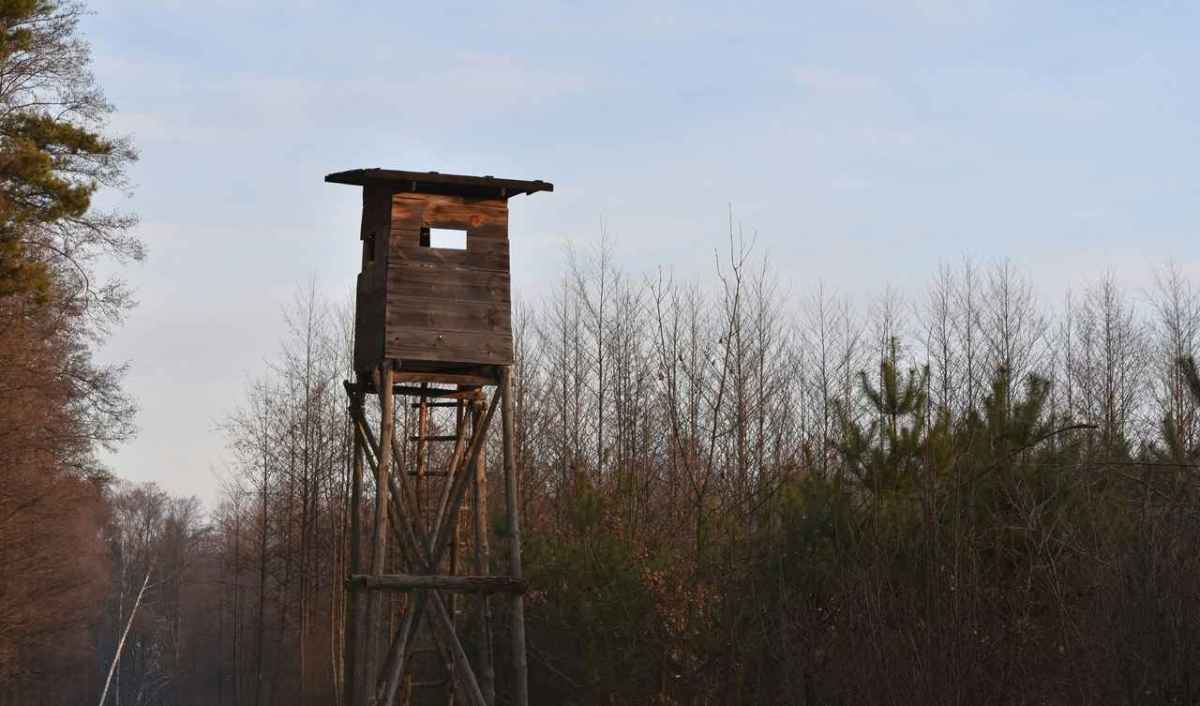
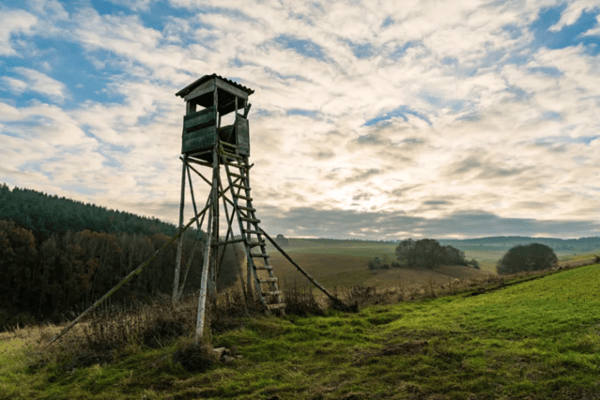
Symbolic image. Photo: Alehandra / Unsplash
«What Begins at the High Seat»
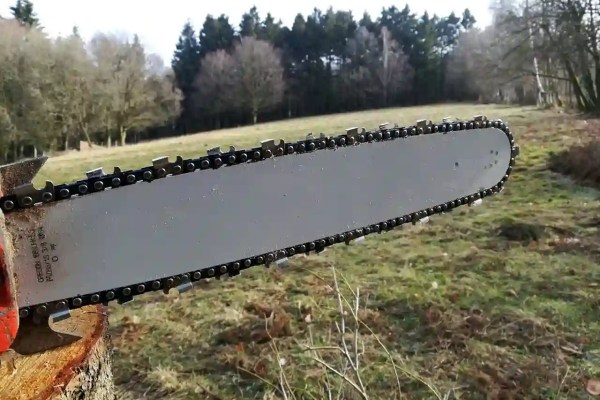
Sawn-through supports, burnt-out hunting platforms, toppled ladders: since January 2026, unknown persons in Germany have damaged or destroyed at least 50 high seats, spread across 15 cases and series between the Allgäu and Lower Saxony. There are also incidents in Austria and Belgium.
The figure is a minimum compiled by our editorial team from the police reports and local news coverage listed here, not an official statistic. It counts damaged or destroyed high seats in Germany with an offence date in 2026. Cases abroad, a mobile hunting cabin and the older Saxon investigation complex are not included.
January to August: fire, saws and one arrest
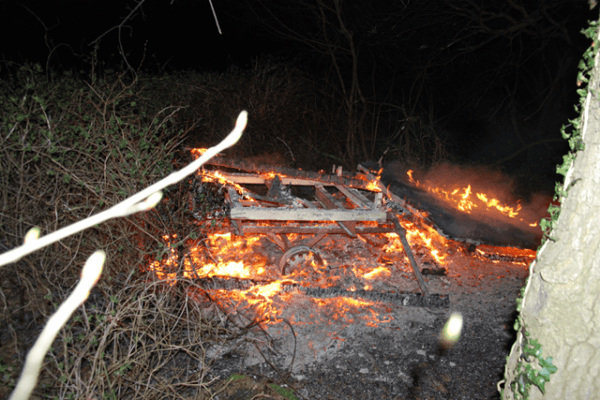
- Niederneisen (Rhineland-Palatinate), 4 January: Two high seats with elaborate structures burnt down completely, about 800 metres apart. Diez police station is looking for a man who was seen in the forest shortly before the first fire.
- Brandenburg, January: In one hunting ground, four hunting stands were destroyed.
- Forstinning (Bavaria), 30 January: A high seat near the Wagmühle burnt down completely. Poing police station assumes arson; the damage is around 500 euros.
- Nienburg (Lower Saxony), February: Unknown persons sawed through a high seat, and a recreational hunter was injured. In the hunting ground concerned, high seats have been repeatedly damaged for at least 20 years; one hunting platform has already burnt down three times.
- Rückholz (Bavaria), March: In the Ostallgäu, several high seats were sawn through. The hunting lessee has installed wildlife cameras.
- Balve (North Rhine-Westphalia), April: In the forests around Sanssouci, unknown persons destroyed eleven high seats over a single weekend, the largest of the series recorded here.
- Völs (Tyrol), 12 April: An unknown person tore a high seat in the Nasses Tal valley out of its foundation. Police put the damage at over 1,000 euros.
- Pforzheim (Baden-Württemberg), June: In the Sonnenhof residential area, four high seats were destroyed, one of them taken apart into individual pieces.
- Gelsenkirchen (North Rhine-Westphalia), 14 June: A trail camera filmed a 64-year-old man with a saw and a cordless drill; several posts had already been sawn through or unscrewed. Police arrested him at the scene. Nothing is known about his motive.
- Grossenhain (Saxony), August: Two high seats were knocked over, with damage of up to 500 euros.
Further cases in late summer and autumn
- Glissen (Lower Saxony), late summer: Three locked high seats were broken into, and two windows were smashed on one of them.
- Willingshausen (Hesse), September: Between Wasenberg and Neustadt, over one weekend, five high seats and a mobile hunting cabin were damaged, windows smashed and attachments torn out. Schwalmstadt police suspect the incidents are connected.
- Münchenbernsdorf (Thuringia), 8 to 22 September: Seven high seats were sawn apart, with damage in the mid four-figure range. According to the owners, it is not the first time.
- Sauerland (North Rhine-Westphalia), end of September: In Schmallenberg and Winterberg, the support beams of at least four high seats were sawn partway through. According to the Westfalenpost, a recreational hunter from Winterberg narrowly escaped an accident.
- Eupen (Belgium), October: On the Monschauer Strasse, several high seats were sawn through were damaged. According to the forestry office, it is the third such case this year.
- Kochel am See (Bavaria), 11 to 13 October: In the Ried hunting ground, two wooden high seats were deliberately pushed over, with damage of around 1,000 euros.
- Zellhäuser Forst (Hesse), October: Within a week, two high seats were knocked over, one of them destroyed. The hunting leaseholder is offering a reward of 1,000 euros for information.
Saxony: investigations for criminal association
The largest case does not date from this year but became public in 2026. In early March, the Saxony State Criminal Police Office and the Dresden public prosecutor searched homes in Dresden, Leipzig and Halle (Saale). The suspects are accused of having, between December 2023 and May 2025, in 24 cases 75 hunting structures in the Dresden area in order to sabotage hunting. The damage is estimated at around 70,000 euros. Five people are being investigated on suspicion of membership of a criminal organisation. Nothing is yet known about any charges. The presumption of innocence applies to the suspects.
Sawn through rather than toppled
A toppled high seat is criminal damage. A sawn-through high seat adds a danger to people: sawn load-bearing components compromise stability, and anyone who fails to notice the damage before climbing up risks a collapse under their own weight. In the Schmallenberg case, the police are therefore investigating not only criminal damage but also attempted grievous bodily harm. Maxim Philipps, head of the Eupen forestry office, said: “This endangers a person's life and safety.”
No separate figures
According to our research, there is no nationwide figure for damaged high seats. According to the hunting portal PIRSCH, such offences are recorded in the police crime statistics as criminal damage and not reported separately. In Hesse, following the incidents in Willingshausen, FDP member of parliament Wiebke Knell announced a parliamentary question on case numbers, clear-up rate and political motivation since 2020.
Perpetrators from within their own ranks
It is striking how quickly the hunting press names the culprits before the police know who they are. Headlines such as “Anti-hunting activists strike again” appear above cases in which neither perpetrator nor motive is known. Only in the Saxon investigation do the authorities explicitly cite a suspected anti-hunting motive.
Yet the trail has already led several times to the hunting community itself, as Wild beim Wild has documented. In the district of Celle, high seats burned for years from 2016 onwards. A former police officer from the area was arrested who, according to the regional press, had not been admitted to the hunting community. He received a three-year prison sentence, as we reported in our articles on the burning high seats and on the smashed high seats in the Valsugana. In Pöhla in the Ore Mountains, a surveillance camera caught a locally known recreational hunter who broke into a hide in order to steal the trail cameras of his fellow hunters.
The pattern is known in Switzerland too. In Grisons, the “Südostschweiz” reported on turf wars between recreational hunters around individual hunting towers. In the canton of Zurich, a regional newspaper pointed out as early as 2017 that recreational hunters had repeatedly damaged the high seats of other recreational hunters and deliberately steered suspicion towards animal rights activists.
Territorial jealousy, feuds between lessees and disputes over stand locations never appear in any police report. All it says is: damage to property by persons unknown.
Fatal shootings on high seats
Quite apart from the damage documented here, 2026 also saw fatalities on high seats. They were not caused by sabotage. In January, near Warburg, a 22-year-old recreational hunter shot his 23-year-old acquaintance on a high seat from a distance of at least 100 metres. At the end of August, in the Westerwald, a hunting lessee killed a colleague on a high seat during a night hunt, as Wild beim Wild reported reported. In the reports evaluated for this overview, no fatality caused by a tampered high seat is mentioned. The headlines about “attacks on the hunting community” are loud, while the shots fired from within its own ranks are passed off as hunting accidents.
For the situation of high seats in Switzerland, where many structures in the forest stand without a permit, see our article on the legal situation and permit requirement. We reported on similar series of sabotage abroad from Lorraine, the Département Isère and Finland.
More on the subject of recreational hunting: In our dossiers on the criticism of recreational hunting gather fact-checks, analyses and background reports. What the research says about this is shown by Hunting fact-checked: the state of research.
The position of IG Wild beim Wild: IG Wild beim Wild rejects recreational hunting. Our model is the canton of Geneva, which has managed without recreational hunting since 1974: without hunting seasons, without hunting dogs, without driven hunts, without high seats, without the animal cruelty and crime that go hand in hand with hunting season elsewhere. What has worked there for over fifty years disproves every position paper by JagdSchweiz. An association that bases its policy on claims it refutes in its own documents is not a professional organisation, but a factory for misinformation.
Wild animals need a voice
Once a week: research, petitions and background information on recreational hunting. Free of charge and can be unsubscribed from at any time.

All articles are written by IG Wild beim Wild as well as by external co-authors. Research, structuring and editorial processes may be supported by AI-assisted tools.
Support our work
With your donation you help protect animals and give their voice a hearing.
Donate now →