Rooks: Lucerne considers incentives for recreational hunters
Scaring them away barely works, removing nests remains an experiment: the Lucerne cantonal government has responded to the crow postulate from Emmen and wants to clarify whether municipalities and recreational hunters would take part in a pilot project with incentives.
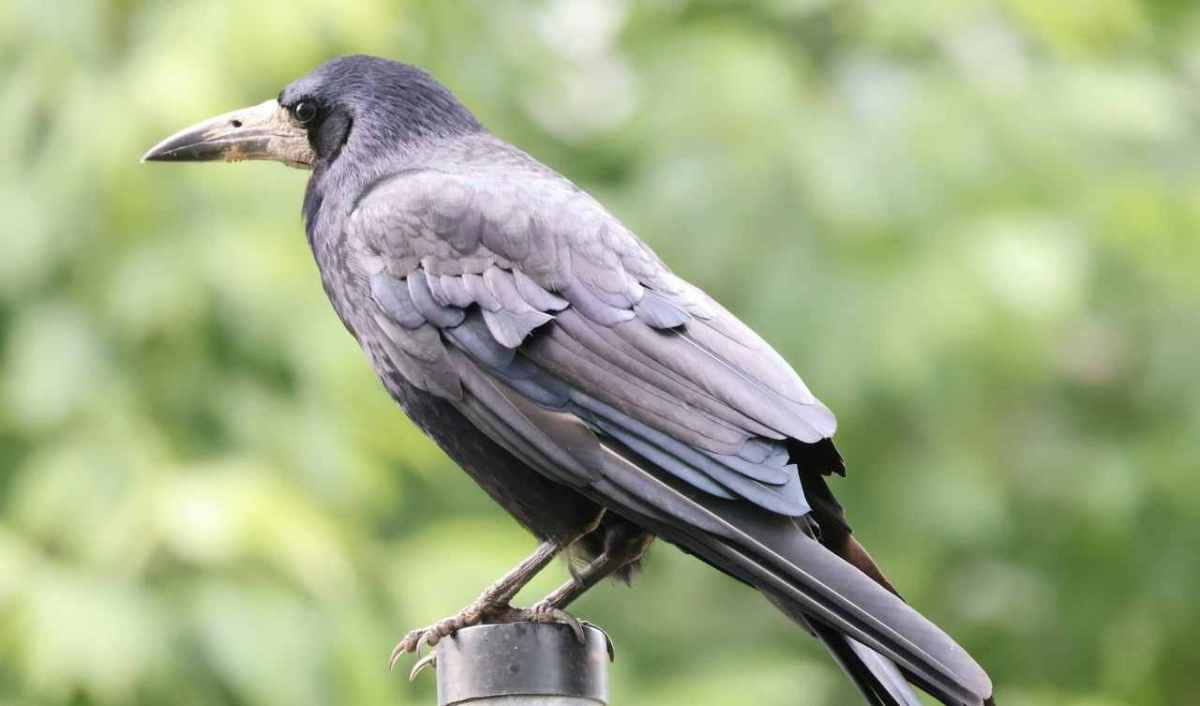
Illustrative image. Photo: Andrey Larionov / Unsplash
“What They Know”
The Lucerne cantonal government rules out shooting rooks in built-up areas. Outside settlements, it wants to clarify with the affected municipalities and recreational hunters whether they will take part in a pilot project testing an “incentive system” for hunting them.
This emerges from its statement of 27 October 2026 on postulate P 760 by FDP cantonal councillor Martin Birrer, which was published on Monday, 2 November, as Radio Central reports, citing Keystone-SDA. According to the cantonal government's assessment, the crows in settlements cannot simply be driven away, and it rules out shooting them there for safety reasons.
What the postulate demands
Birrer, a farmer from Emmen, submitted the motion on 30 March 2026. He describes thousands of crows, constant noise, and balconies, garden tables and vehicles fouled with droppings. The FDP demanded “effective, timely solutions that reduce the colonies” and that can be applied regardless of the closed season. Rooks are protected for more than five months of the year.
What the cantonal government replies
The cantonal government confirms that conflicts with the rook have increased. It attributes this to a larger population and to the fact that the birds like to nest in built-up areas, where they are better protected from enemies such as the pine marten or the eagle owl. According to the canton's investigations, noise and droppings do not count as wildlife damage, so there is no legal basis for intervention during the closed season. From August to mid-February, however, Lucerne's hunting grounds may already hunt the rook today without any quota. In built-up areas the government rules out kills for safety reasons; outside them, population regulation would be possible, if demanding.
As for the other measures, the government itself is sceptical. Attempts to scare the crows away with artificial eagle owls, it says, have shown only a modest effect in Basel, Aarau and Biel, for example. Felling nesting trees can be sustainable but is controversial. As a trial, the cantonal government recommends removing newly built nests outside the closed season and before egg-laying, in the hope that the colony will settle somewhere with fewer conflicts. There is no guarantee of success. The cantonal government asks that the postulate be declared partially accepted.
Incentives for kills: taxpayers' money for crow hunting
Specifically, the cantonal government is thinking of money for special equipment such as camouflage screens and decoys; compensation for the recreational hunters' time is "conceivable". The Department of Agriculture and Forestry could take over planning and advice, and the birds' whereabouts would first have to be established. The cantonal government roughly estimates the cost of later implementation at 50,000 francs, to which the municipalities would have to contribute. Whether the municipalities and the hunting association want to take part at all remains open, according to the cantonal government.
The statement itself gives the reason for the incentives: recreational hunters need "lucrative incentives" because there is no obligation to hunt and doing so "is generally not pressing". The rook may therefore already be shot without limit in Lucerne today; to get more recreational hunters to do so, public money is now to flow. The canton of Zug has gone the opposite way: it abolished its activity bonus of 5 francs per crow and 10 francs per fox tail on 29 June 2026, and six recreational hunters are taking the matter to the Federal Supreme Court in response.
It is also doubtful that kills outside settlements will solve the problems within them. The Bavarian State Office for the Environment notes that over 95 per cent of rooks in Bavaria breed in towns and cities or less than 100 metres from built-up areas. Among the reasons the office cites are earlier hunting outside settlements as well as persecution and disturbance at the colonies, which drive the birds into towns. In settlements, they do not perceive traffic and passers-by as a threat. Since 2025 the office has itself been running a pilot project involving individual kills, but the finding on displacement into towns comes from the office itself. Intensified hunting in the countryside could thus achieve precisely the opposite of what residents in Emmen are hoping for.
In the canton of Lucerne, the issue is not new. As early as 2023, in our article «Recreational hunting of ravens and crows: Pointless», we showed why kills of corvids intensify conflicts rather than resolve them.
Comment: No taxpayers' money for crow hunting
The Lucerne government describes the situation more honestly than the motion does: deterrence has hardly any effect, removing nests is an experiment with no guarantee of success, and shooting within settled areas is not permitted for safety reasons. It is all the harder to understand, then, that it nonetheless floats a pilot project costing roughly 50,000 francs to get recreational hunters to hunt crows, even though it itself sees their effect as only «theoretical» and calls implementation «practically demanding». Anyone who shoots at colonies in the countryside risks driving the birds further into settlements, where they have fewer enemies.
Rooks are highly intelligent, sociable birds whose population, according to the cantonal government, has increased. Conflicts over noise and droppings are real, but the government itself concedes that the question of which population is acceptable is answered «very subjectively». Such conflicts call for patience, planning in urban greening and tolerance, not money for dead birds. Zurich has shown that bird hunting can be restricted. Anyone who wants to take action against kill bounties in the cantonal parliament will find a template in the template text «No kill bounties for wild animals».
Sources
- Cantonal Parliament of Lucerne: Postulate P 760 Birrer, statement by the cantonal government of 27 October 2026
- Radio Central (Keystone-SDA), 3 November 2026: Lucerne cantonal government wants to examine measures against crow plague
- Bote der Urschweiz (CH Media), 3 November 2026: Lucerne examines willingness for crow pilot project
- FDP Lucerne via nau.ch, 31 March 2026: FDP Lucerne wants to finally tackle the crow plague effectively
- Bavarian State Office for the Environment: Rook management
Do you have a tip, a source or a correction for this article? Write to us.
More on the subject of recreational hunting: In the dossier The Role and Criticism of Recreational Hunters we shed light on the training, power and self-image of recreational hunters. The scientific evidence is presented in the overview Studies on the Effects of Recreational Hunting.
The position of IG Wild beim Wild: IG Wild beim Wild rejects recreational hunting. Our model is the canton of Geneva, which has managed without recreational hunting since 1974: without hunting seasons, without hunting dogs, without driven hunts, without high seats, without the animal cruelty and crime that go hand in hand with hunting season elsewhere. What has worked there for over fifty years disproves every position paper by JagdSchweiz. An association that bases its policy on claims it refutes in its own documents is not a professional organisation, but a factory for misinformation.

All articles are written by IG Wild beim Wild as well as by external co-authors. Research, structuring and editorial processes may be supported by AI-assisted tools.
Support our work
With your donation you help protect animals and give their voice a hearing.
Donate now →