Injured wild animals: vets pay, Zurich calls state support “not sensible”
The veterinary profession wants the cantons to pay for the treatment of injured hedgehogs and birds. The Zurich cantonal government refuses and states what the hunting act is intended for.
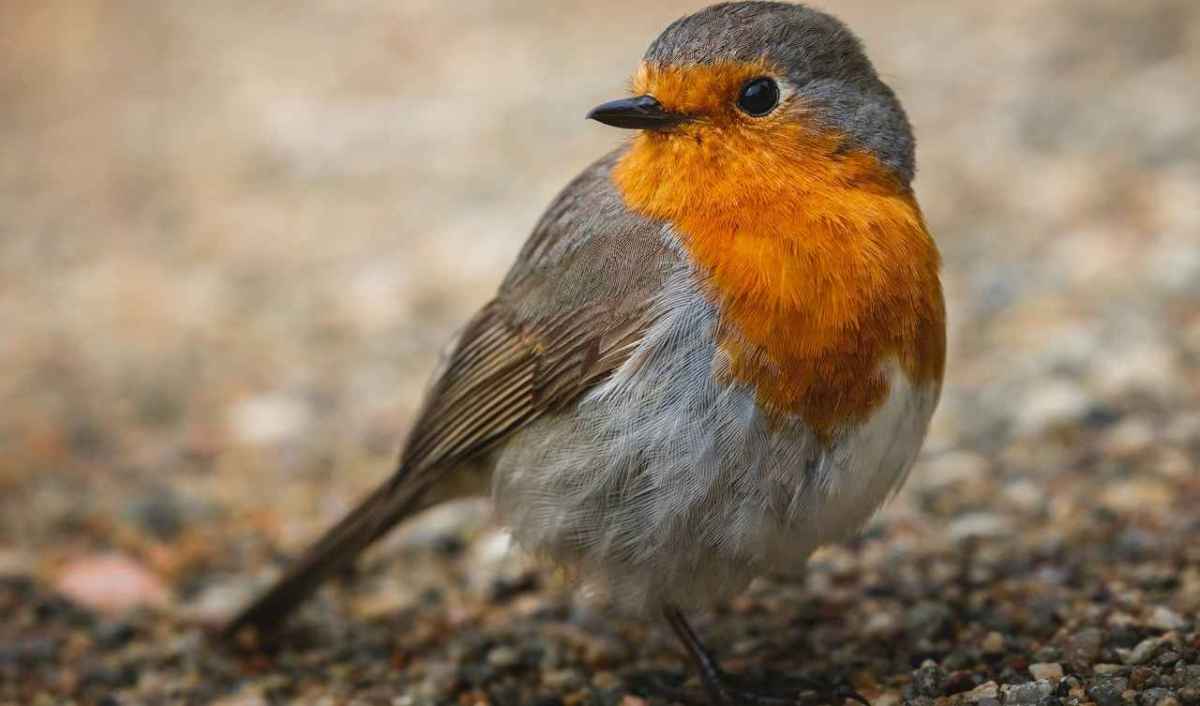
Robin (photo: Andy Holmes / Unsplash)
The night belongs to the hedgehog
Every autumn, hedgehogs hit by cars and sick birds end up in Swiss veterinary practices. According to SRF, practices must provide first aid to ownerless animals; if no cost coverage has been agreed, they are left with the bill. On 16 October 2026, SRF put a figure on what this costs, and the Swiss Association of Veterinarians (GST) is demanding that the cantons pay in future. What is missing from the coverage: the canton of Zurich has already answered this demand. Its reasoning says more about the hunting act than the veterinary profession would like.
What the Zurich Animal Hospital reports
According to SRF, the Zurich Animal Hospital treats over 1,000 wild animals every year, two to three per day. The non-billable services amount to around 300,000 francs a year, roughly 80 per cent of which is for wild animals. The official figure is higher: according to the Zurich cantonal government, the animal hospital's uncovered costs for stray and wild animals came to 360,724 francs in 2024, with an upward trend since 2020. In a small practice, according to SRF, it is one to two wild animals per month; in a larger rural practice, two or more per week. The GST is currently collecting data across Switzerland and plans to present an overall figure in 2027.
Anyone who brings an animal to a practice is legally considered the client. Anyone who declares on handing it over that they want nothing to do with it shifts the cost risk onto the practice. «The vet is left with these costs and cannot bill anyone for them,» GST president Roberto Mossi told SRF. According to SRF, euthanising a badly injured sparrow costs five to ten francs for anaesthetic, painkillers and materials, plus 15 to 30 minutes of work. A hedgehog bitten by a marten, for which a place has to be found in the evening at an overstretched hedgehog rescue centre, costs considerably more.
Since 2025, vets have been allowed to help, but they are not paid
Until the beginning of 2025, vets formally needed a cantonal permit to treat a protected wild animal. The revised Hunting Ordinance changed this as of 1 February 2025: under Art. 6 para. 2 JSV, vets may provide initial treatment to animals in need of care without a permit, provided the animals are then handed over to a rescue centre, released at the place where they were found or euthanised. The GST called this a long-standing demand.
The question of costs remained open. According to the GST, in most cantons there is no legal basis for billing a canton for the treatment. Only a few cantons make contributions. The GST is calling for harmonisation and argues on the grounds of public interest: whoever is presented with an emaciated fox with a matted coat in their practice is the first to notice that a contagious disease might be circulating.
Zurich has already responded: «not envisaged and not sensible either»
In the canton of Zurich, three members of the cantonal parliament from the Greens, GLP and SP demanded in May 2025, with motion KR-Nr. 170/2025, a legal basis for funding veterinary treatment of injured wild animals and stray pets. On 17 September 2025, the cantonal government recommended that the cantonal parliament reject it.
The justification is remarkably candid. The hunting act, it says, 'in principle provides that injured or sick wild animals are to be put out of their suffering'. Game wardens and hunting inspectors are authorised to kill them at any time. The new first-aid treatment by veterinarians is a 'narrowly limited supplement' to the work of the wildlife wardens, 'not to be understood as an invitation to build up veterinary care for wild animals'. Extended care financed by the canton is 'not envisaged and would not make sense either'. From an animal welfare ethics perspective, treatment is justifiable only in individual cases, for rare species with a realistic prospect of recovery and release back into the wild. Otherwise, 'only euthanasia by the wildlife wardens or a veterinary professional' remains.
According to the cantonal government, covering the costs would create the wrong incentives: untrained people might be encouraged to catch injured wild animals and take them to veterinary practices. The government perceives the fact that members of the public do this at all as a nuisance, not as a sign that the population does not accept killing as the standard response.
Who may help and who may kill
For private individuals, the limits are narrow. Under Art. 17 and 18 of the hunting act (JSG), it is a criminal offence to catch, keep captive or appropriate animals of protected or huntable species without authorisation; anyone wishing to care for protected animals needs a cantonal permit under Art. 10 JSG and Art. 6 of the hunting ordinance (JSV). The hedgehog does not fall under the hunting act but under the Nature and Cultural Heritage Ordinance, which, according to the cantonal government, contains no provision for injured animals. What is permissible as short-term emergency aid depends on the species and the canton. The canton of Schwyz states that private individuals are prohibited from catching and caring for such animals, while recommending on another page that weakened hedgehogs be taken to a vet. The Canton of Zurich prohibits transporting roe deer, red deer, wild boar, fox or badger, or bringing them to a practice; if such an animal is nevertheless brought in, it must be killed immediately.
A case in the district of Meilen showed that even well-meant help can have criminal consequences. After freeing an injured young fox from a pasture fence, a helper was accused of negligent cruelty to animals because he did not subsequently inform any responsible authority. The district court acquitted him on 11 May 2026 (read the article).
The killing is more clearly regulated. Under Art. 8 para. 2 of the Hunting Act (JSG), game wardens and hunting inspectors may kill injured or sick animals at any time. The cantons can also permit recreational hunters with a hunting licence to do so, for huntable species; Lucerne does exactly that. The Hunting Ordinance confirms in Art. 1b that anyone who has passed a cantonal hunting examination counts as competent to kill. For putting an animal out of its misery there is a legal basis, there are people responsible, and there is a budget. For treatment there has been a permission since 2025, but no money.
Commentary: The government says it itself
The GST's demand is justified, but the answer from Zurich shows why it fails. It is not a lack of money. The cantons finance the administrative apparatus of recreational hunting, Ticino pays kill bounties for wolves (read the article), Zug until recently paid out fox bounties (read the article). What recreational hunting costs the public as a whole has yet to be set out by any authority (to the dossier). What is lacking is the will, because the system is not built for it. The Zurich cantonal government puts it plainly: the Hunting Act provides for injured wild animals to be put out of their misery. Treatment is the exception, reserved for rare species.
That birds, hedgehogs and foxes nonetheless end up in veterinary practices by the thousand every year is because people do not accept this principle. The bill is paid by veterinarians. What is needed is nationwide, uniform cost coverage by the cantons, as the GST demands, and a clear rule on what emergency aid private individuals may give without facing prosecution. As long as the cantons pay bounties for killing while declaring funded treatment 'not sensible', talk of animal welfare in hunting is merely an assertion.
What you can do if you find an injured animal
First get informed, because the right course of action depends on the species. Do not handle birds with bare hands, and call a bird care station, which will advise on what to do next. Leave fledglings that cannot yet fly alone; the parents are usually nearby. Weakened hedgehogs are common in late autumn (read the article); hedgehog stations and many veterinarians will take them in. For roe deer, red deer, fox or badger, call the wildlife wardens or the police and do not touch the animal. Do not try to put dying animals out of their misery yourself.
Sources: SRF (16.10.2026), watson (16.10.2026), GST (24.2.2025), Zurich Executive Council, RRB 945/2025 (17.9.2025) and RRB 210/2025 (5.3.2025), Zurich Cantonal Council, Motion KR-Nr. 170/2025, Fedlex JSG (SR 922.0) and JSV (SR 922.01, as of 1.2.2025), lawa Lucerne (5.3.2025), Canton of Schwyz (Office for Forests and Nature), Canton of Zurich (Veterinary Office), NZZ (12.5.2026)
More on the subject of recreational hunting: What the research says about this is shown by Hunting fact-checked: the state of research.
The position of IG Wild beim Wild: IG Wild beim Wild rejects recreational hunting. Our model is the canton of Geneva, which has managed without recreational hunting since 1974: without hunting seasons, without hunting dogs, without driven hunts, without high seats, without the animal cruelty and crime that go hand in hand with hunting season elsewhere. What has worked there for over fifty years disproves every position paper by JagdSchweiz. An association that bases its policy on claims it refutes in its own documents is not a professional organisation, but a factory for misinformation.
Wild animals need a voice
Once a week: research, petitions and background information on recreational hunting. Free of charge and can be unsubscribed from at any time.

All articles are written by IG Wild beim Wild as well as by external co-authors. Research, structuring and editorial processes may be supported by AI-assisted tools.
Support our work
With your donation you help protect animals and give their voice a hearing.
Donate now →