Zurich's Questionable Handling of Wild Boars
The canton of Zurich presents its new wild boar management as “innovative” – in reality it shows above all how deeply the logic of permanent management of wild animals has become embedded in everyday hunting practice.
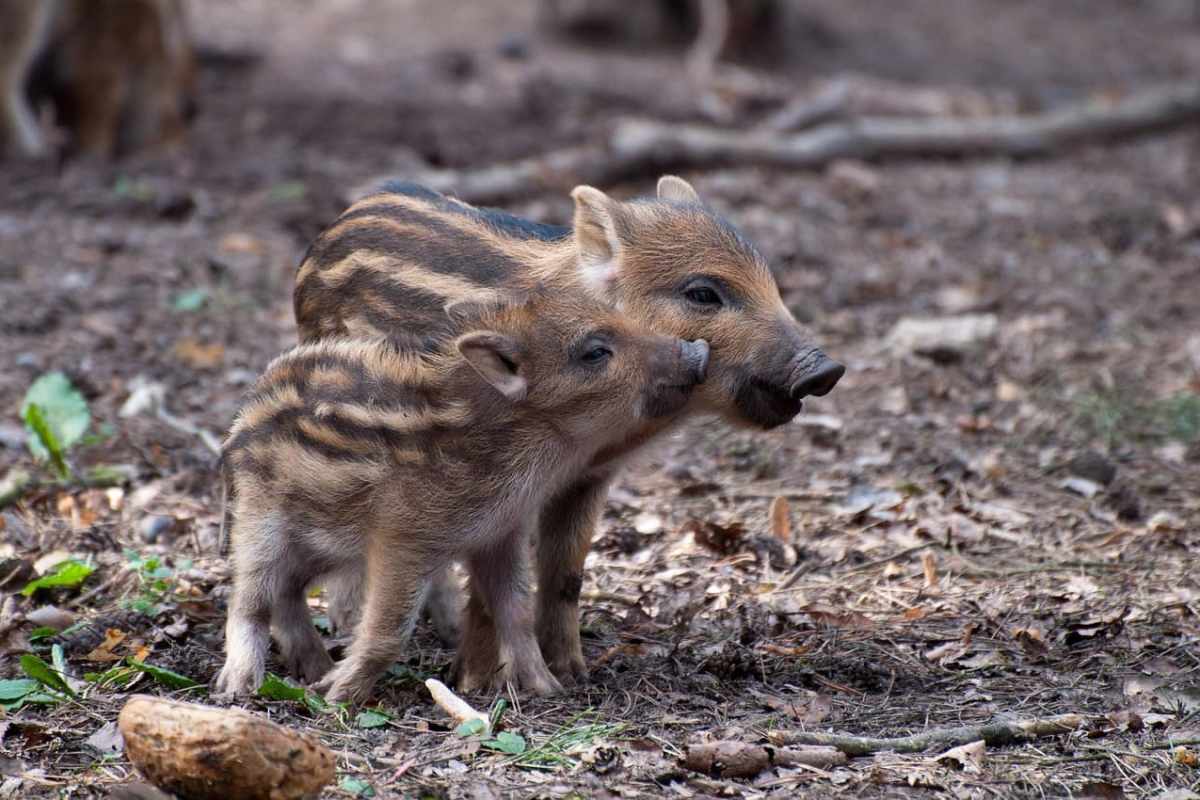
“The Sounder”
The Zurich hunting administration stresses that the wild boar population in Switzerland is growing “more and more” and causing rising damage in agriculture, even though between 1,000 and 2,000 wild boars are already shot in the canton of Zurich every year.
Official estimates put the population at 2,000 to 3,000 animals, and compensation for wildlife damage amounts to around 350,000 francs per year. The justification given for more intensive management is an alleged “growth rate” of up to 300 per cent per year.
These figures alone show the fundamental problem: a directionless recreational hunting regime that has been firing away unscientifically “from all barrels” for years has neither stabilised the wild boar population nor noticeably reduced the damage; it serves above all as a permanent justification for yet more intervention.
The new concept: fields as a war zone, forest as an illusion of safety
With its new concept, the hunting administration wants to hunt wild boars “only in the fields where possible”, while the forest is to serve as a supposedly safe refuge. The official message is: “Field = danger, forest = safety.” Wild boars are to learn to avoid agricultural crops through targeted deterrent kills in the fields. In practice this means: nights in maize or grain fields become the backdrop for shots fired under special permits with night vision devices, while the same hunting pressure can later spread into adjacent areas during driven hunts on the grounds of “damage prevention”.
That Wild animals are in this way turned into tactical “opponents” in a spatial-planning chess game is not collateral damage of the system but its core: the landscape is divided along economic interests into zones of management and zones of “tolerated life”.
Sparing lead sows: animal ethics or population control?
In the SRF report, a recreational hunter explains that they "deliberately shoot the young animals and let the older animals with a leadership role live", because these are the "memory of the sounder" and, after kills, ensure that the rest of the group stays in the forest. In technical papers of the canton Zurich this line is endorsed: lead sows are to be deliberately spared, while piglets and young animals are to be killed preferentially.
What is sold as consideration is in truth a concept of maximum controllability: young animals are presented as a "digestible sacrifice", and the group is deliberately kept in a structure that responds to human deterrence and avoids the "right" areas.
From an animal-ethics perspective, the question remains how a system that defines young animals as its primary target category can claim moral superiority over classic maximisation hunting, merely because it operates more strategically.
In the canton of Zurich, driven and drive hunts on wild boar in forests are permitted from 1 October to the end of February to reduce populations and damage. Owing to increasing agricultural damage, the hunting administration relies on intensive driven hunts, the use of night vision devices and preventive measures to regulate the wild boar population.
Technical deterrence: noise, stench and a failed agricultural policy
The second pillar of the Zurich model comprises technical deterrence measures: electric fences, foul-smelling scent agents and mobile loudspeaker systems emitting gunshot and alarm sounds are subsidised with hundreds of thousands of francs from public funds. Last year alone, CHF 200,000 went into deterrent installations, plus roughly a quarter of a million francs for their upkeep.
These numbers obscure the fact that the problem is being produced elsewhere: monotonous, high-energy crops are an artificial land of plenty for wild boars. Fragmented habitats and a lack of wildlife quiet zones force animals again and again to move into the vicinity of intensively farmed land.
Instead of working consistently on making agriculture more ecological, on wildlife corridors and genuine protected areas, the focus is once again placed on technology-assisted displacement and hunting control.
"Everyone satisfied" except the wild boars
The hunting administration states the project's aim openly: if damage falls while the wild boar population remains "roughly the same size", "everyone is satisfied" – meaning recreational hunters, the administration and agriculture. From the perspective of the wild animals, the balance looks very different: a population that is permanently under fire is being drilled into a desired pattern of behaviour. The causes of the conflict – agricultural policy, spatial planning, recreational hunting, a lack of ecological infrastructure – remain untouched.
That the Zurich strategy is now being touted as a possible "model for other cantons" above all shows how strongly the hunting and farming lobbies jointly define what counts as a "solution to the problem". A model based on refined control rather than consistent protection threatens to become the blueprint for a Switzerland in which wild animals are tolerated only where they cause no further economic inconvenience.
What truly future-proof wild boar management would look like
Wild boar management worthy of the name would not stop at the question of how to scare animals away even more efficiently, but would change the rules of the game: reducing the attractiveness of crops through adapted farming and mixed cropping instead of mere deterrence. Expanding wildlife refuge zones, corridors and near-natural woodland where wild boars can live free of hunting pressure. Consistent monitoring that records not only damage in francs, but also stress, risk of injury and the ecological functions of wild boars in the forest.
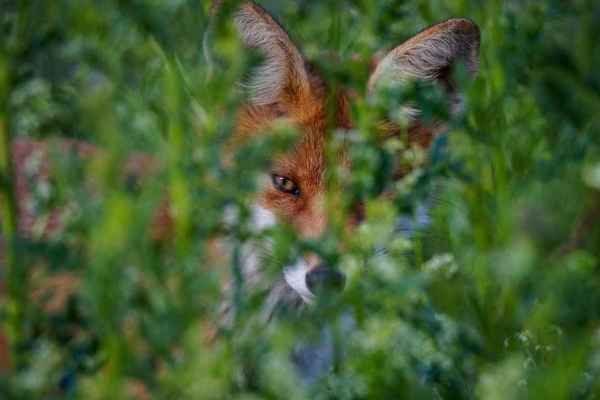
As long as the question of the legitimacy of recreational hunting itself is left out, and wild boars and foxes are viewed primarily as a damage factor and an object of control, every new concept will in the end amount to what Zurich is now selling as a "new path": more technology, more control, more shots, just packaged a little better.
What alternative prevention methods against wild boar damage exist
1. Adapting crops and land use
In areas with high wild boar pressure, less attractive crops such as Sudan grass or cup plant (Silphium perfoliatum) can be grown instead of maize, potatoes, beet and wheat. Guidelines recommend, for example, not growing maize in forest clearings or directly next to cover structures, in order to reduce the pull on wild boars.
2. Technical barriers
Professionally installed and well-maintained electric fences with suitable wire height and sufficient voltage are considered one of the most effective protective measures, but they require 2 to 5 checks per week. Sturdy woven-wire or game fences with solid ground anchoring are suitable for particularly sensitive locations, such as vegetable growing or vineyards, but are costly and material-intensive.
3. Acoustic and visual deterrence
The ZHAW “Wildschweinschreck” (wild boar scarer) works with alarm and warning calls of wild boars as well as variable danger sounds, and in trials it was able to reduce damage significantly when used selectively during critical phases. Visual stimuli such as reflectors, flashing lights or moving ribbons can help in the short term, but often lose their effect quickly because the animals become habituated to them.
4. Olfactory deterrence
Strong-smelling repellents or spices such as chilli are used selectively, for example on posts with soaked rags, but according to field reports they show very variable and mostly short-lived effects. Scent-based agents work better, if at all, as a supplement to fences or acoustic systems, not as a stand-alone solution.
5. Spatial planning, quiet zones and management
Some cantons designate zones with a high risk of damage and link prevention obligations there (e.g. fencing, crop choice) to compensation. Wild boar management concepts explicitly recommend low-disturbance forest and cover areas, so that wild boars are not forced to systematically retreat into farmland at night.
6. Combination rather than single measures
Studies and information sheets agree that no single method offers absolute protection; however, damage can be reduced significantly if technical barriers, adapted crops, acoustic systems and spatial planning measures are intelligently combined.
7. Basic principles of birth control
Given that recreational hunting does not represent an effective solution but increases the risk and undoubtedly causes suffering to the animals, IG Wild beim Wild calls for the development of effective and ethical methods of fertility control in wild boars, as is also done in other countries. The aim is to reduce the fertility of a large proportion of the reproducing animals so that population growth is curbed without killing.
Addendum of 13 October 2026
Zurich's wild boar management will be tested until mid-2028, as watson/SDA reports. The figures in the text above reflect the situation as of February. According to the report, recreational hunters in the canton kill 1,300 to 1,500 wild boars every year. Even so, the population grows by up to 300 animals a year and currently stands at 2,500 to 3,000. In each of the past two years, the canton paid CHF 380,000 in compensation to agriculture. The high kill figures have not prevented the increase.
What Reto Muggler, co-head of the cantonal fisheries and hunting administration, says about kill practice is revealing. To avoid any legal missteps, old boars are often shot because they are recognisable as such. Muggler, however, would like to see more old males in the canton. By his own explanation, they help ensure that fewer young boars cover young sows and produce additional offspring. By his own logic, then, recreational hunters, out of caution, shoot precisely those animals that would curb reproduction.
For the particularly severe damage this year, the report names a specific trigger. Driven by thirst, wild boars entered the maize fields earlier than usual to get at the moisture in the stalks. Part of the damage is therefore due to thirst and maize cultivation, not solely to the number of animals. The concept responds with stench, alarm calls and kills. Background: Despite More Kills: Wild Boar Damage Remains High and the dossier The wild boar in Switzerland.
More on the subject of recreational hunting: In our dossiers on the criticism of recreational hunting gather fact-checks, analyses and background reports. What the research says about this is shown by Hunting fact-checked: the state of research.
The position of IG Wild beim Wild: IG Wild beim Wild rejects recreational hunting. Our model is the canton of Geneva, which has managed without recreational hunting since 1974: without hunting seasons, without hunting dogs, without driven hunts, without high seats, without the animal cruelty and crime that go hand in hand with hunting season elsewhere. What has worked there for over fifty years disproves every position paper by JagdSchweiz. An association that bases its policy on claims it refutes in its own documents is not a professional organisation, but a factory for misinformation.
Wild animals need a voice
Once a week: research, petitions and background information on recreational hunting. Free of charge and can be unsubscribed from at any time.

All articles are written by IG Wild beim Wild as well as by external co-authors. Research, structuring and editorial processes may be supported by AI-assisted tools.
Support our work
With your donation you help protect animals and give their voice a hearing.
Donate now →