Ticino late hunt: Lactating red deer hinds open to hunting without a prior calf kill
975 hinds and calves in the opening plan, 17 hunting days scheduled in early winter, signed by the head of office Tiziano Putelli.
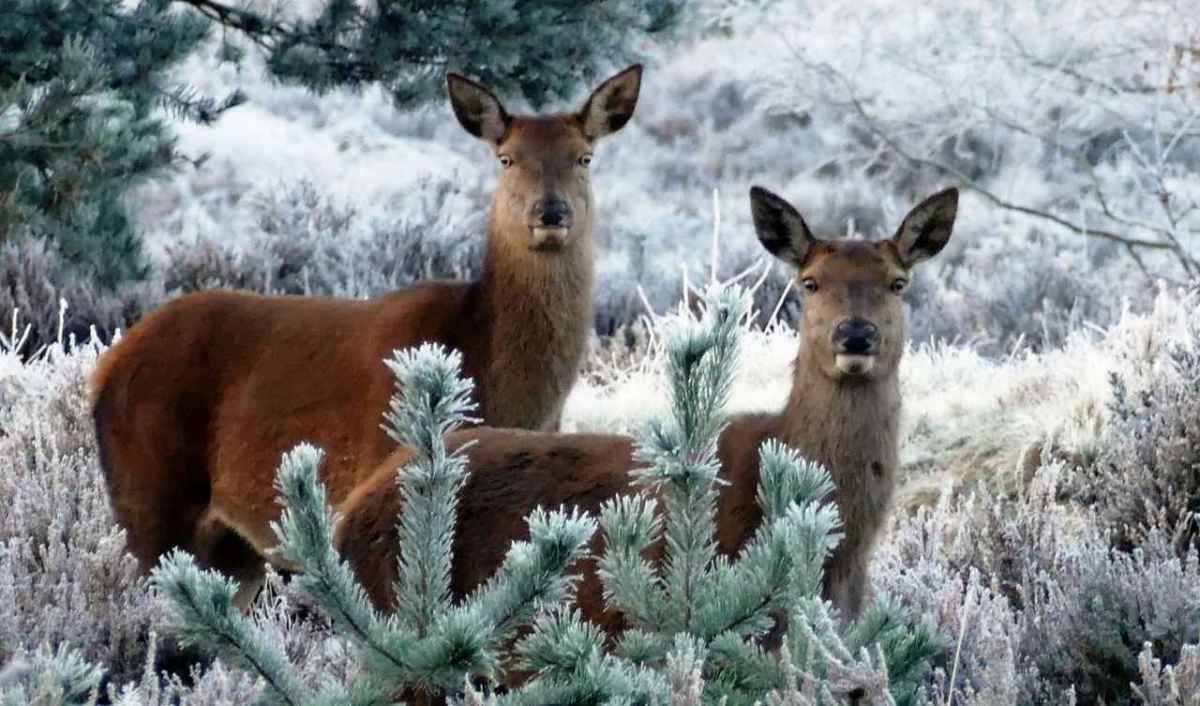
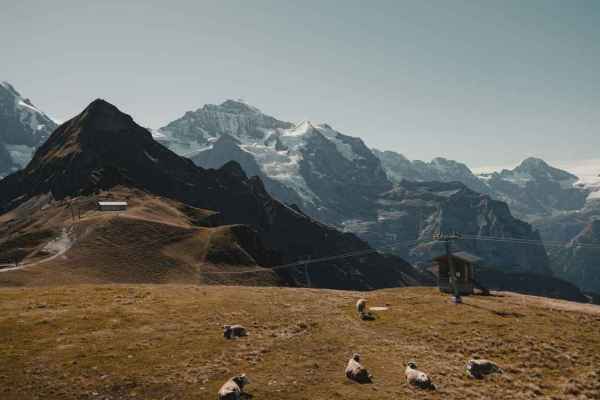
Photo: Anthony / Unsplash (symbolic image)
Since Saturday, 14 November, the «caccia tardo autunnale», the late hunt for red deer, has been under way in Ticino. Seventeen hunting days are scheduled until 20 December. The plan published at the start covers 975 hinds and calves, plus ten stags in a federal hunting ban area. Each person may shoot a first lactating hind without having to kill a calf beforehand. The regulations are signed by Tiziano Putelli, head of the cantonal Ufficio della caccia e della pesca.
What the regulations permit
The Regulations of 20 October 2026 run to five pages. Hunting takes place on Wednesdays, Saturdays and Sundays from 7 a.m. to 2 p.m., below 1,600 metres. For calves, 1.5-year-old female deer and non-lactating adult hinds there is no personal kill limit; what counts are the quotas of the respective zone and district, and once these are reached, recreational hunting there is closed. For lactating, that is, nursing, hinds the limit is up to three per person: «un capo libero senza vincoli», one animal free and without being tied to a calf kill, the second and third only after killing one calf each.
The Kill quota by zone, valid for 14 and 15 November, lists 580 calves and 1.5-year-old female deer and 395 adult hinds across all eight districts. According to the regulations, recreational hunting of roe deer is closed in all districts. Anyone who has purchased the permit for the 2026 high hunt may take part, but so may anyone who has not: in that case a valid proof of marksmanship and a surcharge are sufficient.
Who is responsible
The regulations are signed "Ufficio della caccia e della pesca (UCP), Il Capoufficio: Tiziano Putelli". According to the official page on the late-season hunt, the kill quota for red deer and roe deer is set by the Council of State. Political responsibility lies with the Dipartimento del territorio, which has been headed since 7 October by State Councillor Piero Marchesi (UDC), as the Tessiner Ticker notes.
reports. The rule is not new, and Marchesi did not introduce it: the 2024 regulations, likewise signed by Putelli, already contained it in identical wording. Who signs the regulations and who bears political responsibility is therefore clear.
The office itself counts the kills without a calf
What the killing of lactating hinds means in practice is documented by the office in its 2025 hunting report on the high hunt in September. There, in the last seven days of the hunt, every recreational hunter was allowed to kill a lactating hind without first killing a calf. In these last seven hunting days, 184 lactating hinds were killed, of which 110 were brought in for inspection without a calf; over the whole high hunt the figure was 231 lactating hinds. For the same time window, the report gives the figures 143 and 87 for 2024, and 149 and 89 for 2023. How many of the corresponding calves were still alive and what became of them, the report does not say.
The report calls the rule a "misura straordinaria" that has become "pressoché inevitabile", and notes as a positive effect that it allowed recreational hunters to hunt in the last seven days "senza il timore di incappare in una cattura errata", that is, without fear of a mistaken kill. According to the report, it was reintroduced in 2022, after more than twenty years. In the 2025 late-season hunt, 768 recreational hunters killed 687 red deer, including 322 adult hinds and 275 calves. How many of these hinds were lactating is not shown in the table.
When Ticino introduced the rule for the high hunt in 2022, SRF reported. Samuel Furrer of Swiss Animal Protection STS said at the time: «From our perspective, this clearly violates the Animal Welfare Act and any hunting ethics.» The calves were still dependent on their mother and «doomed to die». The criticism related to the high hunt in September and the correspondingly younger calves. In the same report, Andrea Stampanoni of the Ticino office conceded that shooting the hind was «not ideal» and that they had been forced to resort to this «problematic solution». It was not withdrawn: for the high hunt, the window was extended from five to seven days in 2025. In the follow-up hunt, the release of the first lactating hind without a calf kill already appears in the 2024 regulations, and it is also planned for 2026.
The office sees kill capacity as almost at its limit
The pressure on red deer is justified by damage to forests and crops. The 2025 hunting report puts the compensation paid by the canton for wildlife damage to agricultural crops at CHF 1’132’590.30, 72 per cent of which it attributes to red deer. According to the same report, the permit for the high hunt has cost an unchanged CHF 550 since 2009, while the permit for the follow-up hunt cost CHF 200 in 2025 for holders of a high hunt permit.
What the office writes about its own method is remarkable: «La forza massima di prelievo data dalla caccia è probabilmente pressoché raggiunta» – the maximum removal capacity of hunting has probably almost been reached. The high kill quotas of recent years were met « solo saltuariamente», only occasionally. In 2025 the quota was reached: 2’944 red deer killed against a target of 2’900. In the 2026 high hunt, the figure was 1’882, of which 972 were males, 675 females and 235 calves. The follow-up hunt is now meant to correct what failed in September, and this affects hinds and calves. Background on the quota figures: Ticino's hunting planning: record kills and open questions.
High kill numbers, barely changed population estimate
For 2025, the office estimated the Ticino red deer population at 7,250 animals. In the same reporting year, 2,944 red deer were killed, including 94 kills to prevent agricultural damage. Arithmetically, that corresponds to around 41 per cent of the population estimate. For 2026, the office sets the cantonal estimate slightly higher at 7,360 animals and plans for 2,950 kills. In the Leventina and the Blenio valley, however, the spring counts for 2026 came out lower than the previous year: 1,445 instead of 1,557 and 976 instead of 1,196 red deer counted. The figures alone explain neither the causes of these differing trends nor how the populations would have developed without recreational hunting. The report itself notes that the high hunt disproportionately targets male animals, which the late-season hunt corrects "at least in part".
Across Switzerland, the number of red deer killed has almost doubled since 2000, from 7,036 to 13,885, yet the population recorded in the Federal Hunting Statistics grew from 23,332 to 39,186, as our analysis Hunting statistics 2000 to 2025 shows. There is also the question of where the damage occurs: the red deer is originally an animal of open landscapes and retreats from disturbance, including from recreational hunting, into the forest, where it feeds on shoots and bark. We substantiated this in the article Red deer petition in the St. Gallen cantonal parliament: more shots, not a word on habitat with statements from a wildlife ecologist and the canton of Fribourg.
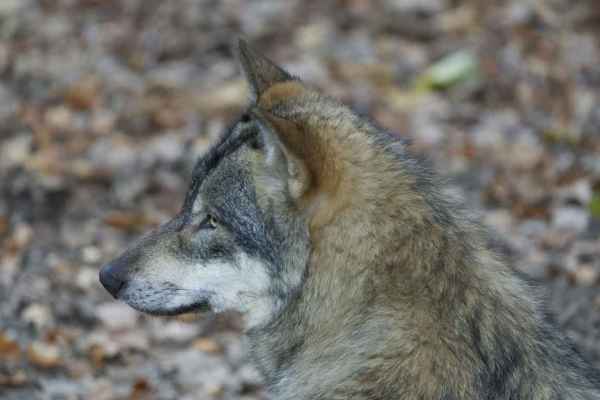
The report explicitly justifies the pressure on red deer by the "gravi danni" to forest regeneration, particularly in forests with a protective function. The wolf, a natural predator of the red deer, does not appear in the hunting report. The same canton is simultaneously having it hunted: the Confederation has approved the killing of young wolves in nine Ticino packs, and according to the announcements of the Ufficio della caccia e della pesca of 30 September, 16 October, 18 October and 13 November, five wolves have been killed since 1 September. For a wolf killed by the authorised recreational hunters brought in, the compensation model provides a success bonus of 500 francs. The status of all cantons is shown by the counter Wolf kills Switzerland 2026/27.
Protected area as a reward, fox hunting without justification
Anyone in the Leventina district who kills at least one red deer gains access, from the following day, to part of the federal game reserve of Campo Tencia. A further ten adult stags are released for hunting there, one per person. In the Blenio valley, hunting also takes place in a delimited part of the «bandita federale della Greina». Uri applies the same logic, as the article Follow-up hunt from 7 November: Uri opens hunting-ban areas shows.
At the same time a «caccia speciale alla volpe» applies: foxes may likewise be shot without a personal maximum number in the area opened for the late hunt, with the exception of the federal game reserves of Campo Tencia and Greina. The regulations give no justification, neither a pattern of damage nor a population target. The rule appeared word for word in the document as early as 2024. In practice this means that anyone out with a rifle for red deer may also shoot a fox. According to the 2025 hunting report, recreational hunters in Ticino killed a total of 76 foxes in 2025, compared with 395 in 2016. Against population regulation through fox hunting, the SWILD study commissioned by the canton of Zug in May 2026 provides substantial arguments: according to the analysis documented in our article Canton of Zug: Authorities Curb Fox Hunting After Study, the licence hunting practised there does not sustainably reduce fox populations and does not contain wildlife diseases, because hunted populations compensate for losses through more offspring, higher survival rates and immigration. The Zug hunting commission subsequently decided to stop actively promoting fox hunting. More in the Fox dossier.
Hunting pressure at a time when red deer must conserve energy
In winter, red deer lower their heart rate, peripheral body temperature and metabolism in order to get by on scarce food. A team led by Walter Arnold described this in 2004 in the «American Journal of Physiology». Flight and additional movement increase energy expenditure and can undermine this energy-saving strategy. The Ticino late hunt places its hunting days in the weeks before winter, and the regulations themselves allow for snow: in the event of heavy snowfall, lower altitude limits can be ordered or the hunt interrupted. On the same official page, the canton publishes a decree on wildlife quiet zones. What the loss of its mother means for a calf has been examined by WBW using a Grisons example: Special hunt in Grisons: protected in September, cleared for killing in December.
Commentary: An authority administers a hobby
An authority that itself counts the kills of lactating mothers without a calf during the high hunt, sees the number rise from 87 to 110 within a year and provides for the same permit in the subsequent hunt, is not acting out of ignorance. It is holding on to a rule that allows lactating mothers to be shot without first killing the calf, and it records it as an advantage that recreational hunters need not fear a mistaken kill. How many calves lose their mother as a result, and what becomes of them, it does not report. In 2022, the Swiss Animal Protection organisation described the rule as a violation of the Animal Welfare Act. IG Wild beim Wild shares this assessment.
In our view, this has little to do with wildlife management. High kill figures alone are no proof that the targeted population trend and a reduction in forest damage are being achieved. The canton must measure its method against these goals and report its effects transparently. An office that states in writing that the kill capacity of recreational hunting is almost at its limit, and yet has the kill quota worked through once again by several hundred recreational shooters, is administering a hobby. To this end it opens parts of federal protection areas, tacks on a fox hunt without justification, and has non-human animals disturbed at the time of year when they depend on peace and quiet. In our view, the canton must also take greater account of the fact that recreational hunting itself causes disturbance. What share it has in the red deer's presence in the forest and in the damage there remains unanswered in the office's documents. Meanwhile, the canton pays compensation of over one million francs.
The handling of the wolf seems to us the most contradictory. The canton justifies high red deer kills by the need to protect forest regeneration, while at the same time promoting the killing of a natural predator of the red deer through success bonuses. How these two interventions interact, and what role the wolf is meant to play in the cantonal red deer management, is something the canton would have to set out in a comprehensible way.
As head of office and as the responsible head of department, Tiziano Putelli and Piero Marchesi bear responsibility for working towards a change to this permit. For as long as it remains in place, they must explain why the shooting of a lactating hind without first killing the calf continues to be allowed in Ticino.
More on the subject of recreational hunting: In our dossiers on the criticism of recreational hunting gather fact-checks, analyses and background reports. What the research says about this is shown by Hunting fact-checked: the state of research.
The position of IG Wild beim Wild: IG Wild beim Wild rejects recreational hunting. Our model is the canton of Geneva, which has managed without recreational hunting since 1974: without hunting seasons, without hunting dogs, without driven hunts, without high seats, without the animal cruelty and crime that go hand in hand with hunting season elsewhere. What has worked there for over fifty years disproves every position paper by JagdSchweiz. An association that bases its policy on claims it refutes in its own documents is not a professional organisation, but a factory for misinformation.
Wild animals need a voice
Once a week: research, petitions and background information on recreational hunting. Free of charge and can be unsubscribed from at any time.

All articles are written by IG Wild beim Wild as well as by external co-authors. Research, structuring and editorial processes may be supported by AI-assisted tools.
Support our work
With your donation you help protect animals and give their voice a hearing.
Donate now →