A Critical Look at a Wolf Shooting Order
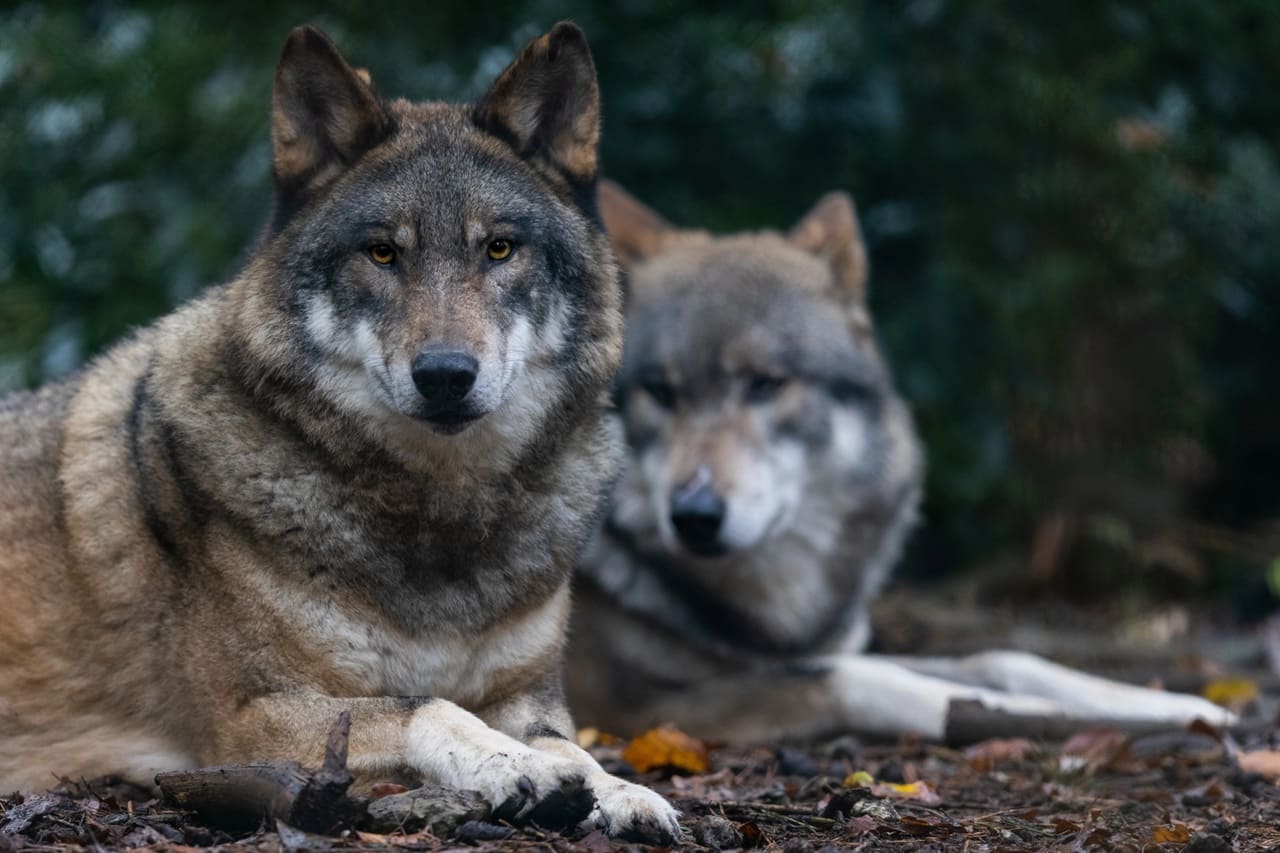
In recent weeks, wolf sightings have increased in a region in the canton of Schwyz.


The cantonal government issued an immediate shooting order for a wolf on 9 May 2025.
The wildlife wardens have been tasked with carrying out the order. The shooting order is limited to 60 days.
Since the beginning of March, a wolf has repeatedly been observed in the Ausserschwyz region, particularly in the municipal areas of Schübelbach and Vorderthal. The sightings occurred near residential areas and in the vicinity of agricultural farms.
On 6 May 2025, a red deer hind was killed in the immediate vicinity of a residential area near the power station in Siebnen, reports the March Anzeiger. A wildlife warden was able to approach the wolf and carried out a deterrence action using rubber pellets. The incident prompted the SVP Canton Schwyz to act. In a press release, the party demanded in blunt terms: Enough watching — shoot now!
On 8 May 2025, an incident occurred in Rempen in which a wolf reportedly approached a farmer without showing any signs of shyness. The canton bases its assessment partly on the assumption that the wolf showed “no shyness,” as it approached a farmer (hearsay). The wolf withdrew without causing any harm. This is not an indication of a lack of shyness, but rather typical wildlife behaviour.
The association Wolfs-Hirten, Wildtierschutz Schweiz and IG Wild beim Wild have no documented evidence of any misconduct on the part of the wolf in question. No livestock kills were recorded and the animal has not behaved aggressively towards humans. The only known encounter was based on the verbal statement of a farmer who claimed to have seen the wolf at a distance of approximately 20 metres. No attack or threatening behaviour took place — on the contrary: the wolf withdrew, as is its nature.
The observations of the wolf near agricultural operations and settlements are cited as justification. According to practice in other cantons, such as Glarus, this is also not a criterion for a shooting order, as long as no repeated, dangerous approaches or attacks have been documented.
The canton argues that the wolf killed a deer cow near a settlement. Hunting regulations and the Wolf Switzerland concept (BAFU) explicitly do not regard the killing of a wild animal — particularly a natural prey species — as problematic behavior. This line of argument is therefore neither factually nor legally tenable.
The order lacks fundamental legal and professional diligence and, in the opinion of experts, contradicts the applicable principles of federal hunting law.
A DNA analysis is required for confirmation. DNA samples are taken from kills and also from feces and sent to a laboratory. This also occurred on Tuesday evening. However, the results are still pending. Even when a DNA result is available, it remains unclear whether the same animal was actually involved each time, according to Rinze Zgraggen, Head of the Hunting and Wildlife Division of the Canton of Schwyz.
Would it not be more appropriate for farmers to properly fence and mark their pastures so that their cows do not attack, injure, and even kill hikers every year? Or to properly train the numerous aggressive farm and hunting dogs so that they do not constantly harass and bite people?
In Switzerland, there are approximately 9’500 medically treated injuries from dog bites each year. The figures are likely higher, however, as not all incidents are reported.
Recommendations for dealing with wolves, Canton of Schwyz
Further articles
- Swiss meadows are losing biodiversity at an alarming rate
- When sheep, cattle and others occupy wildlife habitat
- Swiss animal protection organization criticizes planned wolf culls as a threat to pack structures and herd protection
- Wolf mismanagement runs rampant in Graubünden
- Val Fex: When the herd protection concept is more full of holes than the fence
- Culling instead of protection — Switzerland on the path to silent wolf extermination
- Communication failure at the Office for Hunting and Fisheries Graubünden
- Illegal wolf hunting in Switzerland
- Wolf cubs in Switzerland under fire
- Switzerland sells wolf massacre as a success
- Sloppy work at Katrin Schneeberger's office
- Livestock grazing alters soil, plant and insect populations
- The senseless hunt for wolves in Switzerland
- The truth about sheep mortality in Switzerland: causes and statistics
- Wolf culls in Switzerland: concerns about party politician Albert Rösti
- Let's stop the SVP's destructive rage
- Participatory campaign: An appeal for change in Switzerland
- 200 environmental organizations from 6 continents call on the Swiss government: Stop the wolf cull
- Federal Councillor faces sharp criticism from wolf experts
- The consequences of controversial wolf management in Switzerland
- Wolf: Federal Councillor Rösti (SVP) bypasses law and order
- Es Burebüebli mahn i nit
- Are FOEN and the hunting authorities still working responsibly?
- Federal Councillor Albert Rösti tramples the will of the people
- The consequences of controversial wolf management in Switzerland
- Too many sheep harm biodiversity
- Agricultural use destroys alpine meadows
- Kills despite herd protection — how is that possible?
- The rotten apple in St. Gallen's hunting administration
- Pro Natura calls for a comprehensive strategy for summer sheep grazing
- According to Agridea study, herd protection with dogs works well
- Thanks to herd protection, wolves kill fewer livestock in Switzerland
- Farmers treat fields as disposal sites
- Biomass of wild animals
- On sheep farmers and vague authorities
- The double standards of wolf opponents
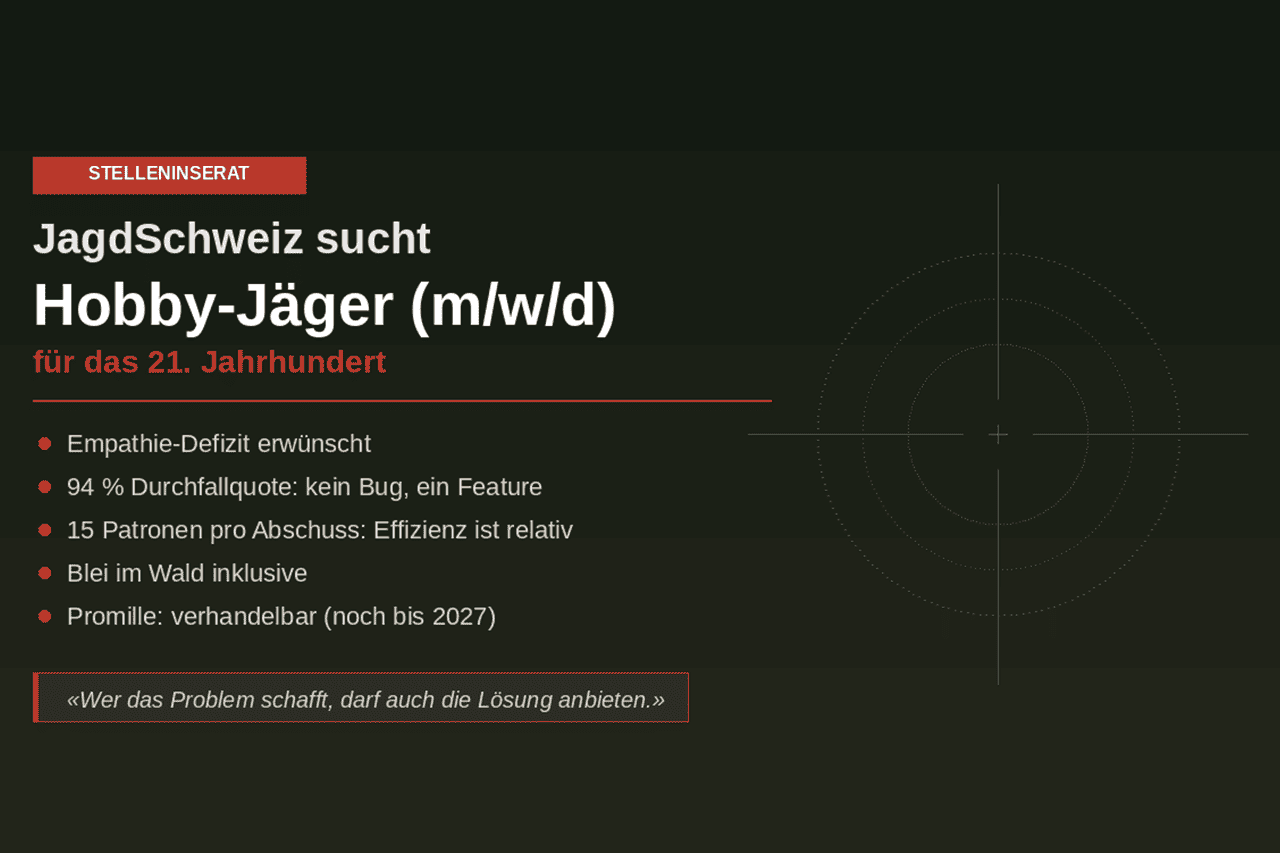
More on the subject of recreational hunting: In the dossier The Role and Criticism of Recreational Hunters we shed light on the training, power and self-image of recreational hunters. What the research says about this is shown by Hunting fact-checked: the state of research.
The position of IG Wild beim Wild: IG Wild beim Wild rejects recreational hunting. Our model is the canton of Geneva, which has managed without recreational hunting since 1974: without hunting seasons, without hunting dogs, without driven hunts, without high seats, without the animal cruelty and crime that go hand in hand with hunting season elsewhere. What has worked there for over fifty years disproves every position paper by JagdSchweiz. An association that bases its policy on claims it refutes in its own documents is not a professional organisation, but a factory for misinformation.