Wolves can save human lives
In the United States, it has been shown that where predators have regained a foothold, traffic accidents involving wildlife have declined significantly.

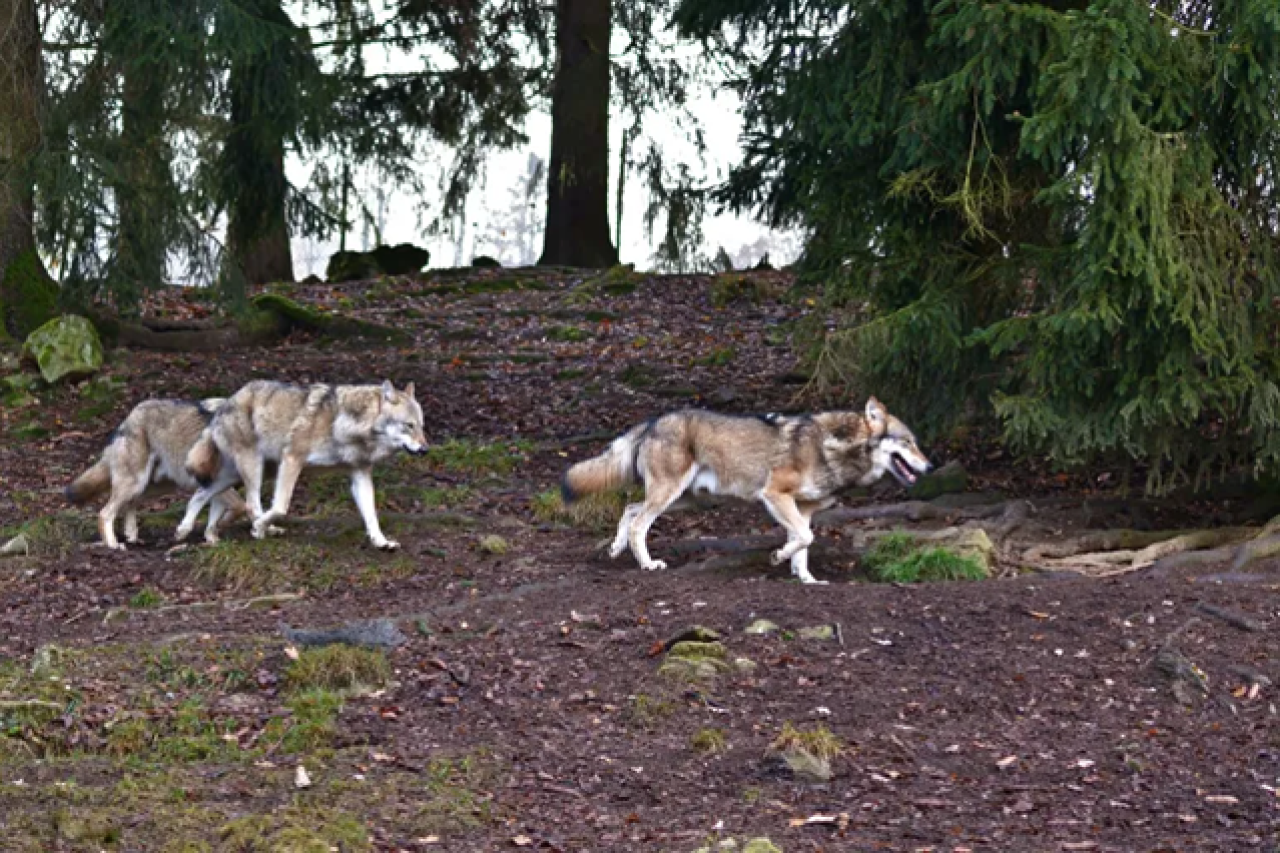
Studies in the USA confirm: where the wolf settles, collisions with wildlife decrease.
«It was found that within a short time after wolves became established, accidents involving wildlife decreased by around 24 percent«, says Dominic Parker, co-author of the study published in the journal «Pnas». The reason for this is, on the one hand, the thinning of the local wildlife population by wolves, but above all behavioural changes in prey animals due to the presence of predators.
This phenomenon, already observed in several regions, has now been documented with hard data by a team led by Jennifer L. Raynor of Wesleyan University in the US state of Connecticut. The researchers collected data on traffic accidents involving wildlife and wolf movements in Wisconsin, and on this basis were able to quantify how the wolves that have settled there have influenced the frequency of collisions between local prey animals — in this case white-tailed deer — and vehicles.
«Wolves use linear landscape features as movement corridors. These include roads, paths and pipelines as well as stream beds. Deer learn this quickly and can adapt by keeping away from such structures«, explains an economist from the University of Wisconsin. In effect, «corridors of fear« emerge, which wildlife increasingly avoids. This also suggests that recreational hunters would not produce the same effect simply by shooting as much wildlife as wolves prey upon.
A 2016 study found that the reintroduction of mountain lions could also reduce the number of wildlife accidents in the eastern United States by around 22%.
Ecological and economic gain
Wolves not only enrich biodiversity but also provide great added value for ecosystems. They keep wildlife populations healthy and in good condition. This is because wolves hunt sick or weak animals more efficiently than recreational hunters. In doing so, they act as the “health police” of the forest. Wolves can thus help curb disease through hunting. They can help reduce the excessively high numbers of deer, roe deer, and wild boar. Despite all the efforts of recreational hunters, it has not been possible to reduce the density of ungulates, which leads to massive browsing damage in forests. In addition, wolves leave prey remains as an important food source for other species.
On average, more than 20,000 wildlife accidents occur annually on Swiss roads and railways. The costs of these accidents are estimated at more than 50 million Swiss francs. People are injured in an average of 100 cases per year. Wolves can therefore also have an economic impact.
Several studies have in the past examined the revenue generated by tourists who come, for example, to observe wolves.
«Most economic studies on wolves address only the negative impacts and have focused on livestock losses. But wolves change ecosystems in many ways, which is sometimes difficult to quantify economically.
Dave Mech, senior researcher at the U.S. Geological Survey in Minnesota.
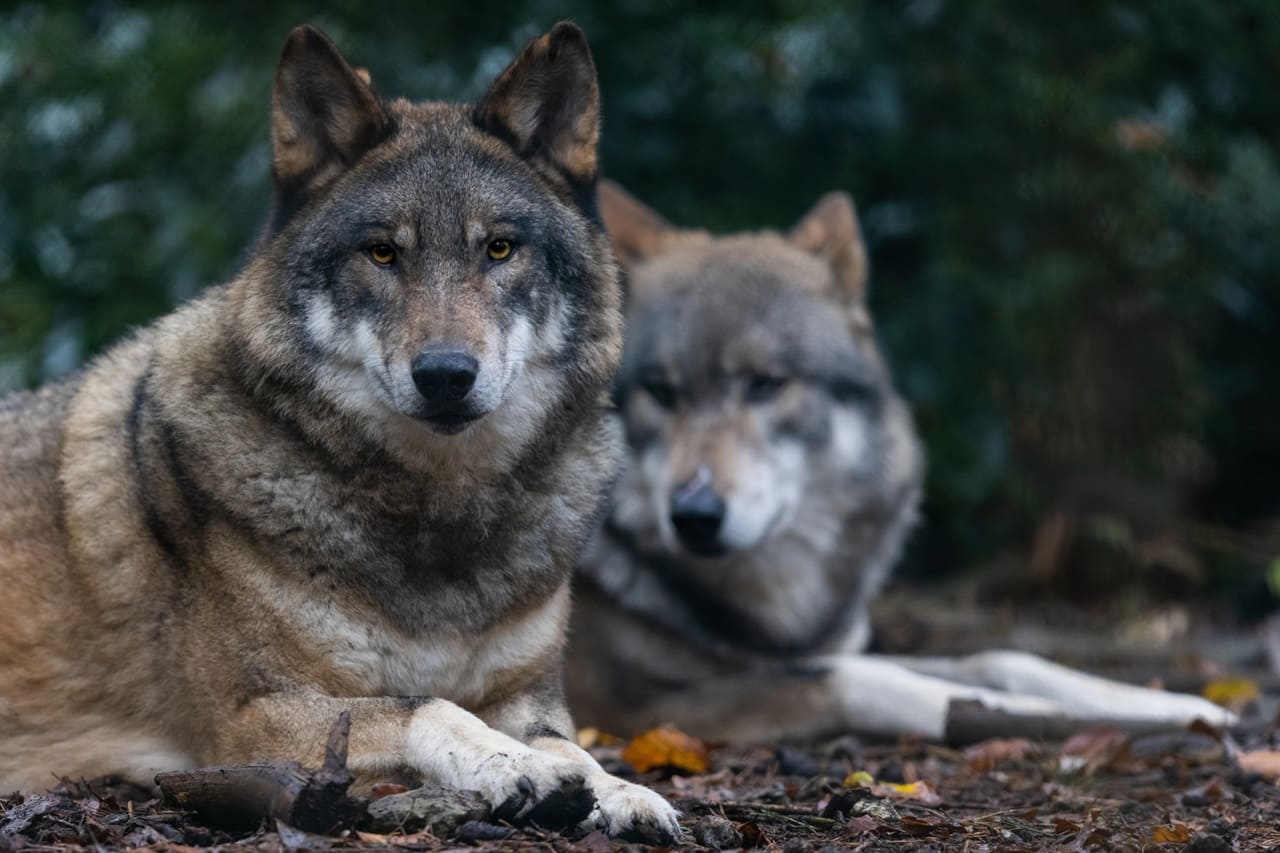
Healthy wolves react shyly and cautiously toward humans. Compared to other formidable animals such as wild boar or cattle, the danger posed by the wolf is greatly exaggerated by some representatives of agriculture and hunting, with certain interest groups engaging in fearmongering. The facts tell a different story: since wolves returned to Switzerland, there has not been a single attack or injury. There are some cases worldwide, but these were associated with disease (rabies) or human misconduct (including feeding).
By contrast, thousands of hospital-treated injuries from dog bites occur every year, and too many people are injured annually in wildlife accidents.
The fact that the presence of the wolf also brings benefits — and in certain respects can even save lives — is rarely considered.
More on the subject of recreational hunting: In the dossier The Role and Criticism of Recreational Hunters we shed light on the training, power and self-image of recreational hunters. The scientific evidence is presented in the overview Studies on the Effects of Recreational Hunting.
The position of IG Wild beim Wild: IG Wild beim Wild rejects recreational hunting. Our model is the canton of Geneva, which has managed without recreational hunting since 1974: without hunting seasons, without hunting dogs, without driven hunts, without high seats, without the animal cruelty and crime that go hand in hand with hunting season elsewhere. What has worked there for over fifty years disproves every position paper by JagdSchweiz. An association that bases its policy on claims it refutes in its own documents is not a professional organisation, but a factory for misinformation.