Red deer salsiz and game salami: the cancer warning also applies to game meat
SRF and RSI recall the WHO classification of processed meat. Game sausages contain the same preservatives, plus lead from ammunition, no official meat inspection and animals that were harried until the shot.
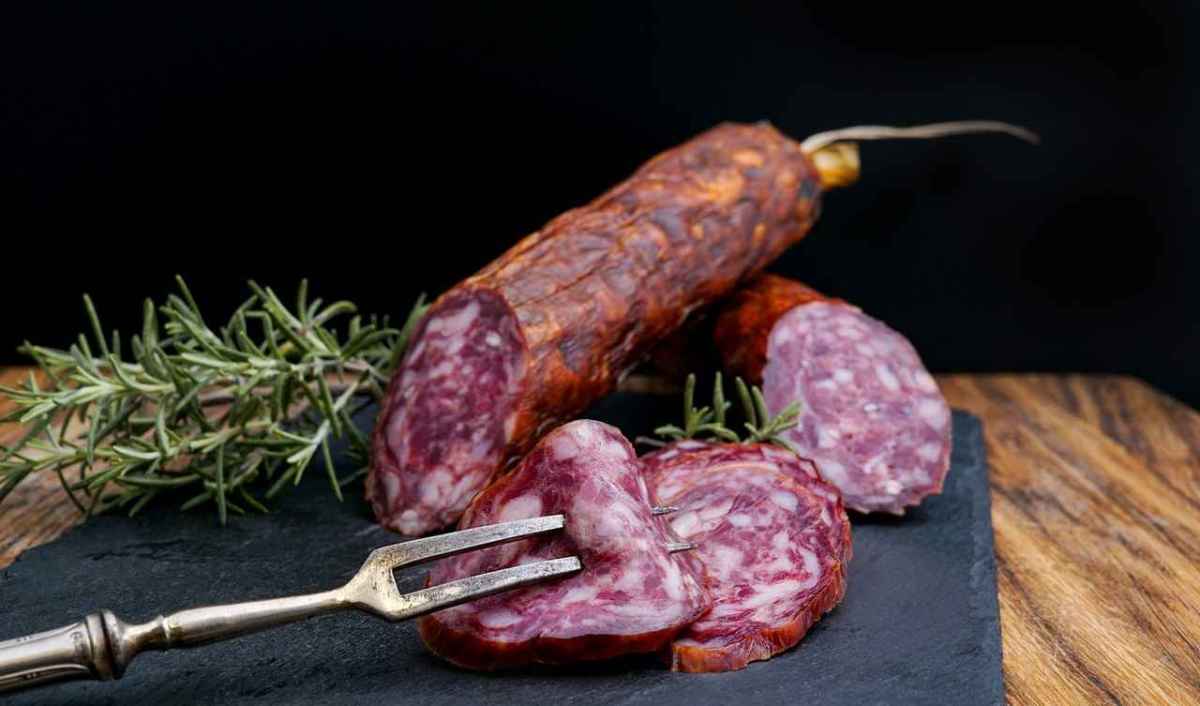
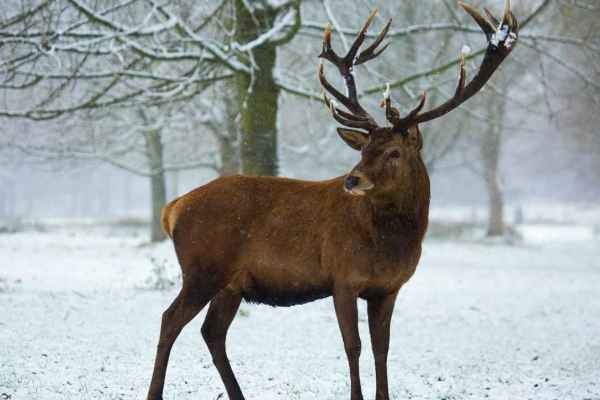
Photo: Wesual Click / Unsplash
«From God’s Hand»
According to a Ticino bowel cancer specialist, processed meat is responsible for around 15 per cent of bowel cancer cases in the canton, report SRF and RSI today. What the report does not mention: red deer salsiz, roe deer salami and wild boar sausage are just as much processed meat. And they bring with them what a pork salami does not: lead from ammunition, a production chain without official meat inspection, and animals that were under stress right up to the shot.
700 people affected and 230 deaths per year
The figures come from Dimitri Christoforidis, a bowel cancer specialist at the Cantonal Hospital of Ticino. In Ticino, 250 to 300 new cases of bowel cancer are registered each year, and he attributes 15 per cent of them to the consumption of processed meat products, that is, around 40 cases per year. The same proportion means roughly 700 new cases and 230 deaths per year for Switzerland as a whole.
The basis has been known since 2015: the International Agency for Research on Cancer (IARC) of the World Health Organization classifies processed meat in Group 1, “carcinogenic to humans”, the same category as tobacco smoke and asbestos. The group describes the strength of the evidence, not the size of the risk; the risk from sausage is considerably smaller than that from tobacco, but it is established. According to the IARC statement of 2015, the risk of colorectal cancer rises by around 18 per cent for every 50 grams of processed meat eaten daily. The report names the preservatives nitrite (E249, E250) and nitrate (E251, E252) as the main suspects, which can be converted during digestion into nitrosamines that damage genetic material. The French Inserm researcher Fabrice Pierre has confirmed this link in a recent study.
A side note from SRF is noteworthy: the only expert quoted in the report who assesses the risks more cautiously, the US nutrition scientist David Klurfeld, worked for the US beef association after his retirement. The lobby has a seat at the table, even where sausage is concerned.
The classification makes no exception for game meat
The IARC defines processed meat by the method, not by the animal species: meat that has been preserved by curing, salting, smoking, fermenting or other processes. Whether the animal comes from the barn or from the forest plays no role in the classification. A red deer salsiz is a raw sausage, cured, fermented and air-dried. A wild boar salami is cured and often smoked. Anyone reading the ingredients list of a standard commercial game salsiz will generally find nitrite curing salt (E250) there. It is precisely the substance the SRF report warns about.
There is also a detail that the hunting lobby likes to sell as an advantage: game meat contains comparatively high levels of iron. However, the haem iron in red meat is one of the mechanisms by which the IARC explains the cancer-promoting effect, because it encourages the formation of nitrosamines in the gut. The advertised plus is part of the problem. We have already shown how the WHO classification is glossed over in hunters' self-presentation using the example of the “Nebelspalter” journalist Dominik Feusi, and that even Swiss hospitals serve nitrite-cured meat products.
Lead: detectable in three out of four game sausages
What sets game sausage apart from every other sausage is the heavy metal from the rifle. In its 2020 food monitoring programme, the German Federal Office of Consumer Protection and Food Safety (BVL) specifically tested 75 sausage products containing game meat. Lead was detected in 54 samples, or 72 per cent. Seven samples were objected to, six of them as 'unfit for consumption' and one as harmful to health. 29 samples, or 39 per cent, exceeded 0.10 milligrams per kilogram, the maximum level that applies to meat from cattle, pigs, sheep and poultry. The sample harmful to health was a roe deer pâté with 98.3 milligrams per kilogram, almost a thousand times that maximum level. Two wild boar pâtés with 12.6 and 14.9 milligrams per kilogram even escaped objection for lack of a maximum level. The higher the proportion of game meat, the higher the lead content, and products containing wild boar tended to be more heavily contaminated than those containing roe deer or red deer.
The fact that sausage in particular fares so badly probably has a practical, butchery-related reason. When a shot animal is cut up, the meat around the wound channel, shot through with bruising and bullet fragments, is considered inferior. Prime cuts such as saddle and leg are sold as roasts, while the trimmings traditionally end up in the sausage meat. The BVL itself explains the high values by particulate lead that penetrates deep into the meat on impact and accumulates mainly near the wound channel. The research project LEMISI, coordinated by the German Federal Institute for Risk Assessment (BfR), showed across several thousand samples that the lead content of the meat rises the closer it is to the wound channel. In the meat grinder the fragments do not disappear, they are finely distributed. What could be cut out of a roast is everywhere in the salami.
In Switzerland, a legal free pass is added to the mix. A maximum level of 0.1 milligrams of lead per kilogram applies to meat from cattle, pigs, sheep and poultry. For game meat there is no maximum level; in practice the cantonal laboratories only raise objections from around 2 milligrams per kilogram, twenty times as much, as SRF reported on 22 October. The Federal Food Safety and Veterinary Office (FSVO) therefore recommends that children up to the age of seven, pregnant and breastfeeding women, and women planning a pregnancy avoid eating game meat wherever possible, because it can never be ruled out that an animal was killed with lead ammunition. We have summarised the state of the research on lead and PFAS in game meat under “Game meat: health risks from lead and PFAS”, and the history of enforcement in our dossier «Lead ammunition». For wild boar sausage, what we documented in October also applies: All 114 wild boar livers examined and one in eight meat samples exceeded the PFAS maximum level.
Stress until the shot
A farm animal is stunned before it dies. A wild animal is chased, shot and wounded, tracked down in a follow-up search or, in the best case, shot from ambush. Wild boars from driven hunts show cortisol levels almost four times higher, as we demonstrated on the basis of the research in «JagdSchweiz as a factory of misinformation»; the association's claim that game meat from driven hunts is «of flawless quality» rests on a study that never measured cortisol at all. This is first and foremost an animal welfare argument and one about meat quality, not a residue that one eats along with the meat. But what hunting stress does to the animals appears on no list of ingredients.
No meat inspection, no maximum level, no provenance
The pork salami from the supermarket comes from a slaughterhouse with official meat inspection. Game meat from recreational hunting, which recreational hunters use themselves or pass on directly to consumers and local businesses, undergoes no official meat inspection; according to the ordinance, examination by a «qualified person» is sufficient, and that may be the very person who shot the animal. Then there is the question of provenance: in an inspection of 34 catering businesses in Grisons and Glarus, the game origin was incorrectly declared or not declared at all in 38 per cent of cases, and a red deer salsiz sold as «Engadine» consisted of 51 per cent New Zealand red deer. Game sausage is thus probably the worst-monitored processed meat on the Swiss market.
The selling season is under way
The high hunt in Grisons, Ticino and Valais is over, and the marketing begins. Over the coming weeks, red deer salsiz, roe deer salami and wild boar sausages will fill the counters of butchers, farm shops and Hubertus markets, packaged as a «gift from the forest». JagdSchweiz presented the product in September in its own Federal Palace served up. The marketing remains the same as with the game weeks in the restaurant trade, which we reported on under «Heimat auf dem Teller» : natural, regional, healthy. The BfR (German Federal Institute for Risk Assessment) advises pregnant women, children and immunocompromised people to heat cured raw sausages made from game meat thoroughly or to avoid them altogether, because pathogens from the wild animal can survive the maturing of a raw sausage.
The SRF report recommends buying from small butchers who use only salt and spices, and immediately adds: even then it remains processed meat with health risks. For game sausage this applies twice over. The forest does not wash out the nitrite, and it adds what no slaughterhouse supplies: lead, PFAS, pathogens that no meat inspection has seen, and animals that were hounded until the shot. Anyone who takes the cancer warning about salami and sausage seriously cannot exempt the red deer salsiz.
More on the subject of recreational hunting: In the dossier The Role and Criticism of Recreational Hunters we shed light on the training, power and self-image of recreational hunters. What the research says about this is shown by Hunting fact-checked: the state of research.
The position of IG Wild beim Wild: IG Wild beim Wild rejects recreational hunting. Our model is the canton of Geneva, which has managed without recreational hunting since 1974: without hunting seasons, without hunting dogs, without driven hunts, without high seats, without the animal cruelty and crime that go hand in hand with hunting season elsewhere. What has worked there for over fifty years disproves every position paper by JagdSchweiz. An association that bases its policy on claims it refutes in its own documents is not a professional organisation, but a factory for misinformation.
Wild animals need a voice
Once a week: research, petitions and background information on recreational hunting. Free of charge and can be unsubscribed from at any time.

All articles are written by IG Wild beim Wild as well as by external co-authors. Research, structuring and editorial processes may be supported by AI-assisted tools.
Support our work
With your donation you help protect animals and give their voice a hearing.
Donate now →