Hunting licence raffle at RTR: What the ethics assessment overlooks
A media ethicist considers the raffle of a Grisons hunting licence by the SRG broadcaster unproblematic. Her reasoning answers a question nobody asked.
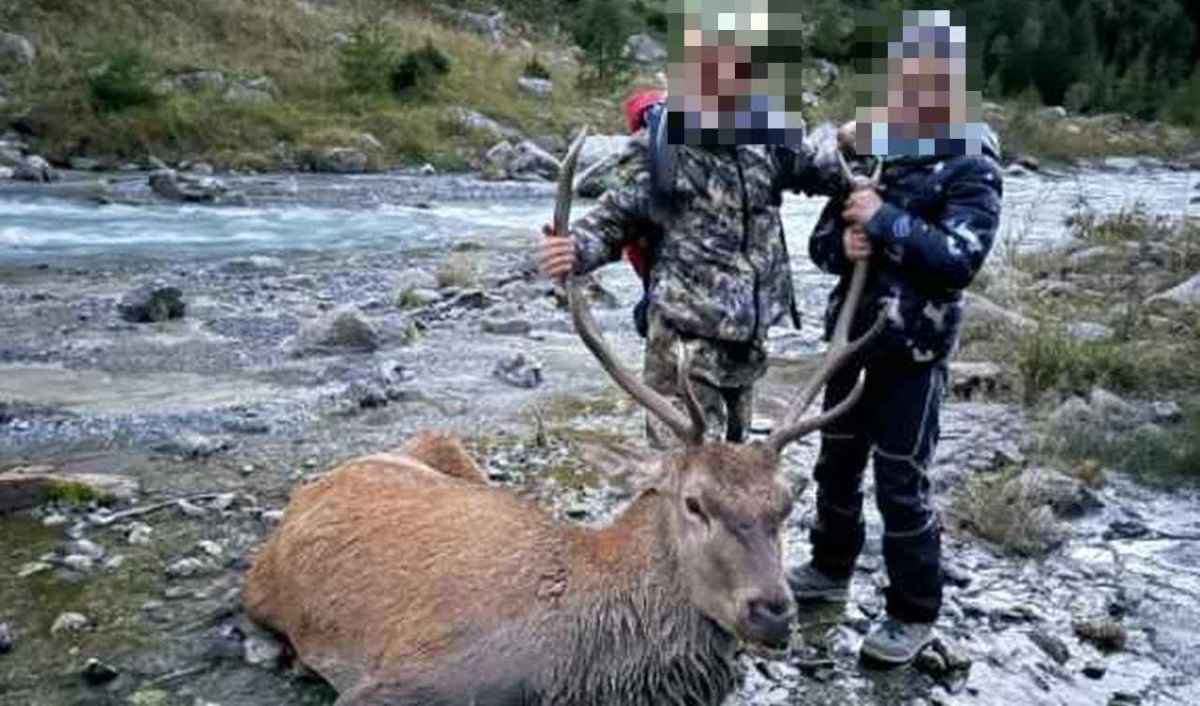
From the RTR gallery «La segunda part da la chatscha» for the «La Preda» 2026 competition: two children pose with the antlers of a shot red deer. Faces blurred by the editorial team. Source: rtr.ch, accessed on 25 September 2026
«The Salt Lick»
Nau.ch reported on 2 October 2026 on the complaint filed by IG Wild beim Wild against the Romansh-language SRG broadcaster RTR.
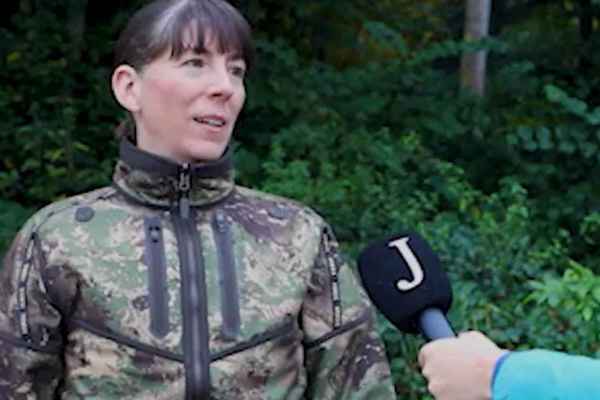
New to the debate, the article brings in the assessment of religious studies scholar and media ethicist Marie-Therese Mäder: she judges the raffle of a Grisons hunting licence to be « unproblematic ». However, her reasoning misses the central question. The issue is not who wins the licence, but what role RTR itself plays in staging kills, trophy photos and recreational hunting.
What this is about
During the Grisons high hunt, RTR's « La Preda » campaign raffles off a hunting licence for the following year among everyone who reports a killed animal by phone, and lets the public vote for the « most beautiful » trophy photo of the season. IG Wild beim Wild filed a complaint against this on 28 September 2026 with the SRG.R ombudsman's office, with a copy to the UBI; the details are set out in the article RTR: SRG broadcaster raffles hunting licence and crowns the “most beautiful” trophy photo. Nau.ch editor Vivian Balsiger had asked the IG for a statement on the same day. Her article appeared four days later, by which time Blick and 20 Minuten had long since reported on it, under the headline that animal welfare advocates were up in arms. In fact, the IG had chosen the path provided for by the Radio and Television Act for such matters: a formal complaint with reasoning and evidence.
The ethicist's argument
Mäder's argument runs, in essence, as follows: anyone who takes part in the prize draw already holds a hunting licence and would obtain one again the following year in any case. A licence given away as a prize therefore does not promote recreational hunting, since it goes to someone who would hunt regardless. The participants know the rules and know how to handle the animals. What matters, she argues, is that the regulations are clear and are observed, so that animal suffering remains as limited as possible. She considers the comparison with a firearms licence mistaken, because a hunting licence comes with conditions attached and is not issued to just anyone.
It is not the winner who is promoted, but the image
Mäder examines the prize draw at the level of the individual: does an eligible person receive something they would have obtained anyway? That was never the point of the criticism. Advertising is not aimed at the person who wins the prize, but at everyone who watches and listens.
With «La Preda», killing a wild animal is the condition of entry. Every report of a kill becomes an item of entertainment, every fox or red deer killed becomes a score. The photo competition rewards the image of a grinning shooter standing beside a dead creature with first place and vouchers from a hunting equipment shop. What this promotes is not the hunting practice of a single winner, but the public perception of recreational hunting as a harmless shared experience. Whether the winner would have hunted even without the draw changes nothing about that.
Even the game wardens consider such images pointless
Mäder's assumption that the participants know how to handle the animals received a response from the hunting authority itself that very same week: the Swiss Game Wardens' Association described posing with a shot roe deer to Nau.ch as pointless and damaging to the image of recreational hunting, as documented in the article Recreational hunter from Grisons poses with dead roe deer. It is precisely this image motif that RTR rewards in a public competition, and in 2025 a game warden drew the lot for the hunting licence in the RTR studio. An ethic that relies on the participants' knowledge of the rules must explain why the hunting authority finds the outcome embarrassing.
A media ethic that leaves the broadcaster out of the picture
Mäder speaks as a media ethicist. Yet the media-ethics questions raised by this case do not feature in her assessment, at least as Nau.ch reports it. What ought to be examined is this: may a licence-fee-funded broadcaster with a statutory information mandate act as the organiser of a hunting campaign? Does a competition for the "most beautiful" photo of a killed animal touch upon the prohibition of glorifying or trivialising violence under Art. 4 para. 1 RTVG? Does a hunting portal satisfy the requirement of factual accuracy if it contains no critical voices on hunting, no animal welfare organisations, and no scientific perspectives on recreational hunting? And how is child protection reconciled with the fact that RTR itself published, in the gallery for the competition, photos of children standing next to killed wild animals?
Her criterion — whether the recipient of the licence is qualified to hold it — is already assessed by the cantonal office for hunting and fisheries each time a licence is issued. A media-ethics review would need to start with the broadcaster, not with the licence holder.
The children nobody mentions
The image accompanying this article is taken from the RTR gallery for the ongoing competition. Two children are holding the antlers of a shot red deer, submitted by a recreational hunter as a "wonderful experience with my two children". We have blurred the faces; RTR published them unblurred. Neither Nau.ch nor the ethicist say a single word about child protection, even though it is a central point of the complaint.

Kinder sind von Natur aus tierlieb. Kein Kind, das die Wahl hat, wählt zum Essen den Hasen statt den Apfel. Dass Kinder lächelnd neben einem toten Hirsch stehen, ist kein Ausdruck ihrer Natur, sondern das Ergebnis von Gewöhnung. Die Hobby-Jagd braucht diesen Nachwuchs, deshalb werden Kinder früh mitgenommen, an das Blut gewöhnt und mit dem Geweih fotografiert.
Die SRG schützt Kinder vor Gewalt, und zwar konsequent: Filme mit Gewaltszenen tragen eine Alterskennzeichnung und laufen erst am späten Abend, Nachrichtenbeiträge mit verstörenden Bildern werden angekündigt, das Radio- und Fernsehgesetz schreibt das in Artikel 5 vor. Der Schutzgedanke ist derselbe, ob die Gewalt Menschen oder Tiere trifft: Kinder sollen nicht ungeschützt mit dem Töten und mit toten Körpern konfrontiert werden. Im Jagdportal «Chatscha 2026» kehrt RTR dieses Prinzip um. Der Sender hält Kinder nicht von Gewalt fern, er führt sie hin: mit der Kindersendung «Minisguard», die Kindern ohne Gegenposition erklärt, wozu die Hobby-Jagd nötig sei, mit frei zugänglichen Erlegerbildern, die als «schön» zur Abstimmung stehen, und mit Bildern von Kindern neben toten Tieren, darunter ein Kleinkind neben einem erschossenen Fuchs mit der Legende «Zufrieden mit der ersten Beute» und ein Mädchen mit einer blutenden Gämse im Arm. Die Bereitschaft, neben einem getöteten Tier zu posieren, entsteht nicht von selbst, sondern durch Konditionierung, und ein öffentlicher Sender, der das ausstellt und prämiert, macht es zum Vorbild.
The four images of children in RTR's gallery for the 2026 competition raise a second question, besides child protection, that is likewise absent from the ethics assessment: the children's right to their own image. The children pictured are estimated to be between two and twelve years old. In the captions for two of the images, RTR names the children's first names and the father's surname, and in one case also the place of residence. The Swiss Child Protection Foundation states: «Article 16 of the UN Convention on the Rights of the Child states that children have a right to privacy. Fundamental rights also guarantee the right to one's own image and the right to self-determination. This means: without consent, parents may not post anything.» A small child cannot assess the scale of a publication on a portal accessible nationwide, so no valid consent exists. What police and specialist agencies have been advising parents against for years under the heading "Pictures of children don't belong online" was done here by a fee-funded broadcaster itself: the images were editorially reviewed, selected, labelled with names, and released for distribution to the hunting magazine «Chatschadur Grischun».
The IG Wild beim Wild has therefore long demanded that minors not be allowed to accompany hunts, as stated in the open letter to the Federal Council and in the ongoing petition to Federal Councillor Rösti. An ethics that fails even to notice the children in such images has not actually looked at its subject.
What the ethicist herself researches
A look at Marie-Therese Mäder's website reveals where her judgement comes from — and where it does not. Her field of expertise is the relationship between religion and media: she earned her doctorate on film and religion, her habilitation on the portrayal of religious communities in the media, and researches weddings, Jesus films and religion on TikTok. There is no work there on recreational hunting, animal ethics or the Radio and Television Act. Nau.ch also fails to mention that, according to her own information, Mäder teaches media ethics at the University of Applied Sciences Grisons in Chur — that is, in the canton and broadcast area of RTR.
What stands out above all is a contradiction with her own research. Mäder is co-editor of the academic journal «Journal for Religion, Film and Media». The current issue, for which she shares responsibility, is titled «Death, Loss and Mourning in Film and Media» and proceeds from the premise that media depictions of death not only mirror but shape societal notions. That is precisely the point at issue with «La Preda». Anyone who argues academically that images of death shape our attitude towards death cannot absolve a broadcaster's competition for the “most beautiful” image of a killed animal with the argument that the winner would have hunted anyway.
Auch als Religionswissenschaftlerin wäre ein anderer Blick zu erwarten gewesen. Nahezu alle grossen religiösen Traditionen kennen Regeln zum Töten von Tieren, vom Gewaltlosigkeitsgebot in Hinduismus, Buddhismus und Jainismus über die Schöpfungsverantwortung im Christentum bis zu den Schlachtvorschriften in Judentum und Islam. Gemeinsam ist ihnen, dass das Töten eines Tieres eine Rechtfertigung braucht und nie Anlass zum Feiern ist. In Mäders Einschätzung kommt diese Dimension nicht vor. Wie Philosophen, Theologen und Schriftsteller über Jahrhunderte über die Jagd geurteilt haben, zeigt unsere Sammlung Quotes on hunting. Übrig bleibt eine Verwaltungsfrage: Hat der Schütze ein Patent?
Animal Suffering as a Footnote
Mäder calls for clear rules so that animal suffering is kept as low as possible. In doing so, she concedes that this suffering exists. In her reasoning, however, non-human animals feature only as a quantity to be minimised, not as living beings whose death a broadcaster turns into the subject of a competition. The red deer in the winning photograph of 2025 and the fox whose report led to the winning of the licence in 2025 are, in this ethical framework, not considered as parties affected. That regulations fail to prevent missed shots and lengthy follow-up searches is shown by the research we have compiled in the overview Studies on the Effects of Recreational Hunting compiled.
Mäder's second premise is that the licence is being given to someone who is qualified for it. A hunting licence certifies that someone has passed an examination. It says nothing about how this person handles violence when life spirals out of control. In July 2026, a 59-year-old recreational hunter from the Blenio Valley shot his ex-wife on the grounds of the rehabilitation clinic in Faido and blew up a house in Leontica the following day, injuring three police officers. RSI confirmed to IG Wild beim Wild that his hunting status is an established fact; we documented the case in the article Femicide in Faido, explosion in Leontica: not an isolated case, but a pattern among recreational hunters. The violence does not stay confined to the high hunt. It travels from the roadside into the home. An ethic that stops at licence eligibility has no term for such cases.
What the actual state of 'qualification' looks like in everyday hunting practice is shown by the figures of the Grisons Office for Hunting and Fishing itself: from 2012 to 2020, the office registered, year after year, over 1,000 fines and reports against recreational hunters—1,089 in 2012, 1,122 in 2013, 1,102 in 2014, 1,298 in 2015, 1,201 in 2016, 1,384 in 2017, 1,114 in 2018, 1,104 in 2019, and 1,241 in 2020—out of around 5,000 participants in the high hunt (2016: 5,512). Since 2021, the office no longer states a figure in its annual reports and merely writes that fines and reports have remained 'within the usual range' (sources: Annual reports of the Grisons Office for Hunting and Fishing, Annual Report 2019, Evaluation 2020, Annual Report 2022). Arithmetically, that corresponds to roughly one violation per five licences per season. We have put these figures into context in the article “Quite common in hunting circles”: what rulings and hunting reports from three cantons show. Anyone who wants to form their own opinion can find the continuously documented cases from across Switzerland in our category Crime & hunting.
The gun licence comparison
RTR and Mäder counter the comparison with a gun licence by arguing that a hunting licence is a cantonally regulated authorisation subject to numerous conditions. That is true, but it misses the point. The comparison is not aimed at the administrative procedure, but at the question of what a public broadcaster is offering as a prize. A hunting licence is official permission to shoot living beings. The fact that it is bound to strict requirements does not make the raffle any less questionable. It merely shows that the broadcaster is treating a state-issued killing permit like a ski pass.
Sponsored does not mean neutral
RTR emphasises to Nau.ch that the hunting licence is sponsored and not paid for out of media licence fees; according to the broadcaster, the Graubünden Cantonal Bank is the sponsor. Nonetheless, all households pay for the hotline, airtime, presentation, hunting portal and gallery — including those who reject recreational hunting — and whether the sponsorship was adequately disclosed under Art. 12 RTVG is part of the complaint.
Tradition explains, but does not justify
RTR points to the historical background of «La Preda». The fact that an event has been running for years explains why it exists, but it has never been a yardstick for whether a public broadcaster should still be staging it today.
The position of IG Wild beim Wild
A public media house may and should report on recreational hunting, even extensively and even in Grisons, where it is socially and politically contentious. But it must not act as its organiser and promoter. This is exactly the line RTR crosses when kills become a condition for entering a competition and the image of a dead red deer becomes the "most beautiful" photo of the season. An ethical assessment that does not address this role of the broadcaster falls short. Ethics must be lived in order to speak credibly about it. Here the tail wags the dog: it is not ethics that judges the programme, it is the programme that is retroactively supplied with an ethic.
What happens next
The ombudsman's office SRG.R handles the complaint and drafts a final report. It does not issue a legally binding decision on a possible violation of programme law. After conclusion of the ombudsman proceedings, IG Wild beim Wild may file an appeal with the UBI within 30 days of receiving the final report. A popular appeal requires at least 20 supporting persons who are of legal age and hold Swiss citizenship or a settlement or residence permit.
Anyone who wishes to support the appeal can download the signature sheet (PDF), fill it in by hand and send it by post to IG Wild beim Wild, Postfach 120, 6716 Acquarossa. To leave enough time for preparation, IG asks that it be returned by 31 October 2026.
To protect minors from recreational hunting, the petition to Federal Councillor Rösti is also underway. We are continuously documenting the Grisons season in the article Grisons hunt 2026/27: incidents, violations and developments at a glance.
Sources: SRG raffles off hunting licence – animal rights activists outraged, ethicist: no problem, Nau.ch, 2 October 2026; website of Marie-Therese Mäder: marie-theresemaeder.com (accessed 2 October 2026)
More on the subject of recreational hunting: In our dossiers on the criticism of recreational hunting gather fact-checks, analyses and background reports. The scientific evidence is presented in the overview Studies on the Effects of Recreational Hunting.
The position of IG Wild beim Wild: IG Wild beim Wild rejects recreational hunting. Our model is the canton of Geneva, which has managed without recreational hunting since 1974: without hunting seasons, without hunting dogs, without driven hunts, without high seats, without the animal cruelty and crime that go hand in hand with hunting season elsewhere. What has worked there for over fifty years disproves every position paper by JagdSchweiz. An association that bases its policy on claims it refutes in its own documents is not a professional organisation, but a factory for misinformation.

All articles are written by IG Wild beim Wild as well as by external co-authors. Research, structuring and editorial processes may be supported by AI-assisted tools.
Support our work
With your donation you help protect animals and give their voice a hearing.
Donate now →