
Wildcat Switzerland: Back, but threatened
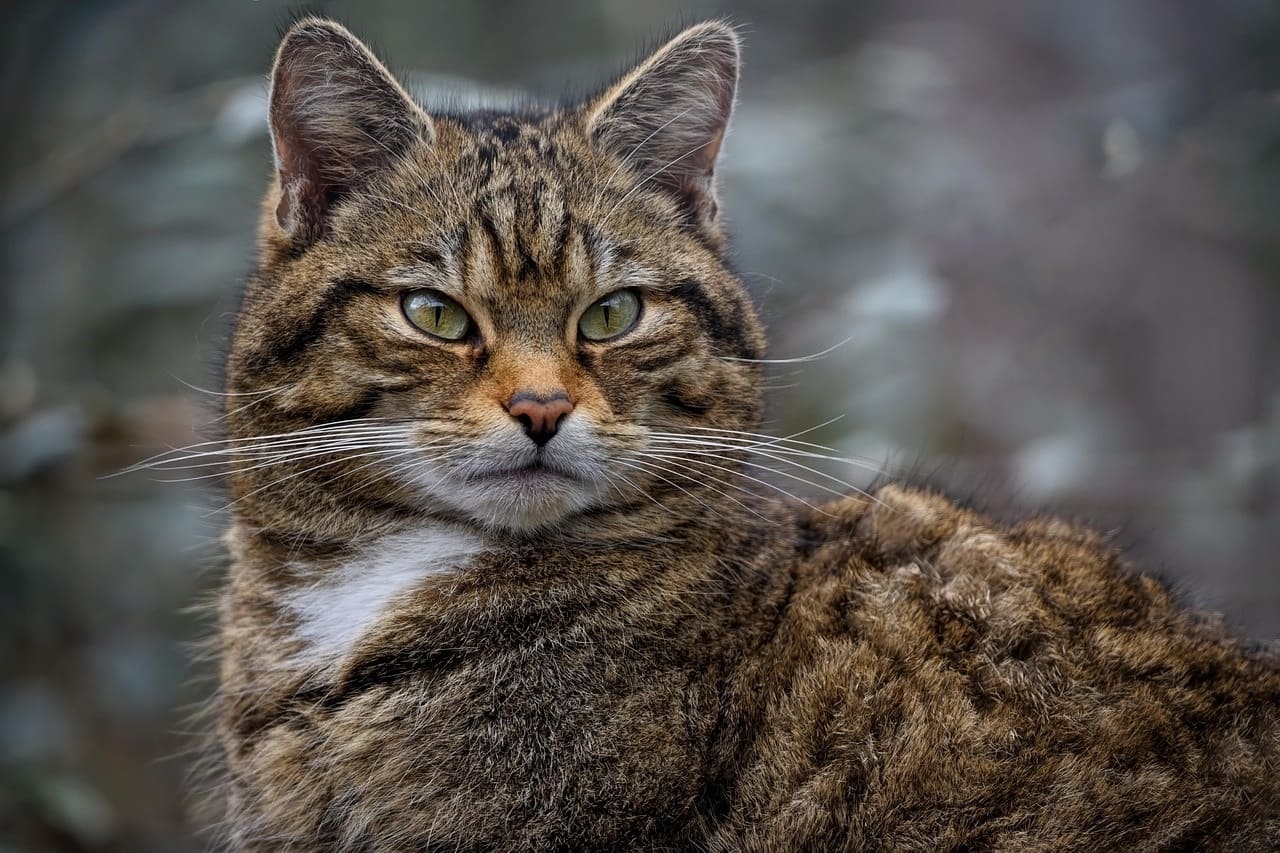
The European wildcat (Felis silvestris) is one of Switzerland's oldest native mammal species. Until the 18th century it was systematically persecuted, nearly exterminated, defamed as the 'most harmful predator of our homeland'. Since 1962 it has been protected. For around 25 years it has been returning, primarily to the Jura, and now also to the Central Plateau. The population is estimated at over 1,000 individuals, with an increasing trend. On Switzerland's Red List it is classified as 'Near Threatened' and as a species with high national priority.
What sounds like a success story is more fragile than it appears. The wildcat is not hunted, but neither is it actively protected. Its return is a self-sustaining process for which conditions are deteriorating: habitats are being fragmented and divided, road traffic regularly claims victims, and the greatest threat comes from our living rooms. Around 2 million domestic cats live in Switzerland. Where wildcats and domestic cats mate, the genetic dissolution of a species that has survived for millennia is threatened. The current hybrid proportion is 15 percent, and it will increase as the wildcat spreads further into the Central Plateau.
This dossier compiles the most important facts about the wildcat in Switzerland: its biology, its ecological significance, the real threats, the political failures, and the question of why a protected species in the 21st century needs more than an entry in the hunting law. Those who want to delve deeper will find the most comprehensive material base in our Dossier on Hunting in Switzerland .
What to expect here
- Biology and way of life: Who the European wildcat is, how it lives, what distinguishes it from the domestic cat, and why it is considered the secretive hunter of Switzerland's forests.
- Ecological significance: Why the wildcat is indispensable as a mouse regulator, indicator species, and element of intact ecosystems.
- History: From extermination to return: How the wildcat nearly disappeared and why its recovery is a product of protection, not hobby hunting.
- Hybridization: The greatest threat comes from the living room. Why interbreeding with domestic cats threatens the genetic survival of the species and what helps against it.
- Threats: Road traffic, habitat fragmentation, mistaken shootings, trap hunting, log piles, and wire mesh fences.
- Hobby hunting and the wildcat: Why the greatest danger to the wildcat does not come from individual shootings, but from the hobby hunting system itself.
- Geneva and the wildcat: Why the Geneva model also works for wildcats.
- 'Did you know?' 20 facts about the wildcat that hardly anyone knows.
- Alternatives: What really helps: mandatory castration, wildlife corridors, professional game wardens.
- What would need to change: Concrete political demands.
- Arguments: Answers to the most common claims.
- Quick links: All relevant articles, studies, and dossiers.
Biology and way of life: The secretive huntress of Switzerland's forests
The European wildcat (Felis silvestris silvestris) belongs to the cat family (Felidae) and is an independent species that has been native to Europe since the last Ice Age. It is not a feral domestic animal: The domestic cat (Felis catus) descends from the African wildcat (Felis lybica) and was domesticated around 9,000 years ago in Mesopotamia. Both species are closely enough related to produce fertile offspring, but have evolved separately over millennia. The wildcat was there before the domestic cat.
Adult wildcats reach a head-body length of 45 to 65 centimeters in females and up to 75 centimeters in toms (males), plus a bushy tail of around 30 centimeters that ends in a broad, blunt rounding with two to three black rings. Weight ranges from 3 to 5 kilograms (females) and 4 to 7 kilograms (toms) respectively. The coat is yellowish-gray with a washed-out, brownish-black stripe pattern, a distinctive dorsal stripe on the back that ends at the base of the tail, as well as four to five neck stripes and one shoulder stripe each. Unlike in tabby domestic cats, the wildcat's markings are washed-out and never sharply contoured.
Wildcats are strict loners and active from dusk to night. During the day they rest in tree hollows, rock cavities, abandoned badger dens, or even in log piles. Territories encompass around 2 to 5 square kilometers for females, 5 to 15 square kilometers for toms, and are marked with urine, feces, and cheek secretions. The mating season falls in the months of January to March. After a gestation period of around 63 to 68 days, the female gives birth to two to five offspring that remain with the mother until autumn. Mortality among young animals is high: many do not survive their first year of life. Natural life expectancy is 12 to 14 years, in captivity up to 21 years.
The wildcat is a pure carnivore and ambush hunter with excellently developed sensory organs. Its diet consists of approximately 90 percent small mammals, primarily voles and field mice. Occasionally, birds, insects, amphibians or small reptiles are also captured. In the stomachs of wildcats found dead, up to 24 prey animals with a total weight of over 450 grams have been documented. The wildcat only accepts carrion in extreme emergencies, which clearly distinguishes it from fox and badger.
Natural enemies of the wildcat are the lynx and the wolf, and for juveniles also eagle owl, golden eagle, goshawk and fox. The wildcat preferably lives in structurally rich and cover-rich deciduous mixed forests with rocky areas and undergrowth. Latest research from the KORA wildcat project 2024-2027 shows, however, that the species is more adaptable than long suspected: At Lake Neuchâtel, wildcats also use reed beds and agricultural land, provided sufficient cover structures are present.
More about this: The Wildcat and Wildcat is Animal of the Year
Ecological significance: Mouse hunter, indicator species and element of intact forests
The wildcat is an ecological keystone species of European forest ecosystems. Its functions are measurable, documented and cannot be replaced by any recreational hunting.
As a mouse regulator the wildcat keeps populations of field mice and voles in natural balance. With a diet consisting of 90 percent small mammals, it is one of the most efficient natural mouse hunters in Swiss forests and cultural landscapes. Fewer mice means less feeding damage to young trees, fewer crop losses in agriculture and fewer ticks that require mice as hosts.
As an indicator species the wildcat is an indicator of the quality of forest ecosystems. Where wildcats occur, structurally rich, undisturbed forests with high biodiversity are present. The presence of wildcats indicates that a habitat offers sufficient cover, prey animals, tranquility and connectivity, which also benefits dozens of other species.
As part of natural predator communities the wildcat complements the functions of lynx, wolf and fox. While the lynx primarily hunts deer and chamois and the fox hunts mice, carrion and small game, the wildcat is specialized in small mammals and hunts in habitats (dense undergrowth, rocky areas) that are less accessible to foxes. Intact predator communities are the backbone of healthy ecosystems, exactly what recreational hunting systematically destroys.
Pro Natura named the wildcat the 'Animal of the Year' in 2020 and made it the ambassador for 'wild forests and diverse cultural landscapes'. This choice was no coincidence: The wildcat stands symbolically for more wilderness, less tidiness and the recognition that nature regulates itself when allowed to do so.
More about this: Distinguishing a wildcat from a domestic cat and Three 'rescued' wildcats in Geneva
History: From extermination to return
The history of the wildcat in Switzerland is a lesson about the consequences of human ignorance and hunting hubris. Even in the 18th century, the wildcat was widespread in the Central Plateau and the Jura. Then came systematic persecution.
KORA quotes from historical hunting literature: The wildcat 'belongs to the most harmful predators of our homeland' and 'hunters have every reason to pursue this sinister guest in every possible way'. This attitude led to the near-complete collapse of the Swiss population. Whether the wildcat was ever completely extinct in Switzerland will remain unknown, but the population was certainly reduced to a critical minimum.
Only in 1962 was the wildcat placed under protection in Switzerland. There were isolated reintroductions, but the return is probably mainly due to immigrating animals from the French Jura, from Sundgau and Burgundy. Since the 1990s, evidence has been increasing in the Swiss Jura. The systematic wildcat monitoring, which uses the valerian method (wildcats rub against valerian-sprayed wooden slats and leave hair for genetic analysis), showed a doubling of occupied territory between the first survey 2008/10 and the second survey 2018/20: from 15 to 31 percent of the Jura area. The population was estimated at over 1,000 individuals in the second survey, compared to 'several hundred' in the first survey.
The KORA density estimate for the northern Jura is 26 individuals per 100 square kilometers of suitable habitat. The expansion continues from the Jura into the Mittelland and possibly into the pre-Alps. The KORA wildcat project 2024–2027 is currently investigating this expansion, hybridization dynamics, and the health status of wildcats. In the canton of Vaud, wildcats are being equipped with GPS transmitters to research movement patterns and habitat choice.
The recovery of the wildcat shows what protection can achieve. But it also shows how quickly protection is undermined: not through targeted persecution, but through indifference toward habitat destruction, lack of connectivity, and the failure to neuter domestic cats in wildcat areas.
More on this: Austria: What the wildcat needs for a successful comeback
Hybridization: The greatest threat comes from the living room
Around 2 million domestic cats live in Switzerland. Most of them have outdoor access. Where the wildcat's range extends into the Mittelland, these two species encounter each other and can mate. The result is fertile hybrids that are often barely distinguishable from purebred wildcats in appearance. And that is precisely the problem.
Hybridization threatens wildcats not through immediate death, but through genetic dissolution. When domestic cat genes spread through generations in the wildcat gene pool (introgressive hybridization), the species loses its genetic independence. This is exactly what happened in Scotland: the wildcat population was so heavily contaminated by hybridization that hardly any genetically pure wildcats still exist. The wildcat there is losing its species identity and becoming a 'feral domestic cat'.
Wildcat monitoring in Switzerland shows: the current hybrid proportion in the Swiss wildcat population is 15 percent. Since the first survey, gene flow between domestic and wildcats has slightly increased. KORA warns: hybridization could increase as the wildcat spreads further into the Mittelland, where domestic cat density is particularly high.
However, a large paleogenomic study by Ludwig Maximilian University Munich (2025) also provides a nuanced finding: over 8,500 years, domestic and wildcats in Europe have mixed surprisingly little. The ancestry of most modern domestic cats can be traced back to wildcats for less than 10 percent. Matings were rare, probably because both species adapted to different ecological niches and show different behavior. Only when wildcat populations shrink to critically small numbers due to habitat loss and persecution does this natural barrier fail, exactly as in Scotland since the 1960s.
Pro Natura identifies hybridization as a key medium-term threat and emphasizes the responsibility of cat owners: Those who keep free-roaming cats should have them neutered. KORA identifies not only hybridization but also the transmission of domestic cat diseases (feline distemper, leukemia, FIV) as a serious risk. In the Bucheggberg (SO/BE) study area, KORA is currently analyzing how wildcats, domestic cats and hybrids behave in the same territory.
More on this: Domestic cats and wildcats: Hybridization and its impacts and Hybrid cats
Threats: What really endangers the wildcat in Switzerland
The wildcat is protected in Switzerland (JSG Art. 7), listed as a 'strictly protected species' in the Bern Convention (Annex II), strictly protected in the EU Habitats Directive (Annex IV) and listed in the Washington Convention on International Trade in Endangered Species (CITES) (Appendix II). Nationally, it is classified as 'potentially endangered' with high priority. Nevertheless, it faces pressure from a whole series of threats that receive hardly any political attention:
Road traffic is one of the most common causes of death. Wildcats are crepuscular and cross roads during their nocturnal hunting expeditions. The risk of collisions increases particularly in areas where wildcats are expanding and establishing new territories.
Habitat fragmentation through roads, settlements, intensive agriculture and infrastructure isolates subpopulations, prevents genetic exchange and can lead to local extinction. Wildcats need connected habitats with migration corridors between forest areas. Pro Natura nature reserves in the Jura can serve wildcats as partial habitat, but connected corridors across the Mittelland are largely absent.
Log piles are used by wildcats as hiding places and birthing sites. During mechanical loading of tree trunks, young animals are crushed or loaded along with the logs. This danger is real, documented and avoidable with simple measures (inspection before loading, rest periods during denning season), but binding regulations are lacking.
Knotted mesh fences can become death traps for wildcats. The animals get their claws caught in the wire knots when climbing over and die agonizingly.
Confusion with domestic cats remains a latent risk. Swiss Animal Protection STS emphasizes: Distinguishing the protected wildcat from a tabby domestic cat in the field is 'difficult to impossible'. In cantons where hobby hunters are allowed to shoot 'feral domestic cats', there is a risk that wildcats or hybrids may be killed in the process. Safe species identification is only possible through genetic analysis. The STS therefore demands that the shooting of stray cats should only be carried out by wildlife wardens and only after prior warning to owners.
Trapping poses another danger. Wildcats enter box traps and concrete tube traps set for other animals. In Germany, wildcat action plans recommend taking photos and genetic samples when wildcat capture is suspected. In Switzerland, comparable protocols are missing in most cantons.
More on this: Animal cruelty: Swiss hobby hunters do not hunt ethically and Dossier: Hunters: Role, power, training and criticism
Recreational hunting and the wildcat: Systemic threat rather than isolated incident
The wildcat is not actively hunted in Switzerland. Anyone who concludes from this that recreational hunting is not a problem for it overlooks the essential point. The threat to the wildcat from recreational hunting is systemic, not individual.
First: Recreational hunting brought the wildcat to the brink of extinction in the first place. The historical persecution in the 18th and 19th centuries, the systematic classification as a 'pest' and the uncontrolled hunting almost wiped out the species in Switzerland. Only the ban saved it. The wildcat is living proof of what happens when a species is subjected to the recreational hunting system and what happens when protection takes effect.
Second: The 'shooting of feral domestic cats' by hobby hunters directly endangers the wildcat. Visual distinction in the field is practically impossible. As long as hobby hunters are allowed to shoot 'feral' cats in wildcat areas, there is a risk of mistaken shootings. The BUND Hessen states it clearly: 'Confusion and thus unintentional shootings of the endangered wildcat cannot be ruled out.' In Bavaria, hobby hunters are allowed to shoot domestic cats from 300 meters from the nearest inhabited building, even in areas with wildcat populations.
Third: Trap hunting for 'predators' (foxes, martens, badgers) endangers wildcats as bycatch. Wildcats enter box traps and concrete pipe traps. In most Swiss cantons there is no protocol that applies when a wildcat is caught.
Fourth: Recreational hunting indirectly fragments habitats by disturbing wildlife corridors, putting wildlife to flight and affecting the wildcat's resting zones. The regular disturbance from hunting activities in forests and fields increases the stress level of all wildlife, including wildcats.
The counter-model is documented: In the canton of Geneva, which has operated without militia hunting since 1974, wildlife is cared for by professional wildlife wardens. Three young wildcats that were mistakenly 'rescued' near Geneva in 2024 were successfully released back into the wild after professional rearing (minimal human contact, feeding with prey animals, DNA-confirmed species identification). This is wildlife management in the 21st century: professional, animal welfare compliant, without recreational hunting.
More on this: Dossier: Geneva and the hunting ban and Dossier: Argumentation for professional wildlife wardens
'Did you know?' 20 facts about wildcats
- The European wildcat is a distinct species and not a feral domestic animal. The domestic cat descends from the African wildcat, not from the European wildcat.
- Wildcats have lived in Switzerland since the last ice age. They were here before domestic cats.
- The wildcat was widespread in Switzerland until the 18th century. Systematic persecution by hobby hunters brought it to the brink of extinction.
- Since 1962 the wildcat has been fully protected in Switzerland. Recreational hunting and trapping are strictly prohibited.
- Pro Natura named the wildcat 2020 'Animal of the Year' and made it an ambassador for wild forests.
- The wildcat population in the Swiss Jura doubled between 2008 and 2020: from 15 to 31 percent of the inhabited area.
- The Swiss wildcat population is estimated at over 1,000 individuals. During the initial survey there were still 'a few hundred'.
- The density in the northern Jura is around 26 wildcats per 100 square kilometers of suitable habitat.
- Wildcats are pure carnivores. Their diet consists of 90 percent small mammals, especially voles.
- Up to 24 prey animals have been found in the stomach of a single dead wildcat.
- Wildcats don't just use forests: At Lake Neuchâtel they also hunt in reed beds and agricultural land.
- The bushy tail with blunt, black tip and two to three rings is the most reliable external identifying feature.
- A wildcat mother was documented for the first time by wildlife camera defending her young against a wolf.
- The valerian trick monitoring works because wildcats rub against valerian-sprayed wooden posts and leave hair behind.
- 15 percent of Swiss wildcats carry domestic cat genes (hybridization). The trend is increasing.
- In Scotland, hybridization has genetically dissolved the wildcat population to such an extent that hardly any purebred animals still exist.
- Paleogenomic studies show: Over 8,500 years, domestic and wild cats in Europe have surprisingly rarely interbred, because they occupy different ecological niches.
- Wood piles in forests are used by wildcats as birthing sites. During mechanical loading, young animals are regularly killed.
- Knotted mesh fences are death traps: wildcats get caught with their claws in the wire knots.
- In Canton Geneva, three mistakenly collected wildcat kittens were successfully released back into the wild in 2024 thanks to professional wildlife management.
Alternatives: What really helps
The wildcat needs no culling plan, no regulation and no 'game management'. It needs peace, connected habitats and the political will to address the threats that actually affect it.
Mandatory sterilization for free-roaming domestic cats: The most effective single measure against hybridization. Pro Natura, KORA and the Swiss Animal Protection STS have been demanding this for years. Switzerland lacks a nationwide requirement. Responsibility currently lies with pet owners, which is insufficient given the scale (2 million domestic cats). A binding sterilization and registration requirement in rural areas and near forests would be a paradigm shift.
Wildlife corridors and habitat connectivity: The wildcat needs continuous migration routes between forest areas. Fragmentation by roads, settlements and monoculture agriculture must be compensated through 'green corridors' of hedgerows, tree strips and extensively managed areas. The BUND in Germany has demonstrated how this works with the 'Wildcat Leap' project. Switzerland lacks a comparable national program.
Professional game wardens instead of hobby hunting: The Geneva model shows that professional wildlife management protects wildcats better than any militia hunting system. Game wardens can provide trained species identification, avoid misidentification shootings and implement scientifically sound measures.
Wood pile protocols: Mandatory inspections before loading wood piles during breeding season (March to June) can massively reduce the risk for wildcat kittens. Baden-Württemberg already has corresponding recommendations. Switzerland lacks binding regulations.
Removal of knotted mesh fences: In wildcat areas, knotted mesh fences should be replaced with wildcat-friendly alternatives.
Deworming and health monitoring: Instead of culling, a systematic health monitoring of the wildcat population is needed, as KORA has established with the 2024-2027 project.
More on this: Dossier: Arguments for professional game wardens
What would need to change: Political demands
- National sterilization requirement for free-roaming domestic cats in rural areas and in a buffer zone of at least 2 kilometers around confirmed wildcat territories. Registration requirement with microchip for all outdoor cats.
- Ban on shooting 'feral domestic cats' by hobby hunters in all cantons with wildcat populations. Field identification is impossible. Responsibility exclusively with professional game wardens.
- National program for wildlife corridors that ensures connectivity of wildcat habitats from the Jura across the Mittelland to the pre-Alps. Financing through the Nature and Heritage Protection Fund.
- Binding wood pile protocols: Inspection of all wood piles for wildcat presence before loading between March and June.
- Removal of knotted mesh fences in wildcat core areas and migration corridors.
- Separation of enforcement and monitoring: Monitoring of wildcat populations must not lie in the hands of recreational hunters. Independent structures modeled after KORA and professional wildlife ranger corps like in Geneva are the standard that a protected species with high national priority deserves.
Arguments: Responses to common claims
«But the wildcat is protected, what's the problem?» Protection status on paper alone does not save a species. The wildcat is protected, but its habitats are being fragmented, its genes are being diluted through hybridization, and the political measures it would need (mandatory neutering, corridors, wood pile protocols) do not exist. «Protected» in Switzerland often means «named, but not cared for».
«But the wildcat is recovering, so the system works.» The recovery is a product of protection status and immigration from France, not a merit of the hunting system. The return shows what is possible when a species is no longer hunted. But the return is fragile: If the hybridization rate continues to rise and habitat fragmentation increases, the positive development could reverse, as the Scottish example shows.
«Hybridization is a natural process.» False. The mating between domestic and wild cats is a result of human intervention: The domestic cat was brought to Europe by humans, its density is a product of pet ownership, and the encounter with the wildcat occurs because we have destroyed and fragmented their habitats. There is nothing natural about it.
«Hobby hunters protect the wildcat by shooting feral domestic cats.» The opposite is the case. The shooting of «feral» cats by hobby hunters endangers the wildcat because visual distinction in the field is practically impossible. The BUND and the STS therefore call for abandoning the shooting of cats by hobby hunters. Neutering is the more effective and animal welfare-appropriate alternative.
«There are so many cats in the forest, intervention is necessary.» The question is not whether to intervene, but how. Hobby hunters who shoot cats without genetic analysis intervene uncontrolled and potentially species-damaging. Professional wildlife rangers with expertise in species identification and access to genetic analysis methods intervene targeted and evidence-based. That is the difference between the hobby hunting system and the Geneva system.
«Wildcats don't need corridors, they are adaptable.» Wildcats are more adaptable than long assumed, but they need cover. Open, cleared agricultural areas without hedges, woodlands and structures are impassable for wildcats. Corridors are not luxury infrastructure, but the minimum requirement for genetic exchange between subpopulations.
Quicklinks
Articles on wildcat topics on wildbeimwild.com:
- The wildcat (animal portrait)
- Distinguishing a wildcat from a domestic cat
- Wildcat is animal of the year
- Three «rescued» wildcats in Geneva
- Domestic cat and wildcat: hybridizations and their effects
- Austria: What the wildcat needs for a successful comeback
- Wildcat mother defends her young against a wolf
- Hybrid cats
- Are cats domesticated?
Related dossiers:
- Golden jackal in Switzerland: Natural immigrant under political pressure
- The otter in Switzerland: Exterminated, returned and politically threatened
- The brown bear in Switzerland: Exterminated, returned and still unwanted
- The wildcat in Switzerland: Back from extinction, threatened by indifference
- The lynx in Switzerland: Predator, keystone species and political object of dispute
- The fox in Switzerland: Most hunted predator without lobby
- Wolf: Ecological function and political reality
- The wolf in Europe: How politics and hobby hunting undermine species conservation
- Wolf in Switzerland: Facts, politics and the limits of hunting
- Valais Wolf Tally: Numbers of a Massacre
- Fox Hunting Without Facts: How JagdSchweiz Invents Problems
- Livestock Protection in Switzerland: What Works, What Fails and Why Shooting Is No Solution
Our Standards
The European wildcat has survived in Switzerland because it was placed under protection in 1962. Not because hobby hunters cared for it, not because the militia hunting system worked, but because people stopped persecuting it. This is the simplest and simultaneously most uncomfortable lesson of wildcat history: protection works. Recreational hunting destroys.
The return of the wildcat from the Jura to the Central Plateau is a rare bright spot in the otherwise grim state of Swiss biodiversity. But this bright spot is not a given. It requires political will, binding measures and the readiness to make uncomfortable decisions: mandatory castration for domestic cats, wildlife corridors, abandoning the system of recreational hunting as wildlife management. Anyone who wants to protect the wildcat must change the structures that endanger its return. Anyone who fails to do so has understood nothing.
This dossier will be continuously updated when new studies, figures or political developments require it.
More on recreational hunting: In our Hunting Dossier we compile fact-checks, analyses and background reports.