Wildcat mother defends her young against a wolf
Extremely agitated, the wildcat mother lashes her puffed-up tail back and forth. Her fur is bristling, her ears pointed forward. Again and again she arches her back threateningly and hisses, as she paces tensely along a tree trunk in the night. She has offspring, and lurking in the background is a formidable opponent:


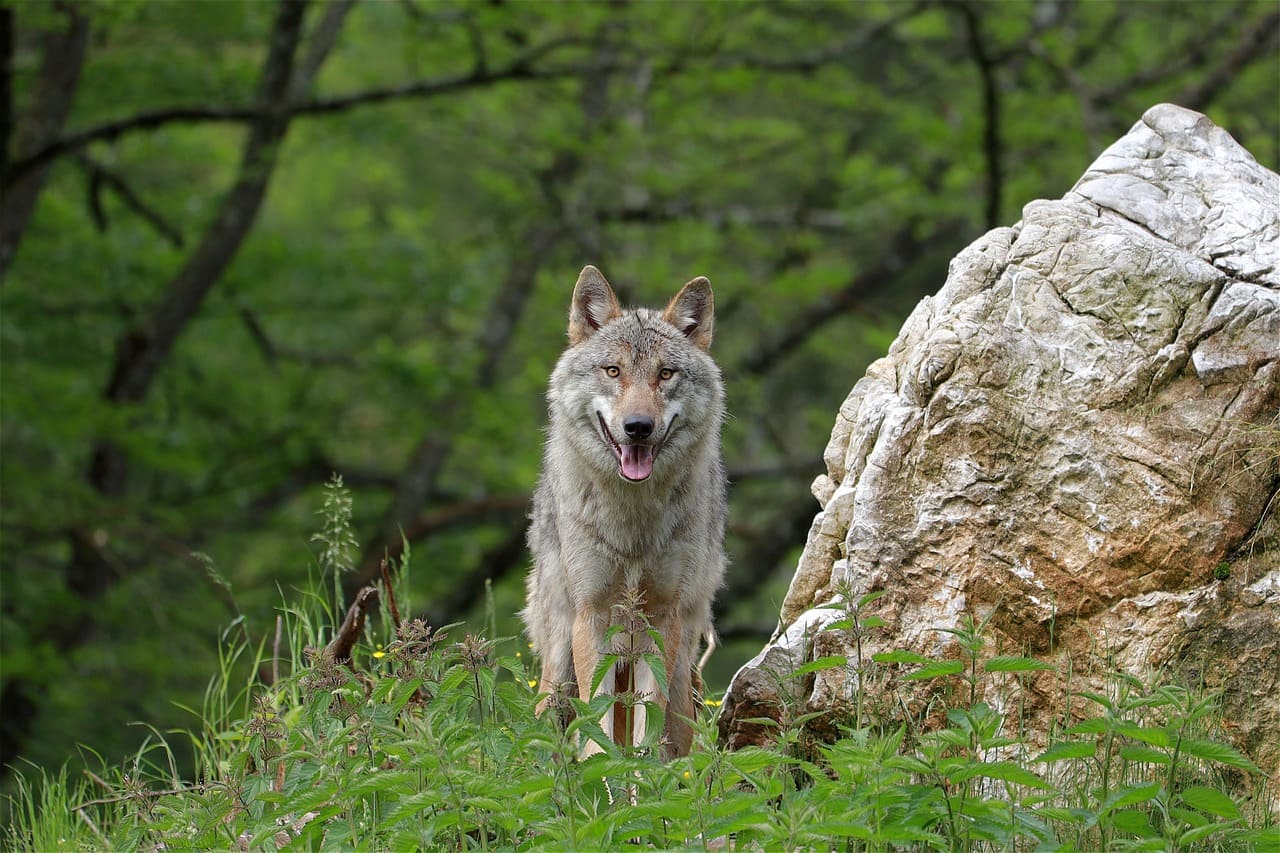
Extremely agitated, the wildcat mother lashes her puffed-up tail back and forth. Her fur is bristling, her ears pointed forward. Again and again she arches her back threateningly and hisses, as she paces tensely along a tree trunk in the night. She has offspring, and lurking in the background is a formidable opponent: a wolf.
First-ever documentation: wildcat versus wolf
«The footage from our camera trap is a small sensation,» says Malte Götz, wildcat expert at the Deutsche Wildtier Stiftung. «The willingness of a wildcat mother to stand her ground against a wolf for the sake of her young has been documented for the very first time.»
In the video you can follow how the courageous animal is at the peak of tension and ready to fight.
The camera trap footage was captured as part of a telemetry study examining the habitat requirements of wildcats far from forested upland regions — their most important refuges — in Saxony-Anhalt. There, the wildcat has survived in the Harz mountains, which today also represents the core of its range.
Wildcat reclaims former habitats
«In recent years, this strictly protected species has been reclaiming some of its former habitats,» says Malte Götz. «This includes the North German Lowlands.»
The Deutsche Wildtier Stiftung supports the reestablishment of the wildcat and investigates, among other things, which shelters in heathland and floodplain landscapes are used for raising young and for daytime rest. “It is important to know which structures are significant and what dangers threaten the species in the cultivated landscape.” The defense against the wolf – as documented by the wildlife camera – shows that wildcats face natural challenges with courage. The return of predators such as the wolf is also a gain for the ecosystem.
The natural range of the wildcat extends from Scotland and Western Europe through Central and Eastern Europe to Central Asia and western India. It also inhabits large parts of Africa, with the exception of the tropical rainforest areas of Central Africa.
The European wildcat or forest cat (Felis silvestris silvestris) is found in Europe, on some Mediterranean islands, in Anatolia, as well as in the Caucasus and North Caucasus, and is distinguished above all by its bushy tail, which ends in a broad, blunt rounded tip. At the end of the tail there are often three black “rings.” The coat is dense, and the striped pattern is quite striking, though often blurred.