Domestic cat and wildcat: hybridisation as a risk
The European wildcat apparently only mates with its human-influenced relatives in emergencies.


Tracing interspecific crossings: Although domestic cats and wildcats can produce offspring together, hybridisation barely occurred during their roughly 2,000 years of co-existence in Europe.
This is shown by an analysis of palaeogenetic material from finds of both species. The rare matings are likely attributable primarily to behavioural differences. As the example of Scotland makes clear, however, when wildcat populations reach critically small numbers, these problematic interbreedings do ultimately occur, the scientists report.
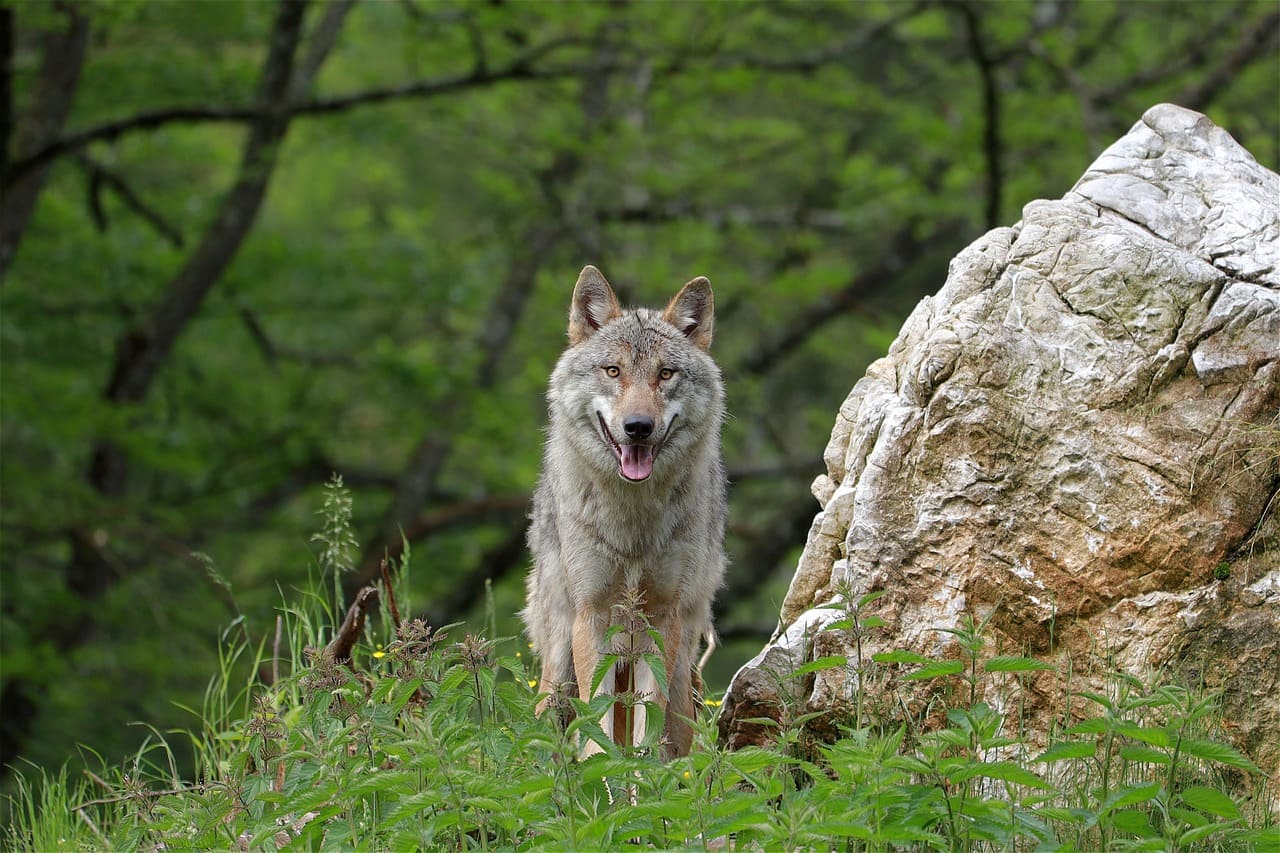
They may look similar, yet they are clearly two distinct species: the European wildcat (Felis silvestris) had long been roaming our forests before humans established “their domestic cat” in its habitat. The domestic cat (Felis catus) descends primarily from the wildcat (Felis lybica) widespread in North Africa and the Middle East. Around 2,000 years ago, humans brought this domesticated animal to the furthest corners of Europe. Since then, it has shared its range with the native European wildcat. As the two species can produce fertile offspring together, it stands to reason that hybridisation could have occurred early on. However, the extent to which such “infidelity” took place over the course of centuries of co-existence has remained unclear.
Tracing feline “infidelities”
An international research team has now dedicated itself to this question using the means of paleogenomics. To this end, the scientists obtained genetic material from wild and domestic cats: it came from 48 modern individuals and 258 domestic and wild cats respectively that lived up to 8,500 years ago. These were remains from archaeological sites in various parts of Europe, which could be dated chronologically using radiocarbon dating. The obtained genetic material was subsequently sequenced, analyzed, and compared. Based on specific genetic traces, it was possible to determine the extent to which gene flow had occurred between the two cat species over the last 2,000 years.
As the team reports, their results make clear that domestic and wild cats interbred surprisingly little over the course of their co-existence. This is reflected in the relatively small heritage of Felis silvestris in our modern house cats: the ancestry of most modern domestic cats can be traced back to wild cats by less than ten percent. In wild cats from the last 2,000 years, the researchers found no or only very minor traces of hybridization in the genetic material. The results thus retrospectively confirm modern indications that the two species at least normally avoid mating.
“Our research shows that the biology of the domestic cat diverges so far from that of the wild cat that they would rather not interbreed,” says senior author Laurent Frantz of Ludwig Maximilian University of Munich. “This is probably because domestic cats and wild cats have adapted to very different ecological niches and exhibit different behaviors: one aspect is that wild cats are more solitary, while domestic cats can live at much greater densities,” says Frantz.
Small populations promote hybridization
According to the researchers, however, it is becoming apparent that the long-lasting reproductive isolation is currently being broken down in some parts of the wild cat’s range by human influences. For when the population of the species becomes very small due to disturbances or fragmentation of its habitat, wild cats will also mate with domestic cats due to a lack of conspecific partners.
This is particularly evident in the case of Scottish populations. Especially since the 1960s, the separation has been diminishing there, as the scientists were able to demonstrate in a separate study led by the University of Bristol. As a result, the wildcat there is increasingly at risk of becoming a feral domestic cat and thus losing its species identity. “This hybridisation is a consequence of modern threats. Habitat loss and persecution have brought the wildcat in Great Britain to the brink of extinction,” says Jo Howard-McCombe, lead author of the study on Scottish wildcats.
The new findings can therefore now help to better protect the species in the future, for example with regard to conservation programmes and reintroductions, the scientists say. For Germany, current results do suggest that populations are not yet subject to the same hybridisation pressure. Nevertheless, attention to the problem is warranted. On this point, Frantz concludes: “We would need more genomic data to be able to monitor the situation in the future and to prevent us from being confronted with the same problems as in Scotland.”
The study by the team led by palaeontologist Laurent Frantz from Ludwig Maximilian University (LMU) Munich and Greger Larson from the University of Oxford has now been published in the journal “Current Biology”.

More on the subject of recreational hunting: In our dossiers on recreational hunting gather fact-checks, analyses and background reports. What the research says about this is shown by Hunting fact-checked: the state of research.
The position of IG Wild beim Wild: IG Wild beim Wild rejects recreational hunting. Our model is the canton of Geneva, which has managed without recreational hunting since 1974: without hunting seasons, without hunting dogs, without driven hunts, without high seats, without the animal cruelty and crime that go hand in hand with hunting season elsewhere. What has worked there for over fifty years disproves every position paper by JagdSchweiz. An association that bases its policy on claims it refutes in its own documents is not a professional organisation, but a factory for misinformation.