Wild she-wolves raise foreign pups: how the USA is fighting for the Mexican wolf
In Arizona and New Mexico, biologists place pups from breeding programmes into the dens of wild wolf families, 148 since 2016. In Switzerland, whose wolf population is of a similar magnitude, young wolves are shot.
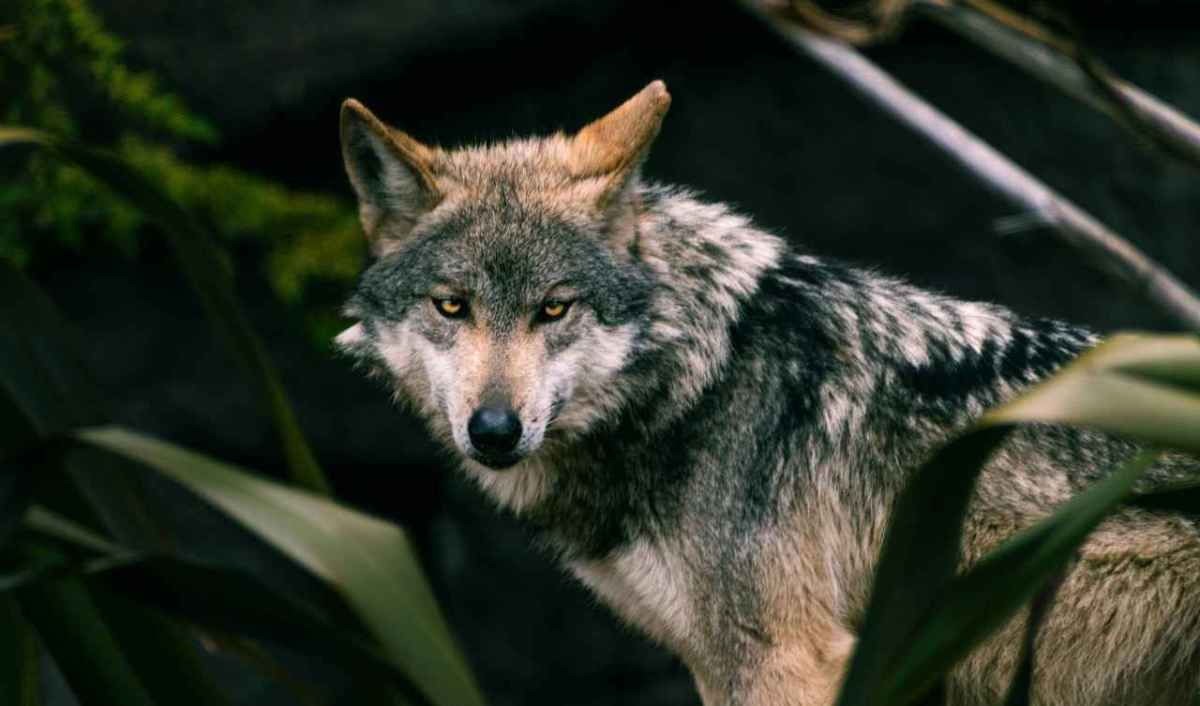
Mexican wolf (stock image). Photo: Anthony Sebbo / Unsplash
«In the Pack»
In Arizona and New Mexico, every spring biologists carry wolf pups from breeding facilities into the dens of wild wolf families. The she-wolves raise the foreign young together with their own litter. Since 2016, 148 fostered pups have been released into the wild this way. The Mexican wolf population has grown to at least 319 animals. In Switzerland, the wolf population is of a similar magnitude, yet here it is young wolves in particular that are being shot.
How fostering works in the wolf den
The method is called cross-fostering. The pups come from the binational SAFE breeding programme and are no more than 14 days old. Biologists bring them to the den of a wild she-wolf whose young are about the same age. There they mix the newcomers in with the litter so that they take on its scent, and then withdraw. Afterwards the she-wolf nurses and cares for all the pups equally.
For this, the birth dates in captivity and in the wild have to coincide. In 2025 this succeeded in Arizona at only a single den, because the wild she-wolves had given birth earlier than the animals in the breeding facilities (Arizona Game and Fish Department). According to the authorities, in 2021 fostered pups survived their first year about as often as wild-born pups, namely around half of them.
148 fostered pups since 2016
The figures from the U.S. Fish and Wildlife Service show how much the programme has grown. In 2016 there were six pups, in the record year 2024 as many as 27. In 2025, 17 pups were placed in wild dens: six in one den in Arizona and eleven in three dens in New Mexico. In June 2026, five more pups followed, bringing the total to 148.
By 2025, 143 pups had been placed in almost 50 wild dens. According to the Arizona wildlife agency, a total of 23 fostered wolves had survived two years in the wild as of July 2026. This already exceeds the recovery plan's target of 22 such wolves by 2030. At least 13 fostered wolves have also produced 31 litters of their own (as of June 2025), carrying their genes into widely scattered packs.
Why every pup counts
The Mexican wolf is the smallest and rarest subspecies of the grey wolf in North America. It had been exterminated in the wild when the USA and Mexico set up a breeding programme in 1977 with seven animals. All Mexican wolves living in the wild today descend from these seven founders. In 1998, the first wolves from enclosures were released in Arizona.
According to the Arizona wildlife agency, the narrow genetic base is the biggest obstacle to the species' recovery. Around 350 Mexican wolves live in more than 60 facilities in the USA and Mexico. The authorities regard bringing their genes into the wild via fostered pups as an effective way of increasing genetic diversity.
The population has been growing without interruption for ten years. At the end of 2025, the inter-agency field team counted at least 319 wolves in Arizona and New Mexico, up from 286 the previous year. To downgrade the protection status, the authorities require an average of 320 wolves over four years.
What critics object to
The programme is not uncontroversial. As early as 2021, the Center for Biological Diversity argued that established families from enclosures, released together, were more likely to survive than individual fostered pups. Above all, the organisation criticises the agency for doing too little about illegal killings. As long as wolves are being poached, even the best genetic refresh achieves little (KJZZ).
And Switzerland?
According to KORA, Switzerland had 43 packs in 2025; a total of 350 wolves were recorded, and at least 155 pups were born. The figure is of a similar order of magnitude to that in Arizona and New Mexico, even if an annual record and a minimum count at year-end do not measure the same thing. The background is set out in our dossier «Wolf in Switzerland».
Since 1 September 2026, at least 43 wolves have been killed in Switzerland under preventive regulation, plus one reactive single kill in Valais. This is shown by our wolf kill counter, as of 27 October 2026. By 4 October, the FOEN had granted 39 approvals for interventions in 37 packs. Preventive regulation is explicitly aimed at the young animals. In the canton of Schwyz, the wildlife wardens killed four pups instead of the proven livestock killers in the Chöpfenberg pack. In Valais, game wardens shot a female wolf in August 2025 as an alleged “lone wolf”. She had given birth to young in May; three days after the shooting, a wildlife camera in the neighbouring Binntal filmed four pups. Whether the female wolf was their mother remains unclear. And the federal government approves kills before any pups have even been confirmed.
Commentary: Two programmes, two attitudes towards wolf pups
The US conservation programme uses the care shown by wild wolf families to bring genetic diversity into the population. In Switzerland, by contrast, the authorities approve the killing of part of the offspring. In the Chöpfenberg pack, four pups of the year were hit, not the proven livestock killers. The differing genetic starting point is part of the context, and the two populations cannot simply be equated. But that takes nothing away from the sharpness of the question: what value do we place on the lives of young wolves?
A wild female wolf that takes in other wolves' pups shows just how strong the bonds within a pack are. It is precisely this cohesion that Swiss regulation destroys, year after year.
More on the subject of recreational hunting: In our dossiers on recreational hunting gather fact-checks, analyses and background reports. What the research says about this is shown by Hunting fact-checked: the state of research.
The position of IG Wild beim Wild: IG Wild beim Wild rejects recreational hunting. Our model is the canton of Geneva, which has managed without recreational hunting since 1974: without hunting seasons, without hunting dogs, without driven hunts, without high seats, without the animal cruelty and crime that go hand in hand with hunting season elsewhere. What has worked there for over fifty years disproves every position paper by JagdSchweiz. An association that bases its policy on claims it refutes in its own documents is not a professional organisation, but a factory for misinformation.
Wild animals need a voice
Once a week: research, petitions and background information on recreational hunting. Free of charge and can be unsubscribed from at any time.

All articles are written by IG Wild beim Wild as well as by external co-authors. Research, structuring and editorial processes may be supported by AI-assisted tools.
Support our work
With your donation you help protect animals and give their voice a hearing.
Donate now →