2026 Wolf Hunt Stopped: Courts Protect the Wolf
In Sweden, licensed hunting of wolves was due to start on 1 January 2026, with kill quotas in no fewer than five provinces and the declared aim of politically reducing the animals' population. But instead of shots, rulings came: administrative courts overturned the hunting decisions, and the Court of Appeal in Sundsvall definitively stopped the planned licensed hunt for 2026.
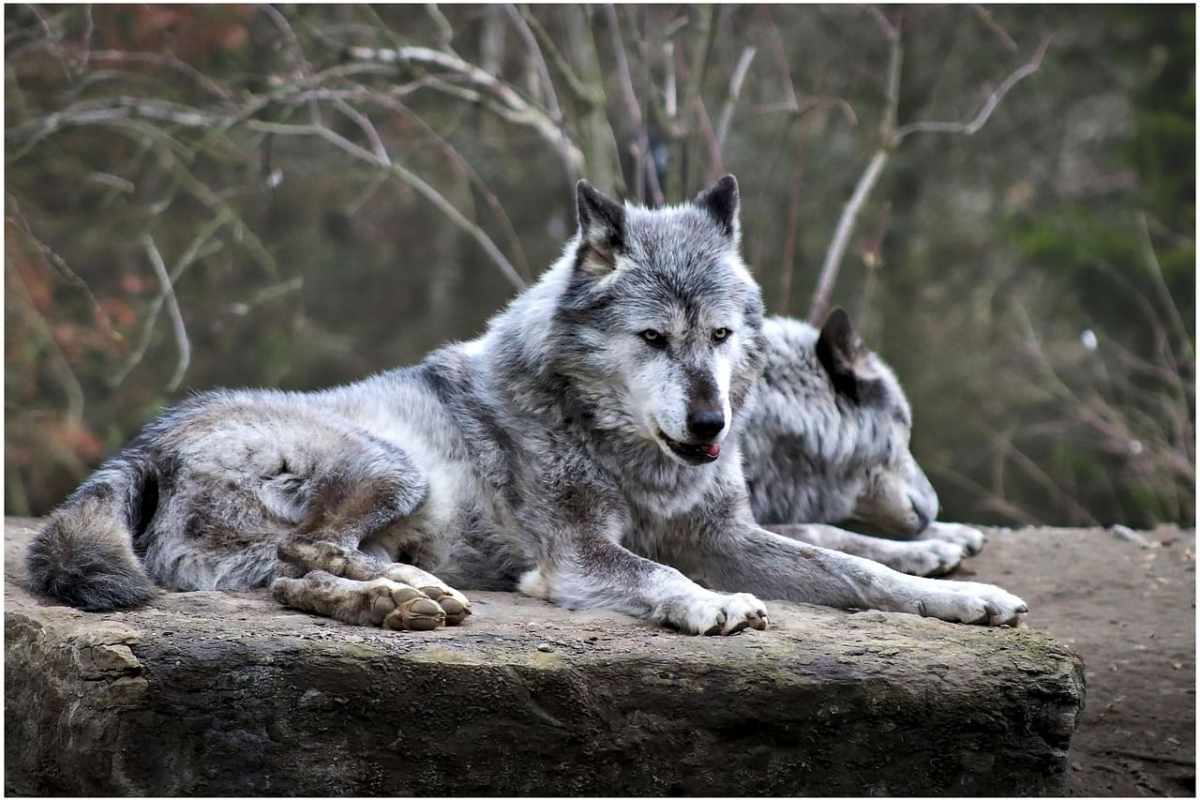
«Homecoming»
The reasoning: the authorities could not prove that recreational hunting would not endanger the population's favourable conservation status — the species protection legally required simply was not guaranteed.
In the very country the Swiss recreational hunting lobby likes to cite as a model for «robust wolf management», the judiciary is now showing just how flimsy the hunting-policy foundations of this narrative really are. While EU policy and national governments seek to gradually turn the wolf back into a huntable resource, courts are left to salvage the species protection that lawmakers themselves are undermining.
Background: licensed hunting based on political target figures
The Swedish government had pushed the target figure for the «favourable conservation status» of the wolf down from 300 to 170 animals and sought to reach this politically set number through intensified recreational hunting. On this basis, several district administrations decided on a licensed hunt with a quota of up to 48 wolves across five regions: Dalarna, Södermanland, Västmanland, Västra Götaland and Örebro.
Conservation organisations criticised that neither genetic diversity nor migration patterns had been adequately taken into account, and that monitoring and the relocation of endangered animals had not been reliably established. Already at first instance, administrative courts overturned all five hunting decisions because the reference value of 170 wolves could not be scientifically justified. The Court of Appeal upheld this line and expressly referred to the established practice of setting the lower limit at a minimum of 300 wolves in Sweden. This effectively killed off the 2026 licensed hunt.
Rule of law vs. hunting lobby: what the ruling really says
The ruling from Sundsvall makes clear that political wish-numbers are not enough to justify intervening in strictly protected populations. Under EU law and the Habitats Directive, authorities and hunting associations must demonstrate that kills will not endanger favourable conservation status — and it is precisely this proof that Sweden failed to provide. The courts are thereby emphasising something that is often brushed aside in political debate: species protection law is not a mood barometer but binding law that requires scientifically robust data. When administrative courts halt a licensed hunt, it is not out of «wolf romanticism», but because authorities have failed to meet their own legal minimum standards for justification, monitoring and risk assessment. In practice, courts are thus the last line of defence preventing recreational hunting, lobby pressure and populist campaigns from causing irreparable damage to strictly protected species.
European context: EU eases killing, courts apply the brakes
The timing of the Swedish ruling is explosive, because EU states have simultaneously lowered the wolf's protection status and politically pushed for faster killing. Following the downgrading under the Bern Convention and corresponding EU decisions, wolves are meant to be hunted more easily and integrated into national hunting acts. In Germany, the federal government explicitly supports this step, while conservation organisations such as NABU and WWF warn that it opens the door to blanket wolf hunting. The political messages are: «The wolf is too numerous», «Rural populations are suffering», «The recreational hunting solves the problems» — while the scientific basis often remains thin, selectively cited, or simply ignored. That Sweden, despite political pressure, has failed to meet the legal criteria for favourable conservation status is thus a signal to the whole of Europe: anyone wanting to hunt the wolf must deliver more than slogans and the complaints of the livestock lobby.
A mixed message from the courts: protection with a catch
Sweden's halt to the licensed hunt is an important partial victory for the wolf, but not a romantic triumph for species protection. Courts are demanding more monitoring, more DNA samples, more GPS collars and more administrative tools to control the wolf population even more precisely and make it politically manageable. The population is being squeezed into target corridors of just a few hundred animals, sold as «protection», even though wolves regulate their own population density as predators. The rule of law is currently correcting the worst excesses of a politicised hunting policy, but at the same time is building up a surveillance regime that could at any point in the long term be translated back into hunting quotas. For practical protection, this means: no killing in 2026, but also no recognition of the wolf as a full, self-regulating part of the ecosystem — rather, as an administrative unit balanced between competing lobby interests.
Switzerland and Central Europe: warning sign or blueprint?
For Switzerland and other Central European countries where the wolf is spreading again after centuries of persecution, the Swedish ruling sends a double signal. On the one hand, it shows conservation organisations that the route through the administrative courts can make a real difference, from a halted licence hunting programme to individual wolves whose killing is initially prevented. On the other hand, it reveals how heavily courts rely on political guidelines: if parliaments bring the wolf under hunting law and negotiate the reference value downwards, courts too will eventually orient themselves to these lowered standards. The current wave of draft laws seeking to make the wolf a huntable species therefore threatens not only individual packs, but also the legal threshold below which courts can still intervene in favour of species protection. Anyone celebrating Sweden's halt to the 2026 wolf hunt today should be fighting against such legislative changes tomorrow — otherwise the rule of law will remain formally intact, but in substance will have been whittled down to a minimum defined by the hunting lobby.
The wolf needs courts and a political sphere that doesn't stab it in the back
The Swedish ruling against the 2026 wolf hunt is a lesson in the fact that courts protect the wolf better than politics does, as long as the legal framework is strong enough. It exposes how carelessly authorities handle terms such as “favourable conservation status” when they treat it primarily as a free pass for kill quotas. At the same time, it serves as a reminder that species protection law is not an irksome obstacle to recreational hunting, but a promise of protection to protected species — a promise that is incompatible with ambitious hunting plans.
For Europe, and particularly the German-speaking region, the question remains: will we allow the wolf to once again become a legitimate target of the rifle through EU decisions and national hunting laws, or will we defend a legal framework in which courts continue to have the power to lower the guns?
More on the subject of recreational hunting: In the dossier The Role and Criticism of Recreational Hunters we shed light on the training, power and self-image of recreational hunters. The scientific evidence is presented in the overview Studies on the Effects of Recreational Hunting.
The position of IG Wild beim Wild: IG Wild beim Wild rejects recreational hunting. Our model is the canton of Geneva, which has managed without recreational hunting since 1974: without hunting seasons, without hunting dogs, without driven hunts, without high seats, without the animal cruelty and crime that go hand in hand with hunting season elsewhere. What has worked there for over fifty years disproves every position paper by JagdSchweiz. An association that bases its policy on claims it refutes in its own documents is not a professional organisation, but a factory for misinformation.

All articles are written by IG Wild beim Wild as well as by external co-authors. Research, structuring and editorial processes may be supported by AI-assisted tools.
Support our work
With your donation you help protect animals and give their voice a hearing.
Donate now →